
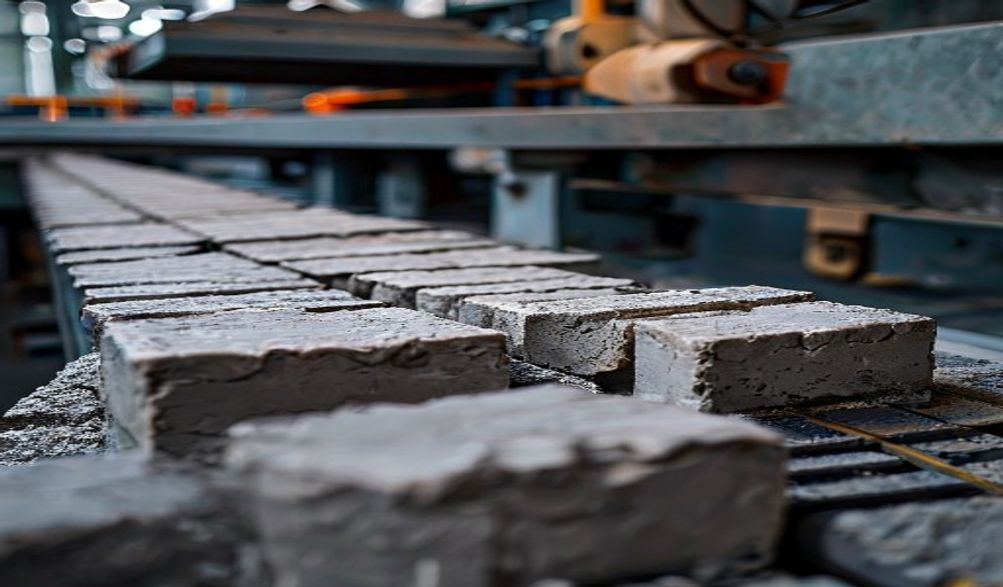
Cara Memilih Mesin Pembuat Bata: Panduan Pembeli yang Komprehensif
Pengenalan
Dari rumah yang paling sederhana hingga pencakar langit yang paling megah, batu bata adalah blok bangunan harfiah dunia kita. Bagi para pengusaha, firma konstruksi, dan manajer proyek, keputusan untukbagaimanaUntuk menghasilkan bata-bata ini adalah penting. Memilih mesin pembuat bata yang tepat bukan sekadar pembelian; ia adalah pelaburan dalam kualiti, kecekapan, dan keuntungan akhir keseluruhan operasi anda. Pilihan yang salah boleh membawa kepada masa henti yang melumpuhkan, produk yang tidak memenuhi piawaian, dan tekanan kewangan.
Panduan ini berfungsi sebagai peta jalan muktamad anda. Dibina berdasarkan kepakaran industri, pengetahuan teknikal, dan pengalaman operasi praktikal, ia menembusi hingar pemasaran. Kami akan memberikan anda rangka kerja yang jelas dan boleh dilaksanakan untuk mengemudi keputusan kritikal ini. Pada akhirnya, anda akan memahami bukan sahajacara memilih mesin pembuat batatetapi bagaimana untuk memilihoptimummesin untuk matlamat khusus anda, memastikan anda mengelakkan kesilapan biasa dan mahal.
Memahami Keperluan Projek Anda: Asas Pilihan Anda
Sebelum anda melihat sebarang brosur mesin, anda perlu melihat ke dalam diri. Keperluan unik projek anda adalah cetak biru yang tidak boleh dirunding untuk pilihan anda. Melangkau langkah ini adalah cara terpantas untuk membeli penindih kertas yang mahal.
Menilai Jumlah dan Skala Pengeluaran Anda
Output yang anda perlukan adalah pendorong utama kos dan kerumitan. Bersikap sangat jujur dengan unjuran anda.
-
Kecil hingga Sederhana Skala (Manual/Separa Automatik):
- Output:Sehingga 1,000 – 5,000 blok sehari.
- Sesuai Untuk:Permulaan, projek pembinaan kecil, perusahaan berasaskan komuniti, atau perniagaan yang menguji pasaran.
- Pertimbangan:Mesin-mesin ini memerlukan lebih banyak tenaga kerja manual tetapi mempunyai pelaburan awal yang lebih rendah dan penyelenggaraan yang lebih mudah.
-
Pengeluaran Komersial Berskala Besar (Sepenuhnya Automatik):
- Output:8,000 hingga 50,000+ blok sehari.
- Sesuai Untuk:Kawasan batu bata yang mantap, pembekal kepada firma pembinaan utama, dan projek infrastruktur berskala besar.
- Pertimbangan:Perbelanjaan modal yang tinggi diimbangi oleh kos buruh per unit yang lebih rendah dan kualiti yang unggul serta konsisten.
Tanya diri anda:Adakah ini untuk projek sekali sahaja dengan tarikh akhir tetap, atau pelancaran perniagaan pengeluaran berterusan? Jawapan anda menentukan sama ada anda memerlukan kuda pekerja atau juara pecut.
Menentukan Jenis Bata atau Blok yang Diperlukan
Tidak semua bata dicipta sama, dan begitu juga mesin yang membuatnya. Produk akhir yang diinginkan segera mengecilkan pencarian anda.
- Blok Konkrit Pejal & Berongga:Tulang belakang pembinaan. Memerlukan mesin dengan getaran dan mampatan yang kuat.
- Blok Paving (Saling Mengunci atau Standard):Perlu pemadatan berketumpatan tinggi untuk ketahanan. Selalunya memerlukan sistem suapan palet khusus.
- Bata Tanah Liat (Terbakar atau Tidak Terbakar):Gunakan teknologi penyemperitan atau penekanan yang sama sekali berbeza berbanding mesin konkrit.
- Blok Khas:Blok tanah saling kunci, blok berudara ringan, atau bentuk seni bina tersuai memerlukan keupayaan mesin dan reka bentuk acuan yang spesifik.
Peraturannya mudah:Kenal pasti produk anda dahulu, kemudian cari mesin yang direka untuk menghasilkannya.
Menganalisis Ketersediaan Bahan Mentah
Mesin anda mesti menjadi rakan kepada sumber tempatan anda, bukan pesaing.
- Mesin Berasaskan Konkrit:Ini adalah yang paling biasa. Ia menggunakan campuran simen, pasir, agregat, dan air. Pastikan anda mempunyai akses yang konsisten kepada agregat berkualiti.
- Mesin Bata Tanah Liat:Sesuai jika anda mempunyai simpanan tanah liat yang banyak. Ia melibatkan proses seperti penyemperitan, pemotongan, dan selalunya pembakaran dalam tanur.
- Mesin Berasaskan Abu Terbang atau Tanah:Pilihan mesra alam yang menggunakan hasil sampingan industri atau tanah yang distabilkan. Sesuai untuk kawasan yang menggalakkan pembinaan mampan.
Mencocokkan mesin dengan bahan mentah tempatan yang kos efektif adalah langkah asas untuk kelangsungan jangka panjang.
Jenis-Jenis Utama Mesin Pembuatan Batu Bata Dijelaskan
Sekarang, mari kita terjemahkan keperluan anda kepada kategori jentera. Memahami jenis teras ini adalah penting.
Mesin Manual dan Semi-Automatik
Ini adalah titik masuk ke dalam pengeluaran bata.
- Bagaimana Mereka Berfungsi: Manual machines rely entirely on human labor for mixing, feeding, and compaction (often via a lever). Semi-automatic versions use a mechanical or hydraulic press operated by a worker, with some automated elements like vibration.
- Kelebihan:
- Pelaburan awal yang sangat rendah.
- Minimal electricity consumption.
- Simple to operate and repair.
- Highly portable.
- Keburukan:
- Low production output.
- High labor intensity and cost.
- Inconsistency in brick density and strength if not carefully operated.
- Verdict: Perfect for proof-of-concept, very small budgets, or regions with extremely low labor costs but unreliable power.
Fully Automatic Stationary Plants
These are the powerhouses of the industry, representing a turnkey production line.
- Bagaimana Mereka Berfungsi: From batching and mixing to molding, curing, and stacking, the process is automated via conveyor belts and programmable logic controllers (PLCs). Human intervention is primarily for monitoring and maintenance.
- Kelebihan:
- Very high, consistent output.
- Exceptional and uniform product quality.
- Dramatically reduced labor requirements.
- Higher profit margins at scale.
- Keburukan:
- Very high capital cost.
- Requires significant factory space and robust power supply (3-phase).
- Complex installation and need for skilled technicians for maintenance.
- Verdict: The choice for serious, large-volume commercial production where efficiency and quality are paramount.
Mesin Pembuatan Bata Mudah Alih
These offer a unique set of advantages for specific scenarios.
- Bagaimana Mereka Berfungsi: Mounted on a trailer or truck bed, these machines can be driven to a construction site to produce bricks directly where they are needed.
- Kelebihan:
- Eliminates the cost and breakage of transporting finished bricks over long distances.
- Reduces the project’s carbon footprint.
- Provides flexibility for companies working on multiple remote sites.
- Keburukan:
- Output is generally lower than large stationary plants.
- May have higher wear and tear due to constant movement.
- Still requires a source of raw materials and power on-site.
- Verdict: An excellent solution for large, remote infrastructure projects (dams, roads, rural housing) where transport costs are prohibitive.
Critical Technical Specifications to Evaluate
When comparing specific models, move beyond the glossy pictures and focus on these hard numbers and features.
Kapasiti Pengeluaran (Blok Per Jam/Hari)
Manufacturer claims are often based on ideal laboratory conditions.
- Look Deeper:Mintamasa kitaran (how long to produce one batch) and the mold capacity (how many blocks per cycle). Multiply these for a theoretical maximum.
- Real-World Factor: Deduct 15-20% for real-world variables like material feeding, pallet changes, and minor stoppages. A machine claiming 1,000 blocks per hour might reliably produce 800-850.
Machine Power and Energy Consumption
This is a major operational cost center.
- Jenis Kuasa: Electric is clean and efficient but requires stable grid power. Diesel is powerful and independent, suited for areas with unreliable electricity, but has higher fuel costs and emissions. Hybrid models offer flexibility.
- Due Diligence: Calculate your daily running cost. A 30kW machine running 8 hours a day at your local electricity rate will have a very different cost profile than a diesel-powered one. Don’t get surprised by the power bill.
Pressure and Vibration Systems
This is the heart of your brick’s strength. Proper compaction removes air pockets and ensures density.
- Getaran: Essential for concrete blocks. Look for high-frequency, dual-sided vibration that ensures even compaction throughout the mold.
- Tekanan: Hydraulic pressure systems provide immense, controllable force, crucial for high-density paving stones and interlocking blocks. Understand the compaction force (measured in kN or tons) – higher is generally better for strength.
- Sistem Gabungan: The best machines often employ a “vibrate and press” method for superior results.
Mold Quality and Customization
The mold defines your product’s shape and wears out over time.
- Bahan: High-carbon, heat-treated steel molds last exponentially longer than mild steel ones. They resist abrasion and deformation. This is an area where cheaper machines cut corners.
- Penyesuaian: If you plan to produce specialty blocks, confirm the manufacturer can design and supply custom molds. Ask about the lead time and cost for additional molds.
- Changeover: How easy is it to change molds? A system that allows for quick changeovers (under 30 minutes) increases your operational flexibility.
Beyond the Machine: Operational and Support Factors
The machine’s price tag is just the beginning. True cost and success lie in these operational realities.
Analisis Kos Pemilikan Keseluruhan
Make a spreadsheet. Account for every cost over a 5-year period:
* Kos Permulaan: Machine price, shipping, import duties, installation.
* Kos Operasi: Energy/fuel, labor, raw materials.
* Kos Penyelenggaraan: Routine service, replacement parts (wear parts like molds, mixer blades, hydraulic seals), and potential downtime costs.
* Kos Latihan: On-site training for your operators.
A slightly more expensive machine with a longer lifespan and lower maintenance can have a far lower total cost of ownership than a cheap machine that breaks down constantly.
Manufacturer Reputation and After-Sales Support
This is where your risk is managed. Your relationship with the manufacturer is as important as the machine itself.
- Establish Trust: Research their history. How long have they been in business? Look for client references and case studies – and actually contact them. Ask about machine performance and support responsiveness.
- Critical Support Elements:
- Jaminan: What is covered, for how long, and what are the terms?
- Alat Ganti: Is there a local parts depot? What is the typical shipping time for critical components? A machine is useless if you wait months for a spare.
- Sokongan Teknikal: Do they offer remote support (phone, video)? Can they dispatch technicians? Is there clear documentation (manuals, diagrams)?
Safety Features and Ease of Operation
Protect your people and your investment.
- Safety First: Look for essential guards on moving parts, emergency stop buttons, and two-hand operation controls on semi-automatic machines to prevent accidents.
- Kemudahan Penggunaan: A well-designed control panel, clear indicators, and logical workflow reduce operator error and training time. Good manufacturers provide comprehensive training.
A Step-by-Step Selection Checklist
Use this actionable list to guide your process from start to finish.
- Define Your Core Needs: Lock down your required production volume, brick types, raw materials, and realistic budget (including operational costs).
- Research & Create a Shortlist: Based on #1, identify 3-5 reputable manufacturers whose machine types align with your needs.
- Request & Scrutinize Detailed Quotes: Ask for formal quotes including full technical specs, FOB/CIF prices, delivery timelines, warranty details, and a list of recommended spare parts.
- Conduct Due Diligence: Ask each manufacturer for 2-3 customer references in a similar climate/region. If possible, visit a working installation to see the machine in action.
- Evaluate Support Structures: Compare warranty length, spare parts pricing and logistics, and the proposed training plan. Read the service contract carefully.
- Make Your Informed Decision: Weigh the complete package—machine performance, total cost of ownership, and the quality of manufacturer support. Choose the partner, not just the product.
Soalan Lazim (FAQ)
Q: What is the single most important factor when choosing a brick making machine?
A: There is no single factor. Success hinges on the precise alignment of three pillars: your specific production needs, your total available budget (including running costs)danmachine’s proven capability backed by reliable support. The most powerful machine is a liability if you can’t afford its parts or power it.
Q: How much does a good brick making machine cost?
A: Prices have an enormous range. A simple manual machine can start at $2,000 – $5,000. A robust semi-automatic model may be $10,000 – $30,000. A fully automatic production line can range from $50,000 to over $500,000. Always analyze the Kos Pemilikan Keseluruhanbukan hanya harga belian.
Q: Can one machine produce different types of bricks?
A: Yes, versatility is common. However, it requires changing the mold. When evaluating a machine, check the cost, availability, and ease of changing molds. Some systems allow for quick changes, while others are more time-consuming.
Q: What are the most common mistakes first-time buyers make?
A:
1. Underestimating Requirements: Failing to account for needed space, power (3-phase vs. single-phase), and skilled labor.
2. Price Tunnel Vision: Choosing the absolute cheapest option, which often compromises on steel quality, leading to rapid wear and breakdowns.
3. Ignoring the Support Equation: Not planning for maintenance or verifying spare parts availability, leading to catastrophic downtime.
4. Overestimating Skill: Assuming operation is simple without investing in proper training for the team.
Kesimpulan
Choosing a brick making machine is a strategic decision that reverberates through your business for years. It demands a careful balance of technical understanding, financial planning, and foresight. By methodically working through your project requirements, understanding the types of machines available, scrutinizing technical specs, and, above all, prioritizing a partnership with a reputable manufacturer, you de-risk your investment.
Remember, you are not just buying a piece of equipment; you are investing in the foundation of your production capability. Prioritize long-term reliability, service, and total value over short-term savings. Use the checklist provided, compile your specific questions, and approach manufacturers not as a novice, but as an informed buyer ready for a detailed consultation. Your ideal machine is out there—now you have the blueprint to find it.
<