
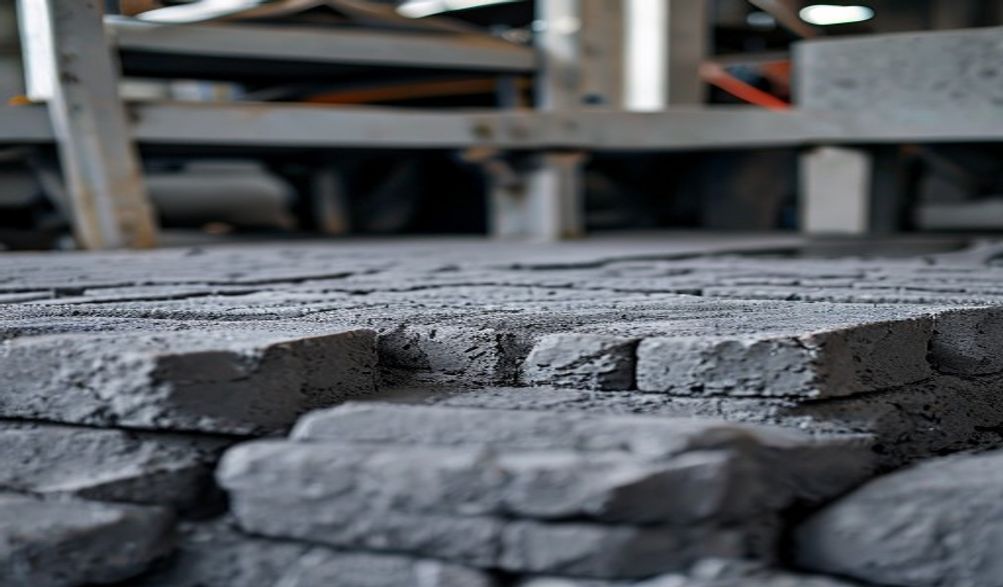
Cara Memilih Mesin Pembuat Bata Fly Ash: Panduan Pembeli Pakar 2024
Pengenalan
Memilih mesin pembuatan bata abu terbang yang tepat bukan sekadar pembelian; ia adalah keputusan perniagaan penting yang akan menentukan kapasiti pengeluaran, kualiti produk, dan keuntungan anda untuk tahun-tahun mendatang. Dengan pengalaman lebih sedekad dalam teknologi pembinaan dan pembuatan mampan, saya telah menyaksikan sendiri bagaimana peralatan yang tepat boleh mendorong usaha ke arah kejayaan, manakala pilihan yang lemah boleh membawa kepada kesesakan yang mengecewakan, bata yang tidak memenuhi piawaian, dan tekanan kewangan yang besar.
Pasaran dipenuhi dengan pelbagai pilihan, daripada mesin tekan manual yang ringkas sehingga ke kilang automatik sepenuhnya yang berskala besar, masing-masing disertai dengan jargon teknikal dan janji-janji yang mengagumkan. Panduan ini direka untuk menembusi hiruk-pikuk tersebut. Kami akan melangkaui hujah-hujah jualan dan memberikan anda rangka kerja langkah demi langkah yang jelas, berakar pada kepakaran praktikal. Di akhir nanti, anda akan memiliki pengetahuan untuk menilai mesin berdasarkan matlamat pengeluaran khusus, bahan mentah, dan bajet anda, mengubah keputusan yang kompleks menjadi pelaburan yakin untuk masa hadapan mampan perniagaan anda.
Mari kita bina asas untuk kejayaan anda.
Memahami Keperluan Projek Anda: Asas Pilihan Anda
Sebelum anda melihat sebarang brosur mesin, anda perlu melihat ke dalam diri. Kesilapan paling lazim dan mahal adalah membeli mesin berdasarkan ciri menarik atau harga yang murah, hanya untuk mendapati ia tidak sesuai dengan operasi sebenar anda. Konteks perniagaan anda adalah cetak biru terpenting.
Menilai Skala Pengeluaran & Matlamat Perniagaan Anda
Sasaran keluaran harian anda adalah pemacu utama pilihan mesin anda. Bersikap realistik tanpa belas kasihan.
- Skala Kecil/Permulaan (Sehingga 1000 batu bata/hari):Anda mungkin sedang menguji pasaran, mempunyai modal yang terhad, atau memenuhi pesanan tempatan yang khusus. Mesin manual atau separa automatik asas adalah titik permulaan anda. Tumpukan pada pelaburan awal yang rendah dan kesederhanaan operasi.
- Sederhana (1000 hingga 10,000 bata/hari):Ini adalah titik optimum bagi kebanyakan PKS yang sedang berkembang dan pengeluar bata khusus. Anda memerlukan kualiti yang konsisten dan output yang boleh dipercayai. Sebuah mesin yang kukuhmesin separa automatik atau automatik sepenuhnyamenjadi penting. Pertimbangkan pengembangan masa depan dalam pelan lantai dan bekalan kuasa anda.
- Berskala Besar/Perindustrian (10,000+ batu bata sehari):Anda membekalkan projek-projek utama atau pengedar. Kecekapan dan campur tangan manusia yang minimum adalah kunci. Hanyatalian pengeluaran sepenuhnya automatik, dikawal oleh PLCdengan sistem pengendalian bahan dan pengawetan bersepadu memberikan justifikasi ekonomi di sini.
Petua Profesional:Sentiasa rancang untuk kapasiti 20-25% lebih daripada sasaran semasa anda. Penampan ini menampung pertumbuhan pasaran dan menghalang mesin anda daripada menjadi halangan dalam tempoh setahun.
Menganalisis Ketersediaan & Kualiti Bahan Mentah
Mesin anda mesti menjadi rakan kepada bahan mentah anda, bukan bekerja menentangnya.
- Konsistensi Abu Terbang:Kualiti abu terbang anda (terutamanyaJenis-Fdari arang batu bitumen atauC-JenisDaripada sub-bituminus/lignit) secara langsung mempengaruhi kekuatan bata dan perkadaran simen yang diperlukan. Sumber tempatan yang konsisten adalah kritikal. Abu yang tidak konsisten akan menghasilkan bata yang tidak konsisten.
- Bahan Lain:Nilaikan kualiti dan granulometri pasir atau debu batu anda. Adakah ia mudah diperoleh dan berpatutan? Apakah kualiti air tempatan? Air keras boleh menjejaskan proses pengawetan.
- Keperluan Pra-pemprosesan:Jika bahan mentah anda (seperti pasir) tidak bersaiz seragam, anda mungkin memerlukan peralatan tambahan sepertipenghancur atau penyaringsebelum dicampur. Kualiti yang tinggipengadun kualiadalah tidak boleh dirunding untuk mencapai campuran homogen, yang merupakan langkah pertama kepada batu bata yang kuat.
Mendefinisikan Spesifikasi Bata Anda & Permintaan Pasaran
Apa yang anda jual, dan kepada siapa anda menjualnya? Produk anda menentukan acuan dan tekanan mesin anda.
- Saiz & Jenis Piawai:Adakah anda membuat blok pejal bersaiz 4 inci, 6 inci, atau 8 inci untuk kerja struktur? Adakahblok berongga(yang menjimatkan bahan dan meningkatkan penebatan) semakin mendapat permintaan tinggi? Mungkin pasaran untuk pembuatan jalanbata saling kunciatau landskappenurapsedang berkembang pesat di kawasan anda.
- Kekuatan Mampatan:Ini adalah raja spesifikasi. Dinding pemikul beban mungkin memerlukan bata dengan kekuatan mampatan 7-10 MPa atau lebih, manakala dinding pemisah boleh menggunakan unit kekuatan lebih rendah. Ketahui kod bangunan tempatan dan keperluan pelanggan anda. Kapasiti tekanan mesin (tonnage) adalah faktor utama yang menentukan kekuatan ini.
Spesifikasi Teknikal Utama Mesin Bata Abu Terbang
Kini, dengan pelan projek anda di tangan, kita boleh mentafsir bahasa teknikal mesin itu. Di sinilah kepakaran membezakan pelaburan yang baik daripada kesilapan yang mahal.
Jenis Mesin Pembuatan Bata Abu Terbang
-
Mesin Manual:Dikendalikan sepenuhnya oleh tuil tangan atau roda gila.
- Kelebihan:Kos permulaan yang sangat rendah, keperluan kuasa yang minimum atau tiada langsung, mudah difahami.
- Keburukan:Pengeluaran yang sangat rendah (200-500 bata/hari), sangat intensif buruh, kualiti produk tidak konsisten, memerlukan tenaga fizikal yang tinggi.
- Terbaik untuk: Ultra-small startups, community projects, or producing samples.
-
Mesin Semi-Automatik: The operator feeds the mix into the machine hopper, but the pressing, ejection, and sometimes feeding are powered (hydraulic or vibratory).
- Kelebihan: Excellent balance of output (1000-5000+ bricks/day), cost, and quality. Good consistency with less labor than manual machines. Often modular, allowing for future upgrades.
- Keburukan: Requires a steady power supply and some skilled labor for operation and maintenance.
- Terbaik untuk: The vast majority of small and medium enterprises (SMEs). This is the most popular and versatile category.
-
Mesin Sepenuhnya Automatik: Computer-controlled (PLC) production lines. They automate material feeding, mixing, pressing, curing stack arrangement, and sometimes pallet return.
- Kelebihan: Very high, consistent output (10,000+ bricks/day) with minimal labor. Exceptional product uniformity and quality control.
- Keburukan: High capital investment, requires significant space and robust three-phase power infrastructure, complex maintenance needing specialized technicians.
- Terbaik untuk: Large-scale industrial plants with high, consistent demand.
Core Mechanism: Hydraulic vs. Vibratory Press
This is a fundamental technical choice impacting brick quality and production style.
-
Mesin Tekan Hidraulik: Uses a hydraulic cylinder to apply immense, controlled static pressure (measured in tons) to the raw mix in a mold.
- How it works: Oil is pumped into a cylinder, forcing a piston to compact the mix under high, sustained pressure.
- Kelebihan: Produces bricks with superior density, strength, and dimensional accuracy. Excellent for high-strength solid blocks and interlocking bricks. The process is generally quieter.
- Pertimbangan: Cycle time can be slightly slower than some vibratory systems, but modern machines are highly efficient.
-
Vibratory Press: Uses a combination of vibration and lower pressure to compact the material. The mix is subjected to high-frequency vibrations that settle the particles densely.
- How it works: An eccentric weight rotates at high speed, creating vibrations transmitted to the mold table.
- Kelebihan: Often has a faster cycle time, making it suitable for high-volume production of certain hollow block designs. Can be more energy-efficient for specific applications.
- Pertimbangan: May not achieve the same ultra-high compressive strengths as a high-tonnage hydraulic press for solid blocks. Can be noisier and cause more wear on molds.
Verdict: For fly ash bricks where high compressive strength is a primary selling pointituhydraulic press is often the recommended and more prevalent choice. However, discuss your specific brick portfolio with suppliers, as some vibratory machines are excellent for certain products.
Critical Machine Specifications to Scrutinize
When comparing models, these are the numbers that matter:
- Kapasiti Tekanan (Tonase): Ranges from 20 tons for small machines to 200+ tons for large ones. Higher tonnage = higher potential brick density and compressive strength. Match this to your strength requirements.
- Cycle Time & Production Output: Cycle time is the seconds/minutes to produce one batch (e.g., 4 bricks). Output is bricks per hour/day. Ensure the claimed output is based on a standard cycle time, not a theoretical maximum. Cross-reference this with your scale assessment.
- Power Requirement (HP/KW): Determines your electricity bill and necessary connection. A 10 HP machine is vastly different from a 50 HP one. Factor this into your operational cost model.
- Tahap Automasi: Does it have an auto-feeder? An automatic pallet return system? A product stacker? Each level of automation reduces labor, increases consistency, and adds to the cost. Choose based on your labor availability and cost.
Beyond the Machine: Essential Auxiliary Equipment
A brick machine alone does not make a brick plant. Ignoring these components is like buying a car without planning for fuel or maintenance.
The Importance of a Quality Pan Mixer
The mixing process is where quality is born. A forced-action pengadun kuali with rotating stars/scrapers is essential. It ensures every particle of fly ash, sand, and cement is uniformly coated, leading to consistent strength and color. Size its batch capacity to match your machine’s cycle to avoid waiting time.
Brick Curing and Drying Systems
Freshly pressed “green” bricks are fragile. Proper curing is what gives them strength.
- Water Curing: The traditional method. Bricks are stacked and kept wet for 14-28 days. It’s low-cost but requires vast space, time, and consistent attention.
- Steam Curing (Autoclaving): Bricks are placed in a chamber and cured with steam under pressure for 8-12 hours. It’s faster, space-efficient, and produces higher early-strength bricks, but requires a significant investment in an autoclave and boiler.
- Pallets & Racks: You’ll need a sufficient number of steel or wooden pallets to hold bricks through the curing cycle and sturdy racks for organized storage.
Material Handling & Logistics
Moving tons of raw material and bricks manually is inefficient and increases breakage.
- Feed Hoppers & Conveyors: Belt conveyors or screw feeders can move raw mix from the mixer to the machine hopper seamlessly.
- Green Brick Handling: Forklifts, trolleys, or simple transfer carts are needed to move fresh bricks to the curing area without damage.
- Penumpukan: For larger operations, mechanical brick stackers can dramatically reduce labor and time post-curing.
The Supplier Evaluation Checklist: Ensuring Trust & Quality
The machine is only as good as the company behind it. This step protects your investment.
Manufacturer Reputation & After-Sales Service
- Research: Look for a history of 10+ years. Search for the company name + “reviews” or “complaints.” Ask for a list of client references and actually call them.
- The Deal-Breaker – After-Sales Support: Does the supplier offer installation supervision, on-site operator training, and a local service network? What is the warranty period (aim for at least 1 year on critical parts)? How quickly can they supply spare parts? A cheap machine with no support is the most expensive machine you can buy.
Requesting a Factory Visit & Machine Trial
If possible, never buy a machine you haven’t seen running.
- Witness Operation: Visit the manufacturer’s facility. See the machine’s build quality, weld points, and electrical panels. Observe it in action—is the operation smooth? Is the noise level acceptable?
- Conduct a Trial: The golden rule. Bring a sample of your own fly ash and raw materials. Have the supplier produce bricks with them. Test these bricks for dimensional accuracy, edge sharpness, and later, for compressive strength in a lab. This proves the machine’s capability with awak inputs.
Cost Analysis: Understanding the Total Investment
Look beyond the sticker price.
- Total Project Cost: Includes:
- Machine Price
- Auxiliary Equipment (Mixer, Conveyor, Pallets)
- Installation & Foundation Civil Work
- Electrical Setup (Transformers, Wiring)
- Transportation and Insurance
- Initial Spare Parts Kit
- Operational Cost per Brick: Calculate the cost of power, labor, maintenance, and raw materials for every 1000 bricks produced. A slightly more expensive but efficient and robust machine will often have a lower operational cost.
- Avoid the Cheap Trap: The lowest bid often cuts corners on steel quality, hydraulic components, and motor brands. This leads to frequent breakdowns, higher maintenance costs, and lost production time. Invest in reliability.
FAQ: Your Fly Ash Brick Machine Questions Answered
Q1: What is the average cost range for a good fly ash brick making machine?
A: Prices vary dramatically. A basic manual machine can start from $1,500 – $3,000. A quality semi-automatic hydraulic machine typically ranges from $15,000 – $50,000+, depending on automation and output. Fully automatic production lines begin around $80,000 and can exceed $250,000. Always get detailed quotes based on your specific output and automation requirements.
Q2: Can I use the same machine to produce different types of bricks (e.g., hollow and solid)?
A: Yes, most machines are designed for this, but with caveats. The machine must have sufficient pressure (tonnage) to produce dense solid blocks. You will need to purchase acuan boleh tukar for each brick type (hollow, solid, paver). Ensure the supplier can provide or source these additional molds and that the machine’s feed system and ejection mechanism are compatible with the different brick heights and designs.
Q3: What is the typical payback period for this investment?
A: With efficient operation and good market demand, a well-planned SME setup can see a payback period of 1.5 to 3 years. For a simplified estimate: (Total Investment Cost) / [(Selling Price per Brick – Cost per Brick) * Monthly Production]. Factors like your local brick price, raw material cost, and sales volume are critical.
Q4: How much skilled labor is required to operate a semi-automatic machine?
A: A standard semi-automatic plant can be effectively run by 2-3 semi-skilled workers. One attends to the mixer and machine feeding, while the others handle the green bricks—transferring them to curing stacks and managing pallets. Comprehensive training from the supplier is essential for safe and efficient operation.
Q5: What are the most common maintenance issues, and how can I prevent them?
A:
* Hydraulic Oil Leaks: Caused by worn seals or loose fittings. Prevention: Regular inspection and using the recommended grade of hydraulic oil.
* Mold Wear & Tear: Leading to rough brick edges or dimensional issues. Prevention: Regular cleaning after each shift and ensuring the raw mix is free of large, hard impurities.
* Electrical Faults: From dust ingress or loose connections. Prevention: Keeping control panels clean and dry, and conducting periodic checks.
* General Wear: On moving parts like bearings and guides. Prevention: Strict adherence to the daily and weekly lubrication schedule outlined in the manual.
Kesimpulan
Choosing the perfect fly ash brick making machine is a systematic journey, not a snap decision. It begins with a clear-eyed assessment of your own production goals, raw materials, and market. This foundation allows you to navigate the technical landscape—understanding the vital difference between hydraulic and vibratory systems, and scrutinizing specifications like tonnage and cycle time. Finally, pairing the right technical specifications with a reputable, service-oriented supplier seals your investment’s success.
Remember, the best machine is not the cheapest or the most feature-laden. It is the one that forms the optimal bridge between your current reality and your growth ambitions, enabling you to produce high-quality, sustainable building materials profitably and reliably. Use this guide as your checklist, ask the hard questions, and invest with confidence.
Call to Action (CTA):
Ready to take the next step? Download our free, detailed Fly Ash Brick Machine Buyer’s Checklist to compare suppliers and specifications systematically. For personalized advice, contact our industry experts with your project details.