
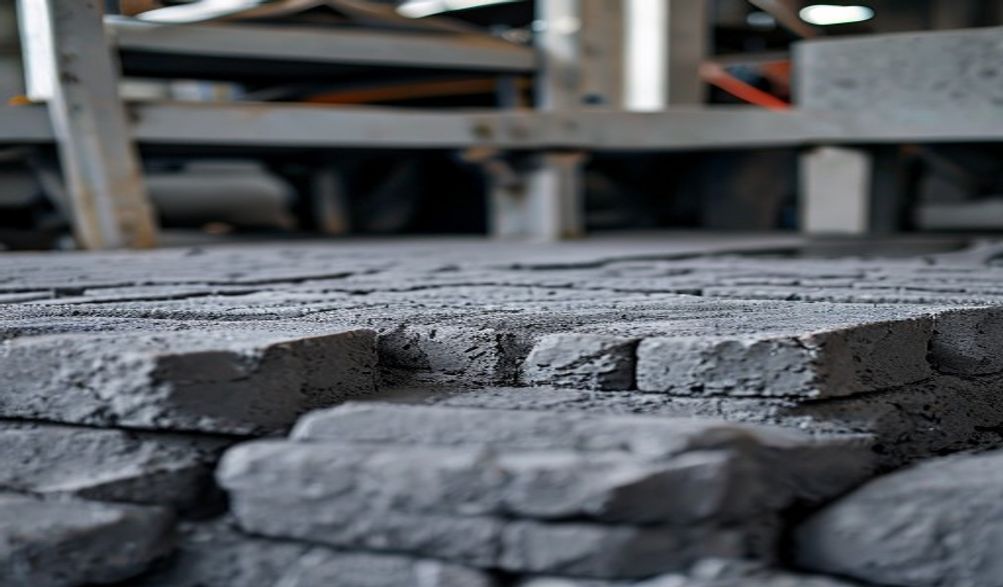
Cách Chọn Máy Sản Xuất Gạch Tro Bay: Hướng Dẫn Mua Hàng Chuyên Gia 2024
Giới thiệu
Việc lựa chọn đúng máy sản xuất gạch tro bay không chỉ là một giao dịch mua hàng; đó là một quyết định kinh doanh then chốt sẽ định hình năng lực sản xuất, chất lượng sản phẩm và lợi nhuận của bạn trong nhiều năm tới. Với hơn một thập kỷ kinh nghiệm trong công nghệ xây dựng và sản xuất bền vững, tôi đã chứng kiến tận mắt cách thiết bị phù hợp có thể đưa một dự án vươn tới thành công, trong khi một lựa chọn sai lầm có thể dẫn đến những điểm tắc nghẽn đáng lo ngại, những viên gạch kém chất lượng và áp lực tài chính đáng kể.
Thị trường tràn ngập các lựa chọn, từ những máy ép thủ công đơn giản đến những nhà máy tự động hoàn toàn quy mô lớn, mỗi loại đều đi kèm với thuật ngữ kỹ thuật và những lời hứa hẹn đầy táo bạo. Hướng dẫn này được thiết kế để xuyên qua sự ồn ào đó. Chúng tôi sẽ vượt ra ngoài những lời quảng cáo bán hàng và cung cấp cho bạn một khuôn khổ rõ ràng, từng bước, bắt nguồn từ chuyên môn thực tiễn. Đến cuối cùng, bạn sẽ có kiến thức để đánh giá máy móc dựa trên mục tiêu sản xuất cụ thể, nguyên liệu thô và ngân sách của mình, biến một quyết định phức tạp thành một khoản đầu tư tự tin vào tương lai bền vững của doanh nghiệp bạn.
Hãy xây dựng nền tảng cho thành công của bạn.
Hiểu Rõ Yêu Cầu Dự Án: Nền Tảng Cho Lựa Chọn Của Bạn
Trước khi xem xét bất kỳ tài liệu quảng cáo máy móc nào, bạn phải nhìn vào nội tại của mình. Sai lầm phổ biến và tốn kém nhất là mua một chiếc máy dựa trên một tính năng hào nhoáng hoặc mức giá hấp dẫn, chỉ để nhận ra nó không phù hợp với hoạt động thực tế của bạn. Bối cảnh kinh doanh của bạn mới là bản thiết kế tối thượng.
Đánh Giá Quy Mô Sản Xuất & Mục Tiêu Kinh Doanh
Mục tiêu sản lượng hàng ngày của bạn là yếu tố chính quyết định việc lựa chọn máy móc. Hãy thực tế một cách tàn nhẫn.
- Quy mô nhỏ/Khởi nghiệp (Lên đến 1000 viên gạch/ngày):Bạn có thể đang thử nghiệm thị trường, có vốn hạn chế hoặc đang đáp ứng các đơn hàng nhỏ lẻ, chuyên biệt tại địa phương. Máy thủ công hoặc máy bán tự động cơ bản là điểm khởi đầu phù hợp. Hãy tập trung vào mức đầu tư ban đầu thấp và tính đơn giản trong vận hành.
- Quy mô trung bình (1.000 đến 10.000 viên gạch/ngày):Đây là điểm lý tưởng cho hầu hết các doanh nghiệp vừa và nhỏ đang phát triển và các nhà sản xuất gạch chuyên dụng. Bạn cần chất lượng ổn định và sản lượng đáng tin cậy. Một hệ thốngmáy bán tự động hoặc máy tự động hoàn toàntrở nên thiết yếu. Hãy cân nhắc đến việc mở rộng trong tương lai trong bản thiết kế mặt bằng và nguồn cung cấp điện của bạn.
- Quy mô lớn/Công nghiệp (10.000+ viên gạch/ngày):Bạn đang cung cấp cho các dự án lớn hoặc nhà phân phối. Hiệu quả và sự can thiệp tối thiểu của con người là yếu tố then chốt.dây chuyền sản xuất tự động hoàn toàn, điều khiển bằng PLCvới các hệ thống xử lý vật liệu và đóng rắn tích hợp mang lại hiệu quả kinh tế tại đây.
Mẹo Chuyên Nghiệp:Luôn lên kế hoạch cho công suất nhiều hơn 20-25% so với mục tiêu hiện tại. Khoản dự phòng này giúp thích ứng với sự tăng trưởng của thị trường và ngăn máy móc của bạn trở thành điểm tắc nghẽn trong vòng một năm.
Phân Tích Tính Sẵn Có và Chất Lượng Nguyên Liệu Thô
Máy móc của bạn phải là đối tác với nguyên liệu thô, không phải là đối thủ chống lại chúng.
- Độ đồng nhất của tro bayChất lượng tro bay của bạn (chủ yếuKiểu Ftừ than đá bitum hoặcC-LoạiTừ than cám/than nâu) ảnh hưởng trực tiếp đến độ bền của gạch và tỷ lệ xi măng cần thiết. Một nguồn cung cấp địa phương ổn định là rất quan trọng. Tro không đồng nhất sẽ dẫn đến gạch không đồng đều.
- Các vật liệu khác:Đánh giá chất lượng và độ hạt của cát hoặc bụi đá. Chúng có sẵn và giá cả phải chăng không? Chất lượng nước địa phương thế nào? Nước cứng có thể ảnh hưởng đến quá trình đông kết.
- Nhu cầu Tiền Xử lý:Nếu nguyên liệu thô (như cát) của bạn không có kích thước đồng đều, bạn có thể cần thiết bị phụ trợ như mộtmáy nghiền hoặc máy sàngtrước khi trộn. Một chất lượng caopan mixer is non-negotiable for achieving a homogeneous mix, which is the first step to a strong brick.
Defining Your Brick Specifications & Market Demand
What are you selling, and who are you selling it to? Your product defines your mold and machine pressure.
- Standard Sizes & Types: Are you making standard 4″, 6″, or 8″ solid blocks for structural work? Are gạch rỗng (which save material and improve insulation) in higher demand? Perhaps the market for paving gạch khóa or landscaping gạch lát nền is booming in your region.
- Cường độ nén: This is the king of specifications. Load-bearing walls may require bricks with a compressive strength of 7-10 MPa or more, while partition walls can use lower-strength units. Know your local building codes and customer requirements. The machine’s pressure capacity (tonnage) is the primary factor determining this strength.
Key Technical Specifications of Fly Ash Brick Machines
Now, with your project blueprint in hand, we can decode the machine’s technical language. This is where expertise separates a good investment from a costly mistake.
Types of Fly Ash Brick Making Machines
-
Máy Móc Thủ Công: Operated entirely by hand levers or flywheels.
- Ưu điểm: Very low initial cost, minimal to no power requirement, simple to understand.
- Nhược điểm: Extremely low output (200-500 bricks/day), highly labor-intensive, inconsistent product quality, physically demanding.
- Tốt nhất cho: Ultra-small startups, community projects, or producing samples.
-
Máy Bán Tự Động: The operator feeds the mix into the machine hopper, but the pressing, ejection, and sometimes feeding are powered (hydraulic or vibratory).
- Ưu điểm: Excellent balance of output (1000-5000+ bricks/day), cost, and quality. Good consistency with less labor than manual machines. Often modular, allowing for future upgrades.
- Nhược điểm: Requires a steady power supply and some skilled labor for operation and maintenance.
- Tốt nhất cho: The vast majority of small and medium enterprises (SMEs). This is the most popular and versatile category.
-
Máy Móc Tự Động Hoàn Toàn: Computer-controlled (PLC) production lines. They automate material feeding, mixing, pressing, curing stack arrangement, and sometimes pallet return.
- Ưu điểm: Very high, consistent output (10,000+ bricks/day) with minimal labor. Exceptional product uniformity and quality control.
- Nhược điểm: High capital investment, requires significant space and robust three-phase power infrastructure, complex maintenance needing specialized technicians.
- Tốt nhất cho: Large-scale industrial plants with high, consistent demand.
Core Mechanism: Hydraulic vs. Vibratory Press
This is a fundamental technical choice impacting brick quality and production style.
-
Máy Ép Thủy Lực: Uses a hydraulic cylinder to apply immense, controlled static pressure (measured in tons) to the raw mix in a mold.
- How it works: Oil is pumped into a cylinder, forcing a piston to compact the mix under high, sustained pressure.
- Ưu điểm: Produces bricks with superior density, strength, and dimensional accuracy. Excellent for high-strength solid blocks and interlocking bricks. The process is generally quieter.
- Các yếu tố cần xem xét: Cycle time can be slightly slower than some vibratory systems, but modern machines are highly efficient.
-
Vibratory Press: Uses a combination of vibration and lower pressure to compact the material. The mix is subjected to high-frequency vibrations that settle the particles densely.
- How it works: An eccentric weight rotates at high speed, creating vibrations transmitted to the mold table.
- Ưu điểm: Often has a faster cycle time, making it suitable for high-volume production of certain hollow block designs. Can be more energy-efficient for specific applications.
- Các yếu tố cần xem xét: May not achieve the same ultra-high compressive strengths as a high-tonnage hydraulic press for solid blocks. Can be noisier and cause more wear on molds.
Verdict: For fly ash bricks where high compressive strength is a primary selling pointcáihydraulic press is often the recommended and more prevalent choice. However, discuss your specific brick portfolio with suppliers, as some vibratory machines are excellent for certain products.
Critical Machine Specifications to Scrutinize
When comparing models, these are the numbers that matter:
- Áp lực ép (Tấn): Ranges from 20 tons for small machines to 200+ tons for large ones. Higher tonnage = higher potential brick density and compressive strength. Match this to your strength requirements.
- Cycle Time & Production Output: Cycle time is the seconds/minutes to produce one batch (e.g., 4 bricks). Output is bricks per hour/day. Ensure the claimed output is based on a standard cycle time, not a theoretical maximum. Cross-reference this with your scale assessment.
- Power Requirement (HP/KW): Determines your electricity bill and necessary connection. A 10 HP machine is vastly different from a 50 HP one. Factor this into your operational cost model.
- Mức độ Tự động hóa: Does it have an auto-feeder? An automatic pallet return system? A product stacker? Each level of automation reduces labor, increases consistency, and adds to the cost. Choose based on your labor availability and cost.
Beyond the Machine: Essential Auxiliary Equipment
A brick machine alone does not make a brick plant. Ignoring these components is like buying a car without planning for fuel or maintenance.
The Importance of a Quality Pan Mixer
The mixing process is where quality is born. A forced-action pan mixer with rotating stars/scrapers is essential. It ensures every particle of fly ash, sand, and cement is uniformly coated, leading to consistent strength and color. Size its batch capacity to match your machine’s cycle to avoid waiting time.
Brick Curing and Drying Systems
Freshly pressed “green” bricks are fragile. Proper curing is what gives them strength.
- Water Curing: The traditional method. Bricks are stacked and kept wet for 14-28 days. It’s low-cost but requires vast space, time, and consistent attention.
- Steam Curing (Autoclaving): Bricks are placed in a chamber and cured with steam under pressure for 8-12 hours. It’s faster, space-efficient, and produces higher early-strength bricks, but requires a significant investment in an autoclave and boiler.
- Pallets & Racks: You’ll need a sufficient number of steel or wooden pallets to hold bricks through the curing cycle and sturdy racks for organized storage.
Material Handling & Logistics
Moving tons of raw material and bricks manually is inefficient and increases breakage.
- Feed Hoppers & Conveyors: Belt conveyors or screw feeders can move raw mix from the mixer to the machine hopper seamlessly.
- Green Brick Handling: Forklifts, trolleys, or simple transfer carts are needed to move fresh bricks to the curing area without damage.
- Xếp chồng: For larger operations, mechanical brick stackers can dramatically reduce labor and time post-curing.
The Supplier Evaluation Checklist: Ensuring Trust & Quality
The machine is only as good as the company behind it. This step protects your investment.
Manufacturer Reputation & After-Sales Service
- Research: Look for a history of 10+ years. Search for the company name + “reviews” or “complaints.” Ask for a list of client references and actually call them.
- The Deal-Breaker – After-Sales Support: Does the supplier offer installation supervision, on-site operator training, and a local service network? What is the warranty period (aim for at least 1 year on critical parts)? How quickly can they supply spare parts? A cheap machine with no support is the most expensive machine you can buy.
Requesting a Factory Visit & Machine Trial
If possible, never buy a machine you haven’t seen running.
- Witness Operation: Visit the manufacturer’s facility. See the machine’s build quality, weld points, and electrical panels. Observe it in action—is the operation smooth? Is the noise level acceptable?
- Conduct a Trial: The golden rule. Bring a sample of your own fly ash and raw materials. Have the supplier produce bricks with them. Test these bricks for dimensional accuracy, edge sharpness, and later, for compressive strength in a lab. This proves the machine’s capability with bạn inputs.
Cost Analysis: Understanding the Total Investment
Look beyond the sticker price.
- Total Project Cost: Includes:
- Giá Máy
- Auxiliary Equipment (Mixer, Conveyor, Pallets)
- Installation & Foundation Civil Work
- Electrical Setup (Transformers, Wiring)
- Transportation and Insurance
- Initial Spare Parts Kit
- Operational Cost per Brick: Calculate the cost of power, labor, maintenance, and raw materials for every 1000 bricks produced. A slightly more expensive but efficient and robust machine will often have a lower operational cost.
- Avoid the Cheap Trap: The lowest bid often cuts corners on steel quality, hydraulic components, and motor brands. This leads to frequent breakdowns, higher maintenance costs, and lost production time. Invest in reliability.
FAQ: Your Fly Ash Brick Machine Questions Answered
Q1: What is the average cost range for a good fly ash brick making machine?
A: Prices vary dramatically. A basic manual machine can start from $1,500 – $3,000. A quality semi-automatic hydraulic machine typically ranges from $15,000 – $50,000+, depending on automation and output. Fully automatic production lines begin around $80,000 and can exceed $250,000. Always get detailed quotes based on your specific output and automation requirements.
Q2: Can I use the same machine to produce different types of bricks (e.g., hollow and solid)?
A: Yes, most machines are designed for this, but with caveats. The machine must have sufficient pressure (tonnage) to produce dense solid blocks. You will need to purchase interchangeable molds for each brick type (hollow, solid, paver). Ensure the supplier can provide or source these additional molds and that the machine’s feed system and ejection mechanism are compatible with the different brick heights and designs.
Q3: What is the typical payback period for this investment?
A: With efficient operation and good market demand, a well-planned SME setup can see a payback period of 1.5 đến 3 năm. For a simplified estimate: (Total Investment Cost) / [(Selling Price per Brick – Cost per Brick) * Monthly Production]. Factors like your local brick price, raw material cost, and sales volume are critical.
Q4: How much skilled labor is required to operate a semi-automatic machine?
A: A standard semi-automatic plant can be effectively run by 2-3 semi-skilled workers. One attends to the mixer and machine feeding, while the others handle the green bricks—transferring them to curing stacks and managing pallets. Comprehensive training from the supplier is essential for safe and efficient operation.
Q5: What are the most common maintenance issues, and how can I prevent them?
A:
* Hydraulic Oil Leaks: Caused by worn seals or loose fittings. Prevention: Regular inspection and using the recommended grade of hydraulic oil.
* Mold Wear & Tear: Leading to rough brick edges or dimensional issues. Prevention: Regular cleaning after each shift and ensuring the raw mix is free of large, hard impurities.
* Electrical Faults: From dust ingress or loose connections. Prevention: Keeping control panels clean and dry, and conducting periodic checks.
* General Wear: On moving parts like bearings and guides. Prevention: Strict adherence to the daily and weekly lubrication schedule outlined in the manual.
Conclusion
Choosing the perfect fly ash brick making machine is a systematic journey, not a snap decision. It begins with a clear-eyed assessment of your own production goals, raw materials, and market. This foundation allows you to navigate the technical landscape—understanding the vital difference between hydraulic and vibratory systems, and scrutinizing specifications like tonnage and cycle time. Finally, pairing the right technical specifications with a reputable, service-oriented supplier seals your investment’s success.
Remember, the best machine is not the cheapest or the most feature-laden. It is the one that forms the optimal bridge between your current reality and your growth ambitions, enabling you to produce high-quality, sustainable building materials profitably and reliably. Use this guide as your checklist, ask the hard questions, and invest with confidence.
Call to Action (CTA):
Ready to take the next step? Download our free, detailed Fly Ash Brick Machine Buyer’s Checklist to compare suppliers and specifications systematically. For personalized advice, contact our industry experts with your project details.