
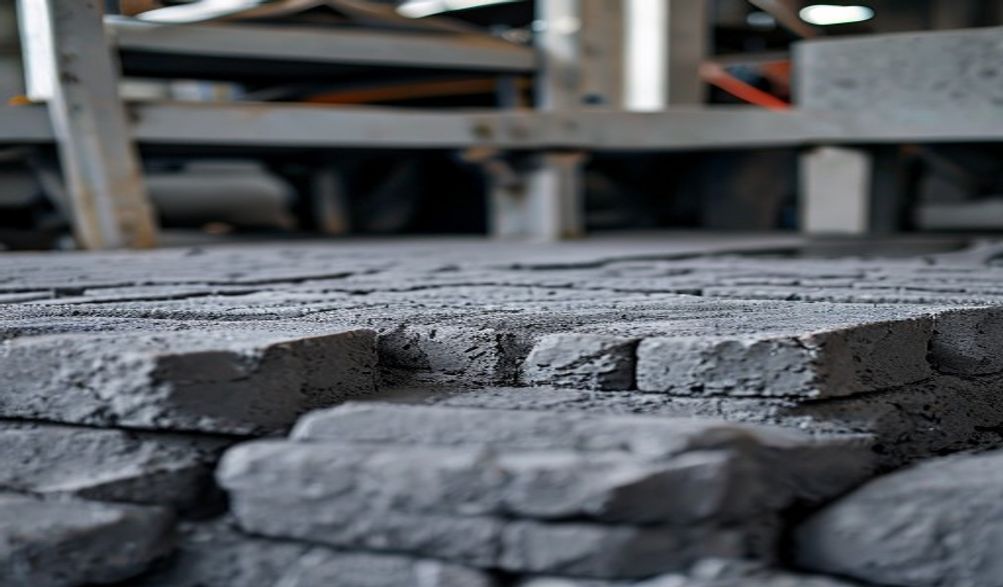
Kouman pou Chwazi yon Machin pou Fè Brik Sann Volkanik: Yon Gid Ekspè pou Achtè 2024
Entwodiksyon
Chwazi bon machin pou fè brik sann dife a se pa sèlman yon acha; se yon desizyon biznis enpòtan ki pral defini kapasite pwodiksyon ou, kalite pwodwi ou, ak pwofi ou pou ane ki ap vini yo. Avèk plis pase yon deseni eksperyans nan teknoloji konstriksyon ak fabrikasyon dirab, mwen te wè de pwòp je kijan bon ekipman an ka pouse yon antrepriz nan siksè, pandan yon move chwa ka mennen nan goulòt ki anbete, brik ki pa bon, ak gwo difikilte finansye.
Mache a plen ak opsyon, soti nan pres senp manuel rive nan plant otomatik ki gen anpil kapasite, chak ak yon pakèt tèm teknik ak pwomès awogan. Gid sa a fèt pou koupe bwi sa a. Nou pral depase diskou pou vann epi ofri ou yon kad klè, etap pa etap, ki baze sou ekspètis pratik. Nan fen an, ou pral gen konesans pou evalye machin dapre objektif pwodiksyon espesifik ou, materyo premye ou, ak bidjè ou, sa ki pral transfòme yon desizyon konplèks an yon envestisman konfyan pou avni dirab biznis ou.
Ann bati fondasyon pou siksè ou.
Konprann Eksijans Pwojè Ou: Fondasyon Chwa Ou
Anvan ou gade yon sèl bwochi machin, ou dwe gade andedan ou. Erè ki pi komen ak ki koute chè se achte yon machin ki baze sou yon karakteristik ki klere oswa yon pri atiran, sèlman pou w jwenn li pa matche ak operasyon reèl ou yo. Kontèks biznis ou a se plan definitif la.
Evalyasyon Echèl Pwodiksyon Ou Ak Objektif Biznis Ou
Objektif pwodiksyon chak jou ou se prensipal faktè ki detèmine chwa machin ou. Fèt pou ou rete reyalis san pitye.
- Ti-echèl/Kòmansman (Jiska 1000 brik pa jou):Ou gen chans ap teste mache a, ou gen kapital limite, oswa w ap satisfè kòmand lokal, espesyalize. Yon machin manyèl oswa yon machin senp semi-otomatik se pwen depa ou. Konsantre sou yon envestisman inisyal ki ba ak senplisite nan operasyon.
- Mwayen (1000 a 10,000 brik/jou):Sa se pwen ki pi bon pou pi fò PME k ap grandi ak manifaktirè brik ki devwe. Ou bezwen kalite ki konstan ak pwodiksyon ki fyab. Yon solidmachin semi-otomatik oswa otomatik nètvin esansyèl. Konsidere ekspansyon nan plan etaj ou ak ekipman pou pouvwa ou.
- Gwo echèl/Endistriyèl (10,000+ brik pa jou):Ou ap apwovizyone gwo pwojè oswa distribitè. Efikasite ak entèvansyon imen minim se kle.liy pwodiksyon otomatik konplè, kontwole pa PLCak sistèm entegre pou manyen materyèl ak sikui fè sans ekonomik isit la.
Konsèy Pwofesyonèl:Toujou planifye pou 20-25% plis kapasite pase sib ou aktyèl la. Sa bay yon rezèv ki pral anplwaye kwasans mache a epi anpeche machin ou a vin tounen yon goulòt detwa nan yon ane.
Analize Disponibilite ak Kalite Matye Premye
Machin ou dwe yon patnè pou materyo premyè ou yo, pa yon lènmi kont yo.
- Konsistans Sann Volan:Kalite sann volan ou yo (sitouF-Tipsoti nan chabon bitimineux oswaC-TipSoti nan sib-bituminèz/lignit) afekte dirèkteman fòs brik la ak pwopòsyon siman ki nesesè. Yon sous lokal ki konsistan enpòtan anpil. Sann ki pa konsistan ap mennen nan brik ki pa konsistan.
- Lòt Materyèl:Evalye kalite ak gwann grenn sab ou oswa pousyè wòch ou. Èske li fasil pou jwenn epi li abòdab? Ki kalite dlo lokal ou genyen? Dlo di ka afekte krizaj la.
- Besoins Pre-traitement:Si materyèl prensipal ou yo (tankou sab) pa gen menm gwosè, ou ka bezwen ekipman oksilyè tankou yonkraze oswa ekrananvan melanje. Yon bon jan kalitepan mixer is non-negotiable for achieving a homogeneous mix, which is the first step to a strong brick.
Defining Your Brick Specifications & Market Demand
What are you selling, and who are you selling it to? Your product defines your mold and machine pressure.
- Standard Sizes & Types: Are you making standard 4″, 6″, or 8″ solid blocks for structural work? Are blòk vid (which save material and improve insulation) in higher demand? Perhaps the market for paving brik antrebloke or landscaping pavè is booming in your region.
- Fòs Konpresif: This is the king of specifications. Load-bearing walls may require bricks with a compressive strength of 7-10 MPa or more, while partition walls can use lower-strength units. Know your local building codes and customer requirements. The machine’s pressure capacity (tonnage) is the primary factor determining this strength.
Key Technical Specifications of Fly Ash Brick Machines
Now, with your project blueprint in hand, we can decode the machine’s technical language. This is where expertise separates a good investment from a costly mistake.
Types of Fly Ash Brick Making Machines
-
Machin Manyèl: Operated entirely by hand levers or flywheels.
- Avantaj: Very low initial cost, minimal to no power requirement, simple to understand.
- Desavantaj: Extremely low output (200-500 bricks/day), highly labor-intensive, inconsistent product quality, physically demanding.
- Pi bon pou: Ultra-small startups, community projects, or producing samples.
-
Machin Semi-Otomatik: The operator feeds the mix into the machine hopper, but the pressing, ejection, and sometimes feeding are powered (hydraulic or vibratory).
- Avantaj: Excellent balance of output (1000-5000+ bricks/day), cost, and quality. Good consistency with less labor than manual machines. Often modular, allowing for future upgrades.
- Desavantaj: Requires a steady power supply and some skilled labor for operation and maintenance.
- Pi bon pou: The vast majority of small and medium enterprises (SMEs). This is the most popular and versatile category.
-
Machin Otomatik Konplè: Computer-controlled (PLC) production lines. They automate material feeding, mixing, pressing, curing stack arrangement, and sometimes pallet return.
- Avantaj: Very high, consistent output (10,000+ bricks/day) with minimal labor. Exceptional product uniformity and quality control.
- Desavantaj: High capital investment, requires significant space and robust three-phase power infrastructure, complex maintenance needing specialized technicians.
- Pi bon pou: Large-scale industrial plants with high, consistent demand.
Core Mechanism: Hydraulic vs. Vibratory Press
This is a fundamental technical choice impacting brick quality and production style.
-
Pwès Idwolik: Uses a hydraulic cylinder to apply immense, controlled static pressure (measured in tons) to the raw mix in a mold.
- How it works: Oil is pumped into a cylinder, forcing a piston to compact the mix under high, sustained pressure.
- Avantaj: Produces bricks with superior density, strength, and dimensional accuracy. Excellent for high-strength solid blocks and interlocking bricks. The process is generally quieter.
- Konsiderasyon: Cycle time can be slightly slower than some vibratory systems, but modern machines are highly efficient.
-
Vibratory Press: Uses a combination of vibration and lower pressure to compact the material. The mix is subjected to high-frequency vibrations that settle the particles densely.
- How it works: An eccentric weight rotates at high speed, creating vibrations transmitted to the mold table.
- Avantaj: Often has a faster cycle time, making it suitable for high-volume production of certain hollow block designs. Can be more energy-efficient for specific applications.
- Konsiderasyon: May not achieve the same ultra-high compressive strengths as a high-tonnage hydraulic press for solid blocks. Can be noisier and cause more wear on molds.
Verdict: For fly ash bricks where high compressive strength is a primary selling pointahydraulic press is often the recommended and more prevalent choice. However, discuss your specific brick portfolio with suppliers, as some vibratory machines are excellent for certain products.
Critical Machine Specifications to Scrutinize
When comparing models, these are the numbers that matter:
- Kapasite Pweson (Tònaj): Ranges from 20 tons for small machines to 200+ tons for large ones. Higher tonnage = higher potential brick density and compressive strength. Match this to your strength requirements.
- Cycle Time & Production Output: Cycle time is the seconds/minutes to produce one batch (e.g., 4 bricks). Output is bricks per hour/day. Ensure the claimed output is based on a standard cycle time, not a theoretical maximum. Cross-reference this with your scale assessment.
- Power Requirement (HP/KW): Determines your electricity bill and necessary connection. A 10 HP machine is vastly different from a 50 HP one. Factor this into your operational cost model.
- Nivo Otomatizasyon: Does it have an auto-feeder? An automatic pallet return system? A product stacker? Each level of automation reduces labor, increases consistency, and adds to the cost. Choose based on your labor availability and cost.
Beyond the Machine: Essential Auxiliary Equipment
A brick machine alone does not make a brick plant. Ignoring these components is like buying a car without planning for fuel or maintenance.
The Importance of a Quality Pan Mixer
The mixing process is where quality is born. A forced-action pan mixer with rotating stars/scrapers is essential. It ensures every particle of fly ash, sand, and cement is uniformly coated, leading to consistent strength and color. Size its batch capacity to match your machine’s cycle to avoid waiting time.
Brick Curing and Drying Systems
Freshly pressed “green” bricks are fragile. Proper curing is what gives them strength.
- Water Curing: The traditional method. Bricks are stacked and kept wet for 14-28 days. It’s low-cost but requires vast space, time, and consistent attention.
- Steam Curing (Autoclaving): Bricks are placed in a chamber and cured with steam under pressure for 8-12 hours. It’s faster, space-efficient, and produces higher early-strength bricks, but requires a significant investment in an autoclave and boiler.
- Pallets & Racks: You’ll need a sufficient number of steel or wooden pallets to hold bricks through the curing cycle and sturdy racks for organized storage.
Material Handling & Logistics
Moving tons of raw material and bricks manually is inefficient and increases breakage.
- Feed Hoppers & Conveyors: Belt conveyors or screw feeders can move raw mix from the mixer to the machine hopper seamlessly.
- Green Brick Handling: Forklifts, trolleys, or simple transfer carts are needed to move fresh bricks to the curing area without damage.
- Pile: For larger operations, mechanical brick stackers can dramatically reduce labor and time post-curing.
The Supplier Evaluation Checklist: Ensuring Trust & Quality
The machine is only as good as the company behind it. This step protects your investment.
Manufacturer Reputation & After-Sales Service
- Research: Look for a history of 10+ years. Search for the company name + “reviews” or “complaints.” Ask for a list of client references and actually call them.
- The Deal-Breaker – After-Sales Support: Does the supplier offer installation supervision, on-site operator training, and a local service network? What is the warranty period (aim for at least 1 year on critical parts)? How quickly can they supply spare parts? A cheap machine with no support is the most expensive machine you can buy.
Requesting a Factory Visit & Machine Trial
If possible, never buy a machine you haven’t seen running.
- Witness Operation: Visit the manufacturer’s facility. See the machine’s build quality, weld points, and electrical panels. Observe it in action—is the operation smooth? Is the noise level acceptable?
- Conduct a Trial: The golden rule. Bring a sample of your own fly ash and raw materials. Have the supplier produce bricks with them. Test these bricks for dimensional accuracy, edge sharpness, and later, for compressive strength in a lab. This proves the machine’s capability with ou inputs.
Cost Analysis: Understanding the Total Investment
Look beyond the sticker price.
- Total Project Cost: Includes:
- Machine Price
- Auxiliary Equipment (Mixer, Conveyor, Pallets)
- Installation & Foundation Civil Work
- Electrical Setup (Transformers, Wiring)
- Transportation and Insurance
- Initial Spare Parts Kit
- Operational Cost per Brick: Calculate the cost of power, labor, maintenance, and raw materials for every 1000 bricks produced. A slightly more expensive but efficient and robust machine will often have a lower operational cost.
- Avoid the Cheap Trap: The lowest bid often cuts corners on steel quality, hydraulic components, and motor brands. This leads to frequent breakdowns, higher maintenance costs, and lost production time. Invest in reliability.
FAQ: Your Fly Ash Brick Machine Questions Answered
Q1: What is the average cost range for a good fly ash brick making machine?
A: Prices vary dramatically. A basic manual machine can start from $1,500 – $3,000. A quality semi-automatic hydraulic machine typically ranges from $15,000 – $50,000+, depending on automation and output. Fully automatic production lines begin around $80,000 and can exceed $250,000. Always get detailed quotes based on your specific output and automation requirements.
Q2: Can I use the same machine to produce different types of bricks (e.g., hollow and solid)?
A: Yes, most machines are designed for this, but with caveats. The machine must have sufficient pressure (tonnage) to produce dense solid blocks. You will need to purchase interchangeable molds for each brick type (hollow, solid, paver). Ensure the supplier can provide or source these additional molds and that the machine’s feed system and ejection mechanism are compatible with the different brick heights and designs.
Q3: What is the typical payback period for this investment?
A: With efficient operation and good market demand, a well-planned SME setup can see a payback period of 1.5 to 3 years. For a simplified estimate: (Total Investment Cost) / [(Selling Price per Brick – Cost per Brick) * Monthly Production]. Factors like your local brick price, raw material cost, and sales volume are critical.
Q4: How much skilled labor is required to operate a semi-automatic machine?
A: A standard semi-automatic plant can be effectively run by 2-3 semi-skilled workers. One attends to the mixer and machine feeding, while the others handle the green bricks—transferring them to curing stacks and managing pallets. Comprehensive training from the supplier is essential for safe and efficient operation.
Q5: What are the most common maintenance issues, and how can I prevent them?
A:
* Hydraulic Oil Leaks: Caused by worn seals or loose fittings. Prevention: Regular inspection and using the recommended grade of hydraulic oil.
* Mold Wear & Tear: Leading to rough brick edges or dimensional issues. Prevention: Regular cleaning after each shift and ensuring the raw mix is free of large, hard impurities.
* Electrical Faults: From dust ingress or loose connections. Prevention: Keeping control panels clean and dry, and conducting periodic checks.
* General Wear: On moving parts like bearings and guides. Prevention: Strict adherence to the daily and weekly lubrication schedule outlined in the manual.
Konklizyon
Choosing the perfect fly ash brick making machine is a systematic journey, not a snap decision. It begins with a clear-eyed assessment of your own production goals, raw materials, and market. This foundation allows you to navigate the technical landscape—understanding the vital difference between hydraulic and vibratory systems, and scrutinizing specifications like tonnage and cycle time. Finally, pairing the right technical specifications with a reputable, service-oriented supplier seals your investment’s success.
Remember, the best machine is not the cheapest or the most feature-laden. It is the one that forms the optimal bridge between your current reality and your growth ambitions, enabling you to produce high-quality, sustainable building materials profitably and reliably. Use this guide as your checklist, ask the hard questions, and invest with confidence.
Call to Action (CTA):
Ready to take the next step? Download our free, detailed Fly Ash Brick Machine Buyer’s Checklist to compare suppliers and specifications systematically. For personalized advice, contact our industry experts with your project details.