
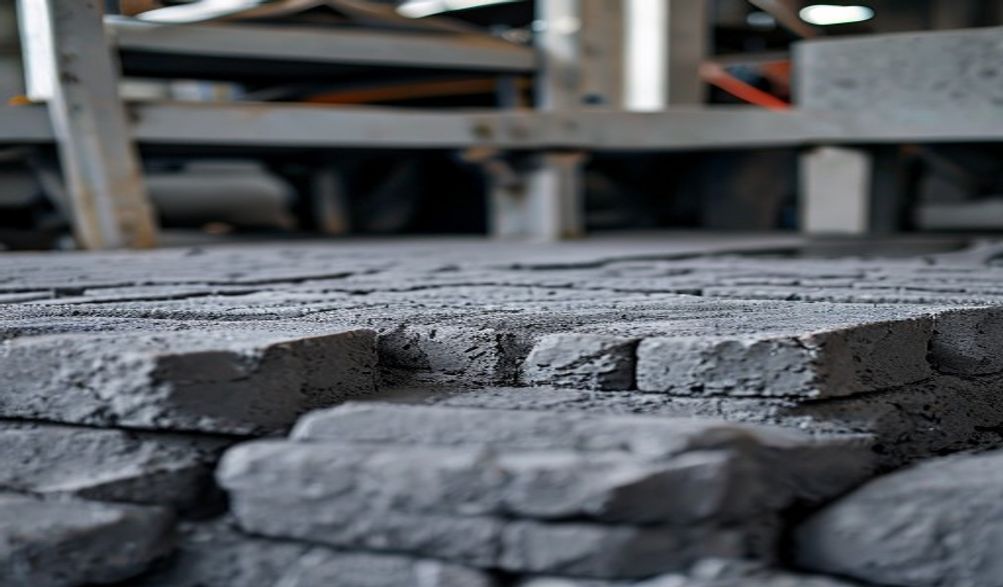
플라이 애시 벽돌 제조기 선택 방법: 2024년 전문가 구매 가이드
소개
적절한 플라이 애시 벽돌 제조 장비를 선택하는 것은 단순한 구매가 아닙니다. 이는 향후 수년간 생산 능력, 제품 품질 및 수익성을 결정짓는 중대한 사업 결정입니다. 건설 기술과 지속 가능한 제조 분야에서 10년 이상의 경험을 쌓아온 저는 올바른 장비가 사업을 성공으로 이끌 수 있는 반면, 잘못된 선택은 답답한 병목 현상, 부적합한 벽돌 및 상당한 재정적 부담으로 이어질 수 있음을 직접 목격해왔습니다.
시장은 단순한 수동 프레스에서 대규모 완전 자동화 설비에 이르기까지 다양한 옵션으로 넘쳐나며, 각각 기술적 전문 용어와 대담한 약속을 동반합니다. 이 가이드는 그런 혼란을 뚫고 나가도록 설계되었습니다. 우리는 판매용 멘트를 넘어 실무 전문성에 기반한 명확하고 단계별 프레임워크를 제공할 것입니다. 이를 통해 여러분은 특정 생산 목표, 원자재, 예산에 따라 기계를 평가할 수 있는 지식을 갖추게 되어 복잡한 결정을 비즈니스의 지속 가능한 미래에 대한 확신 있는 투자로 전환할 수 있을 것입니다.
당신의 성공을 위한 기반을 마련해 드리겠습니다.
프로젝트 요구사항 이해하기: 선택의 기초
단 하나의 기계 브로셔를 살펴보기 전에, 먼저 내부를 들여다봐야 합니다. 가장 흔하고 비용이 많이 드는 실수는 화려한 기능이나 매력적인 가격표에 끌려 기계를 구매했다가 실제 운영에는 맞지 않는다는 것을 깨닫는 것입니다. 당신의 비즈니스 상황이 궁극적인 청사진입니다.
생산 규모와 비즈니스 목표 평가하기
당신의 일일 생산 목표는 기계 선택의 주된 결정 요인입니다. 현실을 냉정하게 직시하세요.
- 소규모/신생 기업 (하루 최대 1,000개 벽돌 생산)당신은 아마 시장을 테스트 중이거나, 자본이 제한적이거나, 지역적이고 틈새 주문을 처리하고 있을 것입니다. 수동 또는 기본적인 반자동 기계가 당신의 시작점이 될 것입니다. 낮은 초기 투자와 운영의 단순성에 집중하세요.
- 중간 규모(하루 1,000~10,000 벽돌 생산)대부분의 성장 중인 중소기업과 전담 벽돌 제조업체에게 이는 이상적인 조건입니다. 일관된 품질과 안정적인 생산량이 필요합니다.반자동 또는 완전 자동 기계미래 확장을 고려한 평면도와 전력 공급 계획이 필수적입니다.
- 대규모/산업용 (하루 10,000개 이상의 벽돌 생산)주요 프로젝트나 유통업체에 공급하고 계시다면, 효율성과 최소한의 인적 개입이 핵심입니다.완전 자동화된 PLC 제어 생산 라인통합된 자재 처리 및 경화 시스템이 여기서는 경제적 타당성이 있습니다.
전문가 팁:항상 현재 목표보다 20-25% 더 많은 용량을 계획하세요. 이 여유분은 시장 성장을 수용하고, 당신의 기계가 1년 안에 병목 현상이 되는 것을 방지합니다.
원자재 가용성 및 품질 분석
당신의 기계는 원자재에 맞서는 것이 아니라, 원자재와 협력하는 파트너가 되어야 합니다.
- 플라이 애시 일관성당신의 플라이 애시 품질(주로)에프 타입역청탄 또는C-타입아역탄/갈탄에서 나오는 비산재는 벽돌의 강도와 필요한 시멘트 비율에 직접적인 영향을 미칩니다. 일관된 지역 공급원이 매우 중요합니다. 일관성 없는 비산재는 일관성 없는 벽돌을 초래할 것입니다.
- 기타 재료:모래 또는 석분의 품질과 입도 분포를 평가하세요. 구하기 쉽고 가격이 합리적인가요? 지역의 수질은 어떠한가요? 경수는 경화 과정에 영향을 미칠 수 있습니다.
- 전처리 필요 사항:원자재(예: 모래)의 입도가 균일하지 않다면, 체질기나 분쇄기 같은 보조 장비가 필요할 수 있습니다.크러셔 또는 스크리너혼합하기 전에. 고품질의팬 믹서균질한 혼합물을 얻기 위해 필수 불가결한 요소이며, 이는 강한 벽돌을 만들기 위한 첫 단계입니다.
벽돌 사양 정의 및 시장 수요
당신은 무엇을 판매하고 있으며, 누구에게 판매하고 있습니까? 당신의 제품이 금형과 기계 압력을 결정합니다.
- 표준 사이즈 및 종류:구조용으로 표준 4인치, 6인치, 8인치 단단한 블록을 제작하시나요?홀로우 블록(재료를 절약하고 단열을 개선하는) 수요가 더 높은가? 아마도 포장 시장은인터록킹 브릭또는 조경포장재 is booming in your region.
- 압축 강도 This is the king of specifications. Load-bearing walls may require bricks with a compressive strength of 7-10 MPa or more, while partition walls can use lower-strength units. Know your local building codes and customer requirements. The machine’s pressure capacity (tonnage) is the primary factor determining this strength.
Key Technical Specifications of Fly Ash Brick Machines
Now, with your project blueprint in hand, we can decode the machine’s technical language. This is where expertise separates a good investment from a costly mistake.
Types of Fly Ash Brick Making Machines
-
수동 기계: Operated entirely by hand levers or flywheels.
- 장점: Very low initial cost, minimal to no power requirement, simple to understand.
- 단점: Extremely low output (200-500 bricks/day), highly labor-intensive, inconsistent product quality, physically demanding.
- 최적 대상: Ultra-small startups, community projects, or producing samples.
-
반자동 기계: The operator feeds the mix into the machine hopper, but the pressing, ejection, and sometimes feeding are powered (hydraulic or vibratory).
- 장점: Excellent balance of output (1000-5000+ bricks/day), cost, and quality. Good consistency with less labor than manual machines. Often modular, allowing for future upgrades.
- 단점: Requires a steady power supply and some skilled labor for operation and maintenance.
- 최적 대상: The vast majority of small and medium enterprises (SMEs). This is the most popular and versatile category.
-
완전 자동 기계: Computer-controlled (PLC) production lines. They automate material feeding, mixing, pressing, curing stack arrangement, and sometimes pallet return.
- 장점: Very high, consistent output (10,000+ bricks/day) with minimal labor. Exceptional product uniformity and quality control.
- 단점: High capital investment, requires significant space and robust three-phase power infrastructure, complex maintenance needing specialized technicians.
- 최적 대상: Large-scale industrial plants with high, consistent demand.
Core Mechanism: Hydraulic vs. Vibratory Press
This is a fundamental technical choice impacting brick quality and production style.
-
유압 프레스: Uses a hydraulic cylinder to apply immense, controlled static pressure (measured in tons) to the raw mix in a mold.
- How it works: Oil is pumped into a cylinder, forcing a piston to compact the mix under high, sustained pressure.
- 장점: Produces bricks with superior density, strength, and dimensional accuracy. Excellent for high-strength solid blocks and interlocking bricks. The process is generally quieter.
- 고려 사항: Cycle time can be slightly slower than some vibratory systems, but modern machines are highly efficient.
-
Vibratory Press: Uses a combination of vibration and lower pressure to compact the material. The mix is subjected to high-frequency vibrations that settle the particles densely.
- How it works: An eccentric weight rotates at high speed, creating vibrations transmitted to the mold table.
- 장점: Often has a faster cycle time, making it suitable for high-volume production of certain hollow block designs. Can be more energy-efficient for specific applications.
- 고려 사항: May not achieve the same ultra-high compressive strengths as a high-tonnage hydraulic press for solid blocks. Can be noisier and cause more wear on molds.
판결: For fly ash bricks where high compressive strength is a primary selling point더hydraulic press is often the recommended and more prevalent choice. However, discuss your specific brick portfolio with suppliers, as some vibratory machines are excellent for certain products.
Critical Machine Specifications to Scrutinize
When comparing models, these are the numbers that matter:
- 압력 용량 (톤수): Ranges from 20 tons for small machines to 200+ tons for large ones. Higher tonnage = higher potential brick density and compressive strength. Match this to your strength requirements.
- Cycle Time & Production Output: Cycle time is the seconds/minutes to produce one batch (e.g., 4 bricks). Output is bricks per hour/day. Ensure the claimed output is based on a standard cycle time, not a theoretical maximum. Cross-reference this with your scale assessment.
- Power Requirement (HP/KW): Determines your electricity bill and necessary connection. A 10 HP machine is vastly different from a 50 HP one. Factor this into your operational cost model.
- 자동화 수준: Does it have an auto-feeder? An automatic pallet return system? A product stacker? Each level of automation reduces labor, increases consistency, and adds to the cost. Choose based on your labor availability and cost.
Beyond the Machine: Essential Auxiliary Equipment
A brick machine alone does not make a brick plant. Ignoring these components is like buying a car without planning for fuel or maintenance.
The Importance of a Quality Pan Mixer
The mixing process is where quality is born. A forced-action 팬 믹서 with rotating stars/scrapers is essential. It ensures every particle of fly ash, sand, and cement is uniformly coated, leading to consistent strength and color. Size its batch capacity to match your machine’s cycle to avoid waiting time.
Brick Curing and Drying Systems
Freshly pressed “green” bricks are fragile. Proper curing is what gives them strength.
- Water Curing: The traditional method. Bricks are stacked and kept wet for 14-28 days. It’s low-cost but requires vast space, time, and consistent attention.
- Steam Curing (Autoclaving): Bricks are placed in a chamber and cured with steam under pressure for 8-12 hours. It’s faster, space-efficient, and produces higher early-strength bricks, but requires a significant investment in an autoclave and boiler.
- Pallets & Racks: You’ll need a sufficient number of steel or wooden pallets to hold bricks through the curing cycle and sturdy racks for organized storage.
Material Handling & Logistics
Moving tons of raw material and bricks manually is inefficient and increases breakage.
- Feed Hoppers & Conveyors: Belt conveyors or screw feeders can move raw mix from the mixer to the machine hopper seamlessly.
- Green Brick Handling: Forklifts, trolleys, or simple transfer carts are needed to move fresh bricks to the curing area without damage.
- 스태킹: For larger operations, mechanical brick stackers can dramatically reduce labor and time post-curing.
The Supplier Evaluation Checklist: Ensuring Trust & Quality
The machine is only as good as the company behind it. This step protects your investment.
Manufacturer Reputation & After-Sales Service
- Research: Look for a history of 10+ years. Search for the company name + “reviews” or “complaints.” Ask for a list of client references and actually call them.
- The Deal-Breaker – After-Sales Support: Does the supplier offer installation supervision, on-site operator training, and a local service network? What is the warranty period (aim for at least 1 year on critical parts)? How quickly can they supply spare parts? A cheap machine with no support is the most expensive machine you can buy.
Requesting a Factory Visit & Machine Trial
If possible, never buy a machine you haven’t seen running.
- Witness Operation: Visit the manufacturer’s facility. See the machine’s build quality, weld points, and electrical panels. Observe it in action—is the operation smooth? Is the noise level acceptable?
- Conduct a Trial: The golden rule. Bring a sample of your own fly ash and raw materials. Have the supplier produce bricks with them. Test these bricks for dimensional accuracy, edge sharpness, and later, for compressive strength in a lab. This proves the machine’s capability with 당신 inputs.
Cost Analysis: Understanding the Total Investment
Look beyond the sticker price.
- Total Project Cost: Includes:
- Machine Price
- Auxiliary Equipment (Mixer, Conveyor, Pallets)
- Installation & Foundation Civil Work
- Electrical Setup (Transformers, Wiring)
- Transportation and Insurance
- Initial Spare Parts Kit
- Operational Cost per Brick: Calculate the cost of power, labor, maintenance, and raw materials for every 1000 bricks produced. A slightly more expensive but efficient and robust machine will often have a lower operational cost.
- Avoid the Cheap Trap: The lowest bid often cuts corners on steel quality, hydraulic components, and motor brands. This leads to frequent breakdowns, higher maintenance costs, and lost production time. Invest in reliability.
FAQ: Your Fly Ash Brick Machine Questions Answered
Q1: What is the average cost range for a good fly ash brick making machine?
A: Prices vary dramatically. A basic manual machine can start from $1,500 – $3,000. A quality semi-automatic hydraulic machine typically ranges from $15,000 – $50,000+, depending on automation and output. Fully automatic production lines begin around $80,000 and can exceed $250,000. Always get detailed quotes based on your specific output and automation requirements.
Q2: Can I use the same machine to produce different types of bricks (e.g., hollow and solid)?
A: Yes, most machines are designed for this, but with caveats. The machine must have sufficient pressure (tonnage) to produce dense solid blocks. You will need to purchase 교환 가능한 몰드 for each brick type (hollow, solid, paver). Ensure the supplier can provide or source these additional molds and that the machine’s feed system and ejection mechanism are compatible with the different brick heights and designs.
Q3: What is the typical payback period for this investment?
A: With efficient operation and good market demand, a well-planned SME setup can see a payback period of 1.5 to 3 years. For a simplified estimate: (Total Investment Cost) / [(Selling Price per Brick – Cost per Brick) * Monthly Production]. Factors like your local brick price, raw material cost, and sales volume are critical.
Q4: How much skilled labor is required to operate a semi-automatic machine?
A: A standard semi-automatic plant can be effectively run by 2-3 semi-skilled workers. One attends to the mixer and machine feeding, while the others handle the green bricks—transferring them to curing stacks and managing pallets. Comprehensive training from the supplier is essential for safe and efficient operation.
Q5: What are the most common maintenance issues, and how can I prevent them?
A:
* Hydraulic Oil Leaks: Caused by worn seals or loose fittings. Prevention: Regular inspection and using the recommended grade of hydraulic oil.
* Mold Wear & Tear: Leading to rough brick edges or dimensional issues. Prevention: Regular cleaning after each shift and ensuring the raw mix is free of large, hard impurities.
* Electrical Faults: From dust ingress or loose connections. Prevention: Keeping control panels clean and dry, and conducting periodic checks.
* General Wear: On moving parts like bearings and guides. Prevention: Strict adherence to the daily and weekly lubrication schedule outlined in the manual.
결론
Choosing the perfect fly ash brick making machine is a systematic journey, not a snap decision. It begins with a clear-eyed assessment of your own production goals, raw materials, and market. This foundation allows you to navigate the technical landscape—understanding the vital difference between hydraulic and vibratory systems, and scrutinizing specifications like tonnage and cycle time. Finally, pairing the right technical specifications with a reputable, service-oriented supplier seals your investment’s success.
Remember, the best machine is not the cheapest or the most feature-laden. It is the one that forms the optimal bridge between your current reality and your growth ambitions, enabling you to produce high-quality, sustainable building materials profitably and reliably. Use this guide as your checklist, ask the hard questions, and invest with confidence.
Call to Action (CTA):
Ready to take the next step? Download our free, detailed Fly Ash Brick Machine Buyer’s Checklist to compare suppliers and specifications systematically. For personalized advice, contact our industry experts with your project details.