
Jagorar Cikakke na Injin Block na Ƙasa: Gina Makomar Ci Gaba mai Dorewa
A zamanin da ke da matukar bukatar yin maganin sauyin yanayi da kuma matsalar gidaje a duniya, masana'antar gini tana fuskantar babbar kalubale: yadda za a gina gidaje masu tsayin daka da araha ba tare da kara lalata duniyarmu ba. Amsar, kamar yadda aka gano, na iya kasancewa a ƙarƙashin ƙafafunmu. Wata tsohuwar dabarar gini tana sake haifuwa, tana samun ƙarfi daga sabbin ƙirƙira, tana ba da hanyar zuwa ga yanayin gini mai dorewa. Wannan farfaɗowar yana samun ƙarfafawa ne ta hanyar wani muhimmin fasaha:mashin na tubalin ƙasa.
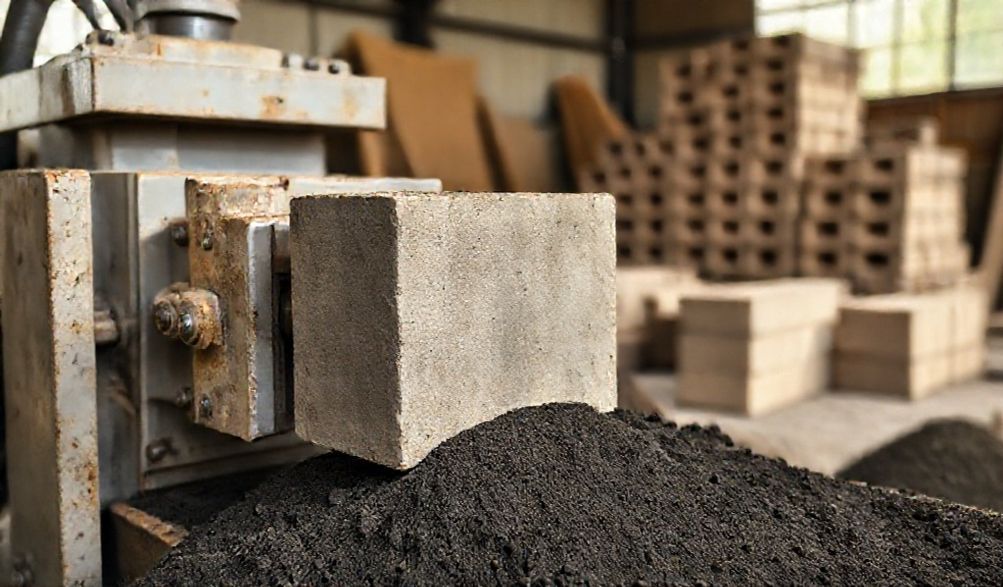
Wanda kuma ake kira da injin matse tubalin ƙasa (CEB) ko injin tubalin haɗin kai, wannan na'urar tana da sauƙi a cikin manufarta. Tana canza ƙasar da aka samo a gida, ƙasa maras tsari—sau da yawa ƙasa daga wurin da ake gini a kai—zuwa gaɓoɓi masu ƙarfi, iri ɗaya, da ƙarfi mai ban mamaki. Wannan tsari yana haɗa hikimar kayan zamani da daidaiton injiniyanci na zamani.
Wannan jagora an tsara ta ne don ta zama cikakkiyar albarkatun ku. Ko kai mai gini ne da ke neman kayan da suka dace, masanin gine-gine da ke ayyana ayyukan da suka dace da muhalli, mai sha'awar yin kansa da ke mafarkin gida mai aiki, ko kuma ɗan kasuwa da ke kallon tattalin arzikin kore, za mu ba ku ƙwararrun ilimin da kuke buƙata. Za mu zurfafa cikin manyan fa'idodin ginin ƙasa, mu bayyana fasahar da ke bayan injinan, mu ba da tsari mai amfani don zaɓar kayan aikin da suka dace, har ma mu binciki yanayin kasuwancin da ya dace don samarwa. Manufarmu ita ce mu sanye ku da ilimi mai amfani, wanda ya dogara ne da mafi kyawun ayyukan masana'antu da aikace-aikacen gaske, don mayar da yuwuwar ƙasa ta zama gaskiya.
Me Ya Zabi Gina Gida Da Tubalin Kasa? Fa'idodi Masu Girma
Bayan ka'idoji, bari mu bincika aiki (ko maimakon haka,dayaamfanai) masu ma'ana waɗanda ke sa ginin tubalin ƙasa ya zama zaɓi mafi kyau a zamaninmu.
Rashin Kama da Dorewa da Kiyayewa
A cikin duniyar kasafin kuɗin carbon da tattalin arzikin dawowa, tubalan ƙasa sun fito a matsayin misali na ginin ƙarancin tasiri.
- Ƙarancin Makamashi Mai Ƙarfafawa:Sabanin bulo da aka gasa ko simintin Portland, waɗanda ke buƙatar zafi mai tsanani (sau da yawa daga mai), ana yin tubalan ƙasa da aka matsa ta hanyar matsi na inji a yanayin zafi na yau da kullun. Ana samun kayan farko a kan wurin ko kusa da wurin, wanda ke rage farashin makamashi na sufuri.
- Rage Ƙarancin Ƙarancin Carbon Footprint:Tsarin samarwa yana fitar da ƙarancin CO2. Lokacin da aka daidaita shi da lemun tsami (wanda ke sake ɗaukar CO2 yayin da yake warkewa) maimakon siminti, tubalan na iya kusanci da rashin carbon.
- Ba Mai Guba Kuma Ana Iya Sake Amfani Da Shi Gaba Daya:Tubalin ƙasa kawai ƙasa ce. Ba su ƙunshe da sinadarai masu gurɓatawar iska (VOCs), suna haɓaka ingantacciyar ingancin iska a cikin gida. A ƙarshen dogon rayuwar ginin, ana iya mayar da tubalin zuwa ƙasa ko niƙa su kuma a sake amfani da su, suna haifar da cikakken zagayowar kayan aiki.
Tsayayyen Ƙarfi da Aiki Mai Girma
Kada sunan "ƙasa" ya yaudare ku. Ingantattun tubalan ƙasa da aka matsa suna da ƙarfi sosai a cikin gine-gine, waɗanda ke da halaye masu kyau waɗanda suka yi kama da, a wasu lokuta kuma suka fi na al'ada.
- Ƙarfin Matsi Mai Girma:Na'urorin matsi na ruwa na zamani na iya samar da tubalan da ke da ƙarfin matsin lamba sama da 10 MPa (fiye da 1,450 psi), wanda ya sa su dace da bangon ɗaukar nauyi a cikin gine-gine masu hawa da yawa.
- Mafi Girman Girman Zafi:Duniya tana da babban ƙarfin ɗaukar, adanawa, da sakin zafi a hankali. Wannan tasirin "baturin zafi" yana daidaita yanayin cikin gida ta halitta, yana rage sauye-sauyen yanayin yini kuma yana rage ƙarfin da ake buƙata don dumama da sanyaya sosai.
- Jure na Kariya daga Wuta da Rufe Sauti:A matsayin abu mai tushe na ma'adinai, ƙasa ba ta ƙone. Hakanan tana ba da ingantacciyar ƙarar sauti, tare da toshe watsa sauti don ƙarin kwanciyar hankali da kwanciyar hankali a cikin gida.
Mahimman Tasiri Mai Tsada
Hujjar tattalin arziƙi don tubalan ƙasa tana da ƙarfi, tana tasiri kan kasafin aikin da farashin mallakar dogon lokaci.
- Ragewar Farashin Kayan Aiki Mai Tsanani:Abu mafi muhimmanci – ƙasa – yakan kasance kyauta ko kuma mai tsada sosai. Wannan yana kawar da ɗaya daga cikin manyan abubuwan da ake cikin ginin na al'ada.
- Ƙanan Farashin Sufuri:Samo kayan gida yana rage kashe kuɗin man fetur da na jigilar kaya.
- Yuwuwar Mai Gina Gida: The simplicity of the system empowers individuals and communities to become their own builders, dramatically reducing labor costs and increasing equity.
Understanding Earth Block Machine Technology
To harness these advantages, you need the right tool. Understanding the mechanics and varieties of earth block machines is the first step to successful production.
Core Mechanics: How Does an Earth Block Machine Work?
The principle is straightforward but requires precision. The machine compresses a measured amount of prepared soil mix into a mold under extreme pressure. The process has three key phases:
- Shirye-shirye: Soil is screened to remove large debris and homogenized with the correct amount of moisture and any stabilizer (like cement or lime).
- Matsawa. The damp mix is fed into a chamber. A ram, powered manually, mechanically, or hydraulically, applies intense, sustained pressure—often measured in tons—to densify the soil particles.
- Fitarwa: The newly formed block is ejected from the mold, stable enough to be handled immediately and stacked for curing.
The critical variable is the soil itself. An optimal mix typically contains 15-30% clay (for cohesion), with the balance being sand and silt (for structural skeleton and reduction of shrinkage). Moisture content is also crucial; too little and the block won’t bind, too much and it will deform.
Types of Earth Block Machines: From Manual to Fully Automated
Machines are categorized by their power source and production capacity, allowing you to match the tool to your project’s scale.
- Manual Presses (e.g., Cinva Ram style): These lever-operated machines are perfect for small-scale, DIY, community, or educational projects. They require significant human effort, with an output of 40-80 blocks per person per hour. They are low-cost and highly portable.
- Mechanical/Lever-Operated Presses: These use compound levers or flywheels to generate higher pressure with less operator effort than a basic manual press. They are a solid middle-ground for small business startups or larger owner-builder projects.
- Hydraulic Presses (Mobile and Stationary): This is the industry standard for commercial production. Powered by electric motors, diesel engines, or a tractor’s Power Take-Off (PTO), they deliver high, consistent pressure for maximum block strength and uniformity. Output can range from 300 to over 1,000 blocks per hour. Mobile units can be towed directly to a construction site.
- Injinoni na Tubalin Masu Haɗa Kai: A revolutionary subset, these machines produce blocks with designed top and bottom profiles that key together like Lego® bricks. This interlocking system eliminates the need for wet mortar between courses, speeding up construction, reducing skill requirements, and creating a mechanically bonded wall.
How to Select the Right Earth Block Machine for Your Project
Choosing a machine is a significant investment. A systematic assessment will ensure you get the right tool for your goals.
Assessing Your Project Scale and Requirements
Start by asking these foundational questions:
- What is the scope? A single home, a housing development, a school, or a commercial building?
- What daily output is needed? Calculate your block requirements and build timeline.
- What is the available budget? Include not just the machine, but also soil testing, site prep, and power infrastructure.
- Who will operate it? What is the skill level of the workforce?
Key Machine Specifications and Features to Compare
When evaluating models, scrutinize these specifications:
- Ƙarfin Samarwa: Look at sustained blocks per hour/day, not peak theoretical output.
- Block Size and Shape: Does it produce the block dimensions you need? Are interlocking or special shapes available?
- Tushen Wutar Lantarki: Electric is clean and quiet but requires a reliable grid. Diesel offers site independence. PTO is ideal for rural/farm use.
- Build Quality & Support: Is it built from heavy-duty steel? Are replacement parts like molds and rams readily available from the manufacturer?
- Ease of Use & Maintenance: How quickly can operators be trained? What does routine maintenance entail?
Sourcing Soil: Testing and Preparation Essentials
This is the most critical step, and where professional expertise is non-negotiable. The machine is just a tool; the quality of the block is determined by the soil.
- Field Tests: Start with simple sediment jar tests and ribbon tests to get a rough idea of clay content and plasticity.
- Laboratory Analysis: For any structural project, send soil samples to a geotechnical lab. A sieve analysis and Atterberg limits test will give you the exact clay/silt/sand ratios and inform stabilization needs.
- Daidaitawa: For increased strength and water resistance, 3-10% cement or 5-15% lime is often added. The correct stabilizer and percentage depend entirely on your soil chemistry and climate.
The Business Case: Starting an Earth Block Production Enterprise
For the entrepreneur, a Na'urar CEB is not just a construction tool—it’s the heart of a viable green business.
Market Analysis and Opportunity
Demand for sustainable, locally sourced, and healthy building materials is growing exponentially. Your blocks can supply:
* Affordable housing projects and private homes.
* Landscape features: retaining walls, garden beds, outdoor kitchens.
* Commercial buildings seeking green certifications (LEED, Living Building Challenge).
* Disaster-resistant and humanitarian construction.
Financial Planning: Costs, Pricing, and ROI
A clear financial model is key.
- Startup Costs: Machine purchase, land lease/purchase, soil testing lab fees, site preparation (level pad, shelter), and initial raw materials (stabilizer).
- Kudin Aiki: Labor, stabilizer, maintenance, utilities/fuel, and marketing.
- Pricing & ROI: Price your blocks competitively against concrete blocks and fired bricks, highlighting their superior insulation and environmental benefits. Your major cost advantage is in raw materials. With a clear sales volume projection, you can calculate a realistic return on investment, which can be very attractive due to the low variable costs.
Building a Sustainable Operation
Long-term success depends on consistency and quality.
- Secure a reliable, suitable soil source. This is your “inventory.”
- Implement rigorous quality control. Regularly test block compressive strength and absorption rates.
- Develop basic marketing. Create a portfolio of completed projects, offer sample blocks, network with architects and builders, and leverage the powerful story of local, sustainable production.
Best Practices for Operation and Construction
Mastering the process ensures the highest quality blocks and buildings.
Step-by-Step Production Process
- Soil Sourcing & Testing: As outlined above, begin with expert analysis.
- Sieving & Proportioning: Screen soil to remove stones >10mm. Use a mechanical mixer or tractor loader to blend soil with the precise percentage of stabilizer.
- Moistening & Homogenizing: Add water gradually to achieve optimal moisture content (usually “damp crumbly”). The mix must be uniform.
- Compression & Curing: Form blocks with the machine. Curing is critical: Stack blocks under plastic sheeting or in a shaded, covered area for 14-28 days, keeping them damp. This allows the stabilizer to fully hydrate and gain strength.
Building with Earth Blocks: Techniques and Tips
- Foundations: Use a raised, moisture-proof foundation (concrete stem wall or rubble trench) to protect earth block walls from ground moisture and splash-back.
- Laying Techniques: For interlocking blocks, dry-stack course by course, checking for level and plumb. For standard blocks, use a thin slurry mortar made from the same soil mix.
- Waterproofing: The wall’s greatest protection is its “hat and boots”—a good roof with wide overhangs and a solid foundation. Finish walls with a permeable, breathable plaster (lime or earthen) that sheds water while allowing moisture vapor to escape.
FAQ Section
Q: What is the typical compressive strength of a compressed earth block?
A: Strength varies widely based on soil and compression. Unstabilized blocks may range from 2-4 MPa. With proper soil selection and stabilization, strengths of 7-10+ MPa are common and suitable for multi-story, load-bearing walls. For comparison, a standard concrete block is typically around 15 MPa.
Q: Can I use the soil from my own backyard?
A: It’s possible, but not guaranteed. A simple sediment jar test is a necessary first step. However, for any structural project, investing in a professional lab analysis is non-negotiable. It will determine if your soil is suitable or what amendments (like sand or stabilizer) are required to make it so.
Q: How resistant are earth blocks to water and weather?
A: Properly made and protected earth blocks are highly durable, with centuries-old examples worldwide. The key is protection from direct, sustained saturation. With adequate stabilizer content, proper compaction, and most importantly, a good roof overhang and a breathable plaster finish, earth block walls will perform excellently in most climates.
Q: What is the cost difference between an earth block machine and a conventional concrete block machine?
A: For similar output capacities, CEB machines can be comparably priced or sometimes less expensive than concrete block machines. However, the dramatic cost savings are in the raw materials. You are purchasing bags of stabilizer versus all the cement, sand, and aggregate needed for concrete blocks.
Q: Do I need special skills or training to operate a machine?
A: While a basic mechanical aptitude is helpful, these machines are designed to be operated by a trained general laborer. Reputable manufacturers provide comprehensive operational and maintenance training. The greater skill lies in soil science and mix design, which is why starting with small test batches is always recommended before full-scale production.
Ƙarshe
Earth block construction represents a powerful convergence of ancient wisdom and modern innovation. It offers a proven, practical solution to the intertwined challenges of sustainable development, affordable housing, and energy-efficient building. The mashin na tubalin ƙasa is the catalyst that transforms this potential into widespread reality, enabling durable, beautiful, and healthy structures to rise from local ground.
This technology is not a rustic alternative, but a viable, professional, and responsible choice for the future of construction. It is backed by both millennia of architectural heritage and contemporary engineering precision.
The journey from interest to impact begins with a single step. We encourage you to take that step today. Conduct a soil test on your property, connect with the global community of earth builders online, request a live demonstration from a machine manufacturer, or start planning a small pilot project like a garden wall. The material is waiting, and the tool is ready. The sustainable future of building is, quite literally, at hand.
<