
Gid Ultim pou Machin Blòk Tè: Bati yon Avni Dirab
Nan yon epòk ki defini pa ijans klima ak yon kriz lojman mondyal, endistri konstriksyon an fè fas a yon defi monimantal: kijan pou konstwi abri dirab ak abòdab san yo pa degrade plis planèt nou an. Repons lan, jan li parèt, ka chita anba pye nou yo. Yon ansyen teknik konstriksyon ap renesans, anime pa inovasyon modèn, ki ofri yon chemen pou yon anviwònman bati vrèman dirab. Renesans sa a anime pa yon moso teknoloji esansyèl:machin blòk tè.
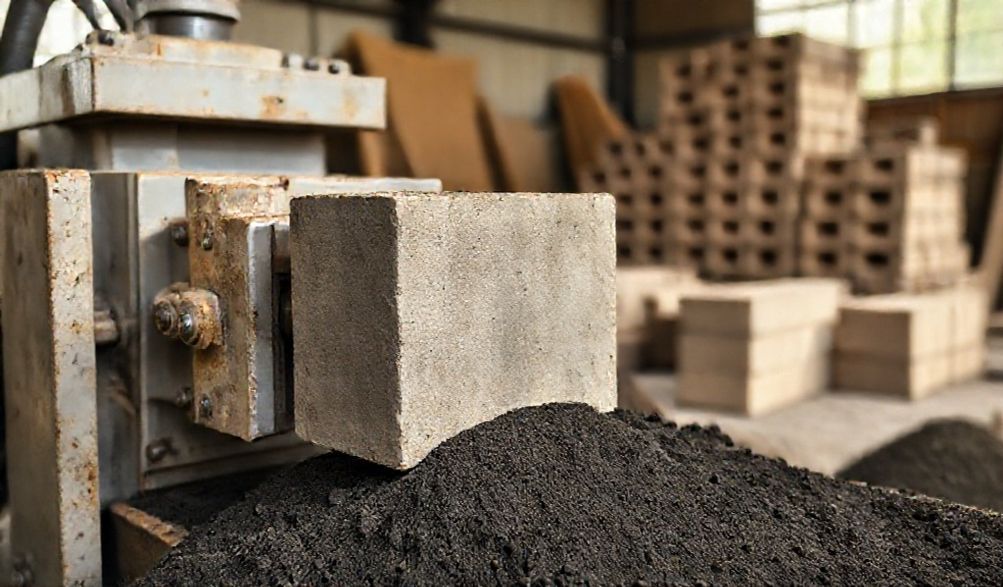
Li te ye tou kòm yon blòk tè konprese (CEB) pou peze oswa yon machin blòk entèbloke, aparèy sa a se yon misyon senp nan elegan li. Li transfòme tè lokal ki soti nan materyèl premyè—souvan tè ki soti nan sit la menm yo ap konstwi sou li—an blòk bilding dans, inifòm, ak fò anpil. Pwosesis sa a marye sajès materyèl san tan ak presizyon jeni kontanporen.
Gid sa a fèt pou se resous definitif ou. Kit ou se yon mason k ap chèche materyèl ki rezistan, yon achitèk k ap espesifye pwojè zanmitay ak anviwònman, yon amatè brikole k ap reve yon kay pratik, oswa yon antreprenè k ap gade ekonomi vèt la, nou pral bay ekspètiz ou bezwen an. Nou pral antre nan fon nan avantaj konvenkan konstriksyon an tè, demistifye teknoloji ki dèyè machin yo, ofri yon kad pratik pou chwazi ekipman ki apwopriye a, e menm eksplore ka biznis fèb pou pwodiksyon an. Objektif nou se pou nou ekipe ou ak konesans aksyonab, ki baze sou pi bon pratik endistri yo ak aplikasyon reyèl, pou fè potansyèl tè a tounen yon reyalite tanjib.
Poukisa ou ta dwe chwazi konstriksyon ak blò tè? Avantaj konvenkan yo
Soti nan teyori, annou egzamine konkret (ou pito,yonbenefis konkrè ki fè konstriksyon blòk tè yon chwa siperyè pou epòk nou an.
Durabilite ak Zannimo ki pa gen parèy
Nan yon mond ki gen bidjè kabòn ak ekonomi sikilè, blòk tè yo parèt kòm yon modèl pou konstriksyon ki gen anpil enpak redwi.
- Enèji Enkòpore Ultra-Ba:Kontrèman ak brik ki kwit nan dife oswa siman Pòtland, ki mande chalè entans (souvan ki soti nan konbistib fosil), blòk tè konprese yo kreye atravè presyon mekanik nan tanperati anbyan. Materyèl prensipal la anjeneral sòti sou sit la oswa lokalman, sa ki redwi anpil enèji ki nesesè pou transpò.
- Rediksyon Dramatik nan Emisyon Kabòn:Pwosesis pwodiksyon an emèt yon kantite minim CO2. Lè yo estabilize ak lacho (ki re-absorbe CO2 pandan l ap sèche) olye pou yo siman, blòk yo ka menm apwoche netralite kabòn.
- Pa Toksik ak Konplètman Resiklab:Blòk tè yo se senpleman tè. Yo pa gen okenn konpoze òganik volatil (VOC), sa ki ankouraje yon bon jan kalite lè andedan kay la. Lè yon bilding fini ak lavi li ki dire lontan, yo ka retounen blòk tè yo nan tè a oswa kraze yo epi itilize yo ankò, sa ki kreye yon vre sik materyèl ki fèmen nèt.
Durabilité ak Pèfòmans Eksepsyonèl
Pa kite non "tè" a twonpe w. Blòk tè konprese byen fèt yo se materyèl konstriksyon solid ki gen karakteristik pèfòmans ki rivalize, epi nan kèk ka depase, opsyon konvansyonèl yo.
- Fòs Konpresif Segondè:Pwès idwolik modèn yo ka pwodui blòk ki gen fòs konpresif ki depase 10 MPa (plis pase 1,450 psi), sa ki fè yo apwopriye pou mi pote chaj nan konstriksyon plizyè etaj.
- Masi Tèmik Sipèryè:Latè gen yon gwo kapasite pou absòbe, estoke, epi lage chalè piti piti. Efè "batri tèmik" sa a natirèlman reglaj tanperati andedan kay la, li fè varyasyon chak jou yo pi lis, epi li diminye anpil enèji ki nesesè pou chofaj ak refwadisman.
- Rezistans Dife Natirèl ak Izolasyon Sonò.Kòm yon materyèl ki baze sou mineral, tè a pa ka boule. Li ofri tou yon mas akoustik ekselan, ki bloke transmisyon son pou enteryè ki pi trankil ak pi lapè.
Efikasite Signifikatif nan Pri
Agiman ekonomik pou blòk tè a solid, li afekte tou de bidjè pwojè yo ak depans alontèm pou posede.
- Eparg Radikal nan Pri Materyo:Eleman prensipal la—tè a—souvan gratis oswa a yon pri ki ba anpil. Sa elimine youn nan depans ki pi gwo nan yon konstriksyon konvansyonèl.
- Pi ba Depans Transpò:Sousi materyo lokalman minimize depans gaz ak transpò.
- Potansyèl Pwopriyetè-Batisè:Senplisite sistèm nan bay moun ak kominote yo pouvwa pou yo vin pwòp bòs mason yo, sa ki diminye drastikman depans pou travay epi ogmante ekite.
Konprann Teknoloji Machin Blòk Latè
Pou ou ka sèvi ak avantaj sa yo, ou bezwen bon zouti a. Konprann mekanik yo ak divèsite yo nanmachin blòk tèpremye etap pou yon pwodiksyon siksè.
Mekanik Debaz: Ki jan yon machin blòk tè fonksyone?
Prensip la senp, men li mande presizyon. Machin nan konprese yon kantite tè prepare ki mezire nan yon mwazi anba presyon ekstrèm. Pwosesis la gen twa faz kle:
- Preparation: Soil is screened to remove large debris and homogenized with the correct amount of moisture and any stabilizer (like cement or lime).
- Konpresyon: The damp mix is fed into a chamber. A ram, powered manually, mechanically, or hydraulically, applies intense, sustained pressure—often measured in tons—to densify the soil particles.
- Ejeksyon: The newly formed block is ejected from the mold, stable enough to be handled immediately and stacked for curing.
The critical variable is the soil itself. An optimal mix typically contains 15-30% clay (for cohesion), with the balance being sand and silt (for structural skeleton and reduction of shrinkage). Moisture content is also crucial; too little and the block won’t bind, too much and it will deform.
Types of Earth Block Machines: From Manual to Fully Automated
Machines are categorized by their power source and production capacity, allowing you to match the tool to your project’s scale.
- Manual Presses (e.g., Cinva Ram style): These lever-operated machines are perfect for small-scale, DIY, community, or educational projects. They require significant human effort, with an output of 40-80 blocks per person per hour. They are low-cost and highly portable.
- Mechanical/Lever-Operated Presses: These use compound levers or flywheels to generate higher pressure with less operator effort than a basic manual press. They are a solid middle-ground for small business startups or larger owner-builder projects.
- Hydraulic Presses (Mobile and Stationary): This is the industry standard for commercial production. Powered by electric motors, diesel engines, or a tractor’s Power Take-Off (PTO), they deliver high, consistent pressure for maximum block strength and uniformity. Output can range from 300 to over 1,000 blocks per hour. Mobile units can be towed directly to a construction site.
- Blòk Entèloke Machin A revolutionary subset, these machines produce blocks with designed top and bottom profiles that key together like Lego® bricks. This interlocking system eliminates the need for wet mortar between courses, speeding up construction, reducing skill requirements, and creating a mechanically bonded wall.
How to Select the Right Earth Block Machine for Your Project
Choosing a machine is a significant investment. A systematic assessment will ensure you get the right tool for your goals.
Assessing Your Project Scale and Requirements
Start by asking these foundational questions:
- What is the scope? A single home, a housing development, a school, or a commercial building?
- What daily output is needed? Calculate your block requirements and build timeline.
- What is the available budget? Include not just the machine, but also soil testing, site prep, and power infrastructure.
- Who will operate it? What is the skill level of the workforce?
Key Machine Specifications and Features to Compare
When evaluating models, scrutinize these specifications:
- Kapasite Pwodiksyon: Look at sustained blocks per hour/day, not peak theoretical output.
- Block Size and Shape: Does it produce the block dimensions you need? Are interlocking or special shapes available?
- Sous Pouvwa: Electric is clean and quiet but requires a reliable grid. Diesel offers site independence. PTO is ideal for rural/farm use.
- Build Quality & Support: Is it built from heavy-duty steel? Are replacement parts like molds and rams readily available from the manufacturer?
- Ease of Use & Maintenance: How quickly can operators be trained? What does routine maintenance entail?
Sourcing Soil: Testing and Preparation Essentials
This is the most critical step, and where professional expertise is non-negotiable. The machine is just a tool; the quality of the block is determined by the soil.
- Field Tests: Start with simple sediment jar tests and ribbon tests to get a rough idea of clay content and plasticity.
- Laboratory Analysis: For any structural project, send soil samples to a geotechnical lab. A sieve analysis and Atterberg limits test will give you the exact clay/silt/sand ratios and inform stabilization needs.
- Estabilizasyon: For increased strength and water resistance, 3-10% cement or 5-15% lime is often added. The correct stabilizer and percentage depend entirely on your soil chemistry and climate.
The Business Case: Starting an Earth Block Production Enterprise
For the entrepreneur, a CEB machin is not just a construction tool—it’s the heart of a viable green business.
Market Analysis and Opportunity
Demand for sustainable, locally sourced, and healthy building materials is growing exponentially. Your blocks can supply:
* Affordable housing projects and private homes.
* Landscape features: retaining walls, garden beds, outdoor kitchens.
* Commercial buildings seeking green certifications (LEED, Living Building Challenge).
* Disaster-resistant and humanitarian construction.
Financial Planning: Costs, Pricing, and ROI
A clear financial model is key.
- Startup Costs: Machine purchase, land lease/purchase, soil testing lab fees, site preparation (level pad, shelter), and initial raw materials (stabilizer).
- Depans Operasyonèl: Labor, stabilizer, maintenance, utilities/fuel, and marketing.
- Pricing & ROI: Price your blocks competitively against concrete blocks and fired bricks, highlighting their superior insulation and environmental benefits. Your major cost advantage is in raw materials. With a clear sales volume projection, you can calculate a realistic return on investment, which can be very attractive due to the low variable costs.
Building a Sustainable Operation
Long-term success depends on consistency and quality.
- Secure a reliable, suitable soil source. This is your “inventory.”
- Implement rigorous quality control. Regularly test block compressive strength and absorption rates.
- Develop basic marketing. Create a portfolio of completed projects, offer sample blocks, network with architects and builders, and leverage the powerful story of local, sustainable production.
Best Practices for Operation and Construction
Mastering the process ensures the highest quality blocks and buildings.
Step-by-Step Production Process
- Soil Sourcing & Testing: As outlined above, begin with expert analysis.
- Sieving & Proportioning: Screen soil to remove stones >10mm. Use a mechanical mixer or tractor loader to blend soil with the precise percentage of stabilizer.
- Moistening & Homogenizing: Add water gradually to achieve optimal moisture content (usually “damp crumbly”). The mix must be uniform.
- Compression & Curing: Form blocks with the machine. Curing is critical: Stack blocks under plastic sheeting or in a shaded, covered area for 14-28 days, keeping them damp. This allows the stabilizer to fully hydrate and gain strength.
Building with Earth Blocks: Techniques and Tips
- Foundations: Use a raised, moisture-proof foundation (concrete stem wall or rubble trench) to protect earth block walls from ground moisture and splash-back.
- Laying Techniques: For interlocking blocks, dry-stack course by course, checking for level and plumb. For standard blocks, use a thin slurry mortar made from the same soil mix.
- Waterproofing: The wall’s greatest protection is its “hat and boots”—a good roof with wide overhangs and a solid foundation. Finish walls with a permeable, breathable plaster (lime or earthen) that sheds water while allowing moisture vapor to escape.
FAQ Section
Q: What is the typical compressive strength of a compressed earth block?
A: Strength varies widely based on soil and compression. Unstabilized blocks may range from 2-4 MPa. With proper soil selection and stabilization, strengths of 7-10+ MPa are common and suitable for multi-story, load-bearing walls. For comparison, a standard concrete block is typically around 15 MPa.
Q: Can I use the soil from my own backyard?
A: It’s possible, but not guaranteed. A simple sediment jar test is a necessary first step. However, for any structural project, investing in a professional lab analysis is non-negotiable. It will determine if your soil is suitable or what amendments (like sand or stabilizer) are required to make it so.
Q: How resistant are earth blocks to water and weather?
A: Properly made and protected earth blocks are highly durable, with centuries-old examples worldwide. The key is protection from direct, sustained saturation. With adequate stabilizer content, proper compaction, and most importantly, a good roof overhang and a breathable plaster finish, earth block walls will perform excellently in most climates.
Q: What is the cost difference between an earth block machine and a conventional concrete block machine?
A: For similar output capacities, CEB machines can be comparably priced or sometimes less expensive than concrete block machines. However, the dramatic cost savings are in the raw materials. You are purchasing bags of stabilizer versus all the cement, sand, and aggregate needed for concrete blocks.
Q: Do I need special skills or training to operate a machine?
A: While a basic mechanical aptitude is helpful, these machines are designed to be operated by a trained general laborer. Reputable manufacturers provide comprehensive operational and maintenance training. The greater skill lies in soil science and mix design, which is why starting with small test batches is always recommended before full-scale production.
Konklizyon
Earth block construction represents a powerful convergence of ancient wisdom and modern innovation. It offers a proven, practical solution to the intertwined challenges of sustainable development, affordable housing, and energy-efficient building. The machin blòk tè is the catalyst that transforms this potential into widespread reality, enabling durable, beautiful, and healthy structures to rise from local ground.
This technology is not a rustic alternative, but a viable, professional, and responsible choice for the future of construction. It is backed by both millennia of architectural heritage and contemporary engineering precision.
The journey from interest to impact begins with a single step. We encourage you to take that step today. Conduct a soil test on your property, connect with the global community of earth builders online, request a live demonstration from a machine manufacturer, or start planning a small pilot project like a garden wall. The material is waiting, and the tool is ready. The sustainable future of building is, quite literally, at hand.
<