
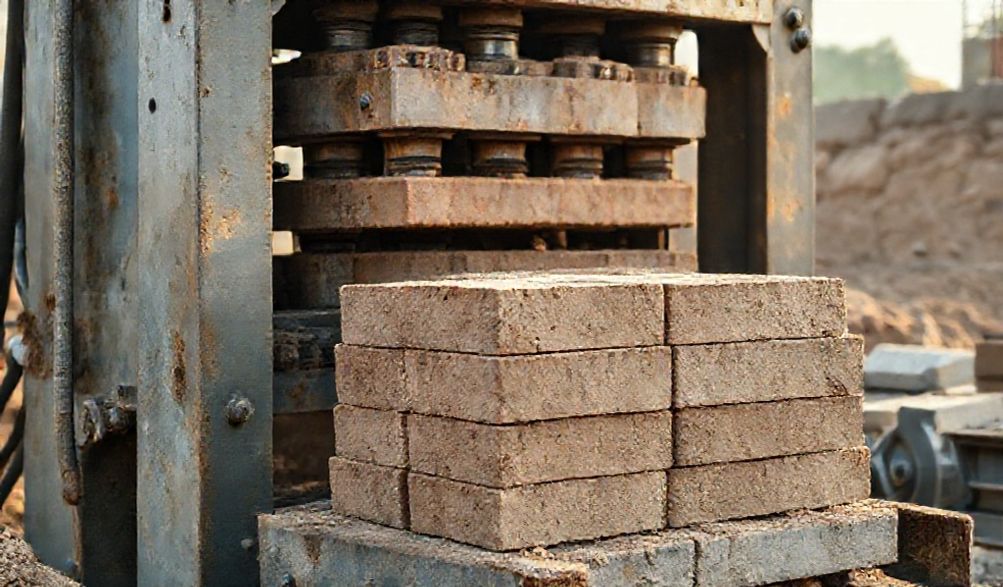
Jagoran Cikakken na Injin Yin Tubalin Ƙasa a Indiya (2026)
Gabatarwa
Tsayayyen gine-ginen Indiya na tashi da sauri ba a taɓa ganin irinsa ba, amma wane farashi ne? Bangaren gine-gine, ginshiƙin wannan ci gaban, shi ma yana ba da gudummawa sosai ga ƙalubalen muhalli na ƙasar. Ka yi la'akari da wannan: ana kiyasin masana'antar bulo na gargajiya da ake kona yana cinye fiye da tan miliyan 24 na kwal kowace shekara kuma yana fitar da kusan tan miliyan 42 na CO2. Yayin da Indiya ke tafiya zuwa ga manufofinta na ci gaba mai dorewa, ana samun juyin juya hali a ƙasa—a zahiri. Neman kayan gini masu araha, masu dacewa da muhalli, da kuma juriya ya kai masu gini, masu zane, da ƴan kasuwa zuwa ga wani muhimmin albarkatu: ƙasa.
Matsalar bulo na gargajiya tana da bangarori da yawa. Samar da su yana da ƙarfin kuzari, yana gurɓata, kuma galibi ya ƙunshi cire ƙasa mai albarka mai amfani. Haɗe da farashin da ba a iya sarrafawa da ƙara yawan binciken ƙa'idodi, buƙatar madadin ba ta taɓa zama mai gaggawa ba kamar yadda yake a yanzu. Ga injin yin bulo na ƙasa—wani abin al'ajabi na fasaha wanda ke canza ƙasa mai ƙanƙanta zuwa tubalan gini masu ƙarfi, mai dorewa.
Wannan cikakken jagora an tsara shi ne don yanke ta cikin hayaniyar. An gina shi akan bincike mai zurfi na masana'antu, nazarin fasaha, da zurfin fahimtar yanayin kasuwar Indiya, yana aiki azaman cikakkiyar albarkatu. Ko kai mai gini ne da ke nufin rage farashi, masanin gine-gine mai ba da shawara kan ƙirar kore, ko ɗan kasuwa mai hango damar kasuwanci, wannan jagora zai ba ku ilimin da za ku yi shawara mai kyau. Za mu zurfafa cikin injiniyoyin waɗannan na'urori, fa'idodinsu masu zurfi, nau'ikan da ake da su, manyan masana'antun Indiya, tsarin samarwa, da muhimman abubuwan da dole ne ku yi la'akari da su kafin ku saka hannun jari.
Menene Injin Yin Tubalin Kasa?
Na'urar yin bulo ta ƙasa wata na'ura ce da aka ƙera don samar da bulo na ƙasa mai matsi (CSEBs). Ta wakilci haɗakar ƙa'ida mai sauƙi da ƙirar ƙira mai ƙarfi, tana ba da hanya ta zamani zuwa ɗayan tsofaffin kayan ginin ɗan adam.
Fasahar Cibiya Ta Bayyana
A cikinsa, fasahar tana da sauƙi mai kyau. Na'urar CSEB tana matsawa cakuda ƙasa mai ɗanɗano, ƙaramin kashi na mai daidaitawa (yawanci 5-10% siminti ko lemun tsami), da ruwa ƙarƙashin matsi mai tsananin ƙarfi. Wannan tsari, wanda zai iya yin tasiri daga tan 2 zuwa sama da 40, baya dogaro da zafi. A maimakon haka, yana matsawa ɓangarorin ta hanyar inji, yana haifar da ƙaƙƙarfan haɗin kai mai ƙarfi. Mai daidaitawa yana aiki azaman mai ɗaure, yana amsawa ta hanyar sinadarai don bawo shinge ƙarfi na dogon lokaci da juriyar ruwa. Sakamakon shi ne bulo mai inganci daidai gwargwado wanda yake shirye don gini bayan wani lokaci na jiyya.
Yadda Ya Bambanta da Ginin Bulo na Al'ada
Bambance da hanyoyin gargajiya ya bayyana a sarari:
* Da Bricken Adobe Da Aka Bari Rana Ta Bushe:Yayin da Adobe kuma yana amfani da ƙasa, ana gyare ta kawai a bushe a rana. CSEBs ana matse su da injina, wanda ya sa su fi ƙarfi, ƙarfi, da dorewa. Sun kuma fi daidaitawa a sigogi.
* Da Bricks na Clay da aka Gasashe a Cikin Kiln:Wannan shine mafi girman bambanci. Tubalin da ake gasa suna buƙatar zafin jiki na 900°C–1100°C na kwanaki, suna ƙona adadi mai yawa na gawayi ko itace. Tsarin CSEB yana kawar da wannan matakin gasawa gaba ɗaya. Wannan yana nufinsifili iskar gas daga konewar man fetur, resulting in an energy saving of up to 90% and a drastic reduction in the carbon footprint of the brick itself.
Key Benefits of Using a Soil Brick Machine in India
Adopting soil brick technology isn’t just an ecological choice; it’s a smart economic and practical decision with wide-ranging advantages.
Economic Advantages
- Rahon Jarin Jarin Jari: Setting up a CSEB production unit requires a fraction of the capital needed for a conventional brick kiln. There is no need for expensive kilns, chimneys, or large land parcels for clay mining.
- Minimal Material Cost: The primary raw material—soil—is often available on-site or locally at minimal cost. Stabilizers like cement are the only major purchased input.
- High-Profit Potential: With low operational costs and a growing market demand for green building materials, the profit margins for CSEB production can be very attractive for small and medium enterprises.
Environmental & Sustainability Benefits
The environmental case for CSEBs is compelling and backed by studies, including those from institutions like the Auroville Earth Institute. Their research highlights the dramatic reduction in embodied energy.
* Near-Zero Carbon Production: As mentioned, the absence of firing removes the largest source of CO2 emissions from brick manufacturing.
* Local & Natural: Using locally sourced soil drastically cuts down on transportation fuel and preserves topsoil for agriculture, as only sub-soil is used.
* Minimal Waste: There is no spoilage or wastage in production. Unused or broken blocks can be crushed, re-wetted, and reused.
Structural and Practical Benefits
- Kyakkyawan Rufe Zafi: Earth blocks have excellent thermal mass. They absorb heat during the day and release it slowly at night, naturally regulating indoor temperatures. This can reduce air-conditioning costs by 30-40%.
- Proven Strength & Durability: When produced with the correct soil mix and stabilization, CSEBs can achieve compressive strengths exceeding those of standard clay bricks, making them perfectly suitable for load-bearing walls in low-rise construction.
- Built-In Safety: They are naturally fire-resistant, non-toxic, and offer good sound insulation. Their density also makes them resistant to termites and pests.
Types of Soil Brick Making Machines Available in India
The Indian market offers a spectrum of machines to suit different scales of operation and budgets.
Manual Press Machines
Ideal for community-led projects, rural housing initiatives, or very small-scale production.
* Abubuwan da suka fi kyau: Extremely low cost, completely portable, requires no electricity. Promotes self-help construction.
* Rashin Kyau: Labor-intensive, low output (typically 100-300 bricks per day), requires significant operator effort.
Matsinoriyar Masu Sarrafa Kansu
A popular choice for small businesses, housing projects, and entrepreneurs. These often feature a hydraulic or mechanical lever system and may include a pan mixer.
* Abubuwan da suka fi kyau: Offers a good balance between output, cost, and ease of use. Significantly reduces manual labor compared to manual presses. Output can range from 500 to 1500 bricks per day.
* Rashin Kyau: Requires a skilled operator for consistent quality. Still involves some manual handling of materials.
Injin Cikakken Aiki Kai Kai
Designed for commercial-scale production. These are integrated systems with automated soil feeding, mixing, compression, and brick ejection, often with conveyor belts.
* Abubuwan da suka fi kyau: High, consistent output (2000+ bricks per day), excellent product uniformity, minimal manual labor.
* Rashin Kyau: High initial investment, requires a reliable power supply (electricity or diesel), and more space.
Mobile vs. Stationary Units
A key consideration is mobility. Many manufacturers offer machines mounted on trailers.
* Mobile Units: Allow for on-site production, eliminating brick transportation costs entirely. Perfect for large, remote projects.
* Stationary Units: Set up in a dedicated production yard, supplying bricks to multiple sites within a region.
Top Factors to Consider Before Buying a Machine
A successful venture hinges on choosing the right equipment. Do not skip this due diligence.
Ƙididdigar Bukatun Samarwa
Be clear about your objectives. Are you building a single house, a colony, or starting a commercial brick supply business? Your required daily output (e.g., 1000 vs. 5000 bricks) will directly dictate the type and capacity of machine you need.
Soil Suitability and Testing
This is the most critical, non-negotiable step. Not all soil is suitable. An investment can fail if the soil on your site is incompatible. Expertise here is paramount.
* The ideal soil has a balanced mix of clay (as a binder), silt, and sand (for skeletal structure).
* Always conduct a professional soil test before purchasing a machine. Reputable suppliers or local engineering colleges can guide you. The test will determine the exact proportion of stabilizer needed.
Machine Specifications & Features
- Brick Size & Shape: Ensure the machine can produce the size (e.g., 230x190x100 mm) and interlocking shapes you require.
- Matsakaicin Matsi: Measured in tonnes or PSI. Higher pressure generally produces denser, stronger bricks (aim for a minimum of 2-3 tonnes for standard blocks).
- Tushen Wutar Lantarki: Choose based on your location’s power reliability—electric, diesel, or hybrid.
- Build Quality & Service: Inspect the machine’s robustness. Crucially, investigate the supplier’s after-sales service network, warranty, and spare parts availability. A machine breakdown without support can halt your entire operation.
Leading Manufacturers and Suppliers of Soil Brick Machines in India
The Indian market features a mix of pioneering domestic manufacturers and distributors of international brands.
Overview of the Indian Market Landscape
The demand for sustainable construction has spurred growth in this niche. Companies range from small-scale fabricators to established firms with extensive R&D and export operations.
Review of Reputable Indian Brands
Based on market presence, technical innovation, and product range, here are a few notable names (this is an informational overview, not an endorsement):
* Auram (Auroville Earth Institute): Considered pioneers in India. They offer a wide range of manual and hydraulic presses, backed by decades of research and training.
* Kathan Engineering: Known for robust and innovative hydraulic and automatic CSEB machines, catering to medium and large-scale production needs.
* Mardini Hydraulics: A manufacturer offering a variety of hydraulic press machines, from manual to fully automatic models.
* Bharath Industrial Works: Produces a range of soil block making machines, including mobile units for on-site production.
Tips for Vetting a Supplier
- Ask for Certifications & References: Request client testimonials, especially from projects in your region.
- Insist on a Live Demo: Never buy based on a brochure alone. Demand a demonstration using a sample of your own soil to see the machine’s performance and brick quality.
- Evaluate Support: Assess their willingness to provide installation guidance, operator training, and their response time for service queries.
The Soil Brick Production Process: A Step-by-Step Guide
Producing quality CSEBs is a systematic process.
Step 1: Soil Selection and Preparation
Excavate sub-soil (not fertile topsoil). Remove debris, vegetation, and large stones. The soil should be spread and allowed to weather if too wet.
Step 2: Sieving and Mixing
Sieving is crucial to remove pebbles and achieve a uniform grain size. The sieved soil is then mixed with the precise percentage of stabilizer (cement/lime) in a dry state to ensure even distribution. Water is then added gradually to achieve optimal moisture content (usually around 10-12%).
Step 3: Compression in the Machine
The moist mix is fed into the machine’s mold chamber and compressed at high pressure. The block is then ejected onto a pallet.
Step 4: Curing and Drying
This is vital for strength development. The fresh bricks are kept under a plastic sheet or sprayed with water for 7-14 days to allow the cement to hydrate fully. After curing, they are shaded dried for another 2-3 weeks before use in construction.
FAQ: Frequently Asked Questions About Soil Brick Machines
Q1: What is the average cost of a soil brick making machine in India?
A: Prices vary dramatically. A simple manual press can start from ₹25,000, semi-automatic hydraulic machines range from ₹1.5 lakh to ₹5 lakh, while high-capacity fully automatic plants can cost ₹10 lakh and above.
Q2: Can I use any soil from my land to make bricks?
A: No. Soil must be tested. Pure clay will shrink and crack; pure sand will not bind. Most soils need blending or stabilization. A simple sediment test can give a preliminary idea, but professional lab testing is recommended.
Q3: How strong are soil-stabilized bricks compared to red clay bricks?
A: Well-made CSEBs stabilized with 5-8% cement can easily achieve a compressive strength of 5-7 MPa, which meets or exceeds the strength of many traditional clay bricks (3-5 MPa) used in low-rise construction, as per Indian Standard IS 1725.
Q4: Is special training required to operate these machines?
A: Yes. While the operation is not overly complex, training is essential for understanding soil mix design, moisture control, machine maintenance, and curing procedures. Reputable suppliers should provide basic operational training.
Q5: What are the government regulations or BIS standards for these bricks?
A: The relevant standard is IS 1725:2013 (Compressed Stabilized Earth Blocks). For building approval, consult your local municipal corporation or town planning authority, as acceptance is growing but can vary by region. Using BIS-standard blocks strengthens your case.
Ƙarshe
Soil brick making technology is more than an alternative building method; it’s a paradigm shift towards a more sustainable, equitable, and cost-effective construction future for India. It empowers local entrepreneurship, conserves precious resources, and creates healthier living spaces. The potential to address both housing shortages and environmental concerns is immense.
However, success with this technology is not automatic. It demands careful planning, a scientific approach to soil, and a strategic investment in the right equipment. We encourage you to use this guide as a starting point for deeper research, site visits to existing projects, and consultations with technical experts.
Ready to build a sustainable future from the ground up? Contact us for a personalized consultation and soil testing recommendations.
Download our free checklist: ’10 Essential Questions to Ask Before Buying a Brick Making Machine in India’.
<