
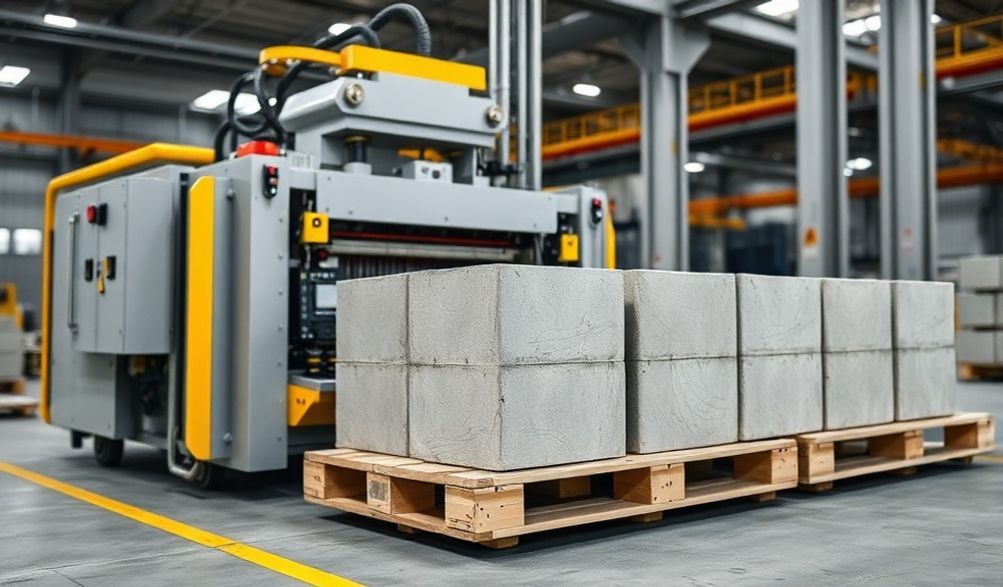
Farashin Injin Yin Tubali: Cikakken Jagorar Mai Siyayya na 2024
Nemo daidai injin yin tubali zai iya zama abin damuwa, musamman idan farashin ya bambanta daga dubban zuwa sama da dubun dari na daloli. Ta yaya za ka san ainihin abin da kake biya? Shin, rahusasshen inji ne mai fa'ida ko kuma damuwa ta gaba? Yawan zaɓuɓɓuka na iya hana ko da mafi ƙarfin shawara na mai kasuwanci.
Wannan cikakken jagora yana yanke ta cikin rudani. Za mu fayyace ainihin abubuwan da ke ƙayyade farashin na'urorin yin tubali, mu kwatanta nau'ikan daban-daban da kewayon farashinsu na gaske, kuma mu bayyana farashin mallakar da ba a saba gani ba. Manufarmu ita ce mu canza ku daga mai siye da ya ruɗe zuwa mai saka hannun jari da ya sani, wanda aka sanye shi don yanke shawara wanda zai haɓaka ribar ku akan jarin (ROI) na shekaru masu zuwa.
A ƙarshen wannan jagorar "farashin injin yin tubali", za ku fahimci ainihin abubuwan da ke haifar da farashi, kuma za ku iya kwatanta nau'ikan da masu samarwa daidai, da kuma ƙirƙirar kasafin aikin da ke nuna ainihin farashin kasuwancin ku. Bari mu shiga ciki.
Abubuwan Da Suka Ke Ƙayyade Farashin Na'urar Yin Tubali
Farashin na'urar yin tubali ba kawai abin da aka zaba ba ne. Yana nuna iyawar ta, ƙarfin ta, da fasahar da ke cikinta. Fahimtar waɗannan mahimman abubuwa shine matakin farko don yin sayayya mai hikima.
Ƙarfin Samarwa & Fitarwa
Mafi mahimmancin abin da ke haifar da farashi shine yawan tubalan da na'ikan za ta iya samarwa. Yawanci ana auna wannan da yawan tubalan a cikin sa'a guda ko kuma a cikin tafiyar sa'o'i takwas.
- Daidaitaccen Alaka:Akwai kusancin alaƙa madaidaiciya tsakanin yawan kayan da ake samarwa da farashin su. Na'urar da aka ƙera don samar da tubalan 2,000 a rana za ta kasance da farashi mai rahusa sosai idan aka kwatanta da wadda aka gina don samar da tubalan 10,000 a rana.
- Ma'auni Mai Girma:Na'urorin da ake sarrafa da hannu na iya samar da ƙananan ɗaruruwan tubalan a kowace rana tare da ma'aikata. Na'urorin da ke da kashi na atomatik na iya haɓaka wannan zuwa dubunnan. Layukan samarwa na cikakken atomatik an ƙera su don dubun-dubatar tubalan a kullum, saboda haka farashinsu ya fi tsada.
Matakin Sarrafa kai
Sarrafa kai shine injin ingantacciyar aiki da farashi. Bayyanannen ma'anar ita ce:Manual < Semi-Automatic < Cikakken Atomati.
- Na'urorin Hannu:Mafi ƙarancin farashi na farko, mafi girman farashin aiki na dogon lokaci. Suna buƙatar ƙoƙari na jiki mai mahimmanci don haɗawa, ciyarwa, da gyare-gyare.
- Matsin Injin Mai Ƙaramin Gudanarwa:Zuba jari na tsaka-tsaki. Suna sarrafa muhimman matakan matsawa da girgiza ta atomatik, sau da yawa ta hanyar tsarin na'urorin ruwa, amma suna iya buƙatar ciyar da albarkatun ƙasa da hannu ko cire tubalan da aka gama.
- Matsarori Masu Sarrafa Kansu Gabaɗaya:Mafi girman farashin farko, amma suna canza yanayin aiki. Waɗannan tsarin suna da sarrafa kayan aiki ta atomatik, haɗawa, gyare-gyare, warkewa, da tari. Musayar a bayyane take: saka jari mai yawa da farko don ceton kuɗin aiki sosai kuma a cimma daidaiton samarwa wanda ba a misaltu ba.
Nau'in Injin & Ƙayyadaddun Block
Ba duk injinan bulo ba ne ake ƙirƙira su daidai. Nau'in bulon da kuke buƙatar kera shi yana ƙayyadaddun ƙira da sarƙaƙiyar injin.
- Injinoni na Hollow Block:Na kowa kuma galibi shine ma'auni na farashin.
- Na'urorin Yin Tarkace, Haɗin Kai, da Na'urorin Yin Bakin Hanya: These require more specialized molds and sometimes different vibration patterns, increasing the cost.
- Multi-Purpose Machines: Machines that can produce multiple block types by changing molds are more versatile but also more expensive than single-purpose units.
- Mold Complexity: Intricate designs (e.g., decorative pavers) require precision-engineered, hardened steel molds, which are a major cost component.
- Special Features: Add-ons like automatic color dispensers for paving stones or integrated concrete mixers will add to the base price.
Sunan Kamfani & Asalin Ƙasar
Where a machine is built and who builds it carries a price implication tied to perceived quality, innovation, and support.
- Established Global Brands (e.g., German, Italian, U.S.): Command a premium price. You’re investing in decades of engineering expertise, high-grade materials, rigorous testing, and (typically) a global network for after-sales service and spare parts. This translates to reliability and minimized downtime.
- Emerging Market Manufacturers (e.g., Indian, Chinese, Turkish): Offer highly competitive pricing. The value proposition is strong, but due diligence is critical. The key is to vet the specific manufacturer for:
- Quality of components (hydraulics, electrical systems).
- Availability of detailed technical documentation.
- Responsiveness of their after-sales service and spare parts supply chain.
Block Making Machine Price Ranges by Type (2024 Estimates)
To ground our discussion, here are realistic price brackets for 2024. Remember, these are estimates—final pricing depends on the specific factors above and your supplier.
Manual & Small-Scale Machines
- Farashin Farashi:$1,000 – $15,000
- Ya Dace Da: Entrepreneurs starting a small business, community projects, or low-volume on-site production where labor costs are low.
- Misalai: Manual “egg-laying” type machines (which produce blocks in place), small stationary machines with simple vibration motors.
Semi-Automatic Machines
- Farashin Farashi: $15,000 – $50,000
- Ya Dace Da: Growing block-making businesses, medium-scale production for local construction companies, or municipal works.
- Misalai: Stationary machines with robust hydraulic systems for high-pressure compaction, possibly with automatic pallet feeders or block ejectors. Output can range from 1,000 to 5,000+ blocks per 8-hour shift.
Fully Automatic Machines & Production Lines
- Farashin Farashi:$50,000 – $300,000+
- Ya Dace Da: Large-scale commercial plants, industrial production supplying regional markets, or major infrastructure projects.
- Misalai: These are complete systems. They include high-speed machines with pallet circulators, automatic material handling robots, programmable logic controller (PLC) panels, and sometimes integrated curing racks. Output can easily exceed 10,000 blocks per shift.
Beyond the Sticker Price: The True Cost of Ownership
The purchase price is just the entry ticket. The real cost of owning and operating a block making machine includes several critical, often overlooked, expenses.
Jigawa, Shigarwa, da Kaddamarwa
A machine sitting in a port isn’t making you money. Budget for getting it to your site and making it operational.
- Incoterms Matter: Know the difference between FOB (Kyauta akan Jirgi)kumaCIF (Cost, Insurance, and Freight). FOB means you own and are responsible for the goods once they’re loaded on the ship; you arrange and pay for the main shipping and insurance. CIF means the supplier arranges and pays for shipping to your port.
- Kudin da ba a bayyana ba: Don’t forget import duties, customs clearance fees, and local transport from the port to your factory.
- Technical Setup: Factor in the cost of foundation work, electrical hookup, and the potential need for a technician from the supplier for installation and commissioning. This service may be included or be an extra fee.
Kudin Aiki: Wutar Lantarki, Ma'aikata, da Albarkatun Kayan Aiki
Your daily expenses will directly impact profitability.
- Amfani da Wutar Lantarki: Fully automatic lines with multiple motors, hydraulics, and conveyors consume significant electricity. Request the machine’s power rating (in kW) to estimate this cost.
- Aiki This is where automation pays off. A semi-automatic machine may need 3-4 operators, while a fully automatic line might run with 1-2. Calculate your local wage costs over 5 years.
- Kayan Aiki: The cost and quality of your concrete mix (cement, aggregates, water) is your largest recurring expense. A consistent, high-quality mix is non-negotiable for producing sellable blocks and protecting your machine from wear.
Maintenance, Spare Parts, and Downtime
This is the ultimate test of your machine’s value. A cheap machine with frequent breakdowns can be more expensive than a costly, reliable one.
- Kula da Kariya: Budget for regular oil changes, filter replacements, and wear-part inspections. A good supplier will provide a maintenance schedule.
- Critical Spare Parts: Identify and keep a small inventory of parts most prone to failure (e.g., specific hydraulic seals, vibration motor bearings, mold liners). The lead time to get these parts can mean days of lost production.
- The Cost of Downtime: When your machine stops, your revenue stops. The true value of a reliable brand or a supplier with excellent local service is measured in uptime.
How to Get the Best Value for Your Investment
Value isn’t about finding the lowest price; it’s about optimizing the balance between cost, performance, and reliability for buƙatun ku na musamman.
Accurately Assessing Your Needs
Start with a business plan, not a brochure. Ask yourself:
- What is my realistic daily and monthly production target in Year 1? Year 3?
- What specific block types (hollow, solid, paver) does my local market demand?
- What is the selling price for these blocks in my area?
- What is my available budget, including a 15-20% contingency for shipping and setup?
Vetting Suppliers and Requesting Quotes
Treat this like hiring a key business partner. Your supplier’s support is as important as the machine.
- Due Diligence Checklist:
- Request and contact customer references, especially those in a similar climate or region.
- Tambaya.detailed videos of the machine in operation at their factory.
- Review the technical specification sheet line by line.
- Understand the warranty terms (duration, what’s covered, what’s not).
- Inquire about the availability and lead time for spare parts.
- Get Multiple Quotes: Ensure each quote is for the exact same specifications so you can make a true comparison.
Key Questions to Ask Before You Buy
Go beyond price. Use this script in your discussions:
- “Can you provide a performance guarantee for output (blocks per hour) and block strength?”
- “What is the standard and optional warranty? What is the process for making a claim?”
- “Do you provide on-site installation and operator training? Is it included or an extra cost?”
- “Can you share a list of recommended critical spare parts to keep in stock and their prices?”
- “What is the estimated power consumption of this model?”
Tambayoyin da ake yawan yi (FAQ)
What is the cheapest block making machine available?
The absolute cheapest options are small, manual press machines, which can start around $1,000. However, it’s crucial to understand the trade-offs: extremely low output, high physical labor requirements, and limited block quality consistency. For a business, focusing on “value for money” rather than the “cheapest price” is a far more sustainable strategy.
Can I get a good automatic block machine under $20,000?
You need to set realistic expectations. A brand-new, high-quality, fully automatic production line is highly unlikely in this price range. However, a robust na'ura mai sarrafa kansa with good output or a basic automatic machine from certain emerging markets may fall within this bracket. The key is to intensify your supplier vetting—scrutinize build quality, component brands, and service promises.
How much profit can I make with a block making machine?
Profitability isn’t guaranteed by the machine alone; it’s determined by your market, efficiency, and management. A simplified way to think about it is your break-even volume. Calculate: Machine Total Investment / (Selling Price per Block - Production Cost per Block) = Number of blocks to break even. Your production cost includes raw materials, labor, power, and maintenance. Profit depends on how efficiently you can produce and sell blocks beyond this volume.
Are used block making machines a good option to save money?
They can be, but they carry risk. Abubuwan da suka fi kyau: Significantly lower upfront capital cost. Rashin Kyau: Potential for hidden mechanical issues, outdated technology, higher energy consumption, and likely no warranty. If considering used, it is highly recommended to have the machine inspected by an independent, qualified technician. Also, ensure critical spare parts are still available for that model.
Ƙarshe
Navigating the “block making machine price” landscape requires looking beyond the initial quote. As we’ve detailed, the final price is a direct function of production capacity, level of automation, machine type, and the brand’s reputation for support. The most cost-effective choice is rarely the cheapest one; it’s the machine that aligns perfectly with your production goals and offers the lowest total cost of ownership through reliability and efficiency.
Investing in a block making machine is a significant decision that forms the foundation of your business. By focusing on your specific needs, conducting thorough supplier due diligence, and planning for all associated costs, you can select equipment that becomes a profitable and reliable cornerstone of your operation for years to come.
Ready to move forward? Download our free Project Planning & Budget Worksheet to systematically organize your requirements, compare quotes, and build a realistic financial model for your block-making venture.
<