
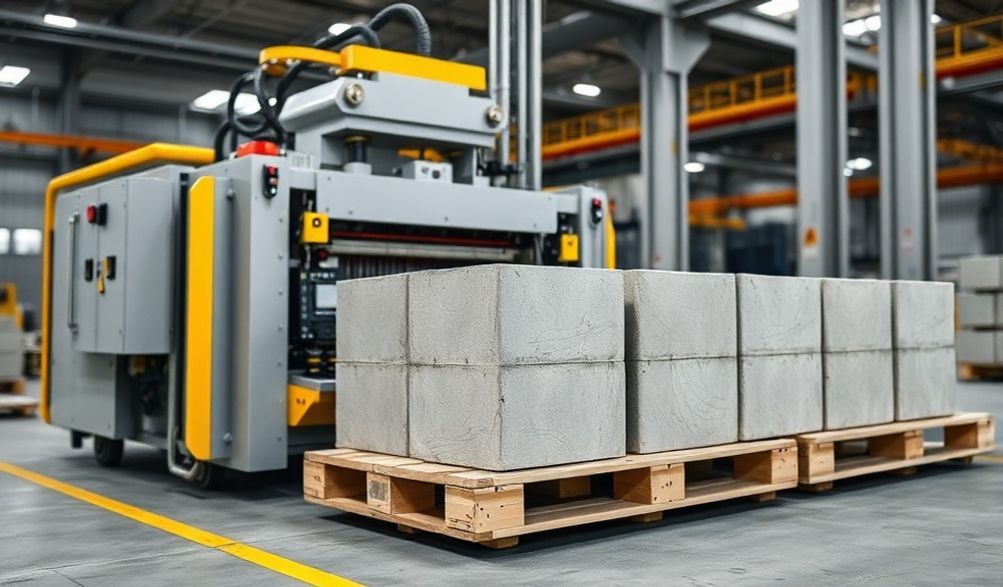
Blokmaakmasjien Prys: 'n Volledige 2024 Koper se Gids
Om die regte blokmasjien te vind, kan oorweldigend voel, veral wanneer pryse wissel van 'n paar duisend tot meer as 'n honderdduisend dollar. Hoe weet jy waarvoor jy werklik betaal? Is 'n goedkoper masjien 'n winskopie of 'n toekomstige kopseer? Die groot aantal opsies kan selfs die mees besluitvaardige besigheidseienaar verlam.
Hierdie omvattende gids sny deur die verwarring. Ons sal die presiese faktore wat blokmasjienpryse bepaal, uiteensit, verskillende tipes en hul realistiese koste-omvang vergelyk, en die dikwels-verborge kostes van eienaarskap onthul. Ons doel is om jou van 'n verwarde koper in 'n ingeligte belegger te omskep, toegerus om 'n besluit te neem wat jou opbrengs op belegging (ROI) vir die komende jare maksimeer.
Aan die einde van hierdie "blokmasjienprys"-gids sal jy die sleutelprysaandrywers duidelik verstaan, modelle en verskaffers akkuraat kan vergelyk, en 'n projekbegroting kan skep wat die ware koste van jou onderneming weerspieël. Kom ons duik in.
Belangrike Faktore Wat Blokmasjienpryse Bepaal
Die prysplaatjie op 'n blokmasjien is nie arbitrêr nie. Dit is 'n direkte weerspieëling van sy vermoëns, duursaamheid en die tegnologie daarin. Om hierdie kernfaktore te verstaan, is die eerste stap om 'n slim aankoop te maak.
Produksiekapasiteit & Uitset
Die belangrikste prysdrywer is hoeveel blokke die masjien kan produseer. Dit word gewoonlik gemeet in blokke per uur of per 8-uur-skof.
- Direkte Korrelasie:Daar is 'n byna-lineêre verhouding tussen produksie en prys. 'n Masjien wat ontwerp is om 2,000 blokke per dag te produseer, sal aansienlik minder kos as een wat gebou is vir 10,000 blokke per dag.
- Die Skaalspektrum:Handmatige masjiene kan 'n paar honderd blokke per dag met 'n span produseer. Semi-outomatiese masjiene kan dit verhoog tot etlike duisende. Volledig outomatiese produksielyne is ontwerp vir tienduisende blokke daagliks, vandaar hul premieprys.
Vlak van Outomatisering
Outomatisering is die enjin van beide doeltreffendheid en koste. Die spektrum is duidelik:Handmatig < Semi-outomaties < Vol-outomaties.
- Handmatige Masjiene: Lowest upfront cost, highest long-term labor cost. They require significant physical effort for mixing, feeding, and molding.
- Halfoutomatiese Masjiene: A middle-ground investment. They automate the critical compression and vibration processes, often with hydraulic systems, but may require manual feeding of raw material or removal of finished blocks.
- Volledig Outomatiese Masjiene: The highest upfront cost, but they transform labor dynamics. These systems feature automated material batching, mixing, molding, curing, and stacking. The trade-off is clear: invest more capital upfront to save substantially on labor costs and achieve unparalleled production consistency.
Machine Type & Block Specifications
Not all block machines are created equal. The type of block you need to produce dictates the machine’s design and complexity.
- Holblokmasjiene: Common and often the baseline for pricing.
- Paver, Interlocking, and Curbstone Machines: These require more specialized molds and sometimes different vibration patterns, increasing the cost.
- Veeldoelige Masjiene: Machines that can produce multiple block types by changing molds are more versatile but also more expensive than single-purpose units.
- Mold Complexity: Intricate designs (e.g., decorative pavers) require precision-engineered, hardened steel molds, which are a major cost component.
- Special Features: Add-ons like automatic color dispensers for paving stones or integrated concrete mixers will add to the base price.
Brand Reputation & Country of Origin
Where a machine is built and who builds it carries a price implication tied to perceived quality, innovation, and support.
- Established Global Brands (e.g., German, Italian, U.S.): Command a premium price. You’re investing in decades of engineering expertise, high-grade materials, rigorous testing, and (typically) a global network for after-sales service and spare parts. This translates to reliability and minimized downtime.
- Emerging Market Manufacturers (e.g., Indian, Chinese, Turkish): Offer highly competitive pricing. The value proposition is strong, but due diligence is critical. The key is to vet the specific manufacturer for:
- Quality of components (hydraulics, electrical systems).
- Availability of detailed technical documentation.
- Responsiveness of their after-sales service and spare parts supply chain.
Block Making Machine Price Ranges by Type (2024 Estimates)
To ground our discussion, here are realistic price brackets for 2024. Remember, these are estimates—final pricing depends on the specific factors above and your supplier.
Handmatige & Kleinskaalse Masjiene
- Prysreeks:$1 000 – $15 000
- Ideaal Vir: Entrepreneurs starting a small business, community projects, or low-volume on-site production where labor costs are low.
- Voorbeelde: Manual “egg-laying” type machines (which produce blocks in place), small stationary machines with simple vibration motors.
Halfoutomatiese Masjiene
- Prysreeks: $15,000 – $50,000
- Ideaal Vir: Growing block-making businesses, medium-scale production for local construction companies, or municipal works.
- Voorbeelde: Stationary machines with robust hydraulic systems for high-pressure compaction, possibly with automatic pallet feeders or block ejectors. Output can range from 1,000 to 5,000+ blocks per 8-hour shift.
Fully Automatic Machines & Production Lines
- Prysreeks: $50,000 – $300,000+
- Ideaal Vir: Large-scale commercial plants, industrial production supplying regional markets, or major infrastructure projects.
- Voorbeelde: These are complete systems. They include high-speed machines with pallet circulators, automatic material handling robots, programmable logic controller (PLC) panels, and sometimes integrated curing racks. Output can easily exceed 10,000 blocks per shift.
Beyond the Sticker Price: The True Cost of Ownership
The purchase price is just the entry ticket. The real cost of owning and operating a block making machine includes several critical, often overlooked, expenses.
Shipping, Installation, and Commissioning
A machine sitting in a port isn’t making you money. Budget for getting it to your site and making it operational.
- Incoterms Matter: Know the difference between FOB (Vry aan Boord)enCIF (Koste, Versekering en Vrag). FOB means you own and are responsible for the goods once they’re loaded on the ship; you arrange and pay for the main shipping and insurance. CIF means the supplier arranges and pays for shipping to your port.
- Verborge Kostes: Don’t forget import duties, customs clearance fees, and local transport from the port to your factory.
- Technical Setup: Factor in the cost of foundation work, electrical hookup, and the potential need for a technician from the supplier for installation and commissioning. This service may be included or be an extra fee.
Operating Costs: Power, Labor, and Raw Materials
Your daily expenses will directly impact profitability.
- Kragverbruik: Fully automatic lines with multiple motors, hydraulics, and conveyors consume significant electricity. Request the machine’s power rating (in kW) to estimate this cost.
- Arbeid: This is where automation pays off. A semi-automatic machine may need 3-4 operators, while a fully automatic line might run with 1-2. Calculate your local wage costs over 5 years.
- Rou Materiaal: The cost and quality of your concrete mix (cement, aggregates, water) is your largest recurring expense. A consistent, high-quality mix is non-negotiable for producing sellable blocks and protecting your machine from wear.
Maintenance, Spare Parts, and Downtime
This is the ultimate test of your machine’s value. A cheap machine with frequent breakdowns can be more expensive than a costly, reliable one.
- Voorkomende Instandhouding: Budget for regular oil changes, filter replacements, and wear-part inspections. A good supplier will provide a maintenance schedule.
- Critical Spare Parts: Identify and keep a small inventory of parts most prone to failure (e.g., specific hydraulic seals, vibration motor bearings, mold liners). The lead time to get these parts can mean days of lost production.
- The Cost of Downtime: When your machine stops, your revenue stops. The true value of a reliable brand or a supplier with excellent local service is measured in uptime.
How to Get the Best Value for Your Investment
Value isn’t about finding the lowest price; it’s about optimizing the balance between cost, performance, and reliability for your specific needs.
Accurately Assessing Your Needs
Start with a business plan, not a brochure. Ask yourself:
- What is my realistic daily and monthly production target in Year 1? Year 3?
- What specific block types (hollow, solid, paver) does my local market demand?
- What is the selling price for these blocks in my area?
- What is my available budget, including a 15-20% contingency for shipping and setup?
Vetting Suppliers and Requesting Quotes
Treat this like hiring a key business partner. Your supplier’s support is as important as the machine.
- Due Diligence Checklist:
- Request and contact customer references, especially those in a similar climate or region.
- Vra virdetailed videos of the machine in operation at their factory.
- Review the technical specification sheet line by line.
- Understand the warranty terms (duration, what’s covered, what’s not).
- Inquire about the availability and lead time for spare parts.
- Get Multiple Quotes: Ensure each quote is for the exact same specifications so you can make a true comparison.
Key Questions to Ask Before You Buy
Go beyond price. Use this script in your discussions:
- “Can you provide a performance guarantee for output (blocks per hour) and block strength?”
- “What is the standard and optional warranty? What is the process for making a claim?”
- “Do you provide on-site installation and operator training? Is it included or an extra cost?”
- “Can you share a list of recommended critical spare parts to keep in stock and their prices?”
- “What is the estimated power consumption of this model?”
Frequently Asked Questions (FAQ)
What is the cheapest block making machine available?
The absolute cheapest options are small, manual press machines, which can start around $1,000. However, it’s crucial to understand the trade-offs: extremely low output, high physical labor requirements, and limited block quality consistency. For a business, focusing on “value for money” rather than the “cheapest price” is a far more sustainable strategy.
Can I get a good automatic block machine under $20,000?
You need to set realistic expectations. A brand-new, high-quality, fully automatic production line is highly unlikely in this price range. However, a robust halfoutomatiese masjien with good output or a basic automatic machine from certain emerging markets may fall within this bracket. The key is to intensify your supplier vetting—scrutinize build quality, component brands, and service promises.
How much profit can I make with a block making machine?
Profitability isn’t guaranteed by the machine alone; it’s determined by your market, efficiency, and management. A simplified way to think about it is your break-even volume. Calculate: Machine Total Investment / (Selling Price per Block - Production Cost per Block) = Number of blocks to break even. Your production cost includes raw materials, labor, power, and maintenance. Profit depends on how efficiently you can produce and sell blocks beyond this volume.
Are used block making machines a good option to save money?
They can be, but they carry risk. Voordele: Significantly lower upfront capital cost. Nadele: Potential for hidden mechanical issues, outdated technology, higher energy consumption, and likely no warranty. If considering used, it is highly recommended to have the machine inspected by an independent, qualified technician. Also, ensure critical spare parts are still available for that model.
Conclusion
Navigating the “block making machine price” landscape requires looking beyond the initial quote. As we’ve detailed, the final price is a direct function of production capacity, level of automation, machine type, and the brand’s reputation for support. The most cost-effective choice is rarely the cheapest one; it’s the machine that aligns perfectly with your production goals and offers the lowest total cost of ownership through reliability and efficiency.
Investing in a block making machine is a significant decision that forms the foundation of your business. By focusing on your specific needs, conducting thorough supplier due diligence, and planning for all associated costs, you can select equipment that becomes a profitable and reliable cornerstone of your operation for years to come.
Ready to move forward? Download our free Project Planning & Budget Worksheet to systematically organize your requirements, compare quotes, and build a realistic financial model for your block-making venture.
<