
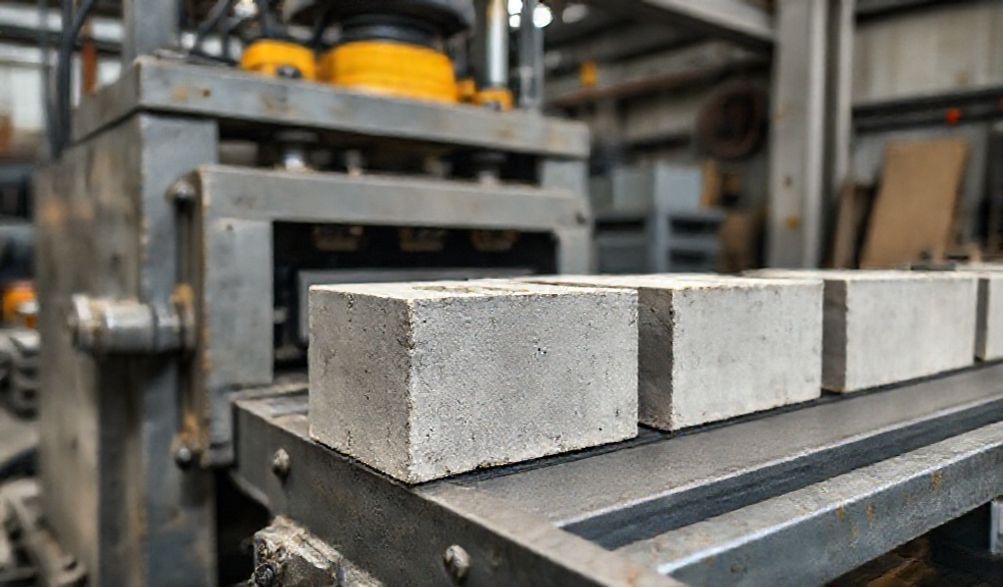
Baksteenvervaardigingsmasjienprys: 'n Volledige 2024-Koperhandleiding
Inleiding
Stel jou voor jy staan op 'n stuk grond vir jou volgende behuisingsprojek, of dalk is jy in 'n klein werkswinkel en droom daarvan om jou konstruksiemateriaalbesigheid uit te brei. Die visie is duidelik: om jou eie stene te vervaardig belowe kwaliteitsbeheer, voorsieningskettingonafhanklikheid en 'n nuwe inkomstestroom. Maar dan kom die praktiese vraag:Wat gaan dit kos?'n Vinnige aanlyn soektog vir "baksteenmasjien prys" openbaar 'n duiselingwekkende reeks—van 'n paar duisend tot etlike honderdduisend dollar. Hoe navigeer jy dit?
As 'n ervare professionele in hierdie bedryf, kan ek vir jou sê dat om uitsluitlik op die prysplakker te fokus die vinnigste pad na 'n swak belegging is. Die ware koste lê in die totale waarde oor die masjien se leeftyd. Hierdie gids is geskep uit jare se ontleding van vervaardiger spesifikasies, gesprekke met besigheidseienaars, en die begrip van die werklike ekonomie van baksteenproduksie. Ons doel is nie net om pryse te lys nie—dit is om jou toe te rus met die raamwerk om 'n waarde-gedrewe besluit te neem wat in lyn is met jou produksiedoelwitte en begroting.
Ons sal die faktore wat koste bepaal ontleed, deursigtige 2024-prysreekse vir verschillende masjientipes verskaf, die dikwels oor die hoof gesiene verborge uitgaves blootlê, en, heel belangrik, wys hoe jy kan bereken wanneer jou belegging homself sal terugverdien. Terwyl spesifieke pryse met marktoestande wissel, sal die evaluasiebeginsels wat ons sal dek jou waardevolste instrument bly. Kom ons beweeg verder as die pysetiket en bou 'n fondasie vir 'n winsgewende belegging.
Verstaan die Faktore Wat Baksteenmaakmasjienprys Bepaal
Die prysverskil in baksteenmaakmasjiene is nie arbitrêr nie. Dit is 'n direkte weerspieëling van ingenieurskunde, materiale en vermoë. Om hierdie komponente te verstaan, is die eerste stap om waarde te begryp.
Kernmasjientipe en Outomatiseringsvlak
Dit is die grootste dryfveer van koste. Die vlak van outomatisering bepaal arbeidsvereistes, uitsette spoed en operasionele kompleksiteit.
- Handmatige Masjiene:Wordkrag word heeltemal deur menslike arbeid verskaf vir meng, voer en druk. Hulle beskik oor dielaagste vooruitkostemaar diehoogste lopende arbeidskosteen laagste uitset.
- Halfoutomatiese Masjiene:Hierdie tref 'n balans. Hulle outomatiseer die kritiese kompressie- en vormproses, dikwels met 'n hidrouliese of meganiese stelsel, maar kan handmatige toevoer van roumateriaal of verwydering van voltooide blokke vereis. Dit verhoog produksie aansienlik terwyl die aanvanklike belegging hanteerbaar gehou word.
- Ten volle outomatiese masjiene (of aanlegte):Dit is volledige produksielyne. Hulle integreer outomatiese materiaaltoevoer, vermenging, vorming, uitharding en soms stapeling/palletisering. Arbeid is hoofsaaklik vir toesig en instandhouding. Diehoë aanvanklike beleggingword geregverdig deur massiewe uitset en minimale arbeidskoste per blok.
Produksiekapasiteit (Blokke per Uur):Binne elke outomatiseringskategorie skaal die prys met kapasiteit. 'n Masjien wat 1 000 blokke per uur produseer sal aansienlik minder kos as een wat 5 000 blokke per uur produseer, selfs al is albei semi-outomaties. Korreleer altyd prys met bewese uitsetkapasiteit.
Kernkomponente en Bougehalte
Twee masjiene mag dalk dieselfde lyk, maar die kwaliteit van hul komponente bepaal die lewensduur, onderhoudsfrekwensie en baksteenbestendigheid.
- Vormkwaliteit & Materiaal:Die vorm bepaal jou finale produk. Vorms van hoë-chroomlegeringstaal weerstaan skuur van sement en aggregaat baie beter as sagte staal, hou jare langer en lewer stene met skerper rande. Hierdie kwaliteit kom teen 'n premie.
- Hidrouliese Stelsel vs. Meganiese Stelsel:Hidrouliese stelsels bied beter drukbeheer, wat lei tot digter, sterker bakstene, en is gewoonlik meer duursaam onder konstante gebruik. Hulle is tipies duurder as suiwer meganiese hefboom/persstelsels, maar bied beter werkverrigting en konsekwentheid.
- Raamwerk en Struktuur'n Masjien wat vir hoë-volume produksie ontwerp is, benodig 'n robuuste, vibrasiebestande raam, dikwels gemaak van versterkte staalplate. 'n Ligter raam kan aanvanklik koste bespaar, maar sal lei tot meer stilstand en belyningsprobleme.
Handelsmerk, Oorsprong, en Na-verkope Ondersteuning
- Premium Internasionale Handelsmerke vs. Betroubare Plaaslike VervaardigersGevestigde Europese of Noord-Amerikaanse handelsmerke vra dikwels hoër pryse as gevolg van gevorderde N&O, streng gehaltebeheer en wêreldwye handelsmerkherkenning. Baie vervaardigers in lande soos China, Indië en Turkye produseer egter nouhoë-gehalte, betroubare masjiene at a more competitive price point. The key is vetting the manufacturer thoroughly.
- The Real Cost of Support: A cheaper machine with no local technical support or a 6-month wait for spare parts can become a very expensive paperweight. The availability of on-site training, a comprehensive warranty (1+ years), and a ready inventory of spare parts is a critical part of the value equation. This support network has a cost built into the machine’s price.
Price Ranges for Different Types of Brick Making Machines
(Note: Prices are indicative for 2024 and can vary based on configuration, brand, and region. They are meant to provide a framework for budgeting.)
Manual & Small-Scale Machines (Economy Range: $1,000 – $10,000)
- Beste Vir: Entrepreneurs starting a small business, community projects, producing specialty bricks (like landscape pavers) in low volume, or for on-site production on a single construction project.
- Wat om te Verwag: These are often simple, mechanical press machines (like the popular “egg-laying” mobile types) or small stationary manual presses. Production is labor-intensive, with output ranging from 200 to 1,500 blocks per 8-hour day, depending on crew size.
- Voorbeeld: A basic manual concrete interlocking block machine might cost between $2,500 and $5,000.
Semi-Automatic Machines (Mid-Range: $10,000 – $50,000)
- Beste Vir: Growing block yards, medium-scale construction companies supplying their own projects, and businesses looking to seriously enter commercial production with a balanced investment.
- Wat om te Verwag: This range includes robust stationary machines with hydraulic systems, automatic vibration and compression, and possibly automatic pallet feeders. Output can range from 800 to 3,000+ blocks per hour. You are paying for dramatically higher output and significantly reduced labor per block.
- Voorbeeld: A quality semi-automatic hydraulic machine producing hollow blocks, with a production capacity of 2,000 blocks per hour, could fall in the $25,000 – $40,000 range.
Fully Automatic Stationary Plants (High Investment: $50,000 – $250,000+)
- Beste Vir: Large-scale commercial brick and block manufacturing plants, major infrastructure contractors, or businesses aiming to dominate regional supply.
- Wat om te Verwag: This is a complete factory in a line. It includes automatic batching plants, mixers, conveyor systems, the core brick machine, curing systems, and stackers. Labor is minimal (2-4 operators for the entire line). Production can easily exceed 5,000 to 10,000+ blocks per hour.
- Justifying the Cost: The ROI comes from unparalleled scale, minimal unit labor cost, and consistent, high-quality output that can secure large contracts.
Mobiele Baksteenvervaardigingsmasjiene
- Price Considerations: These specialized machines, mounted on a trailer for on-site production, typically fall into the $15,000 – $60,000 range. Their price is driven by their unique value: eliminating transport costs for finished blocks. A medium-capacity mobile hydraulic block maker might cost $30,000-$40,000.
The Hidden Costs of Owning a Brick Making Machine
The invoice price is just the beginning. A savvy buyer budgets for the total cost of ownership.
Installation, Foundation, and Utilities
- Site Preparation: A stationary plant, especially a large automatic one, requires a level, reinforced concrete foundation. This is a significant civil work cost.
- Kragvereistes: Semi- and fully-automatic machines often require three-phase industrial power supply. Upgrading your site’s electrical infrastructure can be costly.
- Utilities: Factor in the ongoing cost of electricity and water for the production process.
Raw Material Handling Systems
The machine itself needs to be fed. Costs can include:
* Feeders and Hoppers
* Pan or Twin-Shaft Mixers ($3,000 – $20,000+)
* Conveyor Belts to transport raw material or finished blocks.
* Curing Racks or Chambers.
Operational Costs: Labor, Power, and Maintenance
- Arbeid: Even automatic plants need skilled operators and maintenance staff.
- Kragverbruik: Hydraulic systems and vibrators are power-hungry; calculate your local industrial electricity rate.
- Voorkomende Instandhouding: Regular oil changes, filter replacements, and part inspections are essential to avoid catastrophic breakdowns.
Spare Parts and Consumables (Molds, Pallets)
- Skimmels: Even the best molds wear out. Budget for replacement molds specific to your brick designs.
- Pallette: The steel or wooden pallets that bricks cure on undergo constant wear and need periodic replacement.
- Standard Spare Parts: Keep an inventory of common wear parts like hydraulic seals, vibration motor bearings, and springs.
How to Get the Best Value for Your Investment
Define Your Needs Clearly: A Self-Assessment
Answer these questions before you look at a single price:
* Production Volume: What is your daily/weekly block requirement now? In 2 years?
* Baksteen Tipes: Do you need to produce solid, hollow, interlocking, or paving blocks?
* Rou Materiaal: Will you use concrete, fly ash, clay, or soil?
* Available Space & Power: What are the physical and electrical constraints of your site?
* Total Budget: What is your realistic budget, including hidden costs (add 20-30% to machine price)?
Where to Source: Direct Manufacturers, Local Dealers, or Import?
- Direct from Manufacturer (Overseas): Often the lowest FOB price. Risks: Complex logistics, customs clearance, potential language barriers, and uncertain after-sales support.
- Local Dealer/Distributor: Higher price, but includes import handling, local warranty, technical support, and spare parts inventory. This is often the best value for security.
- Local Manufacturer: Supports the local economy and minimizes logistics headaches. Compare their quality and specs rigorously against international standards.
Key Questions to Ask Before You Buy
- “What is included in the quoted price? (Delivery, installation, training?)”
- “What is the warranty period and what does it specifically cover?”
- “What is the lead time for critical spare parts, and are they stocked locally?”
- “Can you provide contact information for 2-3 current customers in a similar climate/region?”
- “Do you offer installation supervision and operator training?”
The Importance of Seeing a Demo or Visiting a Plant
If possible, always see the machine running. A video is not enough. Witness the build quality, noise level, ease of operation, and the quality of the finished blocks. Visit an existing customer’s plant to hear unfiltered feedback.
Calculating ROI: When Will Your Machine Pay for Itself?
This is the most critical calculation for your business plan.
A Simple ROI Framework
The core question is: How long until my net profit from the machine covers its total cost?
Simplified Formula:
Payback Period (Months) = Total Investment Cost / (Monthly Gross Profit - Monthly Operational Costs)
- Total Investment Cost: Machine price + shipping + installation + initial spare parts.
- Monthly Gross Profit: (Number of blocks sold per month * Profit per block).
- Monthly Operational Costs: Labor + raw materials + power + maintenance.
Case Study Examples
-
Scenario A (Semi-Auto Machine):
- Investment: $35,000
- Monthly Net Profit (after all ops costs): $3,500
- Payback: $35,000 / $3,500 = 10 months.
-
Scenario B (Small Manual Machine):
- Investment: $5,000
- Monthly Net Profit: $800
- Payback: $5,000 / $800 = 6.25 months. (While faster, the absolute profit ceiling is much lower).
Factors That Accelerate ROI
- High Local Demand & Stable Pricing
- Low-Cost, Consistent Raw Material Supply
- Efficient Operation minimizing waste and downtime.
- Diversified Product Range (making multiple block types for different markets).
Frequently Asked Questions (FAQ) About Brick Making Machine Prices
Q1: What is the cheapest brick making machine available?
A: You can find small, manual press machines online for as low as $1,000-$2,000. However, “cheapest” is rarely the best value. Consider production limits and high physical labor costs. It’s better to define the minimum viable output you need and find the most reliable machine in that budget.
Q2: Is it cheaper to import a machine from overseas?
A: The FOB (Free on Board) price may be lower, but you must add shipping, insurance, import duties, customs clearance fees, and local agent charges to get the “landed cost.” Often, the 15-30% savings on the base price is erased by these fees and the long-term risk of poor local support.
Q3: Can I get a good quality machine under $5,000?
A: In this budget, you are firmly in the manual machine category. You can get a decent quality manual machine for producing concrete blocks or pavers. For any form of automatic operation, this budget is unrealistic. Focus on build quality and mold material from reputable small-scale manufacturers.
Q4: Does a higher price always mean better quality?
A: Generally, yes—you pay for better components, engineering, and support. However, it’s not an absolute rule. Always cross-reference the price with the specifications (hydraulic pressure, motor power, production capacity), component brands (e.g., known hydraulic pump brands), and the depth of after-sales service. A mid-priced machine with excellent support can be better value than a premium machine with none.
Q5: Are there financing options available for these machines?
A: Yes. Many established manufacturers offer in-house financing or leasing plans. Local banks also provide equipment loans for industrial machinery. Some government agricultural or small-business development schemes also offer grants or subsidized loans for such capital investments. Always inquire directly.
Conclusion
Navigating the world of brick making machine prices is less about finding the lowest number and more about identifying the highest long-term value. The “right” price is the one that aligns with your production goals, operational capacity, and growth trajectory, ensuring the machine is an asset that drives profit, not a liability that drains it.
Your path forward is clear. Use the self-assessment checklist in this guide to crystallize your needs. Get detailed, specification-based quotes from at least three reputable suppliers—comparing not just price, but warranty, support, and delivery terms. Prioritize those who offer robust after-sales service. If the numbers align, request a custom ROI projection based on your local market conditions.
Remember, this purchase is the foundation of your production capability. Investing time in thorough due diligence now will pave the way for a sustainable and profitable brick-making business for years to come. Take this guide, use it as your roadmap, and make your investment with confidence.
<