
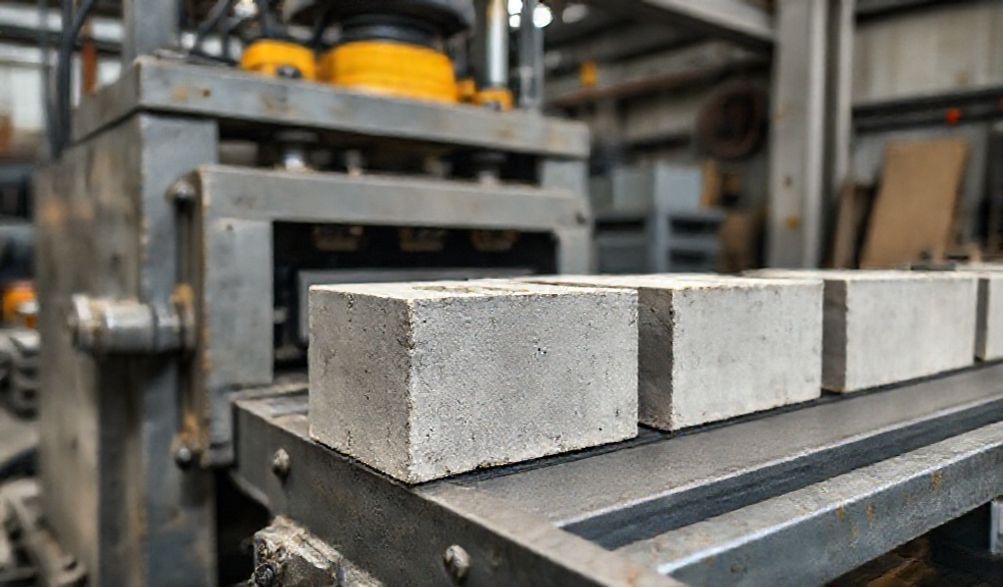
Preço da Máquina de Fazer Tijolos: Um Guia Completo para Compradores em 2024
Introdução
Imagine que você está em um terreno para seu próximo projeto habitacional, ou talvez em uma pequena oficina sonhando em expandir seu negócio de materiais de construção. A visão é clara: produzir seus próprios tijolos promete controle de qualidade, independência da cadeia de suprimentos e uma nova fonte de receita. Mas então, surge a questão prática:Quanto isso vai custar?Uma rápida pesquisa online por "preço de máquina de fazer tijolos" revela uma variedade vertiginosa—de alguns milhares a várias centenas de milhares de dólares. Como navegar por isso?
Como um profissional experiente neste setor, posso afirmar que focar apenas no preço inicial é o caminho mais rápido para um mau investimento. O custo real está no valor total ao longo da vida útil da máquina. Este guia foi elaborado a partir de anos analisando especificações dos fabricantes, conversando com proprietários de negócios e compreendendo a economia real da produção de tijolos. Nosso objetivo não é apenas listar preços, mas fornecer a você a estrutura necessária para tomar uma decisão baseada em valor, alinhada com suas metas de produção e orçamento.
Vamos desconstruir os fatores que determinam o custo, fornecer faixas de preço transparentes para 2024 de diferentes tipos de máquinas, revelar as despesas ocultas frequentemente negligenciadas e, mais importante, mostrar como calcular quando seu investimento vai se pagar. Embora os preços específicos flutuem com as condições do mercado, os princípios de avaliação que abordaremos permanecerão como sua ferramenta mais valiosa. Vamos além da etiqueta de preço e construamos uma base para um investimento lucrativo.
Entendendo os Fatores que Determinam o Preço da Máquina de Fabricar Tijolos
A variação no preço das máquinas de fabricar tijolos não é arbitrária. É um reflexo direto da engenharia, dos materiais e da capacidade. Compreender esses componentes é o primeiro passo para entender o valor.
Tipo de Máquina Principal e Nível de Automação
Este é o maior fator de custo. O nível de automação determina as necessidades de mão de obra, a velocidade de produção e a complexidade operacional.
- Máquinas Manuais:Operado inteiramente por mão de obra humana para mistura, alimentação e compressão. Eles têm acusto inicial mais baixomas ocusto de mão de obra contínuo mais altoe a menor saída.
- Máquinas Semiautomáticas:Eles atingem um equilíbrio. Automatizam o processo crítico de compressão e moldagem, frequentemente com um sistema hidráulico ou mecânico, mas podem exigir alimentação manual da matéria-prima ou remoção dos blocos acabados. Isso aumenta significativamente a produção, mantendo o investimento inicial em um nível gerenciável.
- Máquinas (ou Instalações) Totalmente Automáticas:Estas são linhas de produção completas. Elas integram alimentação automática de materiais, mistura, moldagem, cura e, às vezes, empilhamento/paleteização. A mão de obra é principalmente para supervisão e manutenção.alto investimento inicialé justificada pela produção massiva e pelos custos mínimos de mão de obra por bloco.
Capacidade de Produção (Blocos/Hora):Dentro de cada categoria de automação, o preço varia conforme a capacidade. Uma máquina que produz 1.000 blocos por hora custará significativamente menos do que uma que produz 5.000 blocos por hora, mesmo que ambas sejam semiautomáticas. Sempre correlacione o preço com a capacidade de produção comprovada.
Componentes Principais e Qualidade de Construção
Duas máquinas podem parecer semelhantes, mas a qualidade de seus componentes determina a longevidade, a frequência de manutenção e a consistência dos tijolos.
- Qualidade do Molde & Material:O molde define o seu produto final. Moldes de aço-liga com alto teor de cromo resistem à abrasão do cimento e dos agregados muito melhor do que o aço-carbono, durando anos a mais e produzindo tijolos com arestas mais nítidas. Essa qualidade tem um custo mais elevado.
- Sistema Hidráulico vs. Sistema Mecânico:Sistemas hidráulicos oferecem maior controle de pressão, resultando em tijolos mais densos e resistentes, e são geralmente mais duráveis sob uso constante. Eles são tipicamente mais caros do que sistemas puramente mecânicos de alavanca/prensa, mas oferecem desempenho e consistência superiores.
- Moldura e Estrutura:Uma máquina projetada para produção em alto volume precisa de uma estrutura robusta e resistente a vibrações, geralmente feita de chapas de aço reforçadas. Uma estrutura mais leve pode economizar custos inicialmente, mas levará a mais tempo de inatividade e problemas de alinhamento.
Marca, Origem e Suporte Pós-Venda
- Marcas Internacionais Premium vs. Fabricantes Locais ConfiáveisMarcas estabelecidas europeias ou norte-americanas frequentemente cobram preços mais altos devido à P&D avançada, controle de qualidade rigoroso e reconhecimento global da marca. No entanto, muitos fabricantes em países como China, Índia e Turquia agora produzemmáquinas de alta qualidade e confiáveis at a more competitive price point. The key is vetting the manufacturer thoroughly.
- The Real Cost of Support: A cheaper machine with no local technical support or a 6-month wait for spare parts can become a very expensive paperweight. The availability of on-site training, a comprehensive warranty (1+ years), and a ready inventory of spare parts is a critical part of the value equation. This support network has a cost built into the machine’s price.
Price Ranges for Different Types of Brick Making Machines
(Note: Prices are indicative for 2024 and can vary based on configuration, brand, and region. They are meant to provide a framework for budgeting.)
Manual & Small-Scale Machines (Economy Range: $1,000 – $10,000)
- Melhor Para: Entrepreneurs starting a small business, community projects, producing specialty bricks (like landscape pavers) in low volume, or for on-site production on a single construction project.
- O Que Esperar: These are often simple, mechanical press machines (like the popular “egg-laying” mobile types) or small stationary manual presses. Production is labor-intensive, with output ranging from 200 to 1,500 blocks per 8-hour day, depending on crew size.
- Exemplo: A basic manual concrete interlocking block machine might cost between $2,500 and $5,000.
Semi-Automatic Machines (Mid-Range: $10,000 – $50,000)
- Melhor Para: Growing block yards, medium-scale construction companies supplying their own projects, and businesses looking to seriously enter commercial production with a balanced investment.
- O Que Esperar: This range includes robust stationary machines with hydraulic systems, automatic vibration and compression, and possibly automatic pallet feeders. Output can range from 800 to 3,000+ blocks per hour. You are paying for dramatically higher output and significantly reduced labor per block.
- Exemplo: A quality semi-automatic hydraulic machine producing hollow blocks, with a production capacity of 2,000 blocks per hour, could fall in the $25,000 – $40,000 range.
Fully Automatic Stationary Plants (High Investment: $50,000 – $250,000+)
- Melhor Para: Large-scale commercial brick and block manufacturing plants, major infrastructure contractors, or businesses aiming to dominate regional supply.
- O Que Esperar: This is a complete factory in a line. It includes automatic batching plants, mixers, conveyor systems, the core brick machine, curing systems, and stackers. Labor is minimal (2-4 operators for the entire line). Production can easily exceed 5,000 to 10,000+ blocks per hour.
- Justifying the Cost: The ROI comes from unparalleled scale, minimal unit labor cost, and consistent, high-quality output that can secure large contracts.
Máquinas Móveis de Fabricação de Tijolos
- Price Considerations: These specialized machines, mounted on a trailer for on-site production, typically fall into the $15,000 – $60,000 range. Their price is driven by their unique value: eliminating transport costs for finished blocks. A medium-capacity mobile hydraulic block maker might cost $30,000-$40,000.
The Hidden Costs of Owning a Brick Making Machine
The invoice price is just the beginning. A savvy buyer budgets for the total cost of ownership.
Installation, Foundation, and Utilities
- Site Preparation: A stationary plant, especially a large automatic one, requires a level, reinforced concrete foundation. This is a significant civil work cost.
- Requisitos de Energia: Semi- and fully-automatic machines often require three-phase industrial power supply. Upgrading your site’s electrical infrastructure can be costly.
- Utilitários: Factor in the ongoing cost of electricity and water for the production process.
Raw Material Handling Systems
The machine itself needs to be fed. Costs can include:
* Feeders and Hoppers
* Pan or Twin-Shaft Mixers ($3,000 – $20,000+)
* Conveyor Belts to transport raw material or finished blocks.
* Curing Racks or Chambers.
Operational Costs: Labor, Power, and Maintenance
- Trabalho: Even automatic plants need skilled operators and maintenance staff.
- Consumo de Energia: Hydraulic systems and vibrators are power-hungry; calculate your local industrial electricity rate.
- Manutenção Preventiva: Regular oil changes, filter replacements, and part inspections are essential to avoid catastrophic breakdowns.
Spare Parts and Consumables (Molds, Pallets)
- Moldes: Even the best molds wear out. Budget for replacement molds specific to your brick designs.
- Paletes: The steel or wooden pallets that bricks cure on undergo constant wear and need periodic replacement.
- Standard Spare Parts: Keep an inventory of common wear parts like hydraulic seals, vibration motor bearings, and springs.
How to Get the Best Value for Your Investment
Define Your Needs Clearly: A Self-Assessment
Answer these questions before you look at a single price:
* Volume de Produção: What is your daily/weekly block requirement now? In 2 years?
* Tipos de Tijolos: Do you need to produce solid, hollow, interlocking, or paving blocks?
* Matérias-primas: Will you use concrete, fly ash, clay, or soil?
* Available Space & Power: What are the physical and electrical constraints of your site?
* Orçamento Total: What is your realistic budget, including hidden costs (add 20-30% to machine price)?
Where to Source: Direct Manufacturers, Local Dealers, or Import?
- Direct from Manufacturer (Overseas): Often the lowest FOB price. Risks: Complex logistics, customs clearance, potential language barriers, and uncertain after-sales support.
- Local Dealer/Distributor: Higher price, but includes import handling, local warranty, technical support, and spare parts inventory. This is often the best value for security.
- Local Manufacturer: Supports the local economy and minimizes logistics headaches. Compare their quality and specs rigorously against international standards.
Key Questions to Ask Before You Buy
- “What is included in the quoted price? (Delivery, installation, training?)”
- “What is the warranty period and what does it specifically cover?”
- “What is the lead time for critical spare parts, and are they stocked locally?”
- “Can you provide contact information for 2-3 current customers in a similar climate/region?”
- “Do you offer installation supervision and operator training?”
The Importance of Seeing a Demo or Visiting a Plant
If possible, always see the machine running. A video is not enough. Witness the build quality, noise level, ease of operation, and the quality of the finished blocks. Visit an existing customer’s plant to hear unfiltered feedback.
Calculating ROI: When Will Your Machine Pay for Itself?
This is the most critical calculation for your business plan.
A Simple ROI Framework
The core question is: How long until my net profit from the machine covers its total cost?
Simplified Formula:
Payback Period (Months) = Total Investment Cost / (Monthly Gross Profit - Monthly Operational Costs)
- Total Investment Cost: Machine price + shipping + installation + initial spare parts.
- Monthly Gross Profit: (Number of blocks sold per month * Profit per block).
- Monthly Operational Costs: Labor + raw materials + power + maintenance.
Case Study Examples
-
Scenario A (Semi-Auto Machine):
- Investment: $35,000
- Monthly Net Profit (after all ops costs): $3,500
- Payback: $35,000 / $3,500 = 10 months.
-
Scenario B (Small Manual Machine):
- Investment: $5,000
- Monthly Net Profit: $800
- Payback: $5,000 / $800 = 6.25 months. (While faster, the absolute profit ceiling is much lower).
Factors That Accelerate ROI
- High Local Demand & Stable Pricing
- Low-Cost, Consistent Raw Material Supply
- Efficient Operation minimizing waste and downtime.
- Diversified Product Range (making multiple block types for different markets).
Frequently Asked Questions (FAQ) About Brick Making Machine Prices
Q1: What is the cheapest brick making machine available?
A: You can find small, manual press machines online for as low as $1,000-$2,000. However, “cheapest” is rarely the best value. Consider production limits and high physical labor costs. It’s better to define the minimum viable output you need and find the most reliable machine in that budget.
Q2: Is it cheaper to import a machine from overseas?
A: The FOB (Free on Board) price may be lower, but you must add shipping, insurance, import duties, customs clearance fees, and local agent charges to get the “landed cost.” Often, the 15-30% savings on the base price is erased by these fees and the long-term risk of poor local support.
Q3: Can I get a good quality machine under $5,000?
A: In this budget, you are firmly in the manual machine category. You can get a decent quality manual machine for producing concrete blocks or pavers. For any form of automatic operation, this budget is unrealistic. Focus on build quality and mold material from reputable small-scale manufacturers.
Q4: Does a higher price always mean better quality?
A: Generally, yes—you pay for better components, engineering, and support. However, it’s not an absolute rule. Always cross-reference the price with the specifications (hydraulic pressure, motor power, production capacity), component brands (e.g., known hydraulic pump brands), and the depth of after-sales service. A mid-priced machine with excellent support can be better value than a premium machine with none.
Q5: Are there financing options available for these machines?
A: Yes. Many established manufacturers offer in-house financing or leasing plans. Local banks also provide equipment loans for industrial machinery. Some government agricultural or small-business development schemes also offer grants or subsidized loans for such capital investments. Always inquire directly.
Conclusão
Navigating the world of brick making machine prices is less about finding the lowest number and more about identifying the highest long-term value. The “right” price is the one that aligns with your production goals, operational capacity, and growth trajectory, ensuring the machine is an asset that drives profit, not a liability that drains it.
Your path forward is clear. Use the self-assessment checklist in this guide to crystallize your needs. Get detailed, specification-based quotes from at least three reputable suppliers—comparing not just price, but warranty, support, and delivery terms. Prioritize those who offer robust after-sales service. If the numbers align, request a custom ROI projection based on your local market conditions.
Remember, this purchase is the foundation of your production capability. Investing time in thorough due diligence now will pave the way for a sustainable and profitable brick-making business for years to come. Take this guide, use it as your roadmap, and make your investment with confidence.
<