
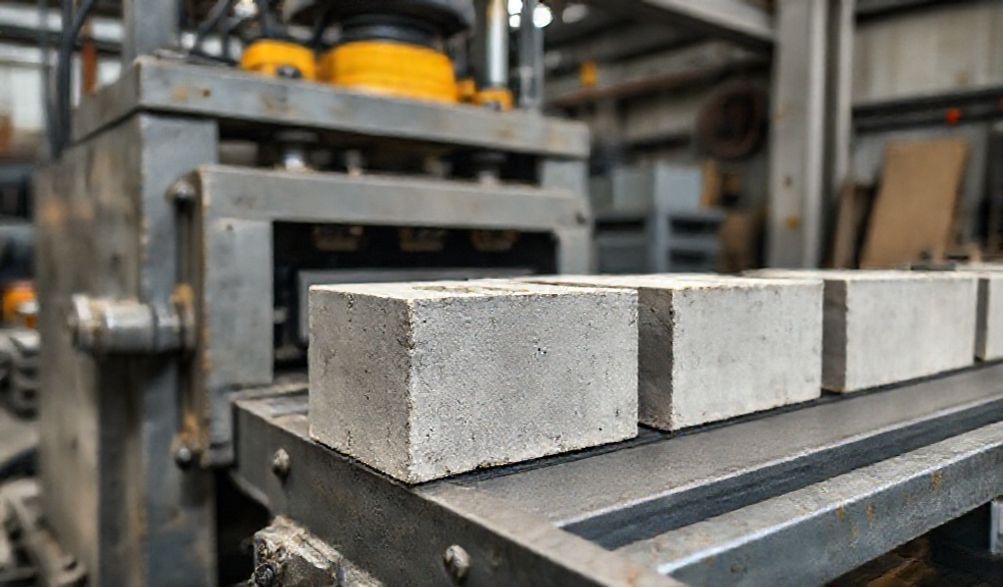
Цена на станок для производства кирпича: Полное руководство для покупателя на 2024 год
Введение
Представьте, что вы стоите на участке земли для вашего следующего жилищного проекта или, возможно, находитесь в небольшой мастерской, мечтая о расширении своего бизнеса по производству строительных материалов. Видение ясно: собственное производство кирпича сулит контроль качества, независимость от цепочек поставок и новый источник дохода. Но затем возникает практический вопрос:Сколько это будет стоить?Быстрый поиск в интернете по запросу "цена на машину для производства кирпича" показывает ошеломляющий разброс — от нескольких тысяч до нескольких сотен тысяч долларов. Как в этом разобраться?
Как опытный специалист в этой отрасли, я могу сказать, что сосредоточение исключительно на цене на этикетке — это самый быстрый путь к неудачным инвестициям. Истинная стоимость заключается в общей ценности в течение всего срока службы машины. Это руководство создано на основе многолетнего анализа спецификаций производителей, общения с владельцами бизнеса и понимания реальной экономики производства кирпича. Наша цель — не просто перечислить цены, а снабдить вас основой для принятия решения, основанного на ценности, которое соответствует вашим производственным задачам и бюджету.
Мы разберем факторы, определяющие стоимость, предоставим прозрачные ценовые диапазоны на 2024 год для различных типов станков, выявим часто упускаемые из виду скрытые расходы и, что важнее всего, покажем, как рассчитать срок окупаемости ваших инвестиций. Хотя конкретные цены колеблются в зависимости от рыночной конъюнктуры, принципы оценки, которые мы рассмотрим, останутся вашим самым ценным инструментом. Давайте выйдем за рамки ценника и заложим основу для прибыльных вложений.
Понимание факторов, определяющих цену машины для производства кирпича
Изменение цены на станки для производства кирпича не является произвольным. Это прямое отражение инженерных решений, материалов и производительности. Понимание этих компонентов — первый шаг к пониманию ценности.
Основной тип станка и уровень автоматизации
Это единственный самый значительный фактор, определяющий стоимость. Уровень автоматизации диктует требования к рабочей силе, скорость выпуска продукции и сложность операционных процессов.
- Ручные станки:Полностью управляемый ручным трудом для смешивания, подачи и прессования. Они имеютсамая низкая первоначальная стоимостьно最高持续劳动力成本以及最低输出。
- Полуавтоматические станки:Эти системы занимают золотую середину. Они автоматизируют ключевые процессы компрессии и формовки, часто используя гидравлические или механические системы, но могут требовать ручной подачи сырья или удаления готовых блоков. Это значительно повышает производительность, сохраняя при этом умеренные начальные инвестиции.
- Полностью автоматические машины (или установки).Это полностью автоматизированные производственные линии. Они объединяют автоматическую подачу материала, смешивание, формовку, отверждение, а иногда и штабелирование/паллетирование. Труд персонала в основном требуется для контроля и обслуживания.high initial investment is justified by massive output and minimal labor costs per block.
Производственная мощность (блоков/час): Within each automation category, price scales with capacity. A machine producing 1,000 blocks per hour will cost significantly less than one producing 5,000 blocks per hour, even if both are semi-automatic. Always correlate price with proven output capacity.
Ключевые компоненты и качество сборки
Two machines may look similar, but the quality of their components dictates longevity, maintenance frequency, and brick consistency.
- Качество и материал формы: The mold defines your final product. High-chromium alloy steel molds resist abrasion from cement and aggregate far better than mild steel, lasting years longer and producing bricks with sharper edges. This quality comes at a premium.
- Гидравлическая система против механической системы: Hydraulic systems offer greater pressure control, leading to denser, stronger bricks, and are generally more durable under constant use. They are typically more expensive than purely mechanical lever/press systems but offer superior performance and consistency.
- Каркас и структура: A machine designed for high-volume production needs a robust, vibration-resistant frame, often made from reinforced steel plates. A lighter frame might save cost initially but will lead to more downtime and alignment issues.
Brand, Origin, and After-Sales Support
- Premium International Brands vs. Reliable Local Manufacturers: Established European or North American brands often command higher prices due to advanced R&D, stringent quality control, and global brand recognition. However, many manufacturers in countries like China, India, and Turkey now produce high-quality, reliable machines at a more competitive price point. The key is vetting the manufacturer thoroughly.
- The Real Cost of Support: A cheaper machine with no local technical support or a 6-month wait for spare parts can become a very expensive paperweight. The availability of on-site training, a comprehensive warranty (1+ years), and a ready inventory of spare parts is a critical part of the value equation. This support network has a cost built into the machine’s price.
Price Ranges for Different Types of Brick Making Machines
(Note: Prices are indicative for 2024 and can vary based on configuration, brand, and region. They are meant to provide a framework for budgeting.)
Manual & Small-Scale Machines (Economy Range: $1,000 – $10,000)
- Лучше всего подходит для: Entrepreneurs starting a small business, community projects, producing specialty bricks (like landscape pavers) in low volume, or for on-site production on a single construction project.
- What to Expect: These are often simple, mechanical press machines (like the popular “egg-laying” mobile types) or small stationary manual presses. Production is labor-intensive, with output ranging from 200 to 1,500 blocks per 8-hour day, depending on crew size.
- Пример: A basic manual concrete interlocking block machine might cost between $2,500 and $5,000.
Semi-Automatic Machines (Mid-Range: $10,000 – $50,000)
- Лучше всего подходит для: Growing block yards, medium-scale construction companies supplying their own projects, and businesses looking to seriously enter commercial production with a balanced investment.
- What to Expect: This range includes robust stationary machines with hydraulic systems, automatic vibration and compression, and possibly automatic pallet feeders. Output can range from 800 to 3,000+ blocks per hour. You are paying for dramatically higher output and significantly reduced labor per block.
- Пример: A quality semi-automatic hydraulic machine producing hollow blocks, with a production capacity of 2,000 blocks per hour, could fall in the $25,000 – $40,000 range.
Fully Automatic Stationary Plants (High Investment: $50,000 – $250,000+)
- Лучше всего подходит для: Large-scale commercial brick and block manufacturing plants, major infrastructure contractors, or businesses aiming to dominate regional supply.
- What to Expect: This is a complete factory in a line. It includes automatic batching plants, mixers, conveyor systems, the core brick machine, curing systems, and stackers. Labor is minimal (2-4 operators for the entire line). Production can easily exceed 5,000 to 10,000+ blocks per hour.
- Justifying the Cost: The ROI comes from unparalleled scale, minimal unit labor cost, and consistent, high-quality output that can secure large contracts.
Мобильные станки для производства кирпича
- Price Considerations: These specialized machines, mounted on a trailer for on-site production, typically fall into the $15,000 – $60,000 range. Their price is driven by their unique value: eliminating transport costs for finished blocks. A medium-capacity mobile hydraulic block maker might cost $30,000-$40,000.
The Hidden Costs of Owning a Brick Making Machine
The invoice price is just the beginning. A savvy buyer budgets for the total cost of ownership.
Installation, Foundation, and Utilities
- Site Preparation: A stationary plant, especially a large automatic one, requires a level, reinforced concrete foundation. This is a significant civil work cost.
- Требования к питанию: Semi- and fully-automatic machines often require three-phase industrial power supply. Upgrading your site’s electrical infrastructure can be costly.
- Utilities: Factor in the ongoing cost of electricity and water for the production process.
Raw Material Handling Systems
The machine itself needs to be fed. Costs can include:
* Feeders and Hoppers
* Pan or Twin-Shaft Mixers ($3,000 – $20,000+)
* Conveyor Belts to transport raw material or finished blocks.
* Curing Racks or Chambers.
Operational Costs: Labor, Power, and Maintenance
- Труд: Even automatic plants need skilled operators and maintenance staff.
- Потребление электроэнергии: Hydraulic systems and vibrators are power-hungry; calculate your local industrial electricity rate.
- Профилактическое обслуживание: Regular oil changes, filter replacements, and part inspections are essential to avoid catastrophic breakdowns.
Spare Parts and Consumables (Molds, Pallets)
- Плесень: Even the best molds wear out. Budget for replacement molds specific to your brick designs.
- Поддоны: The steel or wooden pallets that bricks cure on undergo constant wear and need periodic replacement.
- Standard Spare Parts: Keep an inventory of common wear parts like hydraulic seals, vibration motor bearings, and springs.
How to Get the Best Value for Your Investment
Define Your Needs Clearly: A Self-Assessment
Answer these questions before you look at a single price:
* Объем производства: What is your daily/weekly block requirement now? In 2 years?
* Типы кирпичей: Do you need to produce solid, hollow, interlocking, or paving blocks?
* Сырье: Will you use concrete, fly ash, clay, or soil?
* Available Space & Power: What are the physical and electrical constraints of your site?
* Общий бюджет: What is your realistic budget, including hidden costs (add 20-30% to machine price)?
Where to Source: Direct Manufacturers, Local Dealers, or Import?
- Direct from Manufacturer (Overseas): Often the lowest FOB price. Risks: Complex logistics, customs clearance, potential language barriers, and uncertain after-sales support.
- Local Dealer/Distributor: Higher price, but includes import handling, local warranty, technical support, and spare parts inventory. This is often the best value for security.
- Local Manufacturer: Supports the local economy and minimizes logistics headaches. Compare their quality and specs rigorously against international standards.
Key Questions to Ask Before You Buy
- “What is included in the quoted price? (Delivery, installation, training?)”
- “What is the warranty period and what does it specifically cover?”
- “What is the lead time for critical spare parts, and are they stocked locally?”
- “Can you provide contact information for 2-3 current customers in a similar climate/region?”
- “Do you offer installation supervision and operator training?”
The Importance of Seeing a Demo or Visiting a Plant
If possible, always see the machine running. A video is not enough. Witness the build quality, noise level, ease of operation, and the quality of the finished blocks. Visit an existing customer’s plant to hear unfiltered feedback.
Calculating ROI: When Will Your Machine Pay for Itself?
This is the most critical calculation for your business plan.
A Simple ROI Framework
The core question is: How long until my net profit from the machine covers its total cost?
Simplified Formula:
Payback Period (Months) = Total Investment Cost / (Monthly Gross Profit - Monthly Operational Costs)
- Total Investment Cost: Machine price + shipping + installation + initial spare parts.
- Monthly Gross Profit: (Number of blocks sold per month * Profit per block).
- Monthly Operational Costs: Labor + raw materials + power + maintenance.
Case Study Examples
-
Scenario A (Semi-Auto Machine):
- Investment: $35,000
- Monthly Net Profit (after all ops costs): $3,500
- Payback: $35,000 / $3,500 = 10 months.
-
Scenario B (Small Manual Machine):
- Investment: $5,000
- Monthly Net Profit: $800
- Payback: $5,000 / $800 = 6.25 months. (While faster, the absolute profit ceiling is much lower).
Factors That Accelerate ROI
- High Local Demand & Stable Pricing
- Low-Cost, Consistent Raw Material Supply
- Efficient Operation minimizing waste and downtime.
- Diversified Product Range (making multiple block types for different markets).
Frequently Asked Questions (FAQ) About Brick Making Machine Prices
Q1: What is the cheapest brick making machine available?
А: You can find small, manual press machines online for as low as $1,000-$2,000. However, “cheapest” is rarely the best value. Consider production limits and high physical labor costs. It’s better to define the minimum viable output you need and find the most reliable machine in that budget.
Q2: Is it cheaper to import a machine from overseas?
А: The FOB (Free on Board) price may be lower, but you must add shipping, insurance, import duties, customs clearance fees, and local agent charges to get the “landed cost.” Often, the 15-30% savings on the base price is erased by these fees and the long-term risk of poor local support.
Q3: Can I get a good quality machine under $5,000?
А: In this budget, you are firmly in the 手动机床 category. You can get a decent quality manual machine for producing concrete blocks or pavers. For any form of automatic operation, this budget is unrealistic. Focus on build quality and mold material from reputable small-scale manufacturers.
Q4: Does a higher price always mean better quality?
А: Generally, yes—you pay for better components, engineering, and support. However, it’s not an absolute rule. Always cross-reference the price with the specifications (hydraulic pressure, motor power, production capacity), component brands (e.g., known hydraulic pump brands), and the depth of after-sales service. A mid-priced machine with excellent support can be better value than a premium machine with none.
Q5: Are there financing options available for these machines?
А: Yes. Many established manufacturers offer in-house financing or leasing plans. Local banks also provide equipment loans for industrial machinery. Some government agricultural or small-business development schemes also offer grants or subsidized loans for such capital investments. Always inquire directly.
Заключение
Navigating the world of brick making machine prices is less about finding the lowest number and more about identifying the highest long-term value. The “right” price is the one that aligns with your production goals, operational capacity, and growth trajectory, ensuring the machine is an asset that drives profit, not a liability that drains it.
Your path forward is clear. Use the self-assessment checklist in this guide to crystallize your needs. Get detailed, specification-based quotes from at least three reputable suppliers—comparing not just price, but warranty, support, and delivery terms. Prioritize those who offer robust after-sales service. If the numbers align, request a custom ROI projection based on your local market conditions.
Remember, this purchase is the foundation of your production capability. Investing time in thorough due diligence now will pave the way for a sustainable and profitable brick-making business for years to come. Take this guide, use it as your roadmap, and make your investment with confidence.
<