
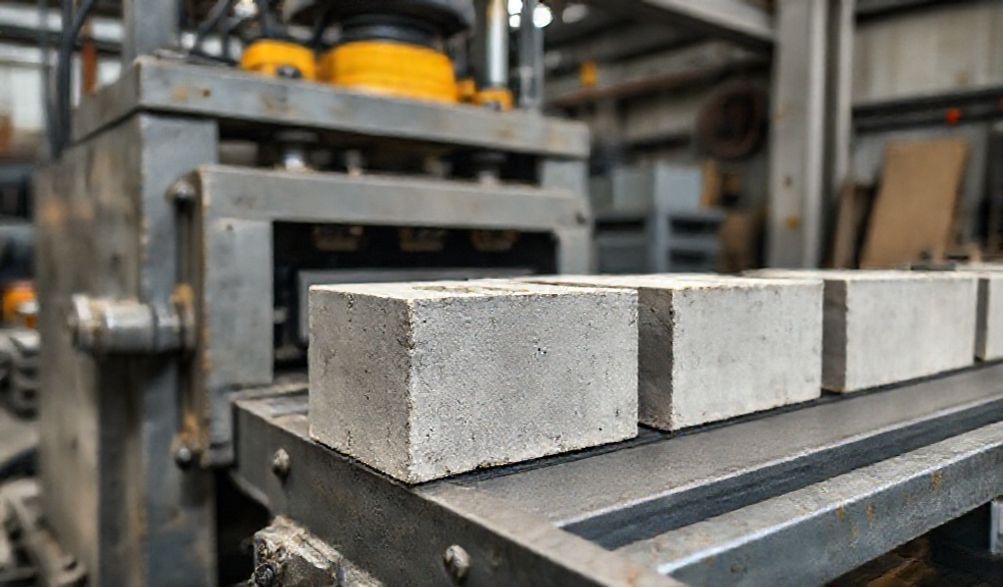
Giá Máy Làm Gạch: Hướng Dẫn Mua Hàng Toàn Diện Năm 2024
Giới thiệu
Hãy tưởng tượng bạn đang đứng trên một mảnh đất cho dự án nhà ở tiếp theo của mình, hoặc có lẽ bạn đang ở trong một xưởng nhỏ mơ ước mở rộng quy mô kinh doanh vật liệu xây dựng. Tầm nhìn đã rõ ràng: tự sản xuất gạch của riêng mình hứa hẹn kiểm soát chất lượng, độc lập về chuỗi cung ứng và một nguồn doanh thu mới. Nhưng rồi, câu hỏi thực tế ập đến:Cái này sẽ tốn bao nhiêu tiền?Một tìm kiếm nhanh trên mạng với từ khóa "giá máy làm gạch" sẽ cho thấy một mức giá chóng mặt—từ vài nghìn đến vài trăm nghìn đô la. Làm thế nào để bạn định hướng trong khoảng này?
Là một chuyên gia kỳ cựu trong ngành, tôi có thể khẳng định rằng chỉ chăm chăm vào giá niêm yết là con đường nhanh nhất dẫn đến một quyết định đầu tư tồi. Chi phí thực sự nằm ở tổng giá trị suốt vòng đời của máy. Hướng dẫn này được đúc kết từ nhiều năm phân tích thông số kỹ thuật của nhà sản xuất, trao đổi với các chủ doanh nghiệp và thấu hiểu bài toán kinh tế thực tế trong sản xuất gạch. Mục tiêu của chúng tôi không chỉ là liệt kê giá cả—mà là trang bị cho bạn một khuôn khổ để đưa ra quyết định dựa trên giá trị, phù hợp với mục tiêu sản xuất và ngân sách của bạn.
Chúng tôi sẽ phân tích các yếu tố quyết định chi phí, cung cấp mức giá minh bạch cho năm 2024 theo từng loại máy, chỉ ra những khoản chi phí ẩn thường bị bỏ qua, và quan trọng nhất là hướng dẫn bạn cách tính toán thời điểm hoàn vốn. Dù giá cả cụ thể có dao động theo tình hình thị trường, những nguyên tắc đánh giá chúng tôi đề cập sẽ luôn là công cụ quý giá nhất của bạn. Hãy vượt ra khỏi mức giá niêm yết và xây dựng nền tảng cho một khoản đầu tư sinh lời.
Hiểu Rõ Các Yếu Tố Quyết Định Giá Máy Sản Xuất Gạch
Sự chênh lệch giá cả của máy làm gạch không phải là ngẫu nhiên. Nó phản ánh trực tiếp chất lượng kỹ thuật, vật liệu và khả năng vận hành. Hiểu rõ những thành phần này là bước đầu tiên để nắm bắt giá trị thực sự.
Loại Máy Chính và Mức Độ Tự Động Hóa
Đây là yếu tố chủ chốt nhất thúc đẩy chi phí. Mức độ tự động hóa quyết định nhu cầu lao động, tốc độ sản xuất và độ phức tạp trong vận hành.
- Máy Móc Thủ Công:Hoạt động hoàn toàn bằng sức lao động con người để trộn, cho ăn và nén. Họ cóchi phí trả trước thấp nhấtnhưngchi phí lao động đang diễn ra cao nhấtvà đầu ra thấp nhất.
- Máy Bán Tự Động:Chúng tạo ra sự cân bằng. Chúng tự động hóa quy trình ép và định hình quan trọng, thường bằng hệ thống thủy lực hoặc cơ khí, nhưng có thể yêu cầu cấp liệu thô hoặc tháo sản phẩm hoàn chỉnh bằng tay. Điều này giúp tăng đáng kể sản lượng trong khi vẫn giữ mức đầu tư ban đầu ở mức có thể kiểm soát.
- Máy (hoặc Nhà máy) Hoàn toàn Tự động:Đây là các dây chuyền sản xuất hoàn chỉnh. Chúng tích hợp cấp liệu tự động, trộn, đúc khuôn, xử lý nhiệt, và đôi khi cả xếp chồng/đóng pallet. Lao động chủ yếu dành cho giám sát và bảo trì.đầu tư ban đầu caođược biện minh bởi sản lượng khổng lồ và chi phí lao động tối thiểu trên mỗi khối.
Năng suất sản xuất (Khối/Giờ):Trong từng loại hình tự động hóa, giá cả tỷ lệ thuận với công suất. Một máy sản xuất 1.000 khối mỗi giờ sẽ có giá thấp hơn đáng kể so với máy sản xuất 5.000 khối mỗi giờ, ngay cả khi cả hai đều là bán tự động. Luôn đối chiếu giá cả với năng lực sản xuất đã được kiểm chứng.
Các Thành Phần Chính và Chất Lượng Chế Tạo
Hai chiếc máy có thể trông giống nhau, nhưng chất lượng linh kiện của chúng quyết định độ bền, tần suất bảo trì và độ đồng đều của gạch.
- Chất Lượng Khuôn & Vật LiệuKhuôn định hình sản phẩm cuối cùng của bạn. Khuôn thép hợp kim crom cao chống mài mòn từ xi măng và cốt liệu tốt hơn nhiều so với thép nhẹ, bền hơn nhiều năm và tạo ra gạch có cạnh sắc nét hơn. Chất lượng này đi kèm với một mức giá cao hơn.
- Hệ Thống Thủy Lực so với Hệ Thống Cơ Khí:Hệ thống thủy lực cung cấp khả năng kiểm soát áp suất tốt hơn, tạo ra những viên gạch đặc chắc, bền hơn và thường có độ bền cao hơn khi sử dụng liên tục. Chúng thường đắt hơn các hệ thống đòn bẩy/cơ khí thuần túy nhưng mang lại hiệu suất và độ đồng nhất vượt trội.
- Khung và Cấu trúc:Một máy được thiết kế để sản xuất khối lượng lớn cần có khung chắc chắn, chịu được rung động, thường được làm từ thép tấm gia cố. Khung nhẹ hơn có thể tiết kiệm chi phí ban đầu nhưng sẽ dẫn đến thời gian ngừng hoạt động và các vấn đề về căn chỉnh nhiều hơn.
Thương hiệu, Xuất xứ và Hỗ trợ sau bán hàng
- Thương hiệu quốc tế cao cấp so với Nhà sản xuất địa phương đáng tin cậy:Các thương hiệu châu Âu hoặc Bắc Mỹ đã có uy tín thường có giá cao hơn nhờ vào nghiên cứu và phát triển tiên tiến, kiểm soát chất lượng nghiêm ngặt và sự nhận diện thương hiệu toàn cầu. Tuy nhiên, nhiều nhà sản xuất tại các quốc gia như Trung Quốc, Ấn Độ và Thổ Nhĩ Kỳ hiện đang sản xuấtchất lượng cao, máy móc đáng tin cậyvới mức giá cạnh tranh hơn. Điều quan trọng là phải thẩm định kỹ lưỡng nhà sản xuất.
- Chi Phí Thực Sự của Sự Hỗ Trợ:Một chiếc máy rẻ hơn nhưng không có hỗ trợ kỹ thuật tại chỗ hoặc phải chờ 6 tháng mới có phụ tùng thay thế có thể trở thành một chặn giấy rất đắt đỏ. Tính khả dụng củađào tạo tại chỗ, bảo hành toàn diện (trên 1 năm), và có sẵn kho phụ tùng thay thếlà một phần quan trọng của phương trình giá trị. Mạng lưới hỗ trợ này có chi phí được tính vào giá của máy.
Mức giá cho các loại máy làm gạch khác nhau
(注:价格为2024年参考值,实际可能因配置、品牌及地区差异而浮动,仅作为预算规划框架。)
Manual & Máy Móc Quy Mô Nhỏ (Phân Khúc Kinh Tế: $1,000 – $10,000)
- Tốt Nhất Cho: Entrepreneurs starting a small business, community projects, producing specialty bricks (like landscape pavers) in low volume, or for on-site production on a single construction project.
- What to Expect: These are often simple, mechanical press machines (like the popular “egg-laying” mobile types) or small stationary manual presses. Production is labor-intensive, with output ranging from 200 to 1,500 blocks per 8-hour day, depending on crew size.
- Ví dụ: A basic manual concrete interlocking block machine might cost between $2,500 and $5,000.
Semi-Automatic Machines (Mid-Range: $10,000 – $50,000)
- Tốt Nhất Cho: Growing block yards, medium-scale construction companies supplying their own projects, and businesses looking to seriously enter commercial production with a balanced investment.
- What to Expect: This range includes robust stationary machines with hydraulic systems, automatic vibration and compression, and possibly automatic pallet feeders. Output can range from 800 to 3,000+ blocks per hour. You are paying for dramatically higher output and significantly reduced labor per block.
- Ví dụ: A quality semi-automatic hydraulic machine producing hollow blocks, with a production capacity of 2,000 blocks per hour, could fall in the $25,000 – $40,000 range.
Fully Automatic Stationary Plants (High Investment: $50,000 – $250,000+)
- Tốt Nhất Cho: Large-scale commercial brick and block manufacturing plants, major infrastructure contractors, or businesses aiming to dominate regional supply.
- What to Expect: This is a complete factory in a line. It includes automatic batching plants, mixers, conveyor systems, the core brick machine, curing systems, and stackers. Labor is minimal (2-4 operators for the entire line). Production can easily exceed 5,000 to 10,000+ blocks per hour.
- Justifying the Cost: The ROI comes from unparalleled scale, minimal unit labor cost, and consistent, high-quality output that can secure large contracts.
Máy Sản Xuất Gạch Di Động
- Price Considerations: These specialized machines, mounted on a trailer for on-site production, typically fall into the $15,000 – $60,000 range. Their price is driven by their unique value: eliminating transport costs for finished blocks. A medium-capacity mobile hydraulic block maker might cost $30,000-$40,000.
The Hidden Costs of Owning a Brick Making Machine
The invoice price is just the beginning. A savvy buyer budgets for the total cost of ownership.
Installation, Foundation, and Utilities
- Site Preparation: A stationary plant, especially a large automatic one, requires a level, reinforced concrete foundation. This is a significant civil work cost.
- Yêu cầu về nguồn điện: Semi- and fully-automatic machines often require three-phase industrial power supply. Upgrading your site’s electrical infrastructure can be costly.
- Utilities: Factor in the ongoing cost of electricity and water for the production process.
Raw Material Handling Systems
The machine itself needs to be fed. Costs can include:
* Feeders and Hoppers
* Pan or Twin-Shaft Mixers ($3,000 – $20,000+)
* Conveyor Belts to transport raw material or finished blocks.
* Curing Racks or Chambers.
Operational Costs: Labor, Power, and Maintenance
- Lao động Even automatic plants need skilled operators and maintenance staff.
- Tiêu thụ điện năng: Hydraulic systems and vibrators are power-hungry; calculate your local industrial electricity rate.
- Preventive Maintenance: Regular oil changes, filter replacements, and part inspections are essential to avoid catastrophic breakdowns.
Spare Parts and Consumables (Molds, Pallets)
- Khuôn mẫu: Even the best molds wear out. Budget for replacement molds specific to your brick designs.
- Pallets: The steel or wooden pallets that bricks cure on undergo constant wear and need periodic replacement.
- Standard Spare Parts: Keep an inventory of common wear parts like hydraulic seals, vibration motor bearings, and springs.
How to Get the Best Value for Your Investment
Define Your Needs Clearly: A Self-Assessment
Answer these questions before you look at a single price:
* Production Volume: What is your daily/weekly block requirement now? In 2 years?
* Các Loại Gạch: Do you need to produce solid, hollow, interlocking, or paving blocks?
* Nguyên liệu thô: Will you use concrete, fly ash, clay, or soil?
* Available Space & Power: What are the physical and electrical constraints of your site?
* Tổng Ngân Sách: What is your realistic budget, including hidden costs (add 20-30% to machine price)?
Where to Source: Direct Manufacturers, Local Dealers, or Import?
- Direct from Manufacturer (Overseas): Often the lowest FOB price. Risks: Complex logistics, customs clearance, potential language barriers, and uncertain after-sales support.
- Local Dealer/Distributor: Higher price, but includes import handling, local warranty, technical support, and spare parts inventory. This is often the best value for security.
- Local Manufacturer: Supports the local economy and minimizes logistics headaches. Compare their quality and specs rigorously against international standards.
Key Questions to Ask Before You Buy
- “What is included in the quoted price? (Delivery, installation, training?)”
- “What is the warranty period and what does it specifically cover?”
- “What is the lead time for critical spare parts, and are they stocked locally?”
- “Can you provide contact information for 2-3 current customers in a similar climate/region?”
- “Do you offer installation supervision and operator training?”
The Importance of Seeing a Demo or Visiting a Plant
If possible, always see the machine running. A video is not enough. Witness the build quality, noise level, ease of operation, and the quality of the finished blocks. Visit an existing customer’s plant to hear unfiltered feedback.
Calculating ROI: When Will Your Machine Pay for Itself?
This is the most critical calculation for your business plan.
A Simple ROI Framework
The core question is: How long until my net profit from the machine covers its total cost?
Simplified Formula:
Payback Period (Months) = Total Investment Cost / (Monthly Gross Profit - Monthly Operational Costs)
- Total Investment Cost: Machine price + shipping + installation + initial spare parts.
- Monthly Gross Profit: (Number of blocks sold per month * Profit per block).
- Monthly Operational Costs: Labor + raw materials + power + maintenance.
Case Study Examples
-
Scenario A (Semi-Auto Machine):
- Investment: $35,000
- Monthly Net Profit (after all ops costs): $3,500
- Payback: $35,000 / $3,500 = 10 months.
-
Scenario B (Small Manual Machine):
- Investment: $5,000
- Monthly Net Profit: $800
- Payback: $5,000 / $800 = 6.25 months. (While faster, the absolute profit ceiling is much lower).
Factors That Accelerate ROI
- High Local Demand & Stable Pricing
- Low-Cost, Consistent Raw Material Supply
- Efficient Operation minimizing waste and downtime.
- Diversified Product Range (making multiple block types for different markets).
Frequently Asked Questions (FAQ) About Brick Making Machine Prices
Q1: What is the cheapest brick making machine available?
A: You can find small, manual press machines online for as low as $1,000-$2,000. However, “cheapest” is rarely the best value. Consider production limits and high physical labor costs. It’s better to define the minimum viable output you need and find the most reliable machine in that budget.
Q2: Is it cheaper to import a machine from overseas?
A: The FOB (Free on Board) price may be lower, but you must add shipping, insurance, import duties, customs clearance fees, and local agent charges to get the “landed cost.” Often, the 15-30% savings on the base price is erased by these fees and the long-term risk of poor local support.
Q3: Can I get a good quality machine under $5,000?
A: In this budget, you are firmly in the manual machine category. You can get a decent quality manual machine for producing concrete blocks or pavers. For any form of automatic operation, this budget is unrealistic. Focus on build quality and mold material from reputable small-scale manufacturers.
Q4: Does a higher price always mean better quality?
A: Generally, yes—you pay for better components, engineering, and support. However, it’s not an absolute rule. Always cross-reference the price with the specifications (hydraulic pressure, motor power, production capacity), component brands (e.g., known hydraulic pump brands), and the depth of after-sales service. A mid-priced machine with excellent support can be better value than a premium machine with none.
Q5: Are there financing options available for these machines?
A: Yes. Many established manufacturers offer in-house financing or leasing plans. Local banks also provide equipment loans for industrial machinery. Some government agricultural or small-business development schemes also offer grants or subsidized loans for such capital investments. Always inquire directly.
Conclusion
Navigating the world of brick making machine prices is less about finding the lowest number and more about identifying the highest long-term value. The “right” price is the one that aligns with your production goals, operational capacity, and growth trajectory, ensuring the machine is an asset that drives profit, not a liability that drains it.
Your path forward is clear. Use the self-assessment checklist in this guide to crystallize your needs. Get detailed, specification-based quotes from at least three reputable suppliers—comparing not just price, but warranty, support, and delivery terms. Prioritize those who offer robust after-sales service. If the numbers align, request a custom ROI projection based on your local market conditions.
Remember, this purchase is the foundation of your production capability. Investing time in thorough due diligence now will pave the way for a sustainable and profitable brick-making business for years to come. Take this guide, use it as your roadmap, and make your investment with confidence.
<