
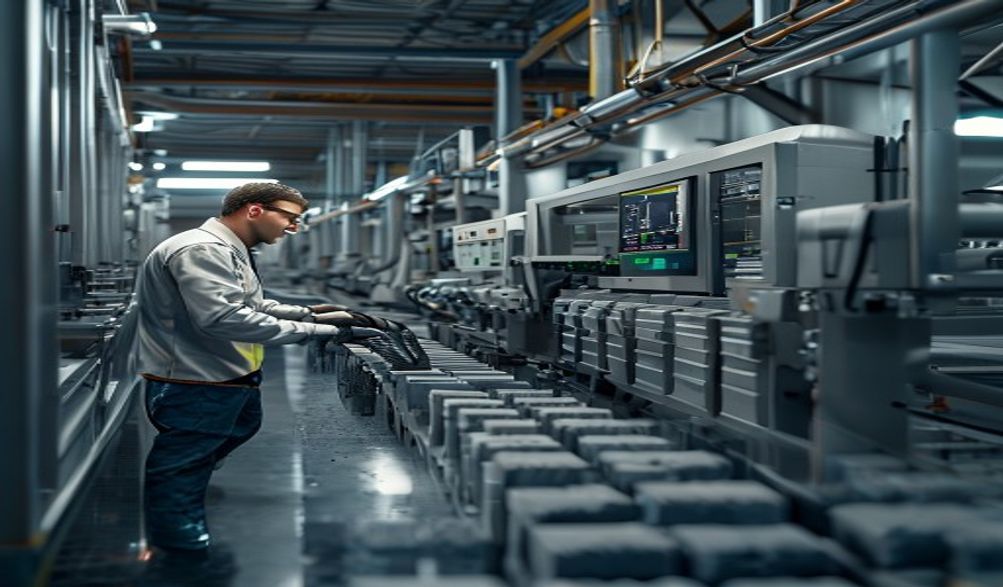
Cara Memilih Mesin Pembuat Bata Abu: Panduan Pembeli Ahli Tahun 2026
Pengantar
Lanskap konstruksi tengah berubah di bawah kaki kita. Seiring meningkatnya fokus global pada keberlanjutan dan efisiensi biaya, bata abu terbang telah muncul sebagai yang terdepan, mengubah limbah industri menjadi blok bangunan yang tahan lama dan ramah lingkungan. Namun, keberhasilan usaha hijau ini bergantung pada satu keputusan penting: memilih mesin pembuat bata abu yang tepat. Mesin yang tepat adalah mesin penggerak profitabilitas Anda, menentukan kualitas produk, efisiensi operasional, dan pada akhirnya, pengembalian investasi Anda.
Banyak pembeli, mulai dari calon pengusaha hingga kontraktor mapan, merasa kewalahan. Pasaran dibanjiri banyak pilihan, spesifikasi teknis bagaikan bahasa asing, dan ketakutan berinvestasi pada peralatan yang tidak cocok—atau lebih buruk lagi, tidak dapat diandalkan—sangat nyata. Pilihan yang buruk dapat menyebabkan waktu henti yang melumpuhkan, bata berkualitas rendah, dan tekanan finansial.
Panduan ini dirancang untuk menyaring kebisingan. Dibangun berdasarkan pengalaman industri dan keahlian teknis selama bertahun-tahun, panduan ini memberikan saran tepercaya dan dapat ditindaklanjuti untuk memperkuat keputusan Anda. Kami akan menavigasi pembelian yang kompleks ini bersama-sama, mencakup semuanya mulai dari menilai kebutuhan proyek Anda sendiri dan memahami berbagai jenis mesin, hingga mengevaluasi spesifikasi teknis, menghitung biaya sebenarnya, dan memeriksa pemasok. Pada akhirnya, Anda akan memiliki peta jalan yang jelas dan percaya diri untuk memilih mesin yang sempurna bagi kesuksesan Anda.
Memahami Kebutuhan dan Ruang Lingkup Proyek
Sebelum Anda melihat satu pun brosur mesin, Anda harus melihat ke dalam diri. Peralatan yang paling canggih pun menjadi beban jika tidak sesuai dengan kenyataan spesifik Anda. Langkah mendasar inilah yang menjadi titik awal bagi para operator berpengalaman.
Menilai Sumber & Kualitas Bahan Baku (Fly Ash) Anda
Mesin Anda hanya sebagus material yang Anda masukkan ke dalamnya. Abu terbang bukanlah komoditas yang seragam.
- Konsistensi adalah Raja:Pasokan abu terbang yang andal dan jangka panjang dengan sifat kimia dan fisik yang konsisten adalah suatu keharusan. Abu yang tidak konsisten menyebabkan kualitas bata yang tidak dapat diprediksi, sehingga memaksa penyesuaian manual terus-menerus pada campuran Anda.
- Kualitas Menentukan Pilihan MesinKomposisi abu Anda (misalnya, kadar kapur, kehalusan) secara langsung memengaruhi proses. Abu dengan kadar kapur rendah (Kelas F) sering kali memerlukan tambahan kapur atau semen untuk pengikatan yang tepat. Sistem pencampuran mesin Anda harus cukup kokoh untuk menangani bahan tambahan ini secara seragam. Memahami kualitas abu Anda sejak awal mencegah modifikasi ulang yang mahal di kemudian hari.
Menentukan Target Produksi Anda: Output & Jenis Bata
Tujuan yang tidak jelas mengarah pada pilihan yang tidak jelas—dan sering kali salah. Lebih spesifik dengan angka-angka.
- Hitung Kapasitas Realistis:Jangan hanya berpikir "hasil tinggi." Hitung kebutuhanmu.potong per shift atau per bulanberdasarkan pesanan yang sudah dikonfirmasi atau permintaan pasar. Mesin yang memproduksi 10.000 batu bata per shift 8 jam terdengar bagus, tetapi jika Anda hanya membutuhkan 2.000, Anda kelebihan investasi dan kurang memanfaatkan.
- Determine Your Product Portfolio: What are you selling?
- Bata Padat: For general masonry.
- Bata Ringan: For load-bearing walls, offering lighter weight and thermal insulation.
- Paving Block & Batu Bata Saling Mengunci: For landscaping and paving.
Different bricks require different mold designs and, sometimes, different compaction mechanisms. Ensure your chosen machine can accommodate the molds for your desired product range.
Site & Infrastructure Considerations
The machine must fit your physical and operational environment.
- Ruang Angkasa: You need space for more than just the machine. Factor in:
- Raw material storage (fly ash, sand, lime).
- Mixing area.
- Production floor.
- Curing area (critical for 14-28 days).
- Finished goods storage.
- Kekuasaan: What is available? A fully automatic hydraulic machine requires a stable, high-capacity three-phase electrical connection. A manual machine may only need basic single-phase power for a small mixer.
- Tenaga Kerja: Match the machine’s automation to your labor pool. A fully automatic machine needs 1-2 skilled operators. A semi-automatic machine may require 4-5 workers for loading, operation, and stacking. Assess local skill levels and training availability.
Types of Ash Brick Making Machines: A Technical Overview
Understanding the core technologies available is the first step in matching capability to your needs.
Mesin Manual & Semi-Otomatis
- Proses: Material is mixed separately and manually fed into a mold. Pressure is applied via a mechanical lever or a small hydraulic system. Bricks are ejected manually and carried to the curing area.
- Kelebihan:
- Low Capital Cost: Minimal initial investment.
- Low Power Consumption: Often runs on basic electricity or even manual power.
- Kesederhanaan: Easier to understand and repair.
- Kekurangan:
- Rendah Keluaran:Biasanya 500-2.000 bata per hari.
- Intensitas Tenaga Kerja yang Tinggi: Physically demanding, requiring multiple workers.
- Ketidakkonsistenan: Brick density and strength can vary due to manual operations.
- Ideal Untuk: Small-scale startups, community projects, rural areas with limited infrastructure, or businesses testing the market with minimal risk.
Mesin Stasioner Sepenuhnya Otomatis
- Proses: An integrated system where material feeding, mixing, compaction, and brick ejection are automated via programmable logic controllers (PLCs). The operator primarily monitors the process.
- Kelebihan:
- High Consistency: Automated pressure and cycles ensure every brick meets the same standard.
- Medium-High Output: Ranges from 4,000 to over 15,000 bricks per shift.
- Tenaga Kerja yang Dikurangi: Requires only 1-2 trained personnel.
- Kekurangan:
- Higher Investment: Significant upfront cost.
- Complexity: Requires proper installation, training, and maintenance.
- Power Dependency: Needs a stable, high-capacity power supply.
- Ideal Untuk: Established medium to large-scale businesses, supplying consistent demand in urban markets, and projects where quality certification (like IS codes) is mandatory.
Fully Automatic Mobile Block Making Machines
- Proses: These are high-output plants, often with a built-in pan mixer and conveyor system. They produce bricks directly on a concrete pallet, which is then moved to curing via a rack system. They are “mobile” in the sense they can be set up on different sites, though setup is major.
- Kelebihan:
- Highest Output: Can produce 20,000+ bricks per shift.
- Superior Product Density: Often use high-pressure vibration for extremely strong bricks/blocks.
- Versatile Siting: Can be established at a central block yard.
- Kekurangan:
- Highest Investment: The most expensive option by far.
- Maximum Infrastructure Needed: Requires a large, solid, level floor (often concrete) and major power supply.
- Complex Operation: Requires a dedicated, skilled team.
- Ideal Untuk: Large-scale commercial production plants, major infrastructure projects, and dedicated block manufacturing yards supplying to a city or region.
Spesifikasi Teknis Utama yang Perlu Dievaluasi
Now, dive into the details. These specs separate marketing hype from operational reality.
Spesifikasi Inti Mesin
- Tekanan (Tonase): This is arguably the most critical spec. Pressure determines brick density and compressive strength. For quality fly ash bricks meeting IS 12894 or similar standards, you typically need a machine capable of applying at least 80-100 tons of pressure. Don’t compromise here.
- Waktu Siklus & Kapasitas Produksi: Cycle time is the time to produce one brick/block. A faster cycle means higher capacity. However, verify the stated “bricks per hour” claim. Is it for a single brick mold or a multi-cavity mold producing 4-6 bricks per cycle?
- Jenis Cetakan & Kustomisasi: Molds are the heart of your product line.
- Dapat Dipertukarkan: How quickly and easily can molds be changed? Look for standardized, bolted systems.
- Daya Tahan: Molds should be made from hardened, high-chrome steel to withstand abrasion.
- Availability: Can the supplier provide custom mold designs for special blocks?
- Tingkat Otomasi: “Automatic” can mean different things. Clarify:
- Pemberian Makan: Manual, conveyor, or automated hopper?
- Mencampur: Separate mixer or integrated?
- Penumpukan: Does it include an automatic stacker, or is this manual?
Power & Performance Metrics
- Motor & Hydraulics: Don’t just note the motor power (e.g., 15 HP). Inquire about the quality of the hydraulic pump, valves, and cylinders. Reputable brands (like Rexroth, Parker, Yuken) indicate a longer-lasting, more reliable system. A cheap hydraulic system is a primary source of leaks and failures.
- Konsumsi Energi: Ask for the machine’s rated power consumption (kW). Factor this into your long-term operational cost analysis. A more efficient machine may have a higher price tag but lower running costs.
Finished Product Quality Parameters
The machine must be engineered to produce a sellable product.
- Akurasi Dimensi: The machine must hold tight tolerances (e.g., +/- 1mm) to ensure bricks are uniform and easy to lay.
- Surface Finish & Compaction: The brick should have a smooth, dense surface straight from the mold, indicating proper compaction. Poor compaction leads to crumbling edges and low strength.
- Standard Compliance: The machine should be demonstrably capable of producing bricks that can pass standard tests for compressive strength, water absorption, and dimensional tolerance as per IS 12894 (India) or ASTM C90 (International).
Total Cost of Ownership: Melampaui Harga yang Tertera
The purchase price is just the entry fee. Smart buyers calculate the total cost of ownership (TCO).
Initial Investment Breakdown
- Machine Cost: The base price.
- Biaya Cetakan: Often extra. Price your initial set of molds.
- Pemasangan & Pengoperasian: Will the supplier install it? Is there a cost?
- Initial Training: Is operator training included, or is it an added fee?
- Pengiriman & Logistik: A major cost, especially for international purchases.
Operational & Maintenance Costs
This is where your profit margin is made or lost.
- Kekuasaan: Calculate daily consumption based on operational hours.
- Tenaga Kerja: Factor in wages for the required number of operators.
- Routine Maintenance: Oil, filters, grease, and regular wear parts.
- Suku Cadang:Theavailability and cost of local spares (like seals, hoses, relays) is crucial. A machine with no local support can be down for weeks waiting for a single part.
Calculating ROI (Return on Investment)
Create a simple framework:
1. Total Annual Cost: Sum of all fixed (depreciation, loan interest) and variable (power, labor, maintenance, raw materials) costs.
2. Annual Revenue: Estimated bricks produced * sale price per brick.
3. Annual Profit: Revenue – Total Cost.
4. Periode Pengembalian Modal: Total Initial Investment / Annual Profit.
A detailed ROI analysis turns an emotional purchase into a strategic business decision.
Vetting Manufacturers and Ensuring After-Sales Support
Your relationship with the manufacturer is as important as the machine itself.
How to Research and Shortlist Manufacturers
- Reputation & Longevity: Prioritize companies with a solid track record of 10+ years. They’ve likely solved common problems.
- Portofolio Klien: Ask for references, preferably in your region or with similar production goals. A video testimonial is more valuable than a stock photo.
- Site Visit: If feasible, visit the manufacturer’s factory. Assess their build quality, testing procedures, and organization. Even more powerful: visit an existing customer’s plant to see the machine running.
Non-Negotiable After-Sales Services
- Garansi Komprehensif: A minimum of 12 months on the entire machine, with clear terms on what’s covered and what’s considered wear-and-tear.
- Pemasangan & Pelatihan: Insist on supervised installation and hands-on training for your operators at your site.
- Dukungan Teknis: Guaranteed access to technical support via phone, WhatsApp, or video call. Ask about their average response time.
- Pasokan Suku Cadang: Get a written commitment on the availability of critical spare parts and their price list.
Requesting and Comparing Quotations
A professional quote should be detailed and transparent.
- What to Demand: Itemized pricing (machine, molds, accessories), detailed technical specifications, drawings, warranty certificate, service terms, and delivery schedule.
- Red Flags: Vague specs, pressure to pay 100% upfront, refusal to provide customer contacts, quotes significantly lower than the market average (often indicating substandard components), and poor communication.
Pertanyaan yang Sering Diajukan (FAQ)
Q1: What is the average cost range for an ash brick making machine?
A: Prices vary dramatically. A small manual machine can start around $2,000 – $5,000. A robust semi-automatic machine may range from $10.000 – $25.000. Fully automatic stationary machines typically fall between $30,000 – $80,000, while large mobile plants can exceed $150,000. Always get detailed, itemized quotes for accurate comparison.
Q2: Can one machine produce different types and sizes of bricks?
A: Yes, most machines can—but only with interchangeable molds. The key question for the supplier is: How quick and easy is the mold changeover? Some systems allow changes in 15 minutes; others may take hours. Also, confirm the cost of each additional mold.
Q3: How much manpower is required to operate a semi-automatic vs. fully automatic machine?
A:Untuk sebuahsemi-otomatis machine, plan for 3-5 workers (material handling, feeding the machine, stacking bricks). For a sepenuhnya otomatis machine, you typically need 1-2 operator terampil primarily for monitoring, minor adjustments, and managing the output stacker.
Q4: What are the most common maintenance issues, and how can I prevent them?
A: The most common issues are hydraulic oil leaks (from poor-quality seals/hoses), mold wear, and electrical control panel faults. Prevention is straightforward: follow the supplier’s preventive maintenance schedule religiously, use recommended oils and greases, and ensure operators are properly trained to spot early warning signs like unusual noises or pressure drops.
Q5: How do I ensure the bricks produced meet official quality standards?
A: First, ensure your machine has sufficient pressure (tonnage). Second, maintain a consistent, high-quality raw material mix recipe. Third, follow proper curing procedures (keeping bricks moist for 14-28 days). Finally, conduct periodic compressive strength and water absorption tests at a certified construction materials laboratory. The machine enables quality, but you must control the process.
Kesimpulan
Choosing an ash brick making machine is a strategic journey, not a simple purchase. It begins with a clear-eyed assessment of your own needs—your materials, your goals, your site. From there, you match those needs to the appropriate machine type, scrutinizing the technical specifications that truly matter: pressure, capacity, and build quality. You then look beyond the price tag to understand the total cost of ownership and, most importantly, partner with a manufacturer whose reputation and after-sales support are beyond reproach.
This investment is the foundation of your business. Rushing this decision, or basing it solely on the lowest price, is the most common and costly mistake. Use this guide as your definitive checklist. Be patient, ask the hard questions, and conduct thorough due diligence. By leveraging this expert-backed approach, you will not just buy a machine; you will invest in a reliable, profitable future in the sustainable construction industry. Take this knowledge, engage with suppliers confidently, and build your success from the ground up.
<