
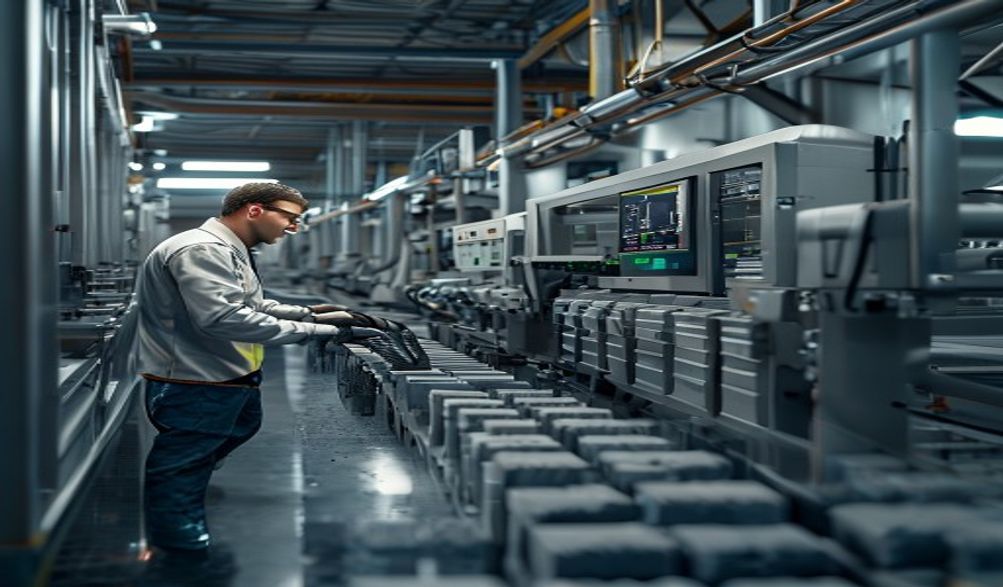
Paano Pumili ng Ash Brick Making Machine: Isang Gabay para sa Mamimili mula sa Eksperto noong 2026
Panimula
Ang tanawin ng konstruksyon ay nagbabago sa ilalim ng ating mga paa. Habang lumalalim ang pandaigdigang pagtuon sa pagpapanatili at kahusayan sa gastos, ang mga laryong fly ash ay lumitaw bilang nangunguna, na ginagawang matibay at eco-friendly na mga bloke ng gusali ang basurang industriyal. Gayunpaman, ang tagumpay ng berdeng pakikipagsapalarang ito ay nakasalalay sa isang mahalagang desisyon: ang pagpili ng tamang makina para sa paggawa ng laryong abo. Ang tamang makina ang makina ng iyong kakayahang kumita, na nagtatakda ng kalidad ng produkto, kahusayan sa operasyon, at sa huli, ang iyong balik sa pamumuhunan.
Maraming mamimili, mula sa mga naghahangad na negosyante hanggang sa mga batikang kontratista, ang nakararamdam ng labis na pagkabalisa. Ang merkado ay puno ng mga opsyon, ang mga teknikal na detalye ay tila banyagang wika, at ang takot na mamuhunan sa hindi angkop—o mas masahol pa, sa hindi mapagkakatiwalaang kagamitan—ay totoo. Ang isang maling pagpili ay maaaring humantong sa nakapipinsalang downtime, mga substandard na laryo, at pinansiyal na paghihirap.
Ang gabay na ito ay idinisenyo upang lampasan ang kalat. Batay sa mga taon ng karanasan sa industriya at teknikal na kadalubhasaan, nagbibigay ito ng mapagkakatiwalaan at naisasagawang payo upang palakasin ang iyong desisyon. Sabay nating dadaanan ang masalimuot na pagbiling ito, sumasaklaw mula sa pagtatasa ng iyong sariling pangangailangan sa proyekto at pag-unawa sa iba't ibang uri ng makina, hanggang sa pagsusuri ng teknikal na specs, pagkalkula ng tunay na gastos, at pag-verify ng mga supplier. Sa pagtatapos, magkakaroon ka ng malinaw at kumpiyansang roadmap upang piliin ang perpektong makina para sa iyong tagumpay.
Pag-unawa sa Iyong Pangangailangan at Saklaw ng Proyekto
Bago ka tumingin sa kahit anong brochure ng makina, kailangan mong tumingin sa loob ng iyong sarili. Ang pinaka-advanced na kagamitan ay pabigat kung hindi ito naaayon sa iyong partikular na realidad. Ang pundasyong hakbang na ito ang pinagsisimulan ng mga bihasang operator.
Pagsusuri ng Iyong Pinagmumulan at Kalidad ng Hilaw na Materyales (Fly Ash)
Ang iyong makina ay kasinghusay lamang ng materyal na ipinapakain mo rito. Ang fly ash ay hindi isang unipormeng kalakal.
- Ang Pagkakapare-pareho ang Hari:Ang isang mapagkakatiwalaan at pangmatagalang supply ng fly ash na may pare-parehong kemikal at pisikal na katangian ay hindi mapag-usapan. Ang hindi pare-parehong abo ay nagdudulot ng hindi mahulaan na kalidad ng ladrilyo, na pumipilit sa patuloy na manu-manong pagsasaayos ng iyong halo.
- Ang Kalidad ang Nagdidikta sa Pagpili ng Makina.Ang komposisyon ng iyong abo (hal., nilalaman ng dayap, kagaspangan) ay direktang nakakaapekto sa proseso. Ang mababang-dayap (Class F) na abo ay madalas nangangailangan ng karagdagang dayap o semento para sa wastong pagbubuklod. Ang sistema ng paghahalo ng iyong makina ay dapat sapat na matibay upang mahawakan nang pantay-pantay ang mga additives na ito. Ang pag-unawa sa kalidad ng iyong abo mula sa simula ay pumipigil sa magastos na pag-retrofit sa hinaharap.
Pagtukoy sa Iyong Mga Layunin sa Produksyon: Output at Uri ng Brick
Ang mga malabong layunin ay humahantong sa malabong—at madalas na maling—mga desisyon. Maging tiyak gamit ang mga numero.
- Kalkulahin ang Makatotohanang Kapasidad:Huwag basta isipin ang “mataas na output.” Kalkulahin ang iyong kinakailangan.bawat shift o bawat buwanbatay sa kumpirmadong order o pangangailangan ng merkado. Ang isang makina na gumagawa ng 10,000 laryo kada 8-oras na shift ay mukhang mahusay, ngunit kung kailangan mo lang ng 2,000, sobra-sobra ang iyong puhunan at hindi mo ito nagagamit nang husto.
- Determine Your Product Portfolio: What are you selling?
- Masinsinang Bricks: For general masonry.
- Hollow Blocks: For load-bearing walls, offering lighter weight and thermal insulation.
- Mga Paver at Interlocking na Bloke: For landscaping and paving.
Different bricks require different mold designs and, sometimes, different compaction mechanisms. Ensure your chosen machine can accommodate the molds for your desired product range.
Site & Infrastructure Considerations
The machine must fit your physical and operational environment.
- Kosmos: You need space for more than just the machine. Factor in:
- Raw material storage (fly ash, sand, lime).
- Mixing area.
- Production floor.
- Curing area (critical for 14-28 days).
- Finished goods storage.
- Kapangyarihan: What is available? A fully automatic hydraulic machine requires a stable, high-capacity three-phase electrical connection. A manual machine may only need basic single-phase power for a small mixer.
- Paggawa: Match the machine’s automation to your labor pool. A fully automatic machine needs 1-2 skilled operators. A semi-automatic machine may require 4-5 workers for loading, operation, and stacking. Assess local skill levels and training availability.
Types of Ash Brick Making Machines: A Technical Overview
Understanding the core technologies available is the first step in matching capability to your needs.
Manual at Semi-Awtomatikong Makina
- Proseso: Material is mixed separately and manually fed into a mold. Pressure is applied via a mechanical lever or a small hydraulic system. Bricks are ejected manually and carried to the curing area.
- Mga Kalamangan:
- Low Capital Cost: Minimal initial investment.
- Low Power Consumption: Often runs on basic electricity or even manual power.
- Kagaanan: Easier to understand and repair.
- Mga Disbentahe:
- Mababang OutputKaraniwan ay 500-2,000 na ladrilyo bawat araw.
- Mataas na Antas ng Paggawa Physically demanding, requiring multiple workers.
- Hindi pagkakasunod-sunod: Brick density and strength can vary due to manual operations.
- Angkop Para Sa: Small-scale startups, community projects, rural areas with limited infrastructure, or businesses testing the market with minimal risk.
Ganap na Awtomatikong Nakatigil na Makinarya
- Proseso: An integrated system where material feeding, mixing, compaction, and brick ejection are automated via programmable logic controllers (PLCs). The operator primarily monitors the process.
- Mga Kalamangan:
- High Consistency: Automated pressure and cycles ensure every brick meets the same standard.
- Medium-High Output: Ranges from 4,000 to over 15,000 bricks per shift.
- Nabawasang Paggawa: Requires only 1-2 trained personnel.
- Mga Disbentahe:
- Higher Investment: Significant upfront cost.
- Complexity: Requires proper installation, training, and maintenance.
- Power Dependency: Needs a stable, high-capacity power supply.
- Angkop Para Sa: Established medium to large-scale businesses, supplying consistent demand in urban markets, and projects where quality certification (like IS codes) is mandatory.
Fully Automatic Mobile Block Making Machines
- Proseso: These are high-output plants, often with a built-in pan mixer and conveyor system. They produce bricks directly on a concrete pallet, which is then moved to curing via a rack system. They are “mobile” in the sense they can be set up on different sites, though setup is major.
- Mga Kalamangan:
- Highest Output: Can produce 20,000+ bricks per shift.
- Superior Product Density: Often use high-pressure vibration for extremely strong bricks/blocks.
- Versatile Siting: Can be established at a central block yard.
- Mga Disbentahe:
- Highest Investment: The most expensive option by far.
- Maximum Infrastructure Needed: Requires a large, solid, level floor (often concrete) and major power supply.
- Complex Operation: Requires a dedicated, skilled team.
- Angkop Para Sa: Large-scale commercial production plants, major infrastructure projects, and dedicated block manufacturing yards supplying to a city or region.
Mga Pangunahing Teknikal na Espesipikasyon na Dapat Suriin
Now, dive into the details. These specs separate marketing hype from operational reality.
Mga Pangunahing Espesipikasyon ng Makina
- Puwersa (Tonelahe): This is arguably the most critical spec. Pressure determines brick density and compressive strength. For quality fly ash bricks meeting IS 12894 or similar standards, you typically need a machine capable of applying at least 80-100 tons of pressure. Don’t compromise here.
- Oras ng Ikot at Kapasidad sa Produksyon: Cycle time is the time to produce one brick/block. A faster cycle means higher capacity. However, verify the stated “bricks per hour” claim. Is it for a single brick mold or a multi-cavity mold producing 4-6 bricks per cycle?
- Uri ng Molde at Pagpapasadya: Molds are the heart of your product line.
- Interchangeability: How quickly and easily can molds be changed? Look for standardized, bolted systems.
- Tibay: Molds should be made from hardened, high-chrome steel to withstand abrasion.
- Availability: Can the supplier provide custom mold designs for special blocks?
- Antas ng Automation: “Automatic” can mean different things. Clarify:
- Pagpapakain: Manual, conveyor, or automated hopper?
- Paghahalo: Separate mixer or integrated?
- Pagtitipon-tipon: Does it include an automatic stacker, or is this manual?
Power & Performance Metrics
- Motor & Hydraulics: Don’t just note the motor power (e.g., 15 HP). Inquire about the quality of the hydraulic pump, valves, and cylinders. Reputable brands (like Rexroth, Parker, Yuken) indicate a longer-lasting, more reliable system. A cheap hydraulic system is a primary source of leaks and failures.
- Pagkonsumo ng Enerhiya: Ask for the machine’s rated power consumption (kW). Factor this into your long-term operational cost analysis. A more efficient machine may have a higher price tag but lower running costs.
Finished Product Quality Parameters
The machine must be engineered to produce a sellable product.
- Katumpakan ng Dimensiyon: The machine must hold tight tolerances (e.g., +/- 1mm) to ensure bricks are uniform and easy to lay.
- Surface Finish & Compaction: The brick should have a smooth, dense surface straight from the mold, indicating proper compaction. Poor compaction leads to crumbling edges and low strength.
- Standard Compliance: The machine should be demonstrably capable of producing bricks that can pass standard tests for compressive strength, water absorption, and dimensional tolerance as per IS 12894 (India) or ASTM C90 (International).
The Total Cost of Ownership: Beyond the Sticker Price
The purchase price is just the entry fee. Smart buyers calculate the total cost of ownership (TCO).
Initial Investment Breakdown
- Machine Cost: The base price.
- Gastos sa Molde: Often extra. Price your initial set of molds.
- Pagkakabit at Pagkakomisyon: Will the supplier install it? Is there a cost?
- Initial Training: Is operator training included, or is it an added fee?
- Paghahatid at Logistics: A major cost, especially for international purchases.
Operational & Maintenance Costs
This is where your profit margin is made or lost.
- Kapangyarihan: Calculate daily consumption based on operational hours.
- Paggawa: Factor in wages for the required number of operators.
- Routine Maintenance: Oil, filters, grease, and regular wear parts.
- Piesa ng Ekstrang Bahagi:Angavailability and cost of local spares (like seals, hoses, relays) is crucial. A machine with no local support can be down for weeks waiting for a single part.
Calculating ROI (Return on Investment)
Create a simple framework:
1. Total Annual Cost: Sum of all fixed (depreciation, loan interest) and variable (power, labor, maintenance, raw materials) costs.
2. Annual Revenue: Estimated bricks produced * sale price per brick.
3. Annual Profit: Revenue – Total Cost.
4. Payback Period: Total Initial Investment / Annual Profit.
A detailed ROI analysis turns an emotional purchase into a strategic business decision.
Vetting Manufacturers and Ensuring After-Sales Support
Your relationship with the manufacturer is as important as the machine itself.
How to Research and Shortlist Manufacturers
- Reputation & Longevity: Prioritize companies with a solid track record of 10+ years. They’ve likely solved common problems.
- Client Portfolio: Ask for references, preferably in your region or with similar production goals. A video testimonial is more valuable than a stock photo.
- Site Visit: If feasible, visit the manufacturer’s factory. Assess their build quality, testing procedures, and organization. Even more powerful: visit an existing customer’s plant to see the machine running.
Non-Negotiable After-Sales Services
- Komprehensibong Warrantiya: A minimum of 12 months on the entire machine, with clear terms on what’s covered and what’s considered wear-and-tear.
- Pag-install at Pagsasanay: Insist on supervised installation and hands-on training for your operators at your site.
- Suportang Teknikal: Guaranteed access to technical support via phone, WhatsApp, or video call. Ask about their average response time.
- Spare Parts Supply: Get a written commitment on the availability of critical spare parts and their price list.
Requesting and Comparing Quotations
A professional quote should be detailed and transparent.
- What to Demand: Itemized pricing (machine, molds, accessories), detailed technical specifications, drawings, warranty certificate, service terms, and delivery schedule.
- Red Flags: Vague specs, pressure to pay 100% upfront, refusal to provide customer contacts, quotes significantly lower than the market average (often indicating substandard components), and poor communication.
Mga Madalas Itanong (FAQ)
Q1: What is the average cost range for an ash brick making machine?
Isalin ang teksto sa Filipino. I-output LAMANG ang isinalin na teksto. Prices vary dramatically. A small manual machine can start around $2,000 – $5,000. A robust semi-automatic machine may range from $10,000 – $25,000. Fully automatic stationary machines typically fall between $30,000 – $80,000, while large mobile plants can exceed $150,000. Always get detailed, itemized quotes for accurate comparison.
Q2: Can one machine produce different types and sizes of bricks?
Isalin ang teksto sa Filipino. I-output LAMANG ang isinalin na teksto. Yes, most machines can—but only with interchangeable molds. The key question for the supplier is: How quick and easy is the mold changeover? Some systems allow changes in 15 minutes; others may take hours. Also, confirm the cost of each additional mold.
Q3: How much manpower is required to operate a semi-automatic vs. fully automatic machine?
Isalin ang teksto sa Filipino. I-output LAMANG ang isinalin na teksto.Para sa isangsemi-awtomatiko machine, plan for 3-5 workers (material handling, feeding the machine, stacking bricks). For a ganap na awtomatiko machine, you typically need 1-2 skilled operators primarily for monitoring, minor adjustments, and managing the output stacker.
Q4: What are the most common maintenance issues, and how can I prevent them?
Isalin ang teksto sa Filipino. I-output LAMANG ang isinalin na teksto. The most common issues are hydraulic oil leaks (from poor-quality seals/hoses), mold wear, and electrical control panel faults. Prevention is straightforward: follow the supplier’s preventive maintenance schedule religiously, use recommended oils and greases, and ensure operators are properly trained to spot early warning signs like unusual noises or pressure drops.
Q5: How do I ensure the bricks produced meet official quality standards?
Isalin ang teksto sa Filipino. I-output LAMANG ang isinalin na teksto. First, ensure your machine has sufficient pressure (tonnage). Second, maintain a consistent, high-quality raw material mix recipe. Third, follow proper curing procedures (keeping bricks moist for 14-28 days). Finally, conduct periodic compressive strength and water absorption tests at a certified construction materials laboratory. The machine enables quality, but you must control the process.
Konklusyon
Choosing an ash brick making machine is a strategic journey, not a simple purchase. It begins with a clear-eyed assessment of your own needs—your materials, your goals, your site. From there, you match those needs to the appropriate machine type, scrutinizing the technical specifications that truly matter: pressure, capacity, and build quality. You then look beyond the price tag to understand the total cost of ownership and, most importantly, partner with a manufacturer whose reputation and after-sales support are beyond reproach.
This investment is the foundation of your business. Rushing this decision, or basing it solely on the lowest price, is the most common and costly mistake. Use this guide as your definitive checklist. Be patient, ask the hard questions, and conduct thorough due diligence. By leveraging this expert-backed approach, you will not just buy a machine; you will invest in a reliable, profitable future in the sustainable construction industry. Take this knowledge, engage with suppliers confidently, and build your success from the ground up.
<