Analisis Teknis dan Komersial Bahan Baku untuk Mesin Batu Bata
Spektrum Material: Dari Tanah Tradisional hingga Produk Samping Industri
Basis bahan baku untuk pembuatan bata telah berkembang pesat, didorong oleh tujuan keberlanjutan, tekanan biaya, dan kemajuan teknologi dalam mesin. Bahan-bahan ini secara garis besar dapat dikategorikan sebagai berikut:
- Agregat Primer dan Tanah
- Tanah liat:Bahan bersejarah dan masih umum digunakan ini, dihargai karena plastisitasnya saat basah dan kekuatannya setelah dibakar. Untuk mesin press modern, tanah liat harus diolah (dihancurkan, diayak, dan dibasahi hingga kelembapan optimal) untuk mencapai konsistensi yang seragam. Perilakunya di bawah tekanan berbeda, seringkali memerlukan desain press khusus untuk menangani sifat kohesifnya.
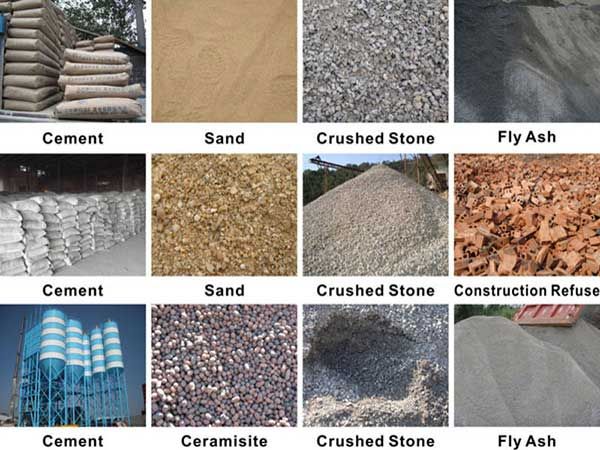
- Pasir:Komponen kritis, jarang digunakan sendiri tetapi sebagai penstabil. Ini mengurangi penyusutan dan retakan pada bata tanah liat atau semen-tanah dengan menyediakan struktur internal. Ukuran dan bentuk butiran (bersudut vs. membulat) memengaruhi kepadatan dan kekuatan akhir.
- Agregat (Debu Batu, Limbah Quarry, Batu Pecah):Ini menyediakan kerangka struktural dalam produksi bata beton. Gradasi (distribusi ukuran partikel) mereka sangat penting; campuran yang bergradasi baik memadat lebih efisien, membutuhkan lebih sedikit bahan pengikat, dan menghasilkan bata yang lebih padat serta kuat. Mesin-mesin harus cukup kokoh untuk menangani sifat abrasif dari material-material ini.
- Pengikat dan Penstabil
- Semen Portland:Pengikat hidraulik yang paling umum. Ketika dicampur dengan air, ia mengalami reaksi kimia (hidrasi) yang mengikat agregat menjadi massa padat. Kandungan semen (biasanya 5-15% dalam blok yang distabilkan) merupakan penggerak utama biaya dan kekuatan. Mesin harus memastikan pencampuran menyeluruh dan kelembapan yang konsisten untuk memulai hidrasi yang tepat setelah pemadatan.
- Jeruk Nipis:Digunakan secara historis dan dalam aplikasi modern, sering kali dengan semen (stabilisasi kapur-semen). Ini meningkatkan kemampuan pengerjaan dan memberikan beberapa aksi pengikatan melalui karbonasi (bereaksi dengan CO₂ atmosfer).
- Bitumen dan Stabilisator Kimia:Digunakan dalam aplikasi khusus untuk ketahanan air atau stabilisasi tanah, ini memerlukan pencampuran khusus dan sering kali kontrol suhu selama pemrosesan.
- Bahan Semen Tambahan (SCM) dan Pemanfaatan Aliran Limbah
- Abu Terbang: A fine powder by-product of coal-fired power plants. It is a pozzolan, meaning it reacts with lime and water to form cementitious compounds. Using fly ash (Class C or F) can reduce cement usage, lower production costs, improve workability, and enhance long-term strength. It requires careful handling due to its fineness and potential variability.
- Ground Granulated Blast-Furnace Slag (GGBS): A by-product of iron production, used as a partial cement replacement. It offers enhanced durability and later-age strength.
- Other Industrial Wastes: Materials like foundry sand, crushed glass (cullet), or certain mine tailings can be incorporated, subject to strict quality control for consistency and absence of harmful contaminants.
Material Science Fundamentals for Machine Operation
The physical behavior of these materials under pressure dictates machine design and setup. Key properties include:
- Particle Size Distribution and Grading
- A balanced mix of coarse, medium, and fine particles is essential. Fines (like clay, silt, fly ash) fill voids between larger particles, leading to maximum dry density and optimal binder efficiency. Poorly graded material results in high porosity, low strength, and inefficient binder use. Machinery often needs integrated screening to ensure consistent feed grading.
- Plasticity and Cohesion
- This is primarily relevant for clay-rich mixes. Plasticity allows the material to deform under pressure without cracking and retain its molded shape. The Atterberg Limits (Liquid and Plastic Limits) are scientific measures of this behavior. A machine processing highly plastic clay must manage stickiness to prevent material adhesion to molds and hoppers, often requiring different tooling surface finishes and release mechanisms compared to non-plastic, sandy mixes.
- Optimum Moisture Content (OMC) and Compaction Relationship
- For any given material blend and compaction energy, there is a specific moisture content that yields the maximum dry density. This is the Optimum Moisture Content (OMC). Operating below OMC leads to poor compaction and weak, friable bricks; operating above causes the material to become spongy, leading to deformation and sticking. Modern machines with feedback controls can adapt to minor variances, but mix preparation must consistently target OMC.
- Abrasion and Corrosiveness
- Materials like crushed granite or slag are highly abrasive, causing accelerated wear on mold liners, feed systems, mixer blades, and conveyor parts. Conversely, some industrial by-products may contain salts or chemicals that promote corrosion. Machine selection must account for material aggressiveness through the specification of wear-resistant steels, hardened components, and protective coatings, impacting both initial cost and lifecycle maintenance planning.
Formulation Engineering: Creating the Optimal Brick Mix
A brick mix is a carefully engineered recipe. The process involves:
- Proportioning for Performance and Economy
- The goal is to meet minimum strength, absorption, and durability standards (e.g., ASTM C90, IS 2185) at the lowest possible cost. This involves iterative testing of different ratios of aggregate, binder, and SCMs. A common strategy is to maximize the use of low-cost local aggregates and industrial by-products while minimizing the percentage of expensive cement, without compromising key performance metrics.
- The Role of Water and Chemical Admixtures
- Water is not just for hydration; it lubricates particles during compaction. Chemical admixtures, though a small percentage, can be transformative. These include:
- Plasticizers/Water Reducers: Allow reduction in water content while maintaining workability, leading to higher strength.
- Set Accelerators/Retarders: Control the setting time, crucial in different climates or for production scheduling.
- Pigmen: For colored bricks, requiring high-shear mixing for uniform dispersion.
- Water is not just for hydration; it lubricates particles during compaction. Chemical admixtures, though a small percentage, can be transformative. These include:
- Mix Design Validation through Laboratory Testing
- Before scaling to full production, a proposed mix must undergo rigorous lab testing: Proctor tests for OMC, compressive strength tests on sample bricks, water absorption tests, and freeze-thaw durability tests. This data is critical for providing performance guarantees to end-buyers and for fine-tuning machine parameters.
Strategic Implications for Machinery Selection and Configuration
The choice of raw materials directly dictates the necessary features and auxiliary equipment for a production line.
- Matching Machine Type to Material Characteristics
- High-Plasticity Clays: Often better suited for extrusion-based machines or specific hydraulic presses designed with de-airing chambers and high-pressure augers.
- Concrete/Stabilized Earth Mixes: Excel in hydraulic or vibration-compaction presses where the granular nature of the material benefits from vibratory consolidation.
- Lightweight Aggregate Mixes (e.g., with pumice or expanded clay): Require machines that can achieve adequate compaction without crushing the fragile aggregates.
- Essential Pre-Processing Equipment
- Penghancur & Layar: Mandatory for processing raw quarry material or recycled demolition waste into a consistent, graded aggregate.
- Pencampur: The type is critical. Pan mixers or paddle mixers are superior for cohesive, clay-based mixes, while twin-shaft mixers provide intense, rapid mixing for dry-cast concrete, ensuring even coating of aggregates with cement.
- Penanganan Material: Conveyors and hoppers must be designed to handle the specific material—preventing segregation in free-flowing mixes or bridging in cohesive ones.
- Tooling and Wear Part Considerations
- The abrasiveness of the mix determines the required hardness of mold liners (e.g., AR400 or AR500 steel), core rods, and feed shoes. A mix containing fly ash, while less abrasive, may be more prone to causing buildup, requiring tooling with specific surface treatments or release angles.
Kesimpulan
For the industrial equipment distributor, expertise in brick-making materials is a powerful competitive lever. It enables a consultative sales approach that begins with an analysis of the client’s locally available resources and desired product specifications, leading to a tailored recommendation for both machinery and mix design. Understanding the science of particle grading, moisture dynamics, and binder chemistry allows for the configuration of complete, efficient production systems that deliver profitability and product quality. In an era focused on sustainable construction and cost optimization, the ability to integrate industrial by-products like fly ash into viable production formulas is an invaluable service. Ultimately, by mastering the raw material dimension, you position your business not as a mere vendor of presses, but as an essential engineering partner in your clients’ success, fostering resilience and growth in a dynamic global market.
Pertanyaan yang Sering Diajukan (FAQ)
Q1: Can a single brick machine effectively process vastly different material types, such as pure clay and a concrete mix?
A: Generally, no. Machines are engineered around core material principles. A machine optimized for stiff, low-moisture concrete mixes uses high vibration and pressure for granular compaction. A machine for plastic clay focuses on de-airing and extrusion through a die. While some versatile hydraulic presses can handle a range of stabilized soils, switching between extremely different material families (e.g., clay to concrete) typically requires significant reconfiguration, different tooling, and often different mixing systems, making it impractical for frequent changes.
Q2: What are the key cost-benefit trade-offs when using industrial by-products like fly ash?
A:
- Manfaat: Significant reduction in material cost (fly ash is often low-cost or free); lower cement requirement; improved long-term strength and durability; enhanced workability of the mix; sustainable “green” product marketing angle.
- Considerations/Trade-offs: Potential variability in the chemical composition of the by-product, requiring strict quality control; may necessitate additional storage and handling infrastructure due to fineness; sometimes slower early strength gain, which can affect early handling and curing logistics. A thorough testing program is essential to lock in consistent performance.
Q3: How does material choice influence the energy consumption of the brick-making process?
A: Material choice has a profound impact. Fired clay bricks require immense thermal energy in kilns. In contrast, cement-stabilized or concrete bricks cure at ambient temperature, saving that energy but incurring the embodied energy of cement production. Mixes with high SCM content reduce this cement-related energy. Within the press itself, a well-graded mix at OMC compacts more efficiently, using less mechanical energy than a poorly graded or dry mix to achieve the same density.
Q4: What are the most critical tests a client should run on their local materials before finalizing a machinery purchase?
A: Three tests are paramount:
- Sieve Analysis/Gradation Test: To understand particle size distribution and optimize the mix design.
- Proctor Compaction Test: To scientifically determine the Optimum Moisture Content (OMC) and Maximum Dry Density for the specific blend.
- Chemical Analysis (for soils/by-products): To check for harmful levels of sulfates, organic matter, or salts that can cause long-term durability issues like efflorescence or reinforcement corrosion.
These tests provide the foundational data needed to correctly specify machine type, mixer capacity, and curing requirements.
Q5: How important is moisture control, and what systems can be integrated into a production line to manage it?
A: Moisture control is arguably the most critical factor in day-to-day consistent production. Variations of even 1-2% from OMC can ruin product quality. Integrated systems include:
- Automated Water Metering Systems: Precisely inject water into the mixer based on the weight of dry materials.
- Moisture Sensors: In-line sensors can provide real-time feedback to the water system, adjusting for natural moisture in aggregates.
- Covered Aggregate Storage: To prevent rain from altering moisture content.
- Curing Chambers: To control humidity and temperature after forming, ensuring proper curing of cement bricks.