
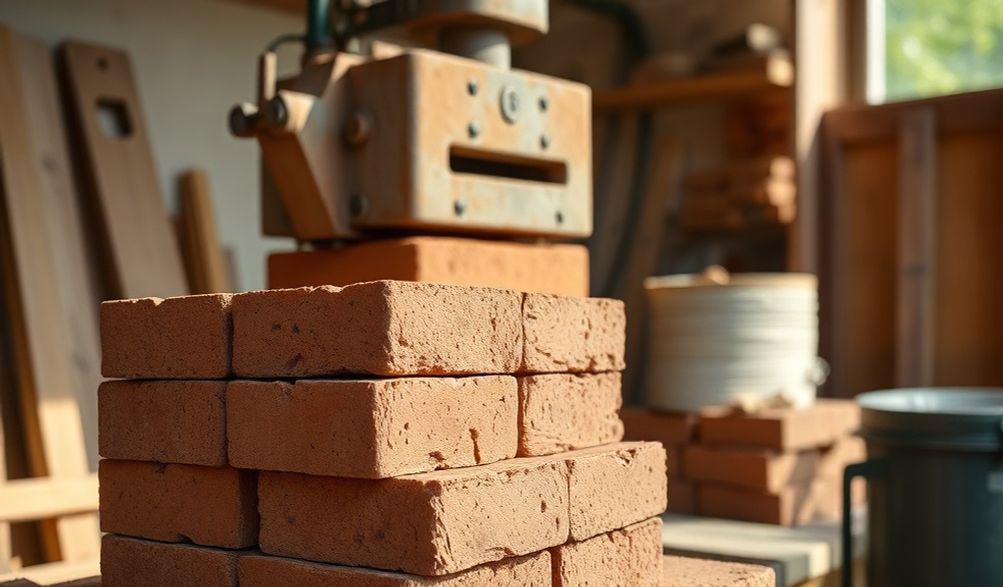
Menemukan Mesin Pembuat Batu Bata Murah Terbaik: Panduan Pembeli 2026
Membangun rumah, tembok, atau memulai bisnis konstruksi kecil sering kali dimulai dengan satu elemen penting dan mahal: batu bata. Namun, bagaimana jika Anda bisa memproduksi batu bata berkualitas tinggi sendiri dengan biaya yang jauh lebih murah? Bagi banyak orang, harga awal peralatan tampak seperti hambatan yang tak teratasi. Panduan ini hadir untuk mengubah persepsi tersebut.
Ketika kita menyebut "mesin pembuat bata murah," kita tidak sedang membicarakan produk yang rapuh dan berkualitas rendah yang mudah rusak. Kami merujuk padahemat, ramah anggaran, dan bernilai baikmesin yang dirancang untuk memaksimalkan pengembalian investasi (ROI) Anda. Ini adalah tulang punggung bagi pembangun skala kecil, penggemar DIY, penghuni lahan pertanian, dan startup wirausaha yang ingin mengendalikan pasokan material dan biaya mereka.
Tujuan kami adalah menembus kebisingan pemasaran. Berdasarkan pengetahuan industri dan keahlian praktis, panduan ini memberikan saran terpercaya untuk membantu Anda membuat keputusan pembelian yang terinformasi, aman, dan ekonomis. Kami akan memandu Anda melalui berbagai jenis mesin, fitur-fitur kunci yang paling penting, tempat menemukan model yang andal, serta tips esensial untuk menghindari kesalahan mahal yang dapat mengubah pembelian "murah" menjadi pelajaran yang berharga.
Memahami Mesin Pembuat Batu Bata: Jenis dan Teknologi
Langkah pertama untuk pembelian yang cerdas adalah memahami lanskapnya. Mesin pembuat batu bata dikategorikan berdasarkan tingkat otomatisasinya, yang secara langsung berkaitan dengan biaya, output, dan kebutuhan tenaga kerja.
Mesin Pembuat Batu Bata Manual
Ini adalah titik masuk paling mendasar dan mudah diakses ke dalam produksi batu bata.
- Deskripsi:Dioperasikan sepenuhnya dengan tenaga manusia melalui tuas tangan atau pedal kaki. Mereka menggunakan keunggulan mekanis untuk memadatkan bahan baku (seperti tanah-semen atau beton) ke dalam cetakan.
- Terbaik Untuk:Proyek berskala ultra-kecil (misalnya, gudang taman, tembok kecil), penggemar DIY yang berdedikasi, tujuan pendidikan, atau lokasi yang sama sekali tidak memiliki akses ke listrik.
- Keluaran & Batasan:Produksi berjalan lambat, sering kali berkisar antara 50 hingga 200 bata per hari, dan sangat melelahkan secara fisik. Kualitasnya sangat bergantung pada teknik operator dan campuran material.
Intinya:Biaya awal terendah dan tagihan energi nol, tetapi tenaga kerjalah yang menjadi input utama. Ini adalah ujian komitmen.
Mesin Pembuat Bata Semi-Otomatis
Kategori ini mewakili "titik optimal" paling populer bagi individu dan bisnis kecil yang mencari keseimbangan.
- Deskripsi:Mesin-mesin ini menggabungkan tenaga kerja manual dengan mekanisme bertenaga. Anda biasanya memasukkan bahan baku secara manual, tetapi proses kompresinya digerakkan oleh motor listrik atau mesin diesel. Beberapa model mungkin dilengkapi konveyor untuk mengeluarkan bata yang sudah jadi.
- Terbaik Untuk:Usaha kecil, proyek perumahan komunitas, produksi skala menengah untuk pasokan lokal, dan siapa pun yang memerlukan output lebih tinggi tanpa biaya otomatisasi penuh.
- Keluaran & Nilai:Anda dapat mengharapkan hasil produksi antara 200 hingga 1.000+ bata per jam, tergantung pada modelnya. Mesin ini secara signifikan mengurangi ketegangan fisik dibandingkan dengan pengepres manual, sementara tetap menjaga investasi modal yang wajar.
Intinya:Menawarkan kompromi terbaik antara biaya, produktivitas, dan otomatisasi. Di sinilah sebagian besar pembeli menemukan nilai sejati.
Mesin Pembuat Batu Bata Otomatis Penuh (Pilihan Anggaran)
Ketika Anda berpikir "otomatis," mungkin yang terlintas adalah "mahal." Namun, pilihan yang ramah anggaran juga tersedia di bidang ini.
- Deskripsi:Mesin-mesin ini mengotomatisasi seluruh proses: pengumpanan, pencampuran (pada beberapa model), kompresi, dan pengeluaran. Mereka sering menggunakan sistem hidrolik untuk pemadatan bertekanan tinggi yang konsisten dan beroperasi dengan intervensi operator yang minimal.
- Terbaik Untuk:Produksi stabil dengan volume lebih tinggi untuk bisnis konstruksi yang berkembang, halaman blok, atau pengusaha yang memasok pasar lokal.
- Mencari Opsi "Murah":Dalam kategori ini, "murah" atau "terjangkau" biasanya berarti:
- Model Tingkat Pemula:Mesin berkapasitas lebih kecil dengan fitur otomatisasi dasar.
- Refurbished Units: Machines that have been professionally reconditioned.
- Older/Simpler Designs: Models without the latest PLC panels but with robust core functionality.
Intinya: Higher initial investment but the lowest labor cost per brick. For the right buyer, the ROI can be quickly realized.
Key Features to Evaluate in a Cost-Effective Machine
A low price tag is meaningless if the machine doesn’t suit your needs or breaks down in a month. Look beyond the sticker price and evaluate these critical features.
Kapasitas Produksi (Batu Bata Per Jam/Hari)
This is the most common mistake: overbuying or underbuying.
- Match Output to Need: Are you building a single house? Supply a small development? Calculate your total brick requirement and your desired timeline. A machine producing 500 bricks per hour is overkill for a DIY garden path.
- The Pitfall of Overbuying: A larger, more expensive machine than you need drains capital, costs more to run, and may require a stronger foundation and more space. It’s a waste of resources.
- Realistic Assessment: Be conservative in your estimates. It’s better to have a machine running at 80% capacity than one sitting idle 50% of the time.
Brick Type and Mold Versatility
Not all bricks are created equal, and not all machines can make all types.
- Jenis-Jenis Bata Umum:
- Balok Padat: For load-bearing walls and foundations.
- Bata Ringan: Lighter, use less material, excellent for partition walls.
- Bata Interlock: Allow for mortar-less construction, popular for landscaping and some structural uses.
- Batu Bata Paving (Paving Block): For driveways, patios, and walkways.
- Fleksibilitas Cetakan: Can you change the mold to produce different brick types? How much do additional molds cost, and are they readily available from the supplier? A machine that can produce multiple products is a more versatile asset.
Power Source: Electric vs. Diesel vs. Manual
Your choice here affects long-term operating costs and location feasibility.
- Motor Listrik:
- Kelebihan: Cleaner, quieter, generally lower running cost per hour, easier maintenance.
- Kekurangan: Requires reliable grid power or a substantial generator. Power surges can damage motors.
- Mesin Diesel:
- Kelebihan: High torque, completely mobile, ideal for remote sites with no grid connection.
- Kekurangan: Noisier, produces fumes, requires fuel storage, and has higher per-hour running costs (fuel + maintenance).
- Panduan: Zero energy cost, but high “human energy” cost.
Analysis: For fixed locations with stable electricity, electric is often the most cost-effective. For field production or areas with frequent outages, diesel provides independence.
Kualitas dan Daya Tahan Bangunan
This is where “cheap” machines truly separate from “cost-effective” ones.
- Komponen Kritis:
- Bingkai & Struktur: Look for thick, high-grade steel (e.g., ASTM A36) with clean, robust welds.
- Hydraulic System (if applicable): Reputable brand names (like Parker, Bosch Rexroth) for pumps and valves are a good sign.
- Jamur: Should be made from hardened, high-chromium steel for longevity and a smooth brick finish.
- Cara Menilai: Scrutinize product photos for weld quality and material thickness. Ask the supplier for the grade of steel used. Read reviews focusing on long-term durability.
After-Sales Support: The True Cost Saver
This is the most important feature for a budget machine.
- Why It’s Non-Negotiable: A machine will need maintenance, spare parts (like wear plates, seals, bolts), and you may need technical advice. A lack of support turns a minor, inexpensive issue into a catastrophic, machine-ending failure.
- Pertanyaan Kunci yang Perlu Diajukan:
- Is a clear parts manual and circuit diagram provided?
- What is the warranty period and what does it cover?
- How quickly can you ship common spare parts?
- Do you provide technical support via phone, email, or video call?
Top Picks: Reliable & Affordable Brick Machine Models (2026)
Penyangkalan: The following is based on aggregated 2026 market research, consistent user feedback, and industry reputation. Models and availability vary by region. Always conduct your own due diligence to verify specifications, local supplier reputation, and after-sales terms for your specific needs.
Best Manual Press for DIYers: T-Max Manual Interlocking Brick Press
- Specs: Produces standard interlocking blocks, all-steel construction, lever-operated.
- Kelebihan: Extremely simple and durable design, no power needed, very low cost, excellent for learning the basics of soil stabilization.
- Kekurangan: Very low output (approx. 80-120 blocks per day), physically intensive.
- Perkiraan Kisaran Harga: $300 – $800.
Best Value Semi-Automatic Machine: Q Green EcoTech QT4-25S
- Specs: Semi-automatic, egg-laying type, produces hollow/solid blocks, single vibrator motor, optional pallet feeder.
- Kelebihan: Excellent balance of price and capability, robust build, good output for small businesses (~1000 blocks/8hr shift), widely available with good parts support.
- Kekurangan: Requires manual feeding and block removal, needs a flat concrete foundation.
- Perkiraan Kisaran Harga: $4,500 – $7,500.
Best Entry-Level Automatic Machine: Lontto LMT4-40
- Specs: Fully automatic, hydraulic system, programmable logic controller (PLC), can produce a wide variety of blocks and pavers.
- Kelebihan: High and consistent output with minimal labor, strong after-sales network from established brand, good durability for its class.
- Kekurangan: Significant step up in price and complexity, requires three-phase power in most configurations.
- Perkiraan Kisaran Harga: $18,000 – $25,000.
Where to Buy: Navigating Suppliers and Avoiding Scams
Your choice of supplier is as critical as your choice of machine.
Direct from Manufacturers vs. Local Distributors
- Direct from Manufacturer (Often overseas):
- Kelebihan: Potentially lower factory-gate prices, access to the latest models.
- Kekurangan: High shipping and import duty costs, potential language/communication barriers, risky if no local support.
- Local Distributor/Agent:
- Kelebihan: Easier communication, may handle import logistics, provides local spare parts and service (crucial!), understands local regulations.
- Kekurangan: Higher markup on the machine price.
Verdict: For your first machine or if you lack import experience, a reputable local distributor is often worth the premium for peace of mind and support.
Online Marketplaces (Alibaba, Made-in-China, etc.)
These platforms can offer great deals but are minefields for the uninformed.
- Verifikasi adalah Kunci: Only deal with Verified SuppliersatauGold Members with several years of history. Check their transaction history and online reviews.
- Request Proof: Always ask for a video of the exact model machine running. Request a video call to see their factory floor.
- Secure Payment: Use secure methods like Alibaba’s Trade Assurance, which holds payment until you confirm satisfactory delivery. Avoid direct wire transfers for full payment.
- Understand Incoterms: Know who is responsible for shipping, insurance, and import duties (e.g., FOB, CIF, DDP). “CIF Port” does not mean delivered to your door.
Red Flags and Scam Alerts
- Prices drastically lower than every other supplier.
- A company with only a vague website and no physical address or landline number.
- Refusal to provide a real-time video call or recent production video.
- Pressure to pay 100% upfront before production.
- Email addresses that don’t match the company domain name.
Maximizing Your Investment: Operation and Cost-Saving Tips
Owning the machine is just the beginning. Proper operation defines your success.
Raw Material Preparation for Optimal Results
The machine provides pressure; your mix provides strength.
- The Recipe is King: Follow proven mix ratios for cement, sand, and aggregate (e.g., 1:3:5 for standard concrete blocks). For soil-cement blocks, the soil’s composition is critical—get it tested.
- Konsistensi: Ensure your raw materials are well-mixed and have uniform moisture content. This prevents crumbling or weak spots.
- Proper Curing: Freshly pressed bricks are fragile. They must be kept damp and allowed to cure slowly for 7-28 days to reach full strength. Do not skip this step.
Routine Maintenance Checklist
Preventative care is cheap. Repairs are expensive.
- Harian: Clean the machine thoroughly at the end of each shift. Check for loose bolts and nuts. Lubricate all moving parts as per the manual.
- Mingguan: Inspect the mold for wear or damage. Check hydraulic hoses for leaks. Tighten all electrical connections.
- Bulanan: Change hydraulic oil and filters as recommended. Perform a more thorough inspection of wear parts like liners and seals.
Calculating Your True Cost Per Brick
This formula reveals the real value of your investment.
Formula: (Machine Cost + Raw Materials + Labor + Power) / Total Bricks Produced.
- Contoh: A $6,000 machine producing 100,000 bricks over its life adds $0.06 per brick in capital cost. Add raw materials ($0.15), minimal labor ($0.02), and power ($0.01). Your total cost per brick might be $0.24. Compare this to the local purchase price of $0.50 per brick, and your savings (and potential profit margin) become clear.
Bagian FAQ
Q1: What is the absolute cheapest type of brick making machine?
A: Manual block presses have the lowest upfront cost, often under $1,000. However, you must honestly factor in the value of your own labor and very low production speed.
Q2: Can I really make strong, durable bricks with a cheap machine?
A: Absolutely. Brick strength primarily comes from the correct raw material mix and proper curing. A well-built, cost-effective machine applies the necessary pressure consistently. The “cheap” risk is machine breakdown, not inherently weak bricks.
Q3: Are used brick making machines a good option to save money?
A: They can be, but caution is paramount. Only consider if you or a trusted mechanic can inspect it in person. Key areas to check: frame for cracks, mold for excessive wear, hydraulic cylinders for leaks, and the engine/motor for proper operation.
Q4: What hidden costs should I budget for?
A: Always account for: international shipping and import duties (can be 30%+ of machine cost), preparing a level concrete foundation, raw material testing and storage, an initial spare parts kit, and basic tools for assembly and maintenance.
Q5: How do I choose the right brick type for my project?
A: Match the brick to the function. Use solid bricks for foundations and load-bearing walls. Hollow bricks are perfect for non-load-bearing partition walls to save weight and material. Interlocking bricks are ideal for mortar-less construction like garden walls, retaining walls, and some low-cost housing models.
Kesimpulan
Finding the best cheap brick making machine is not about hunting for the lowest possible number. It’s a strategic balance of initial price, long-term durability, available support, and precise suitability for your goals. A truly cost-effective machine is an asset that pays for itself by granting you independence, reducing material costs, and creating opportunity.
Let this guide serve as your foundation. Use it as a checklist as you research models, connect with local users for firsthand reviews, and approach suppliers with informed, detailed questions. By prioritizing transparency, build quality, and after-sales service, you transform a simple purchase into a smart investment that builds far more than just bricks—it builds your project, your business, and your future.
<