
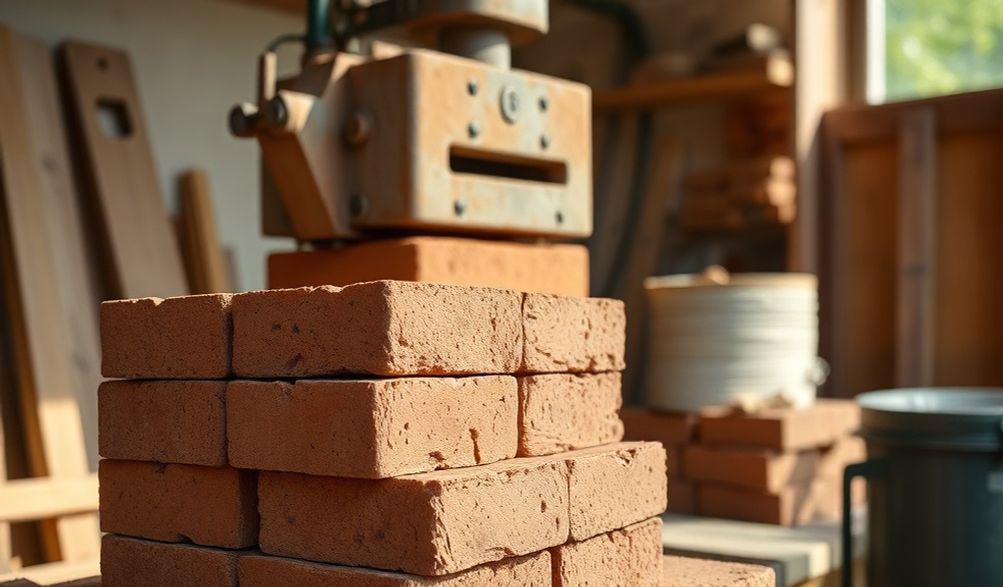
Encontrando as Melhores Máquinas de Fazer Tijolos Baratas: Um Guia de Compra para 2026
Construir uma casa, um muro ou iniciar um pequeno negócio de construção muitas vezes começa com um elemento crucial e caro: os tijolos. Mas e se você pudesse produzir seus próprios tijolos de alta qualidade por uma fração do custo? Para muitos, o preço inicial do equipamento parece uma barreira intransponível. Este guia está aqui para mudar essa percepção.
Quando dizemos "máquinas de fazer tijolos baratas", não estamos falando de produtos frágeis e de baixa qualidade destinados a falhar. Nos referimos acusto-benefício, econômico e com bom custo-benefíciomáquinas projetadas para maximizar seu retorno sobre o investimento (ROI). Estas são as cavalos de batalha para construtores de pequena escala, entusiastas do faça você mesmo, proprietários de sítios e startups empreendedoras que buscam tomar o controle de seu fornecimento de materiais e custos.
Nosso propósito é cortar o ruído de marketing. Com base em conhecimento do setor e experiência prática, este guia oferece conselhos confiáveis para ajudá-lo a fazer uma compra informada, segura e econômica. Vamos orientá-lo pelos diferentes tipos de máquinas, pelas características-chave mais importantes, por onde encontrar modelos confiáveis e pelas dicas essenciais para evitar erros custosos que podem transformar uma compra "barata" em uma lição cara.
Compreendendo as Máquinas de Fabricação de Tijolos: Tipos e Tecnologias
O primeiro passo para uma compra inteligente é entender o cenário. As máquinas de fazer tijolos são categorizadas pelo seu nível de automação, que está diretamente relacionado ao custo, à produção e à mão de obra necessária.
Máquinas Manuais para Fabricação de Tijolos
Estes são os pontos de entrada mais fundamentais e acessíveis para a produção de tijolos.
- Descrição:Operado inteiramente por força humana através de uma alavanca manual ou pedal. Eles usam vantagem mecânica para comprimir matéria-prima (como solo-cimento ou concreto) em um molde.
- Melhor Para:Projetos em escala ultra-pequena (por exemplo, um galpão de jardim, um pequeno muro), entusiastas de DIY dedicados, fins educacionais ou locais com absolutamente nenhum acesso à energia elétrica.
- Saída e Limitações:A produção é lenta, geralmente variando de 50 a 200 tijolos por dia, e é fisicamente exigente. A qualidade é altamente consistente com a técnica do operador e a mistura de materiais.
O Resultado Final:O menor custo inicial e zero contas de energia, mas seu trabalho é o principal insumo. É um teste de comprometimento.
Máquinas Semi-Automáticas para Fabricação de Tijolos
Esta categoria representa o "ponto ideal" mais popular para indivíduos e pequenas empresas que buscam um equilíbrio.
- Descrição:Essas máquinas combinam trabalho manual com mecanismos motorizados. Normalmente, você alimenta a matéria-prima manualmente, mas a compressão é acionada por um motor elétrico ou a diesel. Alguns modelos podem incluir uma esteira para ejetar o tijolo acabado.
- Melhor Para:Pequenas empresas, projetos habitacionais comunitários, produção em média escala para abastecimento local e qualquer pessoa que necessite de maior produção sem o custo de um sistema totalmente automatizado.
- Saída & Valor:Você pode esperar uma produção de 200 a 1.000+ tijolos por hora, dependendo do modelo. Eles reduzem significativamente o esforço físico em comparação com prensas manuais, mantendo o investimento de capital razoável.
O Resultado Final:Oferece o melhor equilíbrio entre custo, produtividade e automação. É onde a maioria dos compradores encontra valor genuíno.
Fully Automatic Brick Making Machines (Budget Options)
When you think “automatic,” you might think “expensive.” However, budget-friendly options exist in this space.
- Descrição: These machines automate the entire process: feeding, mixing (in some models), compression, and ejection. They often use hydraulic systems for consistent, high-pressure compaction and run with minimal operator intervention.
- Melhor Para: Steady, higher-volume production for a growing construction business, block yards, or entrepreneurs supplying a local market.
- Finding “Cheap” Options: In this category, “cheap” or “affordable” typically means:
- Entry-Level Models: Smaller capacity machines with basic automation features.
- Refurbished Units: Machines that have been professionally reconditioned.
- Older/Simpler Designs: Models without the latest PLC panels but with robust core functionality.
O Resultado Final: Higher initial investment but the lowest labor cost per brick. For the right buyer, the ROI can be quickly realized.
Key Features to Evaluate in a Cost-Effective Machine
A low price tag is meaningless if the machine doesn’t suit your needs or breaks down in a month. Look beyond the sticker price and evaluate these critical features.
Production Capacity (Bricks Per Hour/Day)
This is the most common mistake: overbuying or underbuying.
- Match Output to Need: Are you building a single house? Supply a small development? Calculate your total brick requirement and your desired timeline. A machine producing 500 bricks per hour is overkill for a DIY garden path.
- The Pitfall of Overbuying: A larger, more expensive machine than you need drains capital, costs more to run, and may require a stronger foundation and more space. It’s a waste of resources.
- Realistic Assessment: Be conservative in your estimates. It’s better to have a machine running at 80% capacity than one sitting idle 50% of the time.
Brick Type and Mold Versatility
Not all bricks are created equal, and not all machines can make all types.
- Tipos Comuns de Tijolos:
- Blocos Sólidos: For load-bearing walls and foundations.
- Blocos Vazados: Lighter, use less material, excellent for partition walls.
- Tijolos de Encravamento: Allow for mortar-less construction, popular for landscaping and some structural uses.
- Tijolos de Pavimentação (Pavimentadoras): For driveways, patios, and walkways.
- Flexibilidade do Molde: Can you change the mold to produce different brick types? How much do additional molds cost, and are they readily available from the supplier? A machine that can produce multiple products is a more versatile asset.
Power Source: Electric vs. Diesel vs. Manual
Your choice here affects long-term operating costs and location feasibility.
- Motores Elétricos:
- Prós: Cleaner, quieter, generally lower running cost per hour, easier maintenance.
- Contras: Requires reliable grid power or a substantial generator. Power surges can damage motors.
- Motores a Diesel:
- Prós: High torque, completely mobile, ideal for remote sites with no grid connection.
- Contras: Noisier, produces fumes, requires fuel storage, and has higher per-hour running costs (fuel + maintenance).
- Manual: Zero energy cost, but high “human energy” cost.
Analysis: For fixed locations with stable electricity, electric is often the most cost-effective. For field production or areas with frequent outages, diesel provides independence.
Qualidade de Construção e Durabilidade
This is where “cheap” machines truly separate from “cost-effective” ones.
- Componentes Críticos:
- Estrutura e Estrutura: Look for thick, high-grade steel (e.g., ASTM A36) with clean, robust welds.
- Hydraulic System (if applicable): Reputable brand names (like Parker, Bosch Rexroth) for pumps and valves are a good sign.
- Mofo: Should be made from hardened, high-chromium steel for longevity and a smooth brick finish.
- Como Avaliar: Scrutinize product photos for weld quality and material thickness. Ask the supplier for the grade of steel used. Read reviews focusing on long-term durability.
After-Sales Support: The True Cost Saver
This is the most important feature for a budget machine.
- Why It’s Non-Negotiable: A machine will need maintenance, spare parts (like wear plates, seals, bolts), and you may need technical advice. A lack of support turns a minor, inexpensive issue into a catastrophic, machine-ending failure.
- Perguntas-chave a serem feitas:
- Is a clear parts manual and circuit diagram provided?
- Qual é o período de garantia e o que ela cobre?
- How quickly can you ship common spare parts?
- Do you provide technical support via phone, email, or video call?
Top Picks: Reliable & Affordable Brick Machine Models (2026)
Aviso Legal: The following is based on aggregated 2026 market research, consistent user feedback, and industry reputation. Models and availability vary by region. Always conduct your own due diligence to verify specifications, local supplier reputation, and after-sales terms for your specific needs.
Best Manual Press for DIYers: T-Max Manual Interlocking Brick Press
- Specs: Produces standard interlocking blocks, all-steel construction, lever-operated.
- Prós: Extremely simple and durable design, no power needed, very low cost, excellent for learning the basics of soil stabilization.
- Contras: Very low output (approx. 80-120 blocks per day), physically intensive.
- Faixa de Preço Estimada $300 – $800.
Best Value Semi-Automatic Machine: Q Green EcoTech QT4-25S
- Specs: Semi-automatic, egg-laying type, produces hollow/solid blocks, single vibrator motor, optional pallet feeder.
- Prós: Excellent balance of price and capability, robust build, good output for small businesses (~1000 blocks/8hr shift), widely available with good parts support.
- Contras: Requires manual feeding and block removal, needs a flat concrete foundation.
- Faixa de Preço Estimada $4,500 – $7,500.
Best Entry-Level Automatic Machine: Lontto LMT4-40
- Specs: Fully automatic, hydraulic system, programmable logic controller (PLC), can produce a wide variety of blocks and pavers.
- Prós: High and consistent output with minimal labor, strong after-sales network from established brand, good durability for its class.
- Contras: Significant step up in price and complexity, requires three-phase power in most configurations.
- Faixa de Preço Estimada $18,000 – $25,000.
Where to Buy: Navigating Suppliers and Avoiding Scams
Your choice of supplier is as critical as your choice of machine.
Direct from Manufacturers vs. Local Distributors
- Direct from Manufacturer (Often overseas):
- Prós: Potentially lower factory-gate prices, access to the latest models.
- Contras: High shipping and import duty costs, potential language/communication barriers, risky if no local support.
- Local Distributor/Agent:
- Prós: Easier communication, may handle import logistics, provides local spare parts and service (crucial!), understands local regulations.
- Contras: Higher markup on the machine price.
Verdict: For your first machine or if you lack import experience, a reputable local distributor is often worth the premium for peace of mind and support.
Online Marketplaces (Alibaba, Made-in-China, etc.)
These platforms can offer great deals but are minefields for the uninformed.
- Verification is Key: Only deal with Verified SuppliersouGold Members with several years of history. Check their transaction history and online reviews.
- Request Proof: Always ask for a video of the exact model machine running. Request a video call to see their factory floor.
- Secure Payment: Use secure methods like Alibaba’s Trade Assurance, which holds payment until you confirm satisfactory delivery. Avoid direct wire transfers for full payment.
- Understand Incoterms: Know who is responsible for shipping, insurance, and import duties (e.g., FOB, CIF, DDP). “CIF Port” does not mean delivered to your door.
Red Flags and Scam Alerts
- Prices drastically lower than every other supplier.
- A company with only a vague website and no physical address or landline number.
- Refusal to provide a real-time video call or recent production video.
- Pressure to pay 100% upfront before production.
- Email addresses that don’t match the company domain name.
Maximizing Your Investment: Operation and Cost-Saving Tips
Owning the machine is just the beginning. Proper operation defines your success.
Raw Material Preparation for Optimal Results
The machine provides pressure; your mix provides strength.
- The Recipe is King: Follow proven mix ratios for cement, sand, and aggregate (e.g., 1:3:5 for standard concrete blocks). For soil-cement blocks, the soil’s composition is critical—get it tested.
- Consistência: Ensure your raw materials are well-mixed and have uniform moisture content. This prevents crumbling or weak spots.
- Proper Curing: Freshly pressed bricks are fragile. They must be kept damp and allowed to cure slowly for 7-28 days to reach full strength. Do not skip this step.
Routine Maintenance Checklist
Preventative care is cheap. Repairs are expensive.
- Diário: Clean the machine thoroughly at the end of each shift. Check for loose bolts and nuts. Lubricate all moving parts as per the manual.
- Semanal: Inspect the mold for wear or damage. Check hydraulic hoses for leaks. Tighten all electrical connections.
- Mensalmente: Change hydraulic oil and filters as recommended. Perform a more thorough inspection of wear parts like liners and seals.
Calculating Your True Cost Per Brick
This formula reveals the real value of your investment.
Fórmula: (Machine Cost + Raw Materials + Labor + Power) / Total Bricks Produced.
- Exemplo: A $6,000 machine producing 100,000 bricks over its life adds $0.06 per brick in capital cost. Add raw materials ($0.15), minimal labor ($0.02), and power ($0.01). Your total cost per brick might be $0.24. Compare this to the local purchase price of $0.50 per brick, and your savings (and potential profit margin) become clear.
FAQ Section
Q1: What is the absolute cheapest type of brick making machine?
A: Manual block presses have the lowest upfront cost, often under $1,000. However, you must honestly factor in the value of your own labor and very low production speed.
Q2: Can I really make strong, durable bricks with a cheap machine?
A: Absolutely. Brick strength primarily comes from the correct raw material mix and proper curing. A well-built, cost-effective machine applies the necessary pressure consistently. The “cheap” risk is machine breakdown, not inherently weak bricks.
Q3: Are used brick making machines a good option to save money?
A: They can be, but caution is paramount. Only consider if you or a trusted mechanic can inspect it in person. Key areas to check: frame for cracks, mold for excessive wear, hydraulic cylinders for leaks, and the engine/motor for proper operation.
Q4: What hidden costs should I budget for?
A: Always account for: international shipping and import duties (can be 30%+ of machine cost), preparing a level concrete foundation, raw material testing and storage, an initial spare parts kit, and basic tools for assembly and maintenance.
Q5: How do I choose the right brick type for my project?
A: Match the brick to the function. Use solid bricks for foundations and load-bearing walls. Hollow bricks are perfect for non-load-bearing partition walls to save weight and material. Interlocking bricks are ideal for mortar-less construction like garden walls, retaining walls, and some low-cost housing models.
Conclusão
Finding the best cheap brick making machine is not about hunting for the lowest possible number. It’s a strategic balance of initial price, long-term durability, available support, and precise suitability for your goals. A truly cost-effective machine is an asset that pays for itself by granting you independence, reducing material costs, and creating opportunity.
Let this guide serve as your foundation. Use it as a checklist as you research models, connect with local users for firsthand reviews, and approach suppliers with informed, detailed questions. By prioritizing transparency, build quality, and after-sales service, you transform a simple purchase into a smart investment that builds far more than just bricks—it builds your project, your business, and your future.
<