
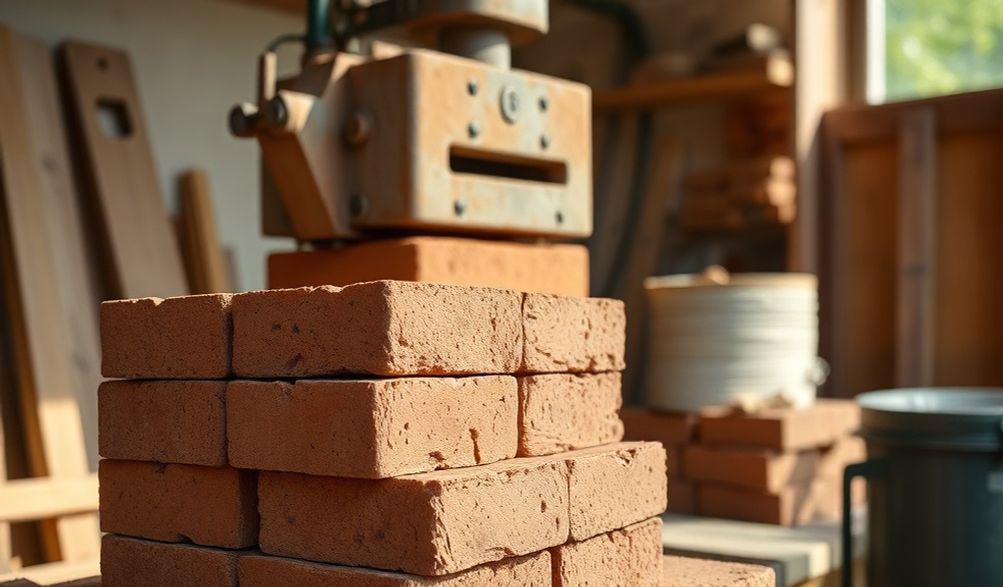
Tìm Kiếm Máy Làm Gạch Giá Rẻ Tốt Nhất: Hướng Dẫn Người Mua Năm 2026
Xây một ngôi nhà, một bức tường, hay khởi nghiệp với doanh nghiệp xây dựng nhỏ thường bắt đầu từ một yếu tố then chốt và tốn kém: gạch. Nhưng nếu bạn có thể tự sản xuất những viên gạch chất lượng cao với chi phí chỉ bằng một phần nhỏ thì sao? Với nhiều người, giá đầu tư ban đầu cho thiết bị dường như là rào cản không thể vượt qua. Hướng dẫn này ra đời để thay đổi nhận định đó.
Khi nói đến "máy làm gạch giá rẻ," chúng tôi không đề cập đến những sản phẩm kém chất lượng, dễ hư hỏng. Chúng tôi muốn nói đếntiết kiệm chi phí, thân thiện với ngân sách, và đáng đồng tiềncác máy móc được thiết kế để tối đa hóa tỷ suất lợi nhuận đầu tư (ROI) của bạn. Đây là những công cụ đắc lực cho các nhà xây dựng quy mô nhỏ, người đam mê tự làm, chủ trang trại và các startup khởi nghiệp muốn kiểm soát nguồn cung và chi phí nguyên vật liệu.
Mục đích của chúng tôi là xuyên qua mớ hỗn độn tiếp thị. Dựa trên kiến thức ngành và chuyên môn thực tiễn, hướng dẫn này cung cấp lời khuyên đáng tin cậy để giúp bạn đưa ra quyết định mua sắm sáng suốt, an toàn và tiết kiệm. Chúng tôi sẽ dẫn dắt bạn qua các loại máy móc khác nhau, những tính năng quan trọng nhất, nơi tìm kiếm các mẫu máy đáng tin cậy, cùng những mẹo thiết yếu để tránh những sai lầm tốn kém có thể biến một món hời thành bài học đắt giá.
Tìm Hiểu Về Máy Sản Xuất Gạch: Các Loại và Công Nghệ
Bước đầu tiên để có một quyết định mua sắm thông minh là hiểu rõ bức tranh tổng thể. Máy làm gạch được phân loại theo mức độ tự động hóa, yếu tố này có mối tương quan trực tiếp với chi phí, sản lượng đầu ra và yêu cầu về nhân công.
Máy Làm Gạch Thủ Công
Đây là điểm khởi đầu cơ bản và dễ tiếp cận nhất vào ngành sản xuất gạch.
- Mô tả:Được vận hành hoàn toàn bằng sức người thông qua một cần gạt tay hoặc bàn đạp chân. Chúng sử dụng lợi thế cơ học để nén nguyên liệu thô (như hỗn hợp đất-xi măng hoặc bê tông) vào khuôn.
- Tốt Nhất Cho:Các dự án siêu nhỏ (ví dụ: nhà kho trong vườn, bức tường nhỏ), những người đam mê DIY chuyên nghiệp, mục đích giáo dục hoặc các địa điểm hoàn toàn không có nguồn điện.
- Đầu ra & Hạn chế:Sản xuất chậm, thường chỉ đạt từ 50 đến 200 viên gạch mỗi ngày và đòi hỏi sức lực nhiều. Chất lượng phụ thuộc rất lớn vào kỹ thuật của người thợ và tỷ lệ pha trộn nguyên liệu.
Điểm mấu chốt:Chi phí ban đầu thấp nhất và không có hóa đơn năng lượng, nhưng sức lao động của bạn là yếu tố đầu vào chính. Đó là một bài kiểm tra về sự cam kết.
Máy Làm Gạch Bán Tự Động
Danh mục này đại diện cho "điểm cân bằng lý tưởng" được ưa chuộng nhất dành cho cá nhân và doanh nghiệp nhỏ đang tìm kiếm sự cân bằng.
- Mô tả:Những máy này kết hợp lao động thủ công với cơ chế vận hành bằng động cơ. Người dùng thường cấp liệu thô bằng tay, nhưng quá trình nén được cung cấp năng lượng bởi động cơ điện hoặc động cơ diesel. Một số mẫu máy có thể bao gồm băng chuyền để đẩy viên gạch thành phẩm ra ngoài.
- Tốt Nhất Cho:Các doanh nghiệp nhỏ, dự án nhà ở cộng đồng, sản xuất quy mô vừa để cung ứng tại địa phương, và bất kỳ ai cần sản lượng cao hơn mà không muốn chi trả mức giá cho hệ thống tự động hoàn toàn.
- Đầu ra & Giá trị:Bạn có thể kỳ vọng sản lượng từ 200 đến hơn 1.000 viên gạch mỗi giờ, tùy thuộc vào mẫu máy. Chúng giảm đáng kể áp lực thể chất so với máy ép thủ công trong khi vẫn giữ mức đầu tư vốn hợp lý.
Điểm mấu chốt:Cung cấp sự cân bằng tốt nhất giữa chi phí, năng suất và tự động hóa. Đây là nơi hầu hết người mua tìm thấy giá trị thực sự.
Máy Làm Gạch Tự Động Hoàn Toàn (Các Lựa Chọn Ngân Sách)
When you think “automatic,” you might think “expensive.” However, budget-friendly options exist in this space.
- Mô tả: These machines automate the entire process: feeding, mixing (in some models), compression, and ejection. They often use hydraulic systems for consistent, high-pressure compaction and run with minimal operator intervention.
- Tốt Nhất Cho: Steady, higher-volume production for a growing construction business, block yards, or entrepreneurs supplying a local market.
- Finding “Cheap” Options: In this category, “cheap” or “affordable” typically means:
- Entry-Level Models: Smaller capacity machines with basic automation features.
- Refurbished Units: Machines that have been professionally reconditioned.
- Older/Simpler Designs: Models without the latest PLC panels but with robust core functionality.
Điểm mấu chốt: Higher initial investment but the lowest labor cost per brick. For the right buyer, the ROI can be quickly realized.
Key Features to Evaluate in a Cost-Effective Machine
A low price tag is meaningless if the machine doesn’t suit your needs or breaks down in a month. Look beyond the sticker price and evaluate these critical features.
Công Suất Sản Xuất (Số Gạch Mỗi Giờ/Ngày)
This is the most common mistake: overbuying or underbuying.
- Match Output to Need: Are you building a single house? Supply a small development? Calculate your total brick requirement and your desired timeline. A machine producing 500 bricks per hour is overkill for a DIY garden path.
- The Pitfall of Overbuying: A larger, more expensive machine than you need drains capital, costs more to run, and may require a stronger foundation and more space. It’s a waste of resources.
- Realistic Assessment: Be conservative in your estimates. It’s better to have a machine running at 80% capacity than one sitting idle 50% of the time.
Brick Type and Mold Versatility
Not all bricks are created equal, and not all machines can make all types.
- Các Loại Gạch Phổ Biến:
- Khối Đặc For load-bearing walls and foundations.
- Gạch rỗng: Lighter, use less material, excellent for partition walls.
- Gạch Lắp Ghép: Allow for mortar-less construction, popular for landscaping and some structural uses.
- Gạch lát (Pavement): For driveways, patios, and walkways.
- Mold Flexibility: Can you change the mold to produce different brick types? How much do additional molds cost, and are they readily available from the supplier? A machine that can produce multiple products is a more versatile asset.
Power Source: Electric vs. Diesel vs. Manual
Your choice here affects long-term operating costs and location feasibility.
- Động cơ Điện:
- Ưu điểm: Cleaner, quieter, generally lower running cost per hour, easier maintenance.
- Nhược điểm: Requires reliable grid power or a substantial generator. Power surges can damage motors.
- Động cơ Diesel:
- Ưu điểm: High torque, completely mobile, ideal for remote sites with no grid connection.
- Nhược điểm: Noisier, produces fumes, requires fuel storage, and has higher per-hour running costs (fuel + maintenance).
- Hướng dẫn sử dụng: Zero energy cost, but high “human energy” cost.
Analysis: For fixed locations with stable electricity, electric is often the most cost-effective. For field production or areas with frequent outages, diesel provides independence.
Build Quality and Durability
This is where “cheap” machines truly separate from “cost-effective” ones.
- Critical Components:
- Khung & Cấu trúc Look for thick, high-grade steel (e.g., ASTM A36) with clean, robust welds.
- Hydraulic System (if applicable): Reputable brand names (like Parker, Bosch Rexroth) for pumps and valves are a good sign.
- Khuôn Should be made from hardened, high-chromium steel for longevity and a smooth brick finish.
- Cách Đánh Giá: Scrutinize product photos for weld quality and material thickness. Ask the supplier for the grade of steel used. Read reviews focusing on long-term durability.
After-Sales Support: The True Cost Saver
This is the most important feature for a budget machine.
- Why It’s Non-Negotiable: A machine will need maintenance, spare parts (like wear plates, seals, bolts), and you may need technical advice. A lack of support turns a minor, inexpensive issue into a catastrophic, machine-ending failure.
- Những Câu Hỏi Chính Cần Đặt Ra:
- Is a clear parts manual and circuit diagram provided?
- What is the warranty period and what does it cover?
- How quickly can you ship common spare parts?
- Do you provide technical support via phone, email, or video call?
Top Picks: Reliable & Affordable Brick Machine Models (2026)
Disclaimer: The following is based on aggregated 2026 market research, consistent user feedback, and industry reputation. Models and availability vary by region. Always conduct your own due diligence to verify specifications, local supplier reputation, and after-sales terms for your specific needs.
Best Manual Press for DIYers: T-Max Manual Interlocking Brick Press
- Specs: Produces standard interlocking blocks, all-steel construction, lever-operated.
- Ưu điểm: Extremely simple and durable design, no power needed, very low cost, excellent for learning the basics of soil stabilization.
- Nhược điểm: Very low output (approx. 80-120 blocks per day), physically intensive.
- Estimated Price Range: $300 – $800.
Best Value Semi-Automatic Machine: Q Green EcoTech QT4-25S
- Specs: Semi-automatic, egg-laying type, produces hollow/solid blocks, single vibrator motor, optional pallet feeder.
- Ưu điểm: Excellent balance of price and capability, robust build, good output for small businesses (~1000 blocks/8hr shift), widely available with good parts support.
- Nhược điểm: Requires manual feeding and block removal, needs a flat concrete foundation.
- Estimated Price Range: $4,500 – $7,500.
Best Entry-Level Automatic Machine: Lontto LMT4-40
- Specs: Fully automatic, hydraulic system, programmable logic controller (PLC), can produce a wide variety of blocks and pavers.
- Ưu điểm: High and consistent output with minimal labor, strong after-sales network from established brand, good durability for its class.
- Nhược điểm: Significant step up in price and complexity, requires three-phase power in most configurations.
- Estimated Price Range: $18,000 – $25,000.
Where to Buy: Navigating Suppliers and Avoiding Scams
Your choice of supplier is as critical as your choice of machine.
Direct from Manufacturers vs. Local Distributors
- Direct from Manufacturer (Often overseas):
- Ưu điểm: Potentially lower factory-gate prices, access to the latest models.
- Nhược điểm: High shipping and import duty costs, potential language/communication barriers, risky if no local support.
- Local Distributor/Agent:
- Ưu điểm: Easier communication, may handle import logistics, provides local spare parts and service (crucial!), understands local regulations.
- Nhược điểm: Higher markup on the machine price.
Verdict: For your first machine or if you lack import experience, a reputable local distributor is often worth the premium for peace of mind and support.
Online Marketplaces (Alibaba, Made-in-China, etc.)
These platforms can offer great deals but are minefields for the uninformed.
- Verification is Key: Only deal with Verified SuppliershoặcGold Members with several years of history. Check their transaction history and online reviews.
- Request Proof: Always ask for a video of the exact model machine running. Request a video call to see their factory floor.
- Secure Payment: Use secure methods like Alibaba’s Trade Assurance, which holds payment until you confirm satisfactory delivery. Avoid direct wire transfers for full payment.
- Understand Incoterms: Know who is responsible for shipping, insurance, and import duties (e.g., FOB, CIF, DDP). “CIF Port” does not mean delivered to your door.
Red Flags and Scam Alerts
- Prices drastically lower than every other supplier.
- A company with only a vague website and no physical address or landline number.
- Refusal to provide a real-time video call or recent production video.
- Pressure to pay 100% upfront before production.
- Email addresses that don’t match the company domain name.
Maximizing Your Investment: Operation and Cost-Saving Tips
Owning the machine is just the beginning. Proper operation defines your success.
Raw Material Preparation for Optimal Results
The machine provides pressure; your mix provides strength.
- The Recipe is King: Follow proven mix ratios for cement, sand, and aggregate (e.g., 1:3:5 for standard concrete blocks). For soil-cement blocks, the soil’s composition is critical—get it tested.
- Tính nhất quán Ensure your raw materials are well-mixed and have uniform moisture content. This prevents crumbling or weak spots.
- Proper Curing: Freshly pressed bricks are fragile. They must be kept damp and allowed to cure slowly for 7-28 days to reach full strength. Do not skip this step.
Routine Maintenance Checklist
Preventative care is cheap. Repairs are expensive.
- Hàng ngày: Clean the machine thoroughly at the end of each shift. Check for loose bolts and nuts. Lubricate all moving parts as per the manual.
- Hàng tuần: Inspect the mold for wear or damage. Check hydraulic hoses for leaks. Tighten all electrical connections.
- Monthly: Change hydraulic oil and filters as recommended. Perform a more thorough inspection of wear parts like liners and seals.
Calculating Your True Cost Per Brick
This formula reveals the real value of your investment.
Công thức: (Machine Cost + Raw Materials + Labor + Power) / Total Bricks Produced.
- Ví dụ: A $6,000 machine producing 100,000 bricks over its life adds $0.06 per brick in capital cost. Add raw materials ($0.15), minimal labor ($0.02), and power ($0.01). Your total cost per brick might be $0.24. Compare this to the local purchase price of $0.50 per brick, and your savings (and potential profit margin) become clear.
FAQ Section
Q1: What is the absolute cheapest type of brick making machine?
A: Manual block presses have the lowest upfront cost, often under $1,000. However, you must honestly factor in the value of your own labor and very low production speed.
Q2: Can I really make strong, durable bricks with a cheap machine?
A: Absolutely. Brick strength primarily comes from the correct raw material mix and proper curing. A well-built, cost-effective machine applies the necessary pressure consistently. The “cheap” risk is machine breakdown, not inherently weak bricks.
Q3: Are used brick making machines a good option to save money?
A: They can be, but caution is paramount. Only consider if you or a trusted mechanic can inspect it in person. Key areas to check: frame for cracks, mold for excessive wear, hydraulic cylinders for leaks, and the engine/motor for proper operation.
Q4: What hidden costs should I budget for?
A: Always account for: international shipping and import duties (can be 30%+ of machine cost), preparing a level concrete foundation, raw material testing and storage, an initial spare parts kit, and basic tools for assembly and maintenance.
Q5: How do I choose the right brick type for my project?
A: Match the brick to the function. Use solid bricks for foundations and load-bearing walls. Hollow bricks are perfect for non-load-bearing partition walls to save weight and material. Interlocking bricks are ideal for mortar-less construction like garden walls, retaining walls, and some low-cost housing models.
Conclusion
Finding the best cheap brick making machine is not about hunting for the lowest possible number. It’s a strategic balance of initial price, long-term durability, available support, and precise suitability for your goals. A truly cost-effective machine is an asset that pays for itself by granting you independence, reducing material costs, and creating opportunity.
Let this guide serve as your foundation. Use it as a checklist as you research models, connect with local users for firsthand reviews, and approach suppliers with informed, detailed questions. By prioritizing transparency, build quality, and after-sales service, you transform a simple purchase into a smart investment that builds far more than just bricks—it builds your project, your business, and your future.
<