
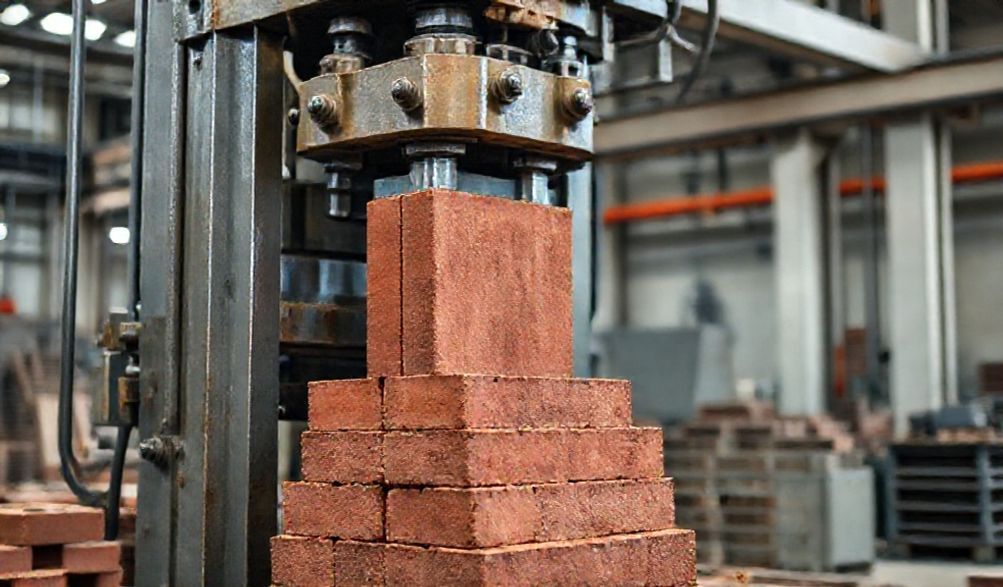
Қалыптау Кірпіш Пресс Машиналарының Толық Нұсқаулығы: Түрлері, Қолданылуы және Таңдау Жолдары
Кіріспе
Құрылыс, қалау және құрылыс материалдары өндірісімен айналысатындар үшін біркелкі жоғары сапалы кірпіштерді алу үнемі қиындық тудырады. Қолмен қалыптау еңбек сыйымды және нәтижесі өзгермелі болып келеді, ал тығыздықтың тұрақсыздығы берік құрылымдардың болмауына және материалдың ысырапталуына әкеледі. Бүгінгі нарықта тиімділік пен тұрақтылық тек идеал ғана емес, сонымен қатар қаржылық міндеттеме болып табылады.
Бұл жан-жақты нұсқаулық инженерлік принциптерге, салалық операциялық стандарттарға және практикалық түсініктерге сүйене отырып, негізгі жабдықтың бірі – қалып кірпіш пресс машинасын анықтайды. Сіз мердігер болсаңыз да, кірпіш жасау бизнесін бастайтын кәсіпкер болсаңыз да, немесе материалдарды таңдап алатын жоба менеджері болсаңыз да, бұл машинаны түсіну сапаны, өнімділікті және шығынды оңтайландыру үшін өте маңызды.
Қалыпты кірпіш прессі - бұл қалып (немесе штамп) мен механикалық немесе гидравликалық қысымды қолдана отырып, саз, бетон, топырақ немесе ұшқыл күл сияқты шикізаттарды дәл, тығыз кірпіштерге сығатын механикаландырылған құрылғы. Ол бос, шикі материалды стандартталған, құрылымдық құрылыс блогына айналдырады.
Бұл жазба сіздің шешім қабылдау жүйеңіз болуға арналған. Біз әртүрлі станоктардың түрлерін, олардың қолданылу салаларын, ескеруге тиіс маңызды техникалық факторларды және оларды тиімді пайдалану тәсілдерін талдаймыз. Біздің мақсатымыз - шағын қоғамдық жобаңыз болсын немесе ірі өндірістік кәсіпорын, сіздің нақты қажеттіліктеріңізге сәйкес келетін тамара станокты таңдауға қажетті біліммен қамтамасыз ету. Мұндағы ақпарат қауіпсіз, хабардар және стратегиялық инвестицияны қолдау үшін жалпы салалық стандарттар мен инженерлік үздік тәжірибелерге негізделген.
Қалған Кірпіш Пресс Машинасы деген не? Негізгі Қағидаттары Түсіндірілді
Брикет прессінің мәні - бұл бақыланатын күш пен дәлдік құрылғысы. Ол топырақты немесе агрегатты қатты пішінге келтірудің ежелгі үдерісін автоматтандырып, жетілдіреді. Оның негізгі қағидаттарын түсіну - оны қолдануды меңгерудің бірінші қадамы.
Негізгі жұмыс механизмі
Қалып кірпіш пресінің жұмысы циклдік процесс бойынша жүзеге асырылады, ол күніне жүздеген немесе мыңдаған рет қайталанады:
- Тамақтандыру:Шикізат қоспасы бункерге салынады. Содан кейін тамақтандыру механизмі (тамақтандыру қорабы, конвейер немесе күрек) осы материалдың өлшенген көлемін машинаның престолындағы бос қалып қуысына жеткізеді.
- СығуБұл шешуші кезең. Гидравликалық домкрат немесе механикалық механизм арқылы қуат алатын басымдауыш басы – үлкен күшпен қалып қуысына түседі. Бір сәт ғана сақталатын бұл қысым материалды сығады, ауа қабаттарын шығарып, бөлшектерді біріктіре отырып, тығыз кірпіш (немесе блок) қалыптастырады. Қысым статикалық болуы мүмкін немесе жақсы тығыздау үшін діріл компонентін қамтуы мүмкін.
- Атқылау:Сығудан кейін, сығымдау басы кері шегінеді. Қалып қорабы жиі көтеріледі немесе тақта жаңа пішінділген кірпішті қуыстан жоғары және сыртқа шығарып, оны паллетке, конвейерге немесе күтіп алу аймағына тасымалдау үшін арбаға қояды.
Theқалып (немесе өлшем)Шоудың жұлдызы - бұл дәлме-дәл өңделген болат қуыс. Ол дайын өнімнің барлық өлшемдерін анықтайды: ұзындығын, енін, биіктігін және пішінін - ол стандартты тікбұрышты, бірігуш немесе әшекейлі болсын.
Негізгі компоненттер және олардың функциялары
Әрбір баспа құрылғысы бірнеше негізгі компоненттердің айналасында құрылған:
- Рама және құрылым: Typically a heavy-duty steel fabrication, the frame provides the rigid stability needed to withstand the immense pressing forces (often measured in tons) without flexing, which would affect brick consistency.
- Power & Drive System: This is the “engine.” In hydraulic presses, an electric or diesel motor powers a pump that drives hydraulic cylinders to generate smooth, controllable pressure. Mechanical presses use a flywheel, gears, and cams to convert motor rotation into a pressing action. Hydraulic systems offer more easily adjustable pressure.
- Қалып (Die): The custom tooling. It’s usually made from hardened steel to resist wear from abrasive materials. Molds are often interchangeable on a single machine to produce different brick types.
- Тамақтандыру жүйесі: Ranges from a simple manual hopper to an automated, volumetric feeder that ensures each mold cavity receives an identical amount of material, which is crucial for uniform brick weight and density.
- Басқару жүйесі: This dictates operation complexity. It can be a simple нұсқаулық lever system, a жартылай автоматты panel with buttons for each part of the cycle, or a fully PLC-controlled (Programmable Logic Controller) system that automates the entire cycle and can integrate with mixers and conveyors.
Types of Mold Brick Press Machines and Their Applications
Choosing the right type of machine is paramount. Your choice should be dictated by your production scale, budget, and labor availability.
Manual Brick Press Machines
- Сипаттама: These are human-powered, lever-operated presses. The operator fills the mold by hand, then uses a mechanical lever to drive a screw or rack-and-pinion mechanism to compress the material.
- Specs: Low pressure range, output of 100-500 bricks per 8-hour day depending on operator skill.
- Ең жақсы: Extremely small-scale projects, DIY enthusiasts, community-based building initiatives, vocational training, or proof-of-concept prototyping with a very low budget. They prioritize low cost over output or ease of use.
Semi-Automatic Brick Press Machines
- Сипаттама: These machines use an electric motor to power the pressing mechanism (often hydraulic), automating the most labor-intensive part. The operator typically still handles feeding the raw material and removing the finished brick.
- Specs: Moderate to high pressure, output can range from 300 to 1,500+ bricks per hour based on model and operator speed.
- Ең жақсы: Small to medium-sized businesses, blockyards, and contractors who need a significant step up in quality and output from manual methods without the capital outlay for full automation. They offer an excellent balance of productivity and affordability.
Fully Automatic Brick Press Machines
- Сипаттама: These are complete production lines. A PLC controls the entire process: automatic material feeding from a mixer, precise mold filling, compression, ejection, and transfer of bricks onto curing pallets via stackers and conveyors. They often feature multi-cavity molds for producing several bricks per cycle.
- Specs: High to very high pressure and output, ranging from 2,000 to 10,000+ bricks per hour.
- Ең жақсы: Large-scale industrial brick and block manufacturing plants where high volume, consistent quality, and minimal direct labor are critical to profitability.
Specialized Presses by Material
While many presses are adaptable, some are optimized for specific raw materials:
- Clay Brick Press Machines: Designed to handle the plasticity and moisture content of natural clay. They often include a vacuum extrusion system to de-air the clay before pressing for higher strength.
- Concrete (Cement) Block Press Machines: Engineered for the abrasive nature of concrete mix (cement, sand, aggregate). They utilize high vibration coupled with pressure to consolidate the mix thoroughly, producing dense hollow blocks, solid blocks, or paving stones.
- Interlocking Brick Press Machines: These produce bricks with designed ridges and grooves that lock together without mortar. Often used with soil-cement (stabilized earth) mixes, they are popular for sustainable, low-cost housing and landscaping projects.
- Ұшқан күл кірпіш жасау машиналары: Specialized to utilize fly ash (a coal combustion byproduct) as a primary raw material, often mixed with lime, gypsum, and a small amount of cement. They support eco-friendly construction and waste utilization.
Critical Factors to Consider When Choosing a Machine
Moving beyond type, here is your actionable framework for evaluating specific models and brands. Ignoring these factors can lead to costly mismatches.
Өндірістік қуат және шығару талаптары
Don’t guess; calculate.
* Сұранысты бағалау. Determine how many bricks you need per day, week, or month. Add a 20-30% buffer for growth.
* Match Cycle Time: A machine’s output is determined by its цикл уақыты (time to produce one brick or one set of bricks). If a machine has a 15-second cycle time, it can produce 240 bricks per hour. Ensure this matches your calculated demand, accounting for operator breaks and maintenance.
Brick Specifications & Mold Compatibility
Машина әлбетте өндіруі керек.exact brick you need to sell or use.
* Мөлшері мен пішіні: Define your required brick dimensions (L x W x H) and style (solid, hollow, interlocking, paving).
* Қалыпты теңшеу: Confirm with the supplier that molds for your specific design are available. Ask about: Interchangeability (How easy/quick is it to change molds?), Шығын of additional molds, and Lead time for custom molds.
Raw Material Characteristics
The press must be suited to your “recipe.”
* Material Type: Clearly identify your primary raw material (e.g., sandy clay, quarry tailings, concrete mix with 10mm aggregate).
* Ылғалдылық мөлшері: This is critical. Most presses require material with a specific moisture range (e.g., 8-12% for concrete) for optimal compaction. Too wet causes sticking; too dry leads to weak bricks.
* Particle Size: The machine’s feeding system and compression method must handle your material’s gradation. Large aggregates require robust, open feeding systems and high compaction force.
Pressure Force and Brick Density
Pressure directly correlates to final brick strength.
* Understanding Tonnage: Pressing force is measured in tons (or MegaPascals – MPa). A standard concrete hollow block might require 150-250 tons of pressure, while a highly compacted paving stone may need 300+ tons.
* Density = Strength: Higher pressure creates denser bricks with lower water absorption and higher compressive strength, which is essential for load-bearing applications. Know the required strength standard (e.g., ASTM C90 for concrete blocks) for your market.
Power Source & Operational Costs
Consider the total cost of ownership.
* Қуат көзі: Electric models are common, clean, and efficient but require a stable grid connection. Diesel engines offer mobility and independence from the grid but have higher fuel costs and emissions. Some offer hybrid options.
* Efficiency Analysis: Request the machine’s rated power consumption (kW). A more efficient motor or hydraulic system may have a higher upfront cost but significantly lower long-term operating expenses.
Operational Best Practices and Maintenance
A machine is only as good as its operation and upkeep. Proper care ensures safety, longevity, and consistent product quality.
Safe Operation Procedures
Safety is non-negotiable.
* Training: Ensure all operators are thoroughly trained on the specific machine.
* Read the Manual: The manufacturer’s operation manual is the primary safety document. Follow it.
* Key Protocols: Never bypass safety guards or interlocks. Use lock-out/tag-out procedures during maintenance. Keep hands clear of the mold area during the compression cycle. Wear appropriate PPE (safety glasses, gloves, steel-toe boots).
Routine Maintenance Checklist
Proactive maintenance prevents catastrophic downtime.
* Күнделікті Check hydraulic oil levels and for leaks. Lubricate all moving points (pivots, guide rods) as specified. Visually inspect the mold for damage or wear. Clean excess material from the machine.
* Апталық: Check and tighten all bolts, especially on the mold and frame. Inspect hoses and electrical connections for wear.
* Ай сайын: Change or clean hydraulic and lubrication filters according to the schedule. Perform a more detailed inspection of wear parts like mold liners, pressing head, and feeder components.
Жиі кездесетін мәселелерді шешу
- Cracked Bricks: Usually caused by incorrect moisture content (too dry), excessive pressure, or a worn mold causing uneven ejection.
- Poor Ejection/Sticking: Often due to material being too wet, insufficient mold taper (draft), or a damaged/poorly lubricated mold surface.
- Uneven Density or Weak Bricks: Can result from uneven feeding (too much or too little material in the mold), insufficient pressure, or an improper raw material mix design.
The Advantages of Using a Modern Brick Press Machine
Investing in a proper press delivers tangible, multifaceted returns that go beyond simple brick production.
Сәйкессіздік пен сапаның үйлесімділігі
Every brick is a clone of the last. Precise molds and controlled pressure ensure identical dimensions, weight, and density. This structural uniformity simplifies construction, improves aesthetics, and ensures predictable load-bearing performance.
Significant Increase in Production Speed
Compare a manual laborer making 200-300 bricks per day to a semi-automatic press producing 2,000-3,000 in the same timeframe. The machine doesn’t tire, dramatically accelerating project timelines and scaling business capacity.
Labor Efficiency and Cost Reduction
The machine reduces reliance on large crews of highly skilled masons for molding. Labor is redirected to material preparation, machine operation, and brick handling, optimizing the workforce and controlling one of the largest variable costs in construction.
Material Efficiency and Sustainability
Precise volumetric feeding minimizes raw material waste. Furthermore, modern presses enable the use of local, sustainable, or recycled materials like stabilized soil, fly ash, or crushed construction waste, reducing the environmental footprint and often the material cost of your bricks.
Frequently Asked Questions (FAQ) About Mold Brick Press Machines
Q1: What is the average cost range for a mold brick press machine?
A: Costs vary dramatically. A simple manual press can be a few hundred dollars. A quality semi-automatic hydraulic press may range from \$5,000 to \$30,000. Fully automatic production lines can start at \$50,000 and exceed \$200,000. Budget based on your required type, capacity, and level of automation, and always factor in costs for molds, shipping, and installation.
Q2: Can one machine produce different sizes and shapes of bricks?
A: Yes, this is a key feature of many presses. The critical factor is mold interchangeability. When evaluating a machine, ask how long a mold change takes (minutes vs. hours) and the cost of additional molds. Some machines offer quick-change systems that greatly enhance operational flexibility.
Q3: How important is after-sales service and technical support?
A: It is absolutely crucial. A machine is a long-term investment. Prioritize suppliers who offer clear documentation, readily available spare parts, and responsive technical support—either remotely or via local agents. This support is your primary defense against prolonged, expensive downtime.
Q4: What is the typical lifespan of a brick press machine?
A: With proper maintenance and operation, a well-built machine can last 15 to 20 years or more. Lifespan is directly tied to build quality (heavy-duty steel), the rigor of your maintenance schedule, and the operating environment (e.g., protecting it from the elements). The mold itself is a wear item and may need refurbishing or replacement more frequently.
Q5: Are there specific foundation or space requirements for installation?
A: Absolutely. Most stationary presses, especially semi- and fully-automatic models, require a solid, level concrete foundation to absorb vibration and support the machine’s weight. The supplier will provide foundation drawings. You also need ample floor space for the machine itself, raw material storage, finished brick curing areas, and access for material handling equipment.
Қорытынды
Selecting the right mold brick press machine is a strategic decision that impacts product quality, operational efficiency, and business profitability. We’ve explored the core principles, from the basic mechanics of compression to the detailed breakdown of manual, semi-automatic, and fully automatic systems. The selection framework—centered on your output needs, brick specifications, raw materials, required pressure, and operational costs—provides a clear path to a sound investment.
As a final recommendation, use this guide as a checklist. Document your specific requirements clearly. Then, approach multiple reputable suppliers with these specs to receive comparable quotations and technical advice. The growing trends of automation, energy efficiency, and sustainable material use will continue to shape this industry.
For large-scale or critical projects, we strongly advise consulting with a qualified mechanical engineer or an experienced industry expert to validate your choice and ensure a safe, optimal installation. Your press is the heart of your production; choose it with care, knowledge, and a focus on the long term.
<