
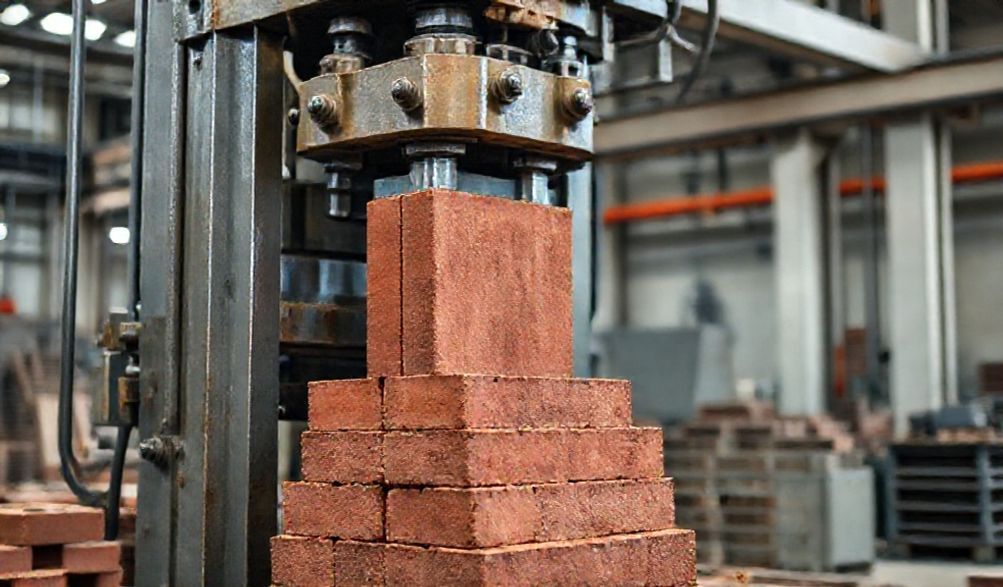
Остаточний посібник з пресів для виробництва цегли: типи, застосування та як обрати
Вступ
Для всіх, хто займається будівництвом, кладкою або виробництвом будматеріалів, досягнення стабільної високої якості цегли може бути постійним викликом. Ручне формування вимагає великих трудовитрат і дає неоднакові результати, тоді як нестабільна щільність призводить до слабких конструкцій та марнотратства матеріалів. На сьогоднішньому ринку ефективність і стійкість — це не просто ідеали, а фінансові необхідності.
Цей вичерпний посібник ґрунтується на інженерних принципах, галузевих експлуатаційних стандартах та практичних знаннях, щоб розкрити суть ключового обладнання: преса для виробництва будівельних блоків. Незалежно від того, чи ви підрядник, підприємець, який започатковує бізнес із виробництва цегли, чи керівник проекту, що займається закупівлею матеріалів, розуміння цієї техніки є ключовим для оптимізації якості, обсягів виробництва та витрат.
Машинка для пресування цегли з використанням форми — це механізований пристрій, який стискає сировинні матеріали, такі як глина, бетон, ґрунт або зольна пил, у точні, щільні цеглини за допомогою комбінації форми (або штампа) та значного механічного або гідравлічного тиску. Вона перетворює сипку сировину у стандартизовану конструкційну будівельну одиницю.
Ця публікація створена як ваш каркас для прийняття рішень. Ми розберемо різні типи машин, їх ідеальні сфери застосування, критичні технічні фактори, які необхідно враховувати, та способи їх ефективної експлуатації. Наша мета — надати вам знання, необхідні для вибору ідеального преса під ваші конкретні потреби, будь то невеликий громадський проект або велике промислове підприємство. Надана інформація ґрунтується на загальних галузевих стандартах та найкращих інженерних практиках, щоб забезпечити безпечні, обґрунтовані та стратегічні інвестиції.
Що таке прес для формування цегли? Пояснення основних принципів
У своїй основі цеглопрес — це пристрій контрольованої сили та точності. Він автоматизує та вдосконалює давній процес ущільнення ґрунту чи наповнювача у тверду форму. Розуміння його основних принципів є першим кроком до оволодіння його застосуванням.
Основний робочий механізм
Робота преса для формування цегли проходить за циклічним процесом, який часто повторюється сотні або тисячі разів на день:
- Годування:Сиру суміш завантажують у бункер. Потім механізм подачі (живильник, конвеєр або лопата) подає відміряний об’єм цього матеріалу у порожню ливарну форму на пресовому столі верстата.
- Стиснення:Це критична фаза. Пресувальна головка, що приводиться в рух гідравлічним циліндром або механічним механізмом, опускається у формувальну порожнину з величезною силою. Цей тиск, який підтримується протягом моменту, стискає матеріал, видаляючи повітряні кишені та з'єднуючи частинки разом, утворюючи щільну цеглину (або блок). Тиск може бути статичним або включати вібраційну складову для кращого ущільнення.
- Викид:Після стиснення пресувальна головка відводиться. Формована коробка часто піднімається, або пластина виштовхує свіжоформовану цеглину вгору та з порожнини на піддон, конвеєр або візок для транспортування до зони твердіння.
Theформа (або штамп)Це зірка шоу. Вона являє собою точно оброблену сталеву порожнину, яка визначає кожен вимір готового виробу: його довжину, ширину, висоту та форму — будь то стандартна прямокутна, замкова або декоративна.
Ключові компоненти та їх функції
Кожна преса складається з кількох ключових компонентів:
- Каркас та структура: Typically a heavy-duty steel fabrication, the frame provides the rigid stability needed to withstand the immense pressing forces (often measured in tons) without flexing, which would affect brick consistency.
- Power & Drive System: This is the “engine.” In hydraulic presses, an electric or diesel motor powers a pump that drives hydraulic cylinders to generate smooth, controllable pressure. Mechanical presses use a flywheel, gears, and cams to convert motor rotation into a pressing action. Hydraulic systems offer more easily adjustable pressure.
- Форма (матриця): The custom tooling. It’s usually made from hardened steel to resist wear from abrasive materials. Molds are often interchangeable on a single machine to produce different brick types.
- Система живлення: Ranges from a simple manual hopper to an automated, volumetric feeder that ensures each mold cavity receives an identical amount of material, which is crucial for uniform brick weight and density.
- Система керування: This dictates operation complexity. It can be a simple інструкція lever system, a напівавтоматичний panel with buttons for each part of the cycle, or a fully PLC-controlled (Programmable Logic Controller) system that automates the entire cycle and can integrate with mixers and conveyors.
Types of Mold Brick Press Machines and Their Applications
Choosing the right type of machine is paramount. Your choice should be dictated by your production scale, budget, and labor availability.
Manual Brick Press Machines
- Опис: These are human-powered, lever-operated presses. The operator fills the mold by hand, then uses a mechanical lever to drive a screw or rack-and-pinion mechanism to compress the material.
- Specs: Low pressure range, output of 100-500 bricks per 8-hour day depending on operator skill.
- Найкраще для: Extremely small-scale projects, DIY enthusiasts, community-based building initiatives, vocational training, or proof-of-concept prototyping with a very low budget. They prioritize low cost over output or ease of use.
Semi-Automatic Brick Press Machines
- Опис: These machines use an electric motor to power the pressing mechanism (often hydraulic), automating the most labor-intensive part. The operator typically still handles feeding the raw material and removing the finished brick.
- Specs: Moderate to high pressure, output can range from 300 to 1,500+ bricks per hour based on model and operator speed.
- Найкраще для: Small to medium-sized businesses, blockyards, and contractors who need a significant step up in quality and output from manual methods without the capital outlay for full automation. They offer an excellent balance of productivity and affordability.
Fully Automatic Brick Press Machines
- Опис: These are complete production lines. A PLC controls the entire process: automatic material feeding from a mixer, precise mold filling, compression, ejection, and transfer of bricks onto curing pallets via stackers and conveyors. They often feature multi-cavity molds for producing several bricks per cycle.
- Specs: High to very high pressure and output, ranging from 2,000 to 10,000+ bricks per hour.
- Найкраще для: Large-scale industrial brick and block manufacturing plants where high volume, consistent quality, and minimal direct labor are critical to profitability.
Specialized Presses by Material
While many presses are adaptable, some are optimized for specific raw materials:
- Clay Brick Press Machines: Designed to handle the plasticity and moisture content of natural clay. They often include a vacuum extrusion system to de-air the clay before pressing for higher strength.
- Concrete (Cement) Block Press Machines: Engineered for the abrasive nature of concrete mix (cement, sand, aggregate). They utilize high vibration coupled with pressure to consolidate the mix thoroughly, producing dense hollow blocks, solid blocks, or paving stones.
- Interlocking Brick Press Machines: These produce bricks with designed ridges and grooves that lock together without mortar. Often used with soil-cement (stabilized earth) mixes, they are popular for sustainable, low-cost housing and landscaping projects.
- Машини для виробництва цегли з золи-уносу: Specialized to utilize fly ash (a coal combustion byproduct) as a primary raw material, often mixed with lime, gypsum, and a small amount of cement. They support eco-friendly construction and waste utilization.
Critical Factors to Consider When Choosing a Machine
Moving beyond type, here is your actionable framework for evaluating specific models and brands. Ignoring these factors can lead to costly mismatches.
Виробнича потужність та вимоги до обсягів виробництва
Don’t guess; calculate.
* Оцінка попиту: Determine how many bricks you need per day, week, or month. Add a 20-30% buffer for growth.
* Match Cycle Time: A machine’s output is determined by its час циклу (time to produce one brick or one set of bricks). If a machine has a 15-second cycle time, it can produce 240 bricks per hour. Ensure this matches your calculated demand, accounting for operator breaks and maintenance.
Brick Specifications & Mold Compatibility
Машина повинна вироблятиexact brick you need to sell or use.
* Розмір та форма: Define your required brick dimensions (L x W x H) and style (solid, hollow, interlocking, paving).
* Налаштування форми: Confirm with the supplier that molds for your specific design are available. Ask about: Interchangeability (How easy/quick is it to change molds?), Вартість of additional molds, and Lead time for custom molds.
Raw Material Characteristics
The press must be suited to your “recipe.”
* Тип матеріалу: Clearly identify your primary raw material (e.g., sandy clay, quarry tailings, concrete mix with 10mm aggregate).
* Вміст вологи: This is critical. Most presses require material with a specific moisture range (e.g., 8-12% for concrete) for optimal compaction. Too wet causes sticking; too dry leads to weak bricks.
* Particle Size: The machine’s feeding system and compression method must handle your material’s gradation. Large aggregates require robust, open feeding systems and high compaction force.
Pressure Force and Brick Density
Pressure directly correlates to final brick strength.
* Understanding Tonnage: Pressing force is measured in tons (or MegaPascals – MPa). A standard concrete hollow block might require 150-250 tons of pressure, while a highly compacted paving stone may need 300+ tons.
* Density = Strength: Higher pressure creates denser bricks with lower water absorption and higher compressive strength, which is essential for load-bearing applications. Know the required strength standard (e.g., ASTM C90 for concrete blocks) for your market.
Power Source & Operational Costs
Consider the total cost of ownership.
* Джерело живлення: Electric models are common, clean, and efficient but require a stable grid connection. Diesel engines offer mobility and independence from the grid but have higher fuel costs and emissions. Some offer hybrid options.
* Efficiency Analysis: Request the machine’s rated power consumption (kW). A more efficient motor or hydraulic system may have a higher upfront cost but significantly lower long-term operating expenses.
Operational Best Practices and Maintenance
A machine is only as good as its operation and upkeep. Proper care ensures safety, longevity, and consistent product quality.
Safe Operation Procedures
Safety is non-negotiable.
* Навчання: Ensure all operators are thoroughly trained on the specific machine.
* Read the Manual: The manufacturer’s operation manual is the primary safety document. Follow it.
* Key Protocols: Never bypass safety guards or interlocks. Use lock-out/tag-out procedures during maintenance. Keep hands clear of the mold area during the compression cycle. Wear appropriate PPE (safety glasses, gloves, steel-toe boots).
Routine Maintenance Checklist
Proactive maintenance prevents catastrophic downtime.
* Daily: Check hydraulic oil levels and for leaks. Lubricate all moving points (pivots, guide rods) as specified. Visually inspect the mold for damage or wear. Clean excess material from the machine.
* Weekly: Check and tighten all bolts, especially on the mold and frame. Inspect hoses and electrical connections for wear.
* Monthly: Change or clean hydraulic and lubrication filters according to the schedule. Perform a more detailed inspection of wear parts like mold liners, pressing head, and feeder components.
Troubleshooting Common Issues
- Cracked Bricks: Usually caused by incorrect moisture content (too dry), excessive pressure, or a worn mold causing uneven ejection.
- Poor Ejection/Sticking: Often due to material being too wet, insufficient mold taper (draft), or a damaged/poorly lubricated mold surface.
- Uneven Density or Weak Bricks: Can result from uneven feeding (too much or too little material in the mold), insufficient pressure, or an improper raw material mix design.
The Advantages of Using a Modern Brick Press Machine
Investing in a proper press delivers tangible, multifaceted returns that go beyond simple brick production.
Неперевершена стабільність та якість
Every brick is a clone of the last. Precise molds and controlled pressure ensure identical dimensions, weight, and density. This structural uniformity simplifies construction, improves aesthetics, and ensures predictable load-bearing performance.
Significant Increase in Production Speed
Compare a manual laborer making 200-300 bricks per day to a semi-automatic press producing 2,000-3,000 in the same timeframe. The machine doesn’t tire, dramatically accelerating project timelines and scaling business capacity.
Labor Efficiency and Cost Reduction
The machine reduces reliance on large crews of highly skilled masons for molding. Labor is redirected to material preparation, machine operation, and brick handling, optimizing the workforce and controlling one of the largest variable costs in construction.
Material Efficiency and Sustainability
Precise volumetric feeding minimizes raw material waste. Furthermore, modern presses enable the use of local, sustainable, or recycled materials like stabilized soil, fly ash, or crushed construction waste, reducing the environmental footprint and often the material cost of your bricks.
Frequently Asked Questions (FAQ) About Mold Brick Press Machines
Q1: What is the average cost range for a mold brick press machine?
А: Costs vary dramatically. A simple manual press can be a few hundred dollars. A quality semi-automatic hydraulic press may range from \$5,000 to \$30,000. Fully automatic production lines can start at \$50,000 and exceed \$200,000. Budget based on your required type, capacity, and level of automation, and always factor in costs for molds, shipping, and installation.
Q2: Can one machine produce different sizes and shapes of bricks?
А: Yes, this is a key feature of many presses. The critical factor is mold interchangeability. When evaluating a machine, ask how long a mold change takes (minutes vs. hours) and the cost of additional molds. Some machines offer quick-change systems that greatly enhance operational flexibility.
Q3: How important is after-sales service and technical support?
А: It is absolutely crucial. A machine is a long-term investment. Prioritize suppliers who offer clear documentation, readily available spare parts, and responsive technical support—either remotely or via local agents. This support is your primary defense against prolonged, expensive downtime.
Q4: What is the typical lifespan of a brick press machine?
А: With proper maintenance and operation, a well-built machine can last 15 to 20 years or more. Lifespan is directly tied to build quality (heavy-duty steel), the rigor of your maintenance schedule, and the operating environment (e.g., protecting it from the elements). The mold itself is a wear item and may need refurbishing or replacement more frequently.
Q5: Are there specific foundation or space requirements for installation?
А: Absolutely. Most stationary presses, especially semi- and fully-automatic models, require a solid, level concrete foundation to absorb vibration and support the machine’s weight. The supplier will provide foundation drawings. You also need ample floor space for the machine itself, raw material storage, finished brick curing areas, and access for material handling equipment.
Висновок
Selecting the right mold brick press machine is a strategic decision that impacts product quality, operational efficiency, and business profitability. We’ve explored the core principles, from the basic mechanics of compression to the detailed breakdown of manual, semi-automatic, and fully automatic systems. The selection framework—centered on your output needs, brick specifications, raw materials, required pressure, and operational costs—provides a clear path to a sound investment.
As a final recommendation, use this guide as a checklist. Document your specific requirements clearly. Then, approach multiple reputable suppliers with these specs to receive comparable quotations and technical advice. The growing trends of automation, energy efficiency, and sustainable material use will continue to shape this industry.
For large-scale or critical projects, we strongly advise consulting with a qualified mechanical engineer or an experienced industry expert to validate your choice and ensure a safe, optimal installation. Your press is the heart of your production; choose it with care, knowledge, and a focus on the long term.
<