
Полное руководство по прессам для производства кирпича: типы, применение и критерии выбора
Введение
Для всех, кто занят в строительстве, каменной кладке или производстве строительных материалов, достижение стабильного высокого качества кирпича может быть непрекращающейся проблемой. Ручная формовка трудоёмка и неоднородна, а неравномерная плотность ведёт к слабым конструкциям и потере материала. На сегодняшнем рынке эффективность и устойчивость — это не просто идеалы, а финансовые императивы.
Это всеобъемлющее руководство опирается на инженерные принципы, отраслевые стандарты эксплуатации и практический опыт, чтобы раскрыть суть ключевого оборудования: машины для прессования формованных кирпичей. Независимо от того, являетесь ли вы подрядчиком, предпринимателем, начинающим кирпичный бизнес, или менеджером проекта, занимающимся закупкой материалов, понимание работы этого оборудования — залог оптимизации качества, производительности и затрат.
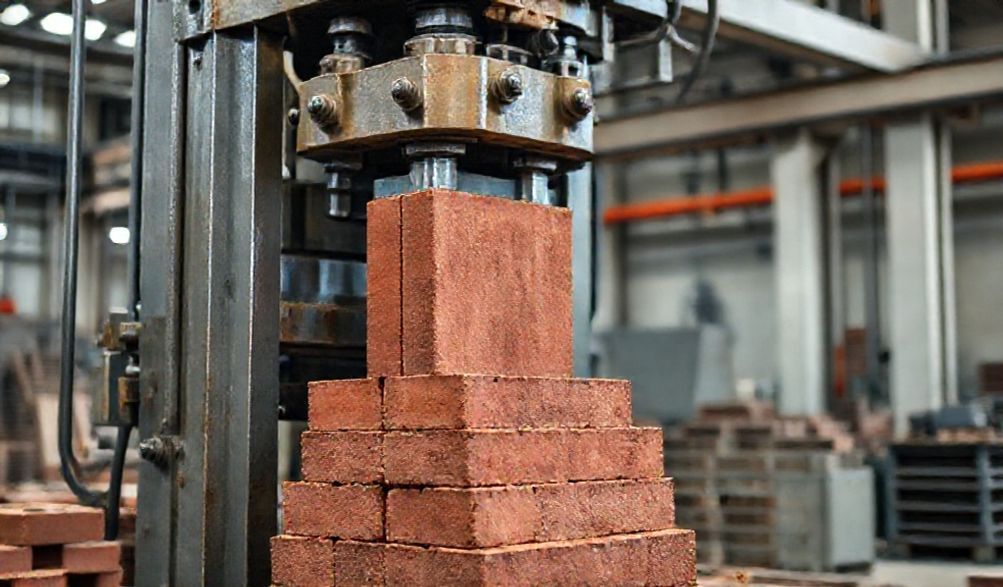
Машина для прессования формованных кирпичей — это механизированное устройство, которое сжимает сырье, такое как глина, бетон, грунт или зольная пыль, в точные, плотные кирпичи с помощью комбинации формы (или штампа) и значительного механического или гидравлического давления. Она превращает сыпучее сырье в стандартизированный структурный строительный блок.
Эта статья послужит вашей системой принятия решений. Мы разберем различные типы машин, их оптимальные области применения, ключевые технические параметры, которые необходимо учитывать, и принципы эффективной эксплуатации. Наша цель — вооружить вас знаниями для выбора идеального пресса под ваши конкретные задачи, будь то небольшой общественный проект или крупное промышленное предприятие. Представленная информация основана на общих отраслевых стандартах и лучших инженерных практиках, чтобы обеспечить безопасное, осознанное и стратегически верное вложение средств.
Что такое пресс для формования кирпича? Объяснение основных принципов работы
В основе своей, кирпичный пресс — это устройство контролируемой силы и точности. Он автоматизирует и доводит до совершенства древний процесс уплотнения земли или заполнителя в твёрдую форму. Понимание его основных принципов — это первый шаг к освоению его применения.
Основной рабочий механизм
Работа пресса для формования кирпича представляет собой циклический процесс, который часто повторяется сотни или тысячи раз в день:
- Кормление:Сырьевая смесь загружается в бункер. Затем питающий механизм (питающая коробка, конвейер или лоток) подает отмеренный объем этого материала в пустую полость формы на прессовом столе машины.
- Сжатие:Это критическая фаза. Прессующая головка, приводимая в действие гидравлическим цилиндром или механическим механизмом, с огромной силой опускается в полость формы. Давление, удерживаемое в течение некоторого времени, сжимает материал, вытесняя воздушные пузыри и связывая частицы вместе, образуя плотный кирпич (или блок). Давление может быть статическим или включать вибрационный компонент для лучшего уплотнения.
- Выброс:После сжатия прессующая головка отводится. Часто форма поднимается или пластина выталкивает свежесформованный кирпич вверх из полости на поддон, конвейер или тележку для транспортировки в зону отверждения.
Theформа (или штамп)Звезда шоу — это прецизионно обработанная стальная полость, которая определяет все параметры конечного продукта: его длину, ширину, высоту и форму — будь то стандартная прямоугольная, сцепляющаяся или декоративная.
Ключевые компоненты и их функции
Каждый пресс состоит из нескольких ключевых компонентов:
- Каркас и структура:Обычно изготавливаемая из прочной стали, рама обеспечивает необходимую жесткую стабильность, чтобы выдерживать огромные усилия прессования (часто измеряемые в тоннах) без прогиба, что могло бы повлиять на однородность кирпича.
- Силовая установка и трансмиссия:Это «двигатель». Вгидравлические прессыЭлектрический или дизельный двигатель приводит в действие насос, который управляет гидравлическими цилиндрами для создания плавного и контролируемого давления.Механические прессыиспользуйте маховик, шестерни и кулачки для преобразования вращения двигателя в прессующее действие. Гидравлические системы обеспечивают более легко регулируемое давление.
- Форма (Штамп): The custom tooling. It’s usually made from hardened steel to resist wear from abrasive materials. Molds are often interchangeable on a single machine to produce different brick types.
- Система кормления: Ranges from a simple manual hopper to an automated, volumetric feeder that ensures each mold cavity receives an identical amount of material, which is crucial for uniform brick weight and density.
- Система управления: This dictates operation complexity. It can be a simple руководство lever system, a полуавтоматический panel with buttons for each part of the cycle, or a fully PLC-controlled (Programmable Logic Controller) system that automates the entire cycle and can integrate with mixers and conveyors.
Types of Mold Brick Press Machines and Their Applications
Choosing the right type of machine is paramount. Your choice should be dictated by your production scale, budget, and labor availability.
Manual Brick Press Machines
- Описание: These are human-powered, lever-operated presses. The operator fills the mold by hand, then uses a mechanical lever to drive a screw or rack-and-pinion mechanism to compress the material.
- Specs: Low pressure range, output of 100-500 bricks per 8-hour day depending on operator skill.
- Лучше всего подходит для: Extremely small-scale projects, DIY enthusiasts, community-based building initiatives, vocational training, or proof-of-concept prototyping with a very low budget. They prioritize low cost over output or ease of use.
Semi-Automatic Brick Press Machines
- Описание: These machines use an electric motor to power the pressing mechanism (often hydraulic), automating the most labor-intensive part. The operator typically still handles feeding the raw material and removing the finished brick.
- Specs: Moderate to high pressure, output can range from 300 to 1,500+ bricks per hour based on model and operator speed.
- Лучше всего подходит для: Small to medium-sized businesses, blockyards, and contractors who need a significant step up in quality and output from manual methods without the capital outlay for full automation. They offer an excellent balance of productivity and affordability.
Fully Automatic Brick Press Machines
- Описание: These are complete production lines. A PLC controls the entire process: automatic material feeding from a mixer, precise mold filling, compression, ejection, and transfer of bricks onto curing pallets via stackers and conveyors. They often feature multi-cavity molds for producing several bricks per cycle.
- Specs: High to very high pressure and output, ranging from 2,000 to 10,000+ bricks per hour.
- Лучше всего подходит для: Large-scale industrial brick and block manufacturing plants where high volume, consistent quality, and minimal direct labor are critical to profitability.
Specialized Presses by Material
While many presses are adaptable, some are optimized for specific raw materials:
- Clay Brick Press Machines: Designed to handle the plasticity and moisture content of natural clay. They often include a vacuum extrusion system to de-air the clay before pressing for higher strength.
- Concrete (Cement) Block Press Machines: Engineered for the abrasive nature of concrete mix (cement, sand, aggregate). They utilize high vibration coupled with pressure to consolidate the mix thoroughly, producing dense hollow blocks, solid blocks, or paving stones.
- Interlocking Brick Press Machines: These produce bricks with designed ridges and grooves that lock together without mortar. Often used with soil-cement (stabilized earth) mixes, they are popular for sustainable, low-cost housing and landscaping projects.
- Машины для производства кирпича из золы-уноса: Specialized to utilize fly ash (a coal combustion byproduct) as a primary raw material, often mixed with lime, gypsum, and a small amount of cement. They support eco-friendly construction and waste utilization.
Critical Factors to Consider When Choosing a Machine
Moving beyond type, here is your actionable framework for evaluating specific models and brands. Ignoring these factors can lead to costly mismatches.
Производственные мощности и требования к объему выпуска
Don’t guess; calculate.
* Оценить спрос: Determine how many bricks you need per day, week, or month. Add a 20-30% buffer for growth.
* Match Cycle Time: A machine’s output is determined by its время цикла (time to produce one brick or one set of bricks). If a machine has a 15-second cycle time, it can produce 240 bricks per hour. Ensure this matches your calculated demand, accounting for operator breaks and maintenance.
Brick Specifications & Mold Compatibility
Машина должна производитьточный brick you need to sell or use.
* Размер и форма: Define your required brick dimensions (L x W x H) and style (solid, hollow, interlocking, paving).
* Индивидуализация форм Confirm with the supplier that molds for your specific design are available. Ask about: Interchangeability (How easy/quick is it to change molds?), Стоимость of additional molds, and Lead time for custom molds.
Raw Material Characteristics
The press must be suited to your “recipe.”
* Тип материала Clearly identify your primary raw material (e.g., sandy clay, quarry tailings, concrete mix with 10mm aggregate).
* Влажность: This is critical. Most presses require material with a specific moisture range (e.g., 8-12% for concrete) for optimal compaction. Too wet causes sticking; too dry leads to weak bricks.
* Particle Size: The machine’s feeding system and compression method must handle your material’s gradation. Large aggregates require robust, open feeding systems and high compaction force.
Pressure Force and Brick Density
Pressure directly correlates to final brick strength.
* Understanding Tonnage: Pressing force is measured in tons (or MegaPascals – MPa). A standard concrete hollow block might require 150-250 tons of pressure, while a highly compacted paving stone may need 300+ tons.
* Density = Strength: Higher pressure creates denser bricks with lower water absorption and higher compressive strength, which is essential for load-bearing applications. Know the required strength standard (e.g., ASTM C90 for concrete blocks) for your market.
Источник питания и эксплуатационные расходы
Consider the total cost of ownership.
* Источник питания: Электрический models are common, clean, and efficient but require a stable grid connection. Дизельный двигатель engines offer mobility and independence from the grid but have higher fuel costs and emissions. Some offer hybrid options.
* Efficiency Analysis: Request the machine’s rated power consumption (kW). A more efficient motor or hydraulic system may have a higher upfront cost but significantly lower long-term operating expenses.
Operational Best Practices and Maintenance
A machine is only as good as its operation and upkeep. Proper care ensures safety, longevity, and consistent product quality.
Safe Operation Procedures
Safety is non-negotiable.
* Обучение: Ensure all operators are thoroughly trained on the specific machine.
* Read the Manual: The manufacturer’s operation manual is the primary safety document. Follow it.
* Key Protocols: Never bypass safety guards or interlocks. Use lock-out/tag-out procedures during maintenance. Keep hands clear of the mold area during the compression cycle. Wear appropriate PPE (safety glasses, gloves, steel-toe boots).
Routine Maintenance Checklist
Proactive maintenance prevents catastrophic downtime.
* Ежедневно: Check hydraulic oil levels and for leaks. Lubricate all moving points (pivots, guide rods) as specified. Visually inspect the mold for damage or wear. Clean excess material from the machine.
* Weekly: Check and tighten all bolts, especially on the mold and frame. Inspect hoses and electrical connections for wear.
* Monthly: Change or clean hydraulic and lubrication filters according to the schedule. Perform a more detailed inspection of wear parts like mold liners, pressing head, and feeder components.
Устранение распространённых проблем
- Cracked Bricks: Usually caused by incorrect moisture content (too dry), excessive pressure, or a worn mold causing uneven ejection.
- Poor Ejection/Sticking: Often due to material being too wet, insufficient mold taper (draft), or a damaged/poorly lubricated mold surface.
- Uneven Density or Weak Bricks: Can result from uneven feeding (too much or too little material in the mold), insufficient pressure, or an improper raw material mix design.
The Advantages of Using a Modern Brick Press Machine
Investing in a proper press delivers tangible, multifaceted returns that go beyond simple brick production.
Непревзойдённая стабильность и качество
Every brick is a clone of the last. Precise molds and controlled pressure ensure identical dimensions, weight, and density. This structural uniformity simplifies construction, improves aesthetics, and ensures predictable load-bearing performance.
Significant Increase in Production Speed
Compare a manual laborer making 200-300 bricks per day to a semi-automatic press producing 2,000-3,000 in the same timeframe. The machine doesn’t tire, dramatically accelerating project timelines and scaling business capacity.
Labor Efficiency and Cost Reduction
The machine reduces reliance on large crews of highly skilled masons for molding. Labor is redirected to material preparation, machine operation, and brick handling, optimizing the workforce and controlling one of the largest variable costs in construction.
Material Efficiency and Sustainability
Precise volumetric feeding minimizes raw material waste. Furthermore, modern presses enable the use of local, sustainable, or recycled materials like stabilized soil, fly ash, or crushed construction waste, reducing the environmental footprint and often the material cost of your bricks.
Frequently Asked Questions (FAQ) About Mold Brick Press Machines
Q1: What is the average cost range for a mold brick press machine?
А: Costs vary dramatically. A simple manual press can be a few hundred dollars. A quality semi-automatic hydraulic press may range from \$5,000 to \$30,000. Fully automatic production lines can start at \$50,000 and exceed \$200,000. Budget based on your required type, capacity, and level of automation, and always factor in costs for molds, shipping, and installation.
Q2: Can one machine produce different sizes and shapes of bricks?
А: Yes, this is a key feature of many presses. The critical factor is mold interchangeability. When evaluating a machine, ask how long a mold change takes (minutes vs. hours) and the cost of additional molds. Some machines offer quick-change systems that greatly enhance operational flexibility.
Q3: How important is after-sales service and technical support?
А: It is absolutely crucial. A machine is a long-term investment. Prioritize suppliers who offer clear documentation, readily available spare parts, and responsive technical support—either remotely or via local agents. This support is your primary defense against prolonged, expensive downtime.
Q4: What is the typical lifespan of a brick press machine?
А: With proper maintenance and operation, a well-built machine can last 15 to 20 years or more. Lifespan is directly tied to build quality (heavy-duty steel), the rigor of your maintenance schedule, and the operating environment (e.g., protecting it from the elements). The mold itself is a wear item and may need refurbishing or replacement more frequently.
Q5: Are there specific foundation or space requirements for installation?
А: Absolutely. Most stationary presses, especially semi- and fully-automatic models, require a solid, level concrete foundation to absorb vibration and support the machine’s weight. The supplier will provide foundation drawings. You also need ample floor space for the machine itself, raw material storage, finished brick curing areas, and access for material handling equipment.
Заключение
Selecting the right mold brick press machine is a strategic decision that impacts product quality, operational efficiency, and business profitability. We’ve explored the core principles, from the basic mechanics of compression to the detailed breakdown of manual, semi-automatic, and fully automatic systems. The selection framework—centered on your output needs, brick specifications, raw materials, required pressure, and operational costs—provides a clear path to a sound investment.
As a final recommendation, use this guide as a checklist. Document your specific requirements clearly. Then, approach multiple reputable suppliers with these specs to receive comparable quotations and technical advice. The growing trends of automation, energy efficiency, and sustainable material use will continue to shape this industry.
For large-scale or critical projects, we strongly advise consulting with a qualified mechanical engineer or an experienced industry expert to validate your choice and ensure a safe, optimal installation. Your press is the heart of your production; choose it with care, knowledge, and a focus on the long term.
<