
홀로우 블록 성형 기계 완벽 가이드: 종류, 용도 및 선택 방법
소개
세계 건설 산업은 저렴하고 내구성이 있으며 쉽게 구할 수 있는 재료에 대한 수요를 기반으로 구축되었습니다. 수많은 주거용, 상업용 및 인프라 프로젝트의 중심에는 겸손하지만 필수불가결한 구성 요소인 속이 빈 콘크리트 블록이 있습니다. 그 인기는 우연이 아닙니다. 뛰어난 강도, 단열 및 내화성을 제공하기 때문입니다. 하지만 모든 믿을 수 있는 블록 뒤에는 정확하고 효율적인 생산을 가능하게 하는 기술, 즉 속이 빈 블록 성형기가 있습니다.
수십 년 동안 수동 블록 생산은 여러 도전과제를 안고 표준 방식이었습니다. 크기와 밀도의 불일치, 허리가 휠 정도의 힘든 노동, 고통스러울 만큼 느린 생산 속도는 프로젝트 일정을 차질에 빠뜨리고 구조적 안전성을 훼손할 수 있었습니다. 확장 가능하고 신뢰할 수 있는 해결책이 필요하다는 점은 분명했습니다. 이에 기계화가 등장했습니다. 중공 블록 성형기가 명확한 해답으로 부상하며, 블록 생산을 장인적 기술에서 스타트업, 소규모 기업, 대규모 공장 모두에 적합한 효율적인 산업 공정으로 변모시켰습니다.
이 가이드는 신뢰할 수 있는 권위 있는 정보원이 되도록 설계되었습니다. 깊은 산업 지식, 기술 사양, 실용적인 운영 통찰력을 바탕으로 복잡한 정보를 정리하여 명확하고 실질적인 정보를 제공합니다. 우리의 목표는 귀하의 특정 요구에 맞춰 자신 있게 정보에 기반한 투자 결정을 내릴 수 있도록 필요한 이해를 갖추도록 돕는 것입니다.
다음 섹션에서는 홀로우 블록 성형 기계가 정확히 무엇인지 해체해 보고, 사용 가능한 다양한 유형을 탐색하며, 그들의 중요한 이점을 상세히 설명하고, 구매자를 위한 핵심 체크리스트를 제공하며, 운영 및 유지 보수에 대한 모범 사례를 개요로 설명하겠습니다. 이 지식을 기초부터 차근차근 쌓아가 보겠습니다.
홀로우 블록 성형 기계란 무엇인가요?
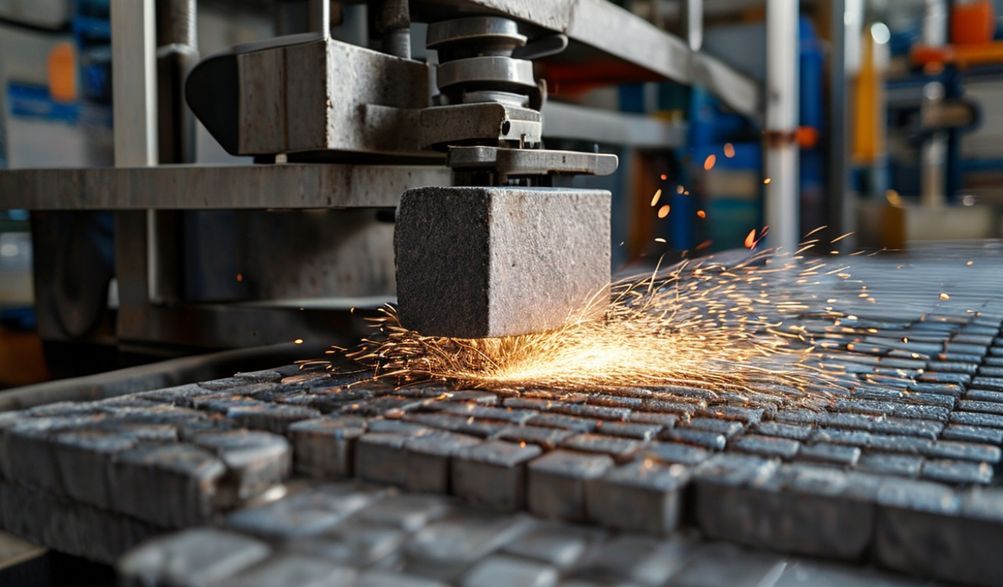
본질적으로, 경량 블록 성형기는 시멘트, 모래, 그리고 골재(예: 돌 조각이나 플라이 애시 같은 산업 부산물)로 이루어진 반건조 혼합물을 기계적 압력과 고주파 진동을 결합하여 특정한 중공 형태로 성형하는 자동화된 특수 설비입니다.
핵심 기능과 기본 작동 원리
The machine’s magic lies in its ability to replicate perfect blocks, one after another. The process, while sophisticated in execution, follows a logical sequence:
- 급식원료 혼합물을 기계의 호퍼에 적재합니다.
- 다짐/진동: The mix is fed into a mold cavity. A vibrating table and, often, a hydraulic press simultaneously compact the material. This vibration removes air pockets, ensuring a dense, strong block.
- 성형: The compacted material takes the exact shape of the mold, which includes cores to form the block’s characteristic hollow chambers.
- 이젝션 The newly formed block is ejected from the mold, either onto a pallet, a conveyor, or the ground, ready for curing.
주요 구성 요소와 그 역할
주요 부품을 이해하면 기계의 작동 원리가 명확해집니다.
- 호퍼: The holding vessel for the raw concrete mix. Its design ensures a consistent flow of material into the molding area.
- 곰팡이냐 죽음이냐: The heart of the machine. This precision steel component defines the block’s final shape, size, and hollow pattern. Molds are interchangeable to produce different block types.
- 진동 시스템 Typically consists of one or more electric motors mounted on a vibrating table. This system provides the high-frequency oscillations essential for proper material compaction and strength.
- Hydraulic or Mechanical Press System: Applies downward pressure on the material in the mold, working in tandem with vibration to achieve optimal density.
- 제어판 Houses the electrical controls, switches, and timers (on advanced models) to operate the vibration, press, and other functions.
- 프레임과 구조 The robust steel chassis that holds all components together, providing stability and durability during the high-stress molding process.
Types of Hollow Blocks Molder Machines
Choosing the right type of machine is your first major decision. The market offers a spectrum from simple manual units to fully automated plants, each catering to different scales and budgets.
수동 블록 성형 기계
These are the most basic entry point into block production.
- 설명: Operated purely by human labor using a lever mechanism to compress the material. They are portable, have no electrical parts, and production is entirely dependent on the operator’s effort.
- 장점:
- Lowest upfront cost and minimal investment risk.
- No electricity or fuel required, ideal for remote sites.
- Simple design means easy maintenance and repair.
- 단점:
- Very low output (typically 300-500 blocks per 8-hour day).
- High physical labor requirement leads to operator fatigue.
- Inconsistency in block quality and dimensions is common.
반자동 블록 제작 기계
This category strikes the best balance for most small to medium enterprises (SMEs) and is the most popular choice globally.
- 설명: These electrically powered machines automate the critical compaction process using vibration and a hydraulic press. Operators manually feed the raw material and remove the finished blocks, but the core molding action is mechanized.
- 장점:
- Significantly higher output than manual machines (e.g., 1,000 to 3,000 blocks per 8-hour shift).
- Excellent consistency in block quality, size, and strength.
- Good return on investment with moderate capital outlay.
- 단점:
- Requires a steady power supply (single or three-phase electricity).
- Still requires 1-2 operators for material handling and block removal.
Fully Automatic Block Making Plants
These represent the pinnacle of production efficiency for large-scale commercial block yards and construction companies.
- 설명: These are complete, computer-controlled production lines. They integrate automatic material batching, mixing, conveying, molding, curing, and block stacking. Human intervention is minimal, primarily for monitoring and maintenance.
- 장점:
- Massive output capacity (tens of thousands of blocks per day).
- Unmatched consistency and quality control.
- Dramatically reduced direct labor costs.
- 단점:
- 매우 높은 초기 자본 투자.
- Requires substantial factory space and a strong, level foundation.
- Needs skilled technicians for operation and maintenance.
Key Benefits of Using a Hollow Block Molder Machine
Investing in a block molder machine isn’t just about buying equipment; it’s about upgrading your entire production capability. The advantages are substantial and multifaceted.
뛰어난 효율성과 생산성
Machines don’t tire. A single semi-automatic unit can produce more in one hour than a team of manual laborers can in a full day. This translates to faster project completion, the ability to take on larger orders, and consistent output regardless of weather conditions, fundamentally transforming your business’s scalability.
Superior Block Quality and Consistency
This is arguably the most critical technical benefit. Controlled vibration frequency and precise pressure ensure every block has optimal density and compressive strength. Uniform dimensions mean less mortar is wasted on-site during construction, walls go up straighter, and the overall structural integrity of buildings is enhanced. Quality becomes a repeatable standard, not a variable.
Significant Cost Reduction & ROI
While there’s an upfront cost, the long-term savings are compelling:
* 노동력 절감 One machine replaces multiple manual laborers.
* 자재 효율성 Precise compaction reduces raw material waste.
* 거부율 감소 Consistent quality means fewer blocks are discarded.
When viewed as an investment, a quality machine often pays for itself within a predictable period through these savings and increased revenue from higher output.
생산의 다재다능함
A single machine is rarely limited to one product. By simply changing the mold, you can pivot production to meet market demand:
* Different hollow block sizes (4-inch, 6-inch, 8-inch).
* Solid concrete blocks for specific applications.
* Paving slabs, interlocking blocks, and decorative landscaping products.
This flexibility protects your business from market shifts and opens multiple revenue streams.
How to Choose the Right Machine for Your Needs: A Buyer’s Checklist
Navigating the market requires a methodical approach. Use this checklist to guide your evaluation.
Assess Your Production Requirements
Start by asking the fundamental questions:
* What is my target daily or monthly output in number of blocks?
* What specific block sizes and types (hollow, solid, paver) do my customers or projects require?
* Is this for a one-time project, or am I establishing an ongoing block manufacturing business?
* What is my available budget, including costs for foundation, power connection, and initial raw materials?
Evaluate Machine Specifications
Look beyond the sales brochure. Key technical specs determine performance:
* Motor Power & Vibration Frequency: Higher power and adjustable frequency allow for better compaction of different mixes and faster cycle times.
* 사이클 타임: How many seconds does it take to produce one block or one pallet of blocks? This directly dictates your maximum output.
* 압력 용량 Measured in tons or kilonewtons (kN). Greater pressure creates denser, stronger blocks, which is crucial for load-bearing applications.
* 금형 품질 The mold is a consumable part. Inquire about the steel grade (e.g., EN-31), hardening process (heat treatment), and the ease and cost of purchasing replacement or different molds.
Consider Operational Factors
Think about the machine’s life in your environment:
* 전원 공급 장치 Does your location have reliable three-phase electricity, or do you need a diesel-powered model?
* Space & Foundation: Each machine requires a specific footprint and a level, reinforced concrete foundation to operate correctly and safely.
* After-Sales Support & Warranty: This is non-negotiable. A reputable supplier will offer a clear warranty, have readily available spare parts, and provide (or facilitate) operator training. Local service technicians are a huge advantage over distant manufacturers.
Budget and Total Cost of Ownership
The cheapest machine is often the most expensive in the long run. Consider:
* 선결 비용: Purchase price, delivery, and installation.
* 운영 비용 Regular power consumption, routine maintenance parts (oil, grease, filters), and mold replacement.
* 다운타임 비용: A machine from a supplier with poor support can idle your business for weeks waiting for a simple part.
Operating and Maintaining Your Machine for Longevity
A machine is a long-term partner. Proper care ensures it runs reliably for years.
Safe Operating Procedures
Safety must be the foundation of all operations.
* Always wear appropriate Personal Protective Equipment (PPE): safety glasses, gloves, and steel-toe boots.
* Ensure all machine guards are in place before starting.
* Follow a strict lock-out/tag-out procedure during any maintenance or clearing of blockages.
* Adhere to the manufacturer’s step-by-step startup, running, and shutdown sequence.
Essential Daily and Periodic Maintenance
Proactive maintenance is the #1 predictor of machine lifespan.
* Daily: Clean excess concrete from the mold, hopper, and frame. Check for and tighten any loose bolts or nuts. Lubricate all moving parts as per the manual.
* Weekly/Monthly: Inspect the mold for signs of wear or damage. Check hydraulic oil levels and condition. Listen for unusual noises from vibration motors and bearings.
* Annually: Consider a comprehensive service by a qualified technician.
Troubleshooting Common Issues
| Problem | Possible Cause | Solution |
| :— | :— | :— |
| Blocks breaking easily | Insufficient vibration time; Low-quality raw materials; Incorrect water-cement ratio | Increase vibration duration; Use properly graded sand/aggregate; Adjust mix to a semi-dry consistency |
| Rough or uneven block surface | Worn-out mold; Too much water in the mix | Replace or repair the mold; Reduce water content in the mix |
| Machine vibrates excessively | Loose foundation bolts; Unbalanced load on the table | Tighten all foundation and frame bolts; Ensure the machine is level and the load is even |
| Low block output rate | Long cycle time; Manual feeding is slow | Optimize vibration/press timing (if adjustable); Improve raw material preparation and feeding workflow |
The Future of Block Molding Technology
The industry continues to evolve, focusing on smarter, greener production.
Trends Towards Automation and Smart Controls
The integration of Internet of Things (IoT) sensors allows for remote monitoring of machine health, predicting maintenance needs before a breakdown occurs. Energy-efficient servo motors and programmable logic controllers (PLCs) are making machines more precise and cheaper to run.
Sustainable Manufacturing Practices
Modern machines are increasingly designed to optimize the use of recycled materials. This includes higher percentages of fly ash (a coal combustion by-product) or even crushed construction and demolition waste as aggregates. Closed-loop water recycling systems within production plants are also reducing environmental impact.
FAQ Section
Q1: What is the average production capacity of a semi-automatic hollow block machine?
A: Capacity varies by model, but a standard semi-automatic machine can produce between 1,000 to 3,000 blocks (of standard 6″ size) in an 8-hour shift, depending on crew efficiency and cycle time.
Q2: What is the ideal cement-sand-aggregate mix ratio for machine-made blocks?
A: A common and effective ratio is 1 part cement, 3 parts sand, and 2 parts coarse aggregate (e.g., 6mm stone chips). The key is a semi-dry mix—just enough water to bind when compacted. Always test your local materials first.
Q3: Can I use a hollow block machine to make paving slabs or solid blocks?
A: Absolutely. This is a key advantage. You only need to change the mold to the specific shape required for pavers or solid blocks. Ensure your machine has the pressure capacity for solid blocks, as they require more compaction.
Q4: How much space do I need to install and operate a block molding machine?
A: For a semi-automatic machine, plan for a covered area of at least 500-700 sq. ft. This includes space for the machine, raw material storage, block curing, and movement. Fully automatic plants require significantly more industrial space.
Q5: What is the typical lead time for receiving a machine after ordering?
A: For standard models from a local dealer with stock, delivery can be within weeks. For custom orders or direct imports from manufacturers, lead times can range from 45 to 90 days, plus shipping.
Q6: How long does it take for a new operator to learn to use the machine effectively?
A: With proper training from the supplier, a competent operator can learn the basic controls, safety procedures, and daily maintenance for a semi-automatic machine within 3-5 days. Mastering mix optimization and troubleshooting comes with experience over a few weeks.
결론
The hollow blocks molder machine stands as a transformative piece of technology in the construction materials sector. It bridges the gap between raw material and reliable building component, empowering entrepreneurs and builders with control over quality, cost, and scale. From boosting productivity and ensuring consistency to providing remarkable versatility, the right machine is a cornerstone asset for growth and profitability.
Making this important investment requires partnering with knowledge and integrity. Always prioritize suppliers who demonstrate proven expertise, offer transparent technical information, and—most critically—back their machines with robust after-sales support, training, and accessible spare parts. Your machine is a long-term investment; your supplier should be a long-term partner.
Ready to transform your block production and build a more profitable, efficient future? Contact our team of industry experts today for a free, no-obligation needs assessment and a detailed quote on the perfect hollow blocks molder machine for your specific project and ambitions.
<