
Hướng Dẫn Toàn Diện Về Máy Đúc Gạch Rỗng: Phân Loại, Công Dụng Và Cách Lựa Chọn
Giới thiệu
Ngành công nghiệp xây dựng toàn cầu được xây dựng trên nền tảng nhu cầu về các vật liệu giá cả phải chăng, bền bỉ và sẵn có. Trọng tâm của vô số dự án dân dụng, thương mại và cơ sở hạ tầng là một thành phần tuy đơn giản nhưng không thể thiếu: khối bê tông rỗng. Sự phổ biến của nó không phải ngẫu nhiên—nó mang lại độ bền vượt trội, khả năng cách nhiệt và chống cháy tốt. Nhưng đằng sau mỗi khối bền vững là công nghệ giúp việc sản xuất chính xác, hiệu quả trở nên khả thi: máy đúc khối bê tông rỗng.
Trong nhiều thập kỷ, việc sản xuất gạch thủ công là phương pháp phổ biến, đi kèm với vô số thách thức. Sự thiếu đồng nhất về kích thước và độ đặc, sức lao động nặng nhọc, cùng tốc độ sản xuất chậm chạp có thể làm trật nhịp tiến độ dự án và ảnh hưởng đến tính toàn vẹn kết cấu. Nhu cầu về một giải pháp có khả năng mở rộng và đáng tin cậy là rõ ràng. Cơ giới hóa đã ra đời trong bối cảnh đó. Máy đúc gạch block rỗng xuất hiện như câu trả lời tối ưu, chuyển đổi quy trình sản xuất gạch từ một nghề thủ công thành quy trình công nghiệp hiệu quả, phù hợp cho cả các công ty khởi nghiệp, doanh nghiệp nhỏ lẫn nhà máy quy mô lớn.
Hướng dẫn này được thiết kế để trở thành nguồn tài liệu đáng tin cậy của bạn. Dựa trên kiến thức chuyên sâu về ngành, thông số kỹ thuật và những hiểu biết thực tiễn trong vận hành, chúng tôi loại bỏ những thông tin nhiễu loạn để cung cấp thông tin rõ ràng, có thể áp dụng ngay. Mục tiêu của chúng tôi là trang bị cho bạn sự hiểu biết cần thiết để đưa ra quyết định đầu tư tự tin và sáng suốt, phù hợp với nhu cầu cụ thể của bạn.
Trong các phần tiếp theo, chúng ta sẽ phân tích cụ thể máy đúc gạch block rỗng là gì, khám phá các loại máy khác nhau hiện có, trình bày chi tiết những lợi ích quan trọng, cung cấp danh sách kiểm tra thiết yếu cho người mua, và phác thảo các phương pháp vận hành và bảo trì tối ưu. Hãy cùng xây dựng kiến thức này từ nền tảng.
Máy Định Hình Gạch Rỗng là gì?
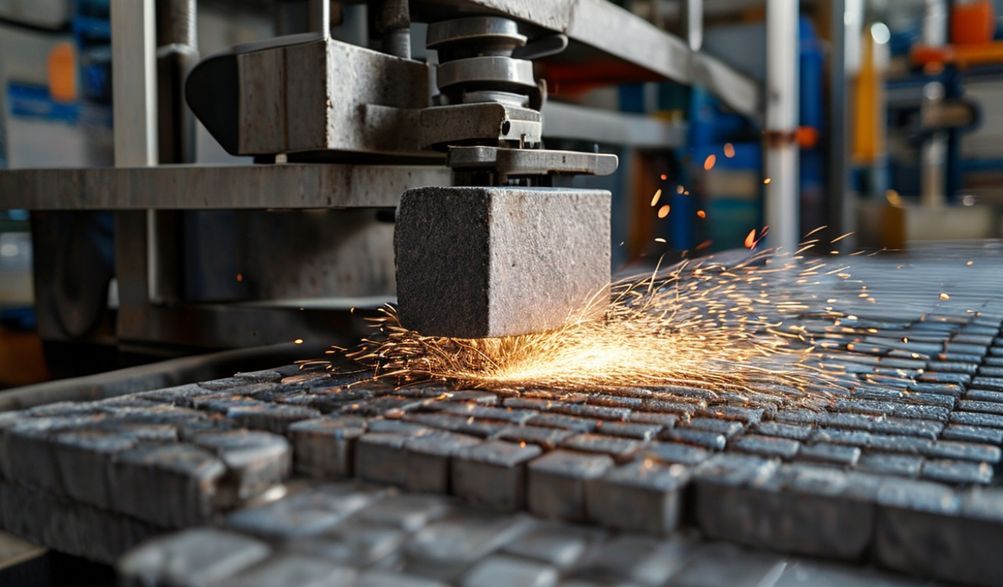
Về cốt lõi, máy đúc khối rỗng là một thiết bị chuyên dụng tự động hóa quá trình tạo hình các khối bê tông rỗng. Nó thực hiện điều này bằng cách nén hỗn hợp bán khô gồm xi măng, cát và cốt liệu (như mạt đá hoặc phụ phẩm công nghiệp như tro bay) thành một hình dạng rỗng cụ thể, thông qua sự kết hợp giữa áp lực cơ học và rung động tần số cao.
Core Function and Basic Working Principle
The machine’s magic lies in its ability to replicate perfect blocks, one after another. The process, while sophisticated in execution, follows a logical sequence:
- Cho ăn:Hỗn hợp nguyên liệu thô được nạp vào phễu của máy.
- Compaction/Vibration: The mix is fed into a mold cavity. A vibrating table and, often, a hydraulic press simultaneously compact the material. This vibration removes air pockets, ensuring a dense, strong block.
- Đúc khuôn The compacted material takes the exact shape of the mold, which includes cores to form the block’s characteristic hollow chambers.
- Đẩy ra: The newly formed block is ejected from the mold, either onto a pallet, a conveyor, or the ground, ready for curing.
Các Thành Phần Chính và Vai Trò của Chúng
Hiểu rõ các bộ phận chính sẽ giúp làm sáng tỏ cách thức hoạt động của máy móc.
- Hopper: The holding vessel for the raw concrete mix. Its design ensures a consistent flow of material into the molding area.
- Khuôn Mẫu hay Là Chết The heart of the machine. This precision steel component defines the block’s final shape, size, and hollow pattern. Molds are interchangeable to produce different block types.
- Hệ thống dao động: Typically consists of one or more electric motors mounted on a vibrating table. This system provides the high-frequency oscillations essential for proper material compaction and strength.
- Hydraulic or Mechanical Press System: Applies downward pressure on the material in the mold, working in tandem with vibration to achieve optimal density.
- Bảng điều khiển: Houses the electrical controls, switches, and timers (on advanced models) to operate the vibration, press, and other functions.
- Khung và Cấu trúc: The robust steel chassis that holds all components together, providing stability and durability during the high-stress molding process.
Types of Hollow Blocks Molder Machines
Choosing the right type of machine is your first major decision. The market offers a spectrum from simple manual units to fully automated plants, each catering to different scales and budgets.
Máy Đúc Khối Thủ Công
These are the most basic entry point into block production.
- Mô tả: Operated purely by human labor using a lever mechanism to compress the material. They are portable, have no electrical parts, and production is entirely dependent on the operator’s effort.
- Ưu điểm:
- Lowest upfront cost and minimal investment risk.
- No electricity or fuel required, ideal for remote sites.
- Simple design means easy maintenance and repair.
- Nhược điểm:
- Very low output (typically 300-500 blocks per 8-hour day).
- High physical labor requirement leads to operator fatigue.
- Inconsistency in block quality and dimensions is common.
Máy Làm Khối Bán Tự Động
This category strikes the best balance for most small to medium enterprises (SMEs) and is the most popular choice globally.
- Mô tả: These electrically powered machines automate the critical compaction process using vibration and a hydraulic press. Operators manually feed the raw material and remove the finished blocks, but the core molding action is mechanized.
- Ưu điểm:
- Significantly higher output than manual machines (e.g., 1,000 to 3,000 blocks per 8-hour shift).
- Excellent consistency in block quality, size, and strength.
- Good return on investment with moderate capital outlay.
- Nhược điểm:
- Requires a steady power supply (single or three-phase electricity).
- Still requires 1-2 operators for material handling and block removal.
Fully Automatic Block Making Plants
These represent the pinnacle of production efficiency for large-scale commercial block yards and construction companies.
- Mô tả: These are complete, computer-controlled production lines. They integrate automatic material batching, mixing, conveying, molding, curing, and block stacking. Human intervention is minimal, primarily for monitoring and maintenance.
- Ưu điểm:
- Massive output capacity (tens of thousands of blocks per day).
- Unmatched consistency and quality control.
- Dramatically reduced direct labor costs.
- Nhược điểm:
- Very high initial capital investment.
- Requires substantial factory space and a strong, level foundation.
- Needs skilled technicians for operation and maintenance.
Key Benefits of Using a Hollow Block Molder Machine
Investing in a block molder machine isn’t just about buying equipment; it’s about upgrading your entire production capability. The advantages are substantial and multifaceted.
Hiệu Suất và Năng Suất Vượt Trội
Machines don’t tire. A single semi-automatic unit can produce more in one hour than a team of manual laborers can in a full day. This translates to faster project completion, the ability to take on larger orders, and consistent output regardless of weather conditions, fundamentally transforming your business’s scalability.
Superior Block Quality and Consistency
This is arguably the most critical technical benefit. Controlled vibration frequency and precise pressure ensure every block has optimal density and compressive strength. Uniform dimensions mean less mortar is wasted on-site during construction, walls go up straighter, and the overall structural integrity of buildings is enhanced. Quality becomes a repeatable standard, not a variable.
Significant Cost Reduction & ROI
While there’s an upfront cost, the long-term savings are compelling:
* Tiết kiệm Lao động One machine replaces multiple manual laborers.
* Hiệu suất vật liệu: Precise compaction reduces raw material waste.
* Tỷ Lệ Từ Chối Giảm: Consistent quality means fewer blocks are discarded.
When viewed as an investment, a quality machine often pays for itself within a predictable period through these savings and increased revenue from higher output.
Tính Linh Hoạt trong Sản Xuất
A single machine is rarely limited to one product. By simply changing the mold, you can pivot production to meet market demand:
* Different hollow block sizes (4-inch, 6-inch, 8-inch).
* Solid concrete blocks for specific applications.
* Paving slabs, interlocking blocks, and decorative landscaping products.
This flexibility protects your business from market shifts and opens multiple revenue streams.
How to Choose the Right Machine for Your Needs: A Buyer’s Checklist
Navigating the market requires a methodical approach. Use this checklist to guide your evaluation.
Assess Your Production Requirements
Start by asking the fundamental questions:
* What is my target daily or monthly output in number of blocks?
* What specific block sizes and types (hollow, solid, paver) do my customers or projects require?
* Is this for a one-time project, or am I establishing an ongoing block manufacturing business?
* What is my available budget, including costs for foundation, power connection, and initial raw materials?
Evaluate Machine Specifications
Look beyond the sales brochure. Key technical specs determine performance:
* Motor Power & Vibration Frequency: Higher power and adjustable frequency allow for better compaction of different mixes and faster cycle times.
* Thời gian chu kỳ: How many seconds does it take to produce one block or one pallet of blocks? This directly dictates your maximum output.
* Pressure Capacity: Measured in tons or kilonewtons (kN). Greater pressure creates denser, stronger blocks, which is crucial for load-bearing applications.
* Chất Lượng Khuôn The mold is a consumable part. Inquire about the steel grade (e.g., EN-31), hardening process (heat treatment), and the ease and cost of purchasing replacement or different molds.
Consider Operational Factors
Think about the machine’s life in your environment:
* Nguồn điện: Does your location have reliable three-phase electricity, or do you need a diesel-powered model?
* Space & Foundation: Each machine requires a specific footprint and a level, reinforced concrete foundation to operate correctly and safely.
* After-Sales Support & Warranty: This is non-negotiable. A reputable supplier will offer a clear warranty, have readily available spare parts, and provide (or facilitate) operator training. Local service technicians are a huge advantage over distant manufacturers.
Budget and Total Cost of Ownership
The cheapest machine is often the most expensive in the long run. Consider:
* Upfront Cost: Purchase price, delivery, and installation.
* Chi phí vận hành: Regular power consumption, routine maintenance parts (oil, grease, filters), and mold replacement.
* Downtime Cost: A machine from a supplier with poor support can idle your business for weeks waiting for a simple part.
Operating and Maintaining Your Machine for Longevity
A machine is a long-term partner. Proper care ensures it runs reliably for years.
Safe Operating Procedures
Safety must be the foundation of all operations.
* Always wear appropriate Personal Protective Equipment (PPE): safety glasses, gloves, and steel-toe boots.
* Ensure all machine guards are in place before starting.
* Follow a strict lock-out/tag-out procedure during any maintenance or clearing of blockages.
* Adhere to the manufacturer’s step-by-step startup, running, and shutdown sequence.
Essential Daily and Periodic Maintenance
Proactive maintenance is the #1 predictor of machine lifespan.
* Hàng ngày: Clean excess concrete from the mold, hopper, and frame. Check for and tighten any loose bolts or nuts. Lubricate all moving parts as per the manual.
* Weekly/Monthly: Inspect the mold for signs of wear or damage. Check hydraulic oil levels and condition. Listen for unusual noises from vibration motors and bearings.
* Hàng năm Consider a comprehensive service by a qualified technician.
Troubleshooting Common Issues
| Problem | Possible Cause | Solution |
| :— | :— | :— |
| Blocks breaking easily | Insufficient vibration time; Low-quality raw materials; Incorrect water-cement ratio | Increase vibration duration; Use properly graded sand/aggregate; Adjust mix to a semi-dry consistency |
| Rough or uneven block surface | Worn-out mold; Too much water in the mix | Replace or repair the mold; Reduce water content in the mix |
| Machine vibrates excessively | Loose foundation bolts; Unbalanced load on the table | Tighten all foundation and frame bolts; Ensure the machine is level and the load is even |
| Low block output rate | Long cycle time; Manual feeding is slow | Optimize vibration/press timing (if adjustable); Improve raw material preparation and feeding workflow |
The Future of Block Molding Technology
The industry continues to evolve, focusing on smarter, greener production.
Trends Towards Automation and Smart Controls
The integration of Internet of Things (IoT) sensors allows for remote monitoring of machine health, predicting maintenance needs before a breakdown occurs. Energy-efficient servo motors and programmable logic controllers (PLCs) are making machines more precise and cheaper to run.
Sustainable Manufacturing Practices
Modern machines are increasingly designed to optimize the use of recycled materials. This includes higher percentages of fly ash (a coal combustion by-product) or even crushed construction and demolition waste as aggregates. Closed-loop water recycling systems within production plants are also reducing environmental impact.
FAQ Section
Q1: What is the average production capacity of a semi-automatic hollow block machine?
A: Capacity varies by model, but a standard semi-automatic machine can produce between 1,000 to 3,000 blocks (of standard 6″ size) in an 8-hour shift, depending on crew efficiency and cycle time.
Q2: What is the ideal cement-sand-aggregate mix ratio for machine-made blocks?
A: A common and effective ratio is 1 part cement, 3 parts sand, and 2 parts coarse aggregate (e.g., 6mm stone chips). The key is a semi-dry mix—just enough water to bind when compacted. Always test your local materials first.
Q3: Can I use a hollow block machine to make paving slabs or solid blocks?
A: Absolutely. This is a key advantage. You only need to change the mold to the specific shape required for pavers or solid blocks. Ensure your machine has the pressure capacity for solid blocks, as they require more compaction.
Q4: How much space do I need to install and operate a block molding machine?
A: For a semi-automatic machine, plan for a covered area of at least 500-700 sq. ft. This includes space for the machine, raw material storage, block curing, and movement. Fully automatic plants require significantly more industrial space.
Q5: What is the typical lead time for receiving a machine after ordering?
A: For standard models from a local dealer with stock, delivery can be within weeks. For custom orders or direct imports from manufacturers, lead times can range from 45 to 90 days, plus shipping.
Q6: How long does it take for a new operator to learn to use the machine effectively?
A: With proper training from the supplier, a competent operator can learn the basic controls, safety procedures, and daily maintenance for a semi-automatic machine within 3-5 days. Mastering mix optimization and troubleshooting comes with experience over a few weeks.
Conclusion
The hollow blocks molder machine stands as a transformative piece of technology in the construction materials sector. It bridges the gap between raw material and reliable building component, empowering entrepreneurs and builders with control over quality, cost, and scale. From boosting productivity and ensuring consistency to providing remarkable versatility, the right machine is a cornerstone asset for growth and profitability.
Making this important investment requires partnering with knowledge and integrity. Always prioritize suppliers who demonstrate proven expertise, offer transparent technical information, and—most critically—back their machines with robust after-sales support, training, and accessible spare parts. Your machine is a long-term investment; your supplier should be a long-term partner.
Ready to transform your block production and build a more profitable, efficient future? Contact our team of industry experts today for a free, no-obligation needs assessment and a detailed quote on the perfect hollow blocks molder machine for your specific project and ambitions.
<