
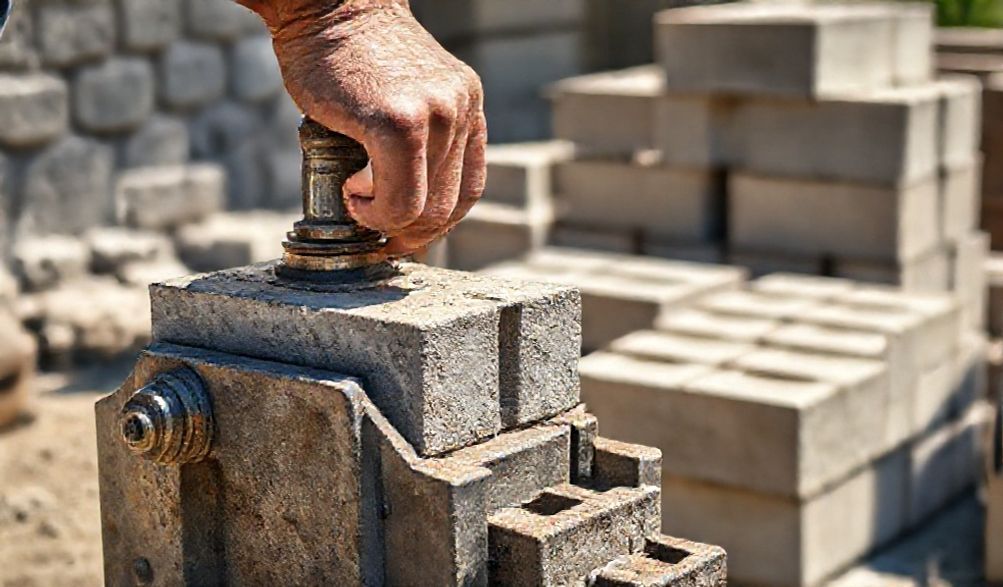
수동 콘크리트 블록 제작 기계 완전 가이드: 선택, 사용 및 유지보수 방법
소개
당신이 시골 지역의 소규모 건축업자이거나, 제한된 예산으로 건축 자재 사업을 시작하는 기업가, 혹은 지역 학교를 짓고자 하는 지역 공동체라고 상상해 보세요. 필요성은 같습니다: 저렴하고 내구성이 좋으며 쉽게 구할 수 있는 건축 블록. 블록을 구매하는 것은 비용이 많이 들고, 운송은 물류적인 골칫거리입니다. 최소한의 투자로 완전한 통제권을 가지고 현장에서 바로 전문가 수준의 콘크리트 블록을 생산할 수 있다면 어떨까요?
이것이 바로 수동식 콘크리트 블록 제조기가 제공하는 강력한 현실입니다. 이는 원시적인 도구와는 거리가 멀며, 전 세계의 개인과 소규모 사업자에게 힘을 실어주는 우아한 기계적 효율성의 증거입니다. 다양한 프로젝트에서 이러한 기계를 사용하고 조언해 온 사람으로서, 저는 어떻게 제약이 기회로 바뀔 수 있는지 직접 목격했습니다.
이 가이드는 확실하고 실용적인 안내서가 되고자 합니다. 우리는 판매 브로슈어를 넘어 현장의 전문 지식으로 나아가, 단순히 이 기계들이 어떻게 작동하는지뿐만 아니라 올바른 기계를 선택하는 방법, 최적의 결과를 위해 운용하는 방법, 장수명을 유지하는 관리법, 심지어 사업적 잠재력을 평가하는 방법까지 다룰 것입니다. 우리의 목표는 여러분의 안전, 프로젝트의 성공, 그리고 투자 가치를 보장할 수 있는 지식을 갖추도록 돕는 것입니다.
수동 콘크리트 블록 제작 기계란 무엇인가요?
핵심적으로, 수동 콘크리트 블록 제조 기계는 건식 콘크리트 혼합물을 금형에 압착하여 조밀하고 균일한 블록이나 벽돌을 순수한 기계적 힘으로 성형하도록 설계된 수동 장치입니다. 이는 중소 규모 생산을 위해 값비싸고 에너지 집약적인 자동화 시스템을 인간의 힘과 영리한 공학으로 대체합니다.
코어 정의 및 작동 원리
원리는 간단하지만 효과적입니다. 시멘트, 모래, 골재로 구성된 특정한 "건식 배합"을 강철 몰드 캐비티에 넣습니다. 그런 다음 작업자가 레버 시스템을 사용하여 엄청난 압력을 가해 배합물을 다집니다. 이 다짐 과정은 공극을 제거하고 재료를 결합시켜, 바로 탈형하여 양생할 수 있을 만큼 강한 "생 블록"을 형성합니다. 핵심은 레버가 제공하는 기계적 이점으로, 한 사람이 수 톤에 달하는 다짐력을 생성할 수 있게 합니다.
주요 구성 요소와 그 기능
부품을 이해하면 과정이 명확해집니다.
* 프레임모든 것을 하나로 묶어주는 튼튼하고 보통 강철로 된 구조물입니다. 반복적인 압력을 견디며 휘지 않도록 견고해야 합니다.
* 금형/다이:기계의 심장. 이 분리 가능한 강철 상자는 블록의 모양(속이 빈, 속이 찬, 포장용)을 결정합니다. 내구성을 위해 경화 강철로 제작된 고품질 몰드가 사용됩니다.
* 레버/손잡이를 누르세요.힘의 배율. 긴 지렛대를 사용하면 작업자가 관리 가능한 노력으로 높은 압축 압력을 생성할 수 있습니다.
* 탬퍼 헤드/압축 플레이트:이 부품은 종종 레버에 연결되어 몰드 내부의 혼합물에 직접 압력을 가합니다.
* 이젝션 시스템: A simple mechanism—sometimes a base plate pushed up by the lever’s next stroke—that gently lifts the freshly formed block out of the mold.
생산되는 일반적인 블록 유형
With interchangeable molds, one machine can be versatile:
* 솔리드 블록 & 홀로우 블록: The staples for wall construction. Hollow blocks are lighter and provide insulation.
* 포장 블록 For driveways, walkways, and patios. These are often thicker and can have various surface textures.
* 인터로킹 블록: Designed to fit together like puzzle pieces, reducing or eliminating the need for mortar in certain wall types.
* Curbstones & Garden Edging: For landscaping and road demarcation.
수동 기계를 선택하는 장점
Why choose a manual machine in an age of automation? The benefits are compelling for the right user, offering a unique set of advantages that automated systems can’t match on a small scale.
Unbeatable Cost-Effectiveness
This is the primary advantage.
* 낮은 초기 투자 비용 Manual machines cost a fraction of electric or hydraulic models.
* 최소 운영 비용: No electricity, diesel, or complex hydraulics means near-zero running costs.
* Affordable Entry: It opens block production to individuals and micro-enterprises who could never finance an automated plant.
단순함과 사용 편의성
- 전문 기술이 필요하지 않습니다. Basic training is sufficient. The mechanics are intuitive.
- Easy to Troubleshoot: With no circuits or engines, most issues are visible and mechanically simple to fix.
- Quick Setup: You can be producing blocks within an hour of delivery.
Portability and Low Maintenance
- Move It Anywhere: Most units are light enough to be carried by two people or loaded onto a truck, perfect for moving around a site.
- 내구성 Fewer moving parts mean fewer things that can break.
- Easy Cleaning: A hose and brush are typically all you need for daily maintenance.
Ideal Application Scenarios
A manual machine is perfect for:
* Small-scale residential construction (building a home, extension, or boundary wall).
* Remote or off-grid locations with unreliable power.
* Startup block-making businesses testing the market.
* DIY enthusiasts and community self-help projects.
* Vocational training and educational workshops.
구매 전에 고려해야 할 주요 사항
A thoughtful purchase decision prevents regret. Here’s how to apply expert scrutiny when choosing your machine.
생산 요구 사항 평가하기
자문해 보세요:
* What is my daily block requirement? Be realistic. A skilled operator/team might produce 200-500 blocks in an 8-hour day.
* What is the total scale of my project? A single home build has different needs than an ongoing small business.
* What block types do I need? Ensure the supplier offers the specific molds you require.
Critical Machine Specifications to Examine
Don’t just look at the price; inspect the build.
* Mold Size & Output: Know the block dimensions (e.g., 4″x8″x16″) and how many blocks are produced per cycle (often 1 or 2).
* Machine Weight & Build Material: Heavier machines with thicker steel frames generally indicate better stability and durability. Avoid flimsy, lightweight frames.
* Pressure Mechanism: Examine the lever’s pivot point and design. A longer lever or a compound lever system provides greater mechanical advantage, making operation easier and compaction better.
Mold Quality and Versatility
The mold is a consumable part that defines your product quality.
* 재료: Insist on hardened steel molds. Mild steel will deform quickly, ruining block dimensions.
* Interchangeability: Can you easily buy and swap different molds from the same manufacturer? A good machine system allows for product line expansion.
* Finish: Internal surfaces should be smooth to ensure easy block ejection and a clean finish.
Supplier Reputation and Support
This step is crucial for long-term trust and operation.
* Check Credentials: How long have they been manufacturing? Can they provide references?
* 보증:어떤 내용이 포함되며, 얼마나 오래 적용되나요?
* 예비 부품: Are spare parts, especially molds, levers, and tamper heads, readily available?
* 애프터 서비스: Do they offer operational guidance or troubleshooting support? A reputable supplier will.
Step-by-Step: Operating Your Machine for Optimal Results
Success hinges on the triad: Machine, Mix, and Method. Here’s the practical, experienced-based process.
The Right Concrete Mix Design
The mix must be a “dry” or “semi-dry” mix—this is non-negotiable. A wet, sloppy mix will not compact properly and will slump upon ejection.
* 표준 비율: A common, strong starting point is 1 part cement : 3 parts sand : 5 parts coarse aggregate (by volume). For finer blocks like pavers, you might use a 1:4 mix (cement:sand).
* Water Content: This is critical. Add just enough water so that the mix holds its shape when squeezed in your fist, with no water dripping. It should crumble when poked.
Preparation: Machine Setup and Mixing
- 포지셔닝: Place the machine on a firm, level surface like a concrete slab or compacted earth.
- 믹싱 Use a clean, hard surface or a mixing tray. Mix the dry sand and aggregate first, then add cement and mix until uniform. Finally, add water gradually and mix thoroughly.
The Block Making Cycle: A Detailed Walkthrough
- Filling the Mold: Place the empty mold under the tamper head. Shovel in your dry mix, slightly overfilling it.
- Initial Compaction: Use the tamper head to press down and level the mix in the mold. This ensures an even fill.
- Applying Full Pressure: Engage the main lever. Apply steady, firm pressure until the lever reaches its full stop. You are compacting the mix to its maximum density. Hold the pressure for a few seconds.
- Ejecting the Green Block: Release the lever. Operate the ejection mechanism (often by pulling/pushing a separate handle or continuing the lever stroke) to lift the freshly formed block out of the mold.
- Handling: Carefully transfer the green block to a curing area. It will have immediate “green strength” but is still fragile.
Curing and Drying Your Blocks Correctly
Curing is not just drying; it’s the chemical process where cement gains strength.
* Keep Them Moist: For the first 7-14 days, blocks must be kept damp. Cover them with plastic sheeting or damp burlap sacks, and sprinkle with water 2-3 times daily.
* 스태킹: Stack blocks on a flat surface, leaving small gaps between them for air circulation. Avoid stacking too high in the first few days.
* Full Strength: Blocks reach handling strength in a few days but continue to gain strength for weeks. Allow at least 28 days for maximum compressive strength before use in load-bearing walls.
Essential Maintenance and Troubleshooting
Proper care ensures years of service and consistent block quality.
Daily and Weekly Maintenance Routine
- After Each Use: Thoroughly clean all mix residue from the mold, tamper head, and frame with a brush and water. Never let concrete harden on the machine.
- Weekly: Check and tighten all bolts and nuts. Apply a light lubricant (like grease or oil) to all pivot points and moving parts.
Common Issues and Practical Solutions
- Problem: Blocks breaking or crumbling during ejection.
- 해결책: The mix is likely incorrect. It could be too dry (lacks cohesion) or too wet (lacks green strength). Adjust water content. Also, ensure you are applying full, held pressure.
- Problem: Blocks lack sharp, defined edges.
- 해결책: The mold may be overfilled, causing “flash” or spillover. Adjust the fill amount. Worn mold edges can also cause this.
- Problem: Machine jams or lever is extremely hard to press.
- 해결책: Stop immediately. There is likely hardened concrete jamming the mechanism. Disassemble as per instructions and clear the obstruction. Never force the lever.
Mold Care and Longevity Tips
- Always clean the mold immediately after production.
- Store in a dry place to prevent rust. A light coating of oil can help during long storage.
- Inspect regularly for wear, especially on the internal edges and corners. A worn mold produces substandard blocks and needs replacement.
FAQ: Your Manual Block Machine Questions Answered
Q1: How many blocks can I make in a day with a manual machine?
A: A realistic output for a single skilled operator, working efficiently with prepared mix, is 200-300 blocks per 8-hour day. A well-organized team of two (one mixing, one operating) can produce 400-500+ blocks. Output depends entirely on rhythm, preparation, and stamina.
Q2: What is the compressive strength of blocks made this way?
A: With a proper mix design (e.g., 1:3:5) and correct curing, blocks can easily achieve compressive strengths between 3.5 MPa (500 psi) to 7 MPa (1000 psi) or more. This meets or exceeds the requirements for many residential and low-rise construction standards (like ASTM C90). Strength is in your control through the mix.
Q3: Is a manual machine profitable for a small business?
A: Yes, primarily due to the very low barrier to entry. Profitability depends on your local market. Calculate your cost per block (cement, sand, aggregate, labor) versus the selling price of finished blocks. For micro-enterprises and local supply, the margins can be attractive, especially where transport costs for imported blocks are high.
Q4: Can I make interlocking blocks without mortar?
A: Absolutely. With a specific interlocking block mold, the blocks are designed to fit together laterally and sometimes vertically. These are excellent for retaining walls, garden walls, and some non-load-bearing structures. They save significantly on mortar and labor for laying.
Q5: Where can I find reliable suppliers or manufacturers?
A: Look for established industrial equipment manufacturers or exporters, often found in countries with strong small-scale construction sectors. Reputable B2B platforms can be a starting point. Critical advice: Always request actual production videos, ask for a list of spare parts with prices, and insist on customer references you can contact. A trustworthy supplier will be transparent.
결론
The manual concrete block making machine is more than a tool; it’s an engine of empowerment. It democratizes the production of essential building materials, turning local resources into durable construction elements. Its value lies in its simplicity, affordability, and the direct control it offers.
Remember, your success will be built on three pillars: investing in a quality, well-specified machine, mastering the correct dry-mix design, and committing to proper curing practices. Neglecting any one of these will compromise your results.
Use this guide to inform your purchase, prepare your site, and refine your technique. Start small, perfect your process, and scale up as your confidence and demand grow. As a final, crucial note, always prioritize safety: wear sturdy gloves and eye protection when handling cement and aggregates, and practice safe lifting techniques when moving blocks and equipment. Here’s to building something solid, from the ground up.
<