
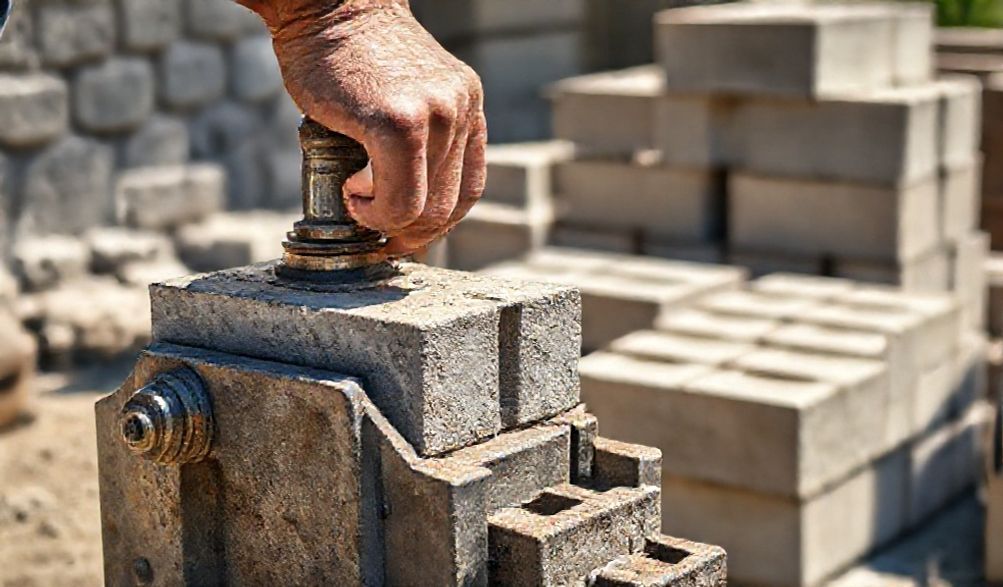
Полное руководство по ручным станкам для производства бетонных блоков: как выбрать, использовать и обслуживать ваше оборудование
Введение
Представьте, что вы небольшой строитель в сельской местности, предприниматель, начинающий бизнес по продаже стройматериалов с ограниченным бюджетом, или общественная группа, стремящаяся построить местную школу. Потребность одна и та же: доступные, прочные и легкодоступные строительные блоки. Покупка их обходится дорого, а транспортировка — это логистическая головная боль. Что, если бы вы могли производить профессиональные бетонные блоки прямо на месте, с минимальными вложениями и полным контролем?
Вот мощная реальность, которую предлагает ручная машина для производства бетонных блоков. Это далеко не примитивный инструмент, а свидетельство элегантной механической эффективности, которая даёт возможности частным лицам и малому бизнесу по всему миру. Как человек, работавший с такими машинами и консультировавший по их использованию в различных проектах, я воочию видел, как они способны превратить ограничение в возможность.
Это руководство призвано стать вашим исчерпывающим практическим пособием. Мы выйдем за рамки рекламных буклетов и обратимся к прикладным знаниям, рассмотрев не только принцип работы этих машин, но и то, как выбрать подходящую модель, эффективно её эксплуатировать, обеспечивать долговечность за счёт грамотного обслуживания и даже оценивать её коммерческий потенциал. Наша цель — вооружить вас знаниями, которые гарантируют вашу безопасность, успех вашего проекта и окупаемость ваших вложений.
Что такое ручная машина для производства бетонных блоков?
По своей сути, ручная машина для производства бетонных блоков — это устройство с ручным управлением, предназначенное для прессования сухой бетонной смеси в форме, создавая плотные, однородные блоки или кирпичи исключительно за счёт механической силы. Она использует человеческую силу и продуманную инженерную конструкцию, заменяя дорогие энергоёмкие автоматизированные системы при малом и среднем объёме производства.
Основное определение и принцип работы
Принцип прост, но эффективен. Определенная "сухая смесь" цемента, песка и заполнителя помещается в стальную форму. Затем оператор с помощью системы рычагов создает огромное давление, уплотняя смесь. Это уплотнение удаляет воздушные пустоты и связывает материалы, образуя "сырой" блок, достаточно прочный, чтобы его можно было сразу извлечь и отправить на отверждение. Волшебство заключается в механическом преимуществе, которое обеспечивает рычаг, позволяя одному человеку создавать усилие уплотнения в несколько тонн.
Ключевые компоненты и их функции
Понимание деталей делает процесс понятным:
* Рамка:Прочная, обычно стальная, конструкция, которая удерживает все вместе. Она должна быть жесткой, чтобы выдерживать повторяющееся давление без изгиба.
* Форма/Штамп:Сердце машины. Этот съемный стальной ящик определяет форму блока (пустотелый, полнотелый, тротуарный). Качественные формы изготавливаются из закаленной стали для долговечности.
* Нажмите рычаг/рукоятку:Множитель силы. Длинный рычаг позволяет оператору создавать высокое давление уплотнения при управляемом усилии.
* Тамперная головка/Уплотнительная плита:Этот компонент, часто соединенный с рычагом, непосредственно надавливает на смесь внутри формы.
* Система катапультирования:Простой механизм — иногда это пластина, поднимаемая следующим ходом рычага, — аккуратно извлекает свежесформованный блок из формы.
Распространенные типы производимых блоков
Сменные формы делают один станок универсальным:
* Сплошные и пустотелые блоки:Основные материалы для возведения стен. Пустотелые блоки легче и обеспечивают теплоизоляцию.
* Тротуарная плитка:Для подъездных путей, пешеходных дорожек и патио. Они часто бывают толще и могут иметь различную текстуру поверхности.
* Взаимосцепляющиеся блоки: Designed to fit together like puzzle pieces, reducing or eliminating the need for mortar in certain wall types.
* Curbstones & Garden Edging: For landscaping and road demarcation.
Advantages of Choosing a Manual Machine
Why choose a manual machine in an age of automation? The benefits are compelling for the right user, offering a unique set of advantages that automated systems can’t match on a small scale.
Непревзойденная рентабельность
This is the primary advantage.
* Низкие первоначальные инвестиции: Manual machines cost a fraction of electric or hydraulic models.
* Minimal Operating Cost: No electricity, diesel, or complex hydraulics means near-zero running costs.
* Affordable Entry: It opens block production to individuals and micro-enterprises who could never finance an automated plant.
Simplicity and Ease of Use
- No Specialized Skills Required: Basic training is sufficient. The mechanics are intuitive.
- Easy to Troubleshoot: With no circuits or engines, most issues are visible and mechanically simple to fix.
- Quick Setup: You can be producing blocks within an hour of delivery.
Portability and Low Maintenance
- Move It Anywhere: Most units are light enough to be carried by two people or loaded onto a truck, perfect for moving around a site.
- Прочность: Fewer moving parts mean fewer things that can break.
- Easy Cleaning: A hose and brush are typically all you need for daily maintenance.
Ideal Application Scenarios
A manual machine is perfect for:
* Small-scale residential construction (building a home, extension, or boundary wall).
* Remote or off-grid locations with unreliable power.
* Startup block-making businesses testing the market.
* DIY enthusiasts and community self-help projects.
* Vocational training and educational workshops.
Key Considerations Before You Buy
A thoughtful purchase decision prevents regret. Here’s how to apply expert scrutiny when choosing your machine.
Оценка ваших производственных потребностей
Спроси себя:
* What is my daily block requirement? Be realistic. A skilled operator/team might produce 200-500 blocks in an 8-hour day.
* What is the total scale of my project? A single home build has different needs than an ongoing small business.
* What block types do I need? Ensure the supplier offers the specific molds you require.
Critical Machine Specifications to Examine
Don’t just look at the price; inspect the build.
* Mold Size & Output: Know the block dimensions (e.g., 4″x8″x16″) and how many blocks are produced per cycle (often 1 or 2).
* Machine Weight & Build Material: Heavier machines with thicker steel frames generally indicate better stability and durability. Avoid flimsy, lightweight frames.
* Pressure Mechanism: Examine the lever’s pivot point and design. A longer lever or a compound lever system provides greater mechanical advantage, making operation easier and compaction better.
Mold Quality and Versatility
The mold is a consumable part that defines your product quality.
* Материал: Insist on hardened steel molds. Mild steel will deform quickly, ruining block dimensions.
* Interchangeability: Can you easily buy and swap different molds from the same manufacturer? A good machine system allows for product line expansion.
* Finish: Internal surfaces should be smooth to ensure easy block ejection and a clean finish.
Supplier Reputation and Support
This step is crucial for long-term trust and operation.
* Check Credentials: How long have they been manufacturing? Can they provide references?
* Гарантия: What is covered and for how long?
* Запчасти: Are spare parts, especially molds, levers, and tamper heads, readily available?
* Послепродажное обслуживание: Do they offer operational guidance or troubleshooting support? A reputable supplier will.
Step-by-Step: Operating Your Machine for Optimal Results
Success hinges on the triad: Machine, Mix, and Method. Here’s the practical, experienced-based process.
The Right Concrete Mix Design
The mix must be a “dry” or “semi-dry” mix—this is non-negotiable. A wet, sloppy mix will not compact properly and will slump upon ejection.
* A Standard Ratio: A common, strong starting point is 1 part cement : 3 parts sand : 5 parts coarse aggregate (by volume). For finer blocks like pavers, you might use a 1:4 mix (cement:sand).
* Water Content: This is critical. Add just enough water so that the mix holds its shape when squeezed in your fist, with no water dripping. It should crumble when poked.
Preparation: Machine Setup and Mixing
- Позиционирование: Place the machine on a firm, level surface like a concrete slab or compacted earth.
- Смешивание: Use a clean, hard surface or a mixing tray. Mix the dry sand and aggregate first, then add cement and mix until uniform. Finally, add water gradually and mix thoroughly.
The Block Making Cycle: A Detailed Walkthrough
- Заполнение формы: Place the empty mold under the tamper head. Shovel in your dry mix, slightly overfilling it.
- Initial Compaction: Use the tamper head to press down and level the mix in the mold. This ensures an even fill.
- Applying Full Pressure: Engage the main lever. Apply steady, firm pressure until the lever reaches its full stop. You are compacting the mix to its maximum density. Hold the pressure for a few seconds.
- Ejecting the Green Block: Release the lever. Operate the ejection mechanism (often by pulling/pushing a separate handle or continuing the lever stroke) to lift the freshly formed block out of the mold.
- Управление: Carefully transfer the green block to a curing area. It will have immediate “green strength” but is still fragile.
Curing and Drying Your Blocks Correctly
Curing is not just drying; it’s the chemical process where cement gains strength.
* Keep Them Moist: For the first 7-14 days, blocks must be kept damp. Cover them with plastic sheeting or damp burlap sacks, and sprinkle with water 2-3 times daily.
* Стекинг: Stack blocks on a flat surface, leaving small gaps between them for air circulation. Avoid stacking too high in the first few days.
* Full Strength: Blocks reach handling strength in a few days but continue to gain strength for weeks. Allow at least 28 days for maximum compressive strength before use in load-bearing walls.
Essential Maintenance and Troubleshooting
Proper care ensures years of service and consistent block quality.
Daily and Weekly Maintenance Routine
- After Each Use: Thoroughly clean all mix residue from the mold, tamper head, and frame with a brush and water. Never let concrete harden on the machine.
- Weekly: Check and tighten all bolts and nuts. Apply a light lubricant (like grease or oil) to all pivot points and moving parts.
Common Issues and Practical Solutions
- Problem: Blocks breaking or crumbling during ejection.
- Solution: The mix is likely incorrect. It could be too dry (lacks cohesion) or too wet (lacks green strength). Adjust water content. Also, ensure you are applying full, held pressure.
- Problem: Blocks lack sharp, defined edges.
- Solution: The mold may be overfilled, causing “flash” or spillover. Adjust the fill amount. Worn mold edges can also cause this.
- Problem: Machine jams or lever is extremely hard to press.
- Solution: Stop immediately. There is likely hardened concrete jamming the mechanism. Disassemble as per instructions and clear the obstruction. Never force the lever.
Mold Care and Longevity Tips
- Always clean the mold immediately after production.
- Store in a dry place to prevent rust. A light coating of oil can help during long storage.
- Inspect regularly for wear, especially on the internal edges and corners. A worn mold produces substandard blocks and needs replacement.
FAQ: Your Manual Block Machine Questions Answered
Q1: How many blocks can I make in a day with a manual machine?
А: A realistic output for a single skilled operator, working efficiently with prepared mix, is 200-300 blocks per 8-hour day. A well-organized team of two (one mixing, one operating) can produce 400-500+ blocks. Output depends entirely on rhythm, preparation, and stamina.
Q2: What is the compressive strength of blocks made this way?
А: With a proper mix design (e.g., 1:3:5) and correct curing, blocks can easily achieve compressive strengths between 3.5 MPa (500 psi) to 7 MPa (1000 psi) or more. This meets or exceeds the requirements for many residential and low-rise construction standards (like ASTM C90). Strength is in your control through the mix.
Q3: Is a manual machine profitable for a small business?
А: Yes, primarily due to the very low barrier to entry. Profitability depends on your local market. Calculate your cost per block (cement, sand, aggregate, labor) versus the selling price of finished blocks. For micro-enterprises and local supply, the margins can be attractive, especially where transport costs for imported blocks are high.
Q4: Can I make interlocking blocks without mortar?
А: Absolutely. With a specific interlocking block mold, the blocks are designed to fit together laterally and sometimes vertically. These are excellent for retaining walls, garden walls, and some non-load-bearing structures. They save significantly on mortar and labor for laying.
Q5: Where can I find reliable suppliers or manufacturers?
А: Look for established industrial equipment manufacturers or exporters, often found in countries with strong small-scale construction sectors. Reputable B2B platforms can be a starting point. Critical advice: Always request actual production videos, ask for a list of spare parts with prices, and insist on customer references you can contact. A trustworthy supplier will be transparent.
Заключение
The manual concrete block making machine is more than a tool; it’s an engine of empowerment. It democratizes the production of essential building materials, turning local resources into durable construction elements. Its value lies in its simplicity, affordability, and the direct control it offers.
Remember, your success will be built on three pillars: investing in a quality, well-specified machine, mastering the correct dry-mix design, and committing to proper curing practices. Neglecting any one of these will compromise your results.
Use this guide to inform your purchase, prepare your site, and refine your technique. Start small, perfect your process, and scale up as your confidence and demand grow. As a final, crucial note, always prioritize safety: wear sturdy gloves and eye protection when handling cement and aggregates, and practice safe lifting techniques when moving blocks and equipment. Here’s to building something solid, from the ground up.
<