
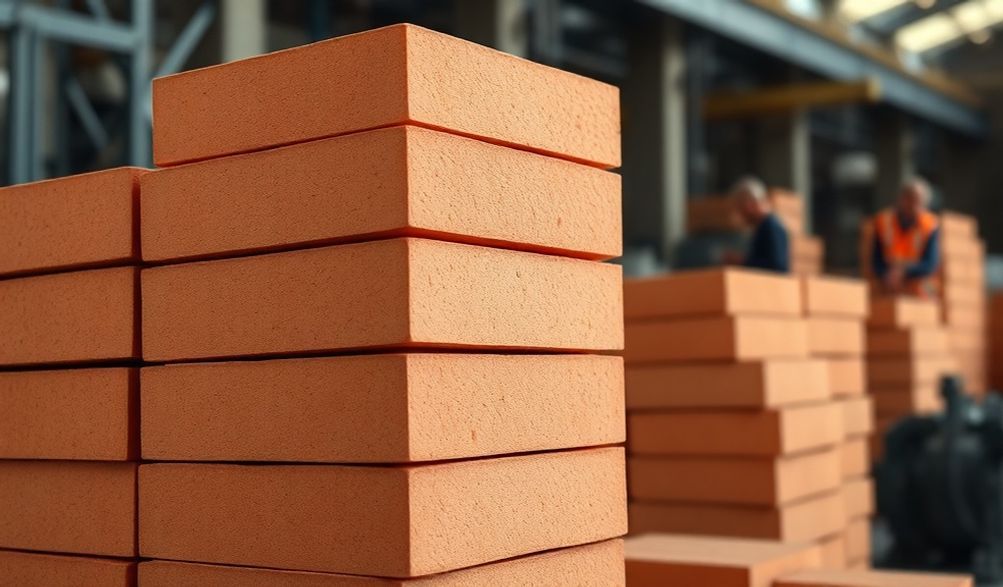
기계 프레스 벽돌: 제조, 장점 및 응용 분야에 대한 현대적 가이드
수천 년 동안, 겸손한 벽돌은 문명의 초석이었습니다. 고대 메소포타미아의 햇볕에 말린 진흙 벽돌에서 산업 혁명 시기의 손으로 빚은 점토 벽돌에 이르기까지, 더 나은 건축 자재를 찾는 노력은 끊임없이 이어져 왔습니다. 오늘날 건설 현장은 전례 없는 규모로 속도, 강도, 정밀도를 요구합니다. 그렇다면 현대 건설을 더 빠르고, 강하며, 균일하게 만드는 것은 무엇일까요? 그 해답은 종종 장인 정신에서 공학적 제조로의 근본적인 전환에 있습니다:기계 프레스 벽돌.
머신 프레스 벽돌은 이름 그대로, 거대한 압력을 가해 원자재를 밀집되고 정밀한 모양으로 압축하는 기계식 프레스(일반적으로 유압식 또는 기계식)를 사용하여 제조된 건축 자재입니다. 주로 소성 또는 단순 성형에 의존하는 전통적인 방식과 달리, 이러한 벽돌의 핵심 정체성은 수 톤의 압축력 아래에서 형성됩니다. 이 공정은 점토, 콘크리트 또는 산업 부산물과 같은 재료를 일관된 고성능 건축 블록으로 변환합니다.
이 가이드는 종합적인 참고 자료 역할을 합니다. 핵심 기술을 명확히 설명하고, 현대적 제조 공정을 단계별로 안내하며, 기계 성형 벽돌이 선호되는 이유가 된 강력한 장점들을 상세히 다룰 것입니다. 다양한 종류와 적용 분야를 탐구하고, 프로젝트에 적합한 벽돌을 선택하는 실용적인 기준을 제공할 것입니다. 업계 표준과 건설 모범 사례에 기반한 이 글은 건축가, 시공자, 개발자, 그리고 정보를 원하는 주택 소유자에게 권위 있는 지식을 갖추도록 설계되었습니다.
기계 프레스 벽돌이란 무엇인가? 핵심 기술 이해하기
기계 프레스 벽돌의 핵심은 세계에서 가장 오래된 건축 자재 중 하나에 산업적 정밀성을 적용한 데 있습니다. 이 벽돌은 원재료가 아니라 고압 성형이라는 제조 방식으로 정의됩니다.
기본 원리: 압력이 불보다 우선한다
결정적인 특징은 고압 압축 공정입니다. 전통적인 점토 벽돌이 고온 소성 과정에서 발생하는 유리화로 강도를 얻고, 일부 콘크리트 블록은 화학적 경화에 의존하는 반면, 프레스 벽돌은 주로 성형 과정에서 가해지는 기계적 압력으로 밀도와 강도를 확보합니다.
- 압출 공법과의 비교:압출 벽돌이 파스타처럼 다이를 통해 밀어내는 방식과 달리 프레스 벽돌은 훨씬 더 높은 압력 아래 제한된 금형 내에서 성형되어 더 날카로운 모서리와 낮은 기공률을 가집니다.
- 소프트 머드와의 비교:소성 진흙이나 수공예 방식과 비교했을 때, 프레스 공정은 불균일성을 제거하여 거의 동일한 크기와 무게의 단위를 생산합니다.
일반적으로 사용되는 원자재
프레스 기술은 다재다능하며 다양한 재료 혼합에 적용될 수 있습니다.
- 클레이:고품질의 외장 벽돌과 포장용 벽돌 제작에 사용됩니다. 압축된 점토는 이후 가마에서 소성됩니다.
- 시멘트 및 골재:콘크리트 프레스 벽돌(예: 시멘트 솔리드 블록 또는 고밀도 콘크리트 블록)의 가장 일반적인 배합.
- 플라이 애시석탄 연소의 부산물인 플라이 애시를 석회, 석고 및 물과 혼합한 친환경 변형체입니다.
- 라임과 모래:칼슘 실리케이트(모래 석회) 벽돌의 기초는 오토클레이브에서 증기로 양생됩니다.
압축 벽돌의 주요 특성
This manufacturing method imparts several distinctive physical properties:
- High Dimensional Accuracy and Uniformity: Each brick is a near-perfect replica of the last, ensuring consistent mortar joints and alignment.
- Smooth, Sharp Edges and Faces: The metal molds produce clean lines, ideal for neat masonry work and aesthetic finishes.
- 높은 압축 강도: The compaction process forces particles together, eliminating voids and creating a dense microstructure capable of bearing significant loads.
- 낮은 흡수율 For many types, especially concrete and sand lime, the low porosity leads to better resistance to moisture ingress and frost damage.
The Machine Press Brick Manufacturing Process: A Step-by-Step Look
The journey from raw material to finished brick is a symphony of automated precision. Here’s a breakdown of the typical stages.
Stage 1: Raw Material Preparation and Mixing
Quality begins with the blend. Raw materials are carefully selected and processed.
- Crushing & Screening: Aggregates or clay are crushed and screened to achieve a consistent, optimal particle size distribution.
- Proportional Mixing: Materials are batched by weight or volume into a mixer. Water is added precisely to achieve the correct moisture content for compaction, known as the “optimum moisture content.”
Stage 2: The Pressing Operation – Heart of the Process
This is where the magic happens. The prepared mix is fed into the press machine.
- The Press Machine: Two main types are used. Hydraulic Presses use fluid power to apply smooth, controllable high pressure. Mechanical Presses use a flywheel and crank mechanism for high-speed operation.
- Mold & Pressure: The mix is filled into a rigid steel mold cavity. A ram then applies extreme pressure—often ranging from 10 MPa to over 40 MPa (1,450 PSI to 5,800 PSI or higher)—compacting the material into its final shape in a matter of seconds.
- 이젝션 The newly formed, “green” brick is then automatically ejected from the mold onto a pallet or conveyor.
Stage 3: Curing, Drying, or Firing
The treatment post-pressing depends on the brick’s chemistry.
- For Concrete/Fly Ash Bricks: They are moved to a curing chamber where controlled temperature and humidity allow the cementitious reactions to occur, gaining strength over 7-28 days.
- For Clay Bricks: The “green” bricks are first dried slowly to remove moisture, then fired in a kiln at temperatures up to 1100°C to achieve permanent hardness.
- For Sand Lime Bricks: They are placed in an autoclave (a high-pressure steam vessel) for several hours, where a chemical reaction between lime and sand forms calcium silicate hydrate.
Stage 4: Quality Control and Packaging
Before dispatch, batches undergo rigorous testing.
- Standard Tests: These include compressive strength tests, water absorption tests, dimensional checks, and density measurements.
- 일관성이 핵심입니다 This stage ensures every batch meets the declared standards (like ASTM, IS, or EN), providing reliability for the builder. Bricks are then stacked and packaged for shipping.
Advantages and Benefits of Using Machine Press Bricks
Choosing machine press bricks isn’t just a manufacturing preference; it delivers tangible benefits from the foundation to the finish.
Superior Strength and Structural Integrity
The high-pressure compaction creates an incredibly dense matrix.
- This directly translates to higher compressive strength, making them the default choice for load-bearing walls in multi-story buildings and heavy-duty infrastructure.
Exceptional Durability and Weather Resistance
Density is the enemy of porosity.
- Lower water absorption means less moisture penetrates the brick, drastically reducing the risk of freeze-thaw damage in cold climates and efflorescence (salt deposits) in all climates. This leads to a longer-lasting structure with lower maintenance.
Precision and Construction Efficiency
Uniformity streamlines the building process.
- Faster Laying: Masons work more quickly with consistent brick sizes.
- Less Mortar: Uniform joints require less mortar, saving material cost and labor time.
- Smoother Finishes: The even surfaces provide an excellent base for plaster, reducing the amount of finishing material needed.
Aesthetic Versatility
Modern presses offer more than just plain blocks.
- Bricks can be produced with integral pigments for consistent color, textured faces for architectural interest, or even special finishes that mimic natural stone. This reduces the need for additional cladding or paint.
Environmental and Economic Benefits
The advantages extend beyond the site.
- Material Use: Fly ash bricks utilize industrial waste. The precision manufacturing process also minimizes material waste.
- Lifecycle Cost: While sometimes higher in initial cost, their durability, energy efficiency (due to mass), and reduced maintenance lead to significant long-term savings.
Common Types and Applications of Pressed Bricks
The press technology adapts to create bricks for nearly every construction need.
Clay Pressed Bricks (Wire-Cut or Pressed)
- 특징: Often considered premium facing bricks. Can be engineered for very low absorption (engineering bricks).
- 응용 분야: Exterior facing walls, pavers, landscaping, and architectural features where aesthetics and durability are paramount.
Concrete Pressed Blocks (Solid, Hollow, or Paver)
- 특징: The workhorse of modern construction. Available in various densities and compressive strength classes.
- 응용 분야:
- 단단한 블록: For load-bearing structural walls, foundations (where specified), and sound barriers.
- 홀로우 블록: For partition walls, infill walls in framed structures, and as a lighter-weight option.
- 포장재 For high-strength driveways, walkways, and industrial flooring.
Fly Ash Pressed Bricks
- 특징: Lighter than clay bricks, with good thermal insulation properties. A sustainable choice.
- 응용 분야: General wall construction in residential, commercial, and industrial projects, especially where green building certifications are targeted.
Calcium Silicate (Sand Lime) Bricks
- 특징: Known for their light grey/white color, smooth finish, and excellent dimensional accuracy. They are free from efflorescence.
- 응용 분야: Both interior and exterior walls where a clean, light-colored finish is desired, often used without plaster.
How to Choose the Right Machine Press Brick for Your Project
Selecting the correct brick is a technical decision. Use this framework to guide your specification.
Assessing Project Requirements: Load-Bearing vs. Non-Load-Bearing
This is the first and most critical filter.
- 내력벽 Require bricks with a high compressive strength class (e.g., Class A or >7 MPa). Consult structural calculations.
- Non-Load-Bearing/Partition Walls: Can use lower-strength, often lighter-weight or hollow blocks.
Climate and Environmental Exposure Considerations
Match the brick’s properties to its environment.
- High Rainfall/Freeze-Thaw Zones: Specify bricks with very low water absorption (e.g., <7% for severe exposure).
- Coastal Areas: Consider bricks with high resistance to sulfate attack.
Aesthetic and Finish Requirements
Decide on the final look early.
- Will the brick be plastered, painted, or left exposed?
- For exposed work, request large samples to check color consistency and texture under natural light.
- Consider jointing style (e.g., recessed, flush) as it interacts with the brick’s face.
Supplier and Quality Checks
This is where due diligence is non-negotiable. Always prioritize verifiable data over marketing claims.
- Request Test Certificates: Ask for recent third-party lab reports against relevant standards (ASTM C90 for concrete block, IS 1077 for clay brick, etc.). Check for consistency in compressive strength and absorption values.
- Visit the Plant: If possible, inspect the manufacturing facility. A well-organized plant with quality control checks at each stage is a good sign.
- Check Certifications: Look for suppliers with industry-recognized quality management certifications (like ISO 9001).
Frequently Asked Questions (FAQ) About Machine Press Bricks
Q1: Are machine press bricks stronger than traditional handmade bricks?
Typically, yes. The high-pressure compaction creates a denser, more uniform microstructure with fewer voids, generally resulting in higher and more consistent compressive strength compared to traditional handmade bricks.
Q2: What is the typical compressive strength range of a machine press brick?
It varies significantly by material and class. For example, standard concrete press bricks often range from 4 MPa (~580 PSI) to over 15 MPa (~2175 PSI). High-strength engineering clay bricks can exceed 50 MPa (~7250 PSI). Always refer to the manufacturer’s technical data sheet for the specific product.
Q3: Can machine press bricks be used for foundation work?
Specific types designed for high strength and very low water absorption can be used. Solid, dense concrete blocks or Class A engineering bricks are sometimes specified. This decision must involve a structural engineer and comply with local building codes, as foundations have the most stringent requirements for durability and load capacity.
Q4: How do I calculate the number of bricks needed for a wall?
Use this basic formula: (Wall Area in sq ft or sq m) / (Face Area of a Single Brick) + Wastage Allowance (5-10%). The precision of machine press bricks makes this calculation more reliable, as mortar joint thickness can be planned more accurately.
Q5: Are fly ash press bricks a sustainable choice?
Yes, they are widely considered an eco-friendly building material. They utilize fly ash, an industrial by-product that would otherwise occupy landfill space. This process conserves topsoil (used in clay bricks) and reduces the carbon footprint associated with cement production in concrete blocks.
결론
The machine press brick stands as a testament to how innovation can refine a fundamental material. By replacing variable manual processes with controlled, high-pressure compaction, this technology delivers bricks of exceptional strength, durability, and precision. From the structural core of a skyscraper to the aesthetic facade of a home, they offer a solution that balances performance, efficiency, and increasingly, environmental responsibility.
For any modern construction project demanding reliability and cost-effectiveness over the long term, machine press bricks present a superior and logical choice. The final step is to apply the technical criteria outlined here—focusing on strength requirements, environmental exposure, and aesthetic goals—to select the optimal type.
Arm yourself with the knowledge from this guide to engage in informed discussions with architects, engineers, and builders. A trustworthy specification is built on asking the right questions and demanding verified quality data from your supplier.
Ready to specify bricks for your project? Use the criteria above to evaluate suppliers, or consult with a construction professional to determine the optimal machine press brick for your specific structural and design needs.
<