
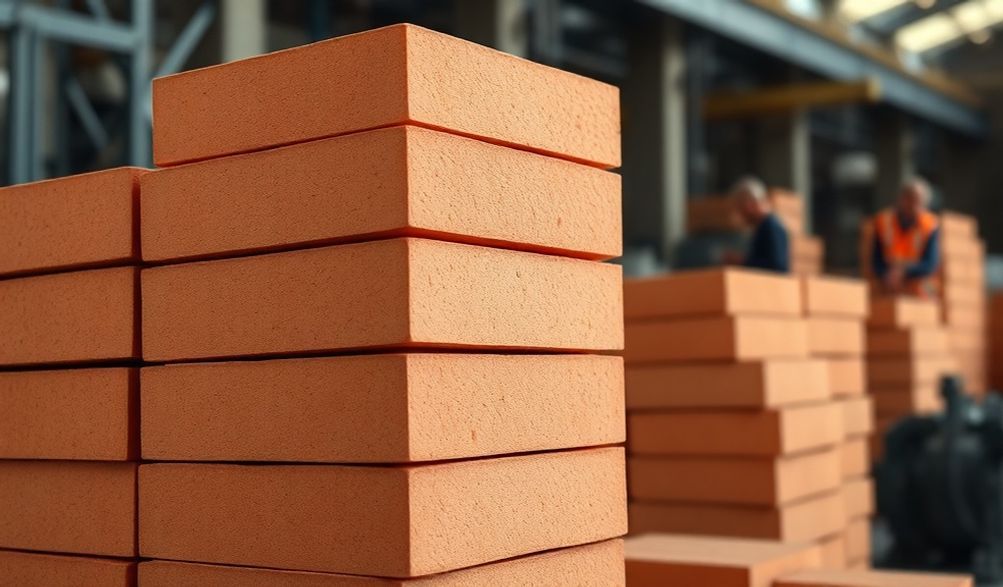
Машиналық Пресс Кірпіш: Өндіріс, Артықшылықтар және Қолдану Салаларының Заманауи Нұсқаулығы
Millýonçylyklap, sadagy kerpiç medeniýetiň esasydyry. Gadymy Mezopotamiýanyň güneşde gurudylan palçyk kerpiçlerinden başlap, Senagat rewolýusiýasynyň gol bilen ýasalýan kerpiçlerine çenli, gowy gurluşyk blokuny gözleýiş dowam etdi. Häzirki wagtda, gurluşyk işleri öň bolmadyk çuňlukda çaltlyk, berk we takyklyk talap edýär. Şeýle bolsa, häzirki gurluşygy has çalt, has berk we birmeňzeş edýän näme? Jogaby köplenç ussatlyk sungatyndan inženerlik öndürişine geçişde ýatýar:Машина пресс кирпич.
Машина басымы бирі - аты айтқанындай: гидравликалық немесе механикалық машина басымы арқылы өндірілетін құрылыс блогы. Бұл процесс шикізатты қатты қысыммен тығыз, дәл пішінге келтіреді. Негізінен күйдіру немесе қарапайым қалыптауға негізделген дәстүрлі әдістерден айырмашылығы, осы бирлердің негізгі сипаты тонналарша қысым күшімен қалыптасады. Бұл процесс саз, бетон немесе өнеркәсіп қалдықтары сияқты материалдарды біркелкі, жоғары өнімді құрылыс блоктарына айналдырады.
Бұл нұсқаулық сіздің жан-жақты ақпарат көзіңіз болады. Біз негізгі технологияны ашып көрсетеміз, заманауи өндіріс процесін қадам-қадам түсіндіреміз және машинамен қысылған кірпішті артықшы таңдау ететін сенімді артықшылықтарын егжей-тегжейлі сипаттаймыз. Біз олардың әртүрлі түрлері мен қолданылуын зерттейміз және жобаңызға сәйкес кірпішті таңдау үшін практикалық негіз береміз. Өнеркәсіп стандарттары мен құрылыс үздік тәжірибелеріне негізделген бұл жазба сәулетшілерге, құрылысшыларға, дамытушыларға және білімді үй иелеріне сенімді біліммен қамтамасыз етуге арналған.
Машиналык пресс кирпич деген эмне? Негизги технологияны түшүнүү
Onuň esasynda, maşyn pres garyndysy dünýäniň iň gadymy gurlyş materiallarynyň birine senagat takyklygynyň ulanylyşyny aňladýar. Ol öz çig materialy bilen däl-de, emele geliş usuly bilen kesgitlenýär: ýokary basyşly ýygnaýyş.
Esasy Prensip: Ot Üstünde Basyş
Аýratyn häsiýet ýokary basyşly ýygnaýyş prosesidir. Däp bolan çigir kiremitleri ýokary temperatura ýakylýan wagtynda bolýan şüşeleşmeden berkitilýär, käbir beton bloklar bolsa himiki bejerilmä bagly bolsa, basyş kiremiti esasy ýygjamlygy we güýjüni döredilýän wagtynda goýulýan mehaniki güýjünden alýar.
- Экструзиямене салышдырма:Экструзияланма керипçелер паста ýaly düýeden çykarylan bolsa, press kerpiçler has ýokary basyş astynda çäklenen galypta emele gelýär, netijede ýiti gyralar we pes gözeneklilik bolýar.
- Ýumşak palçyk bilen deňeşdirme:Ýumşak palçyk ýa-da el ýasama usullary bilen deňeşdirilende, press prosesi birmeňzeş bolmadyk taraplary aradan aýyrýar we deňeşik ölçeg we agramlyk birliklerini öndürýär.
Umumy Görnüşli Çygmalar
Basma tehnologiýasy köp taraply bolup, dürli materiallar garyndylaryna ulanylyp bilner.
- Лай Used for high-quality facing bricks and pavers. The pressed clay is later fired in a kiln.
- Sement we Agregat: The most common mix for concrete press bricks (e.g., Cement Solid Blocks or Dense Concrete Blocks).
- Ултараш: An eco-friendly variant where fly ash—a by-product of coal combustion—is combined with lime, gypsum, and water.
- Lime & Sand: The base for Calcium Silicate (Sand Lime) bricks, which are cured using steam in an autoclave.
Key Characteristics of Pressed Bricks
This manufacturing method imparts several distinctive physical properties:
- High Dimensional Accuracy and Uniformity: Each brick is a near-perfect replica of the last, ensuring consistent mortar joints and alignment.
- Smooth, Sharp Edges and Faces: The metal molds produce clean lines, ideal for neat masonry work and aesthetic finishes.
- Ýokary Gysmaýylyk Güýji: The compaction process forces particles together, eliminating voids and creating a dense microstructure capable of bearing significant loads.
- Pes suw siňdiriş: For many types, especially concrete and sand lime, the low porosity leads to better resistance to moisture ingress and frost damage.
The Machine Press Brick Manufacturing Process: A Step-by-Step Look
The journey from raw material to finished brick is a symphony of automated precision. Here’s a breakdown of the typical stages.
Stage 1: Raw Material Preparation and Mixing
Quality begins with the blend. Raw materials are carefully selected and processed.
- Crushing & Screening: Aggregates or clay are crushed and screened to achieve a consistent, optimal particle size distribution.
- Proportional Mixing: Materials are batched by weight or volume into a mixer. Water is added precisely to achieve the correct moisture content for compaction, known as the “optimum moisture content.”
Stage 2: The Pressing Operation – Heart of the Process
This is where the magic happens. The prepared mix is fed into the press machine.
- The Press Machine: Two main types are used. Hydraulic Presses use fluid power to apply smooth, controllable high pressure. Mechanical Presses use a flywheel and crank mechanism for high-speed operation.
- Mold & Pressure: The mix is filled into a rigid steel mold cavity. A ram then applies extreme pressure—often ranging from 10 MPa to over 40 MPa (1,450 PSI to 5,800 PSI or higher)—compacting the material into its final shape in a matter of seconds.
- Чыгаруу: The newly formed, “green” brick is then automatically ejected from the mold onto a pallet or conveyor.
Stage 3: Curing, Drying, or Firing
The treatment post-pressing depends on the brick’s chemistry.
- For Concrete/Fly Ash Bricks: They are moved to a curing chamber where controlled temperature and humidity allow the cementitious reactions to occur, gaining strength over 7-28 days.
- For Clay Bricks: The “green” bricks are first dried slowly to remove moisture, then fired in a kiln at temperatures up to 1100°C to achieve permanent hardness.
- For Sand Lime Bricks: They are placed in an autoclave (a high-pressure steam vessel) for several hours, where a chemical reaction between lime and sand forms calcium silicate hydrate.
Stage 4: Quality Control and Packaging
Before dispatch, batches undergo rigorous testing.
- Standard Tests: These include compressive strength tests, water absorption tests, dimensional checks, and density measurements.
- Consistency is Key: This stage ensures every batch meets the declared standards (like ASTM, IS, or EN), providing reliability for the builder. Bricks are then stacked and packaged for shipping.
Advantages and Benefits of Using Machine Press Bricks
Choosing machine press bricks isn’t just a manufacturing preference; it delivers tangible benefits from the foundation to the finish.
Superior Strength and Structural Integrity
The high-pressure compaction creates an incredibly dense matrix.
- This directly translates to higher compressive strength, making them the default choice for load-bearing walls in multi-story buildings and heavy-duty infrastructure.
Exceptional Durability and Weather Resistance
Density is the enemy of porosity.
- Lower water absorption means less moisture penetrates the brick, drastically reducing the risk of freeze-thaw damage in cold climates and efflorescence (salt deposits) in all climates. This leads to a longer-lasting structure with lower maintenance.
Precision and Construction Efficiency
Uniformity streamlines the building process.
- Faster Laying: Masons work more quickly with consistent brick sizes.
- Less Mortar: Uniform joints require less mortar, saving material cost and labor time.
- Smoother Finishes: The even surfaces provide an excellent base for plaster, reducing the amount of finishing material needed.
Aesthetic Versatility
Modern presses offer more than just plain blocks.
- Bricks can be produced with integral pigments for consistent color, textured faces for architectural interest, or even special finishes that mimic natural stone. This reduces the need for additional cladding or paint.
Environmental and Economic Benefits
The advantages extend beyond the site.
- Material Use: Fly ash bricks utilize industrial waste. The precision manufacturing process also minimizes material waste.
- Lifecycle Cost: While sometimes higher in initial cost, their durability, energy efficiency (due to mass), and reduced maintenance lead to significant long-term savings.
Common Types and Applications of Pressed Bricks
The press technology adapts to create bricks for nearly every construction need.
Clay Pressed Bricks (Wire-Cut or Pressed)
- Aýratynlyklar: Often considered premium facing bricks. Can be engineered for very low absorption (engineering bricks).
- Programmalar: Exterior facing walls, pavers, landscaping, and architectural features where aesthetics and durability are paramount.
Concrete Pressed Blocks (Solid, Hollow, or Paver)
- Aýratynlyklar: The workhorse of modern construction. Available in various densities and compressive strength classes.
- Programmalar:
- Gaty Bloklar: For load-bearing structural walls, foundations (where specified), and sound barriers.
- Boş bloklar: For partition walls, infill walls in framed structures, and as a lighter-weight option.
- Pawerler: For high-strength driveways, walkways, and industrial flooring.
Fly Ash Pressed Bricks
- Aýratynlyklar: Lighter than clay bricks, with good thermal insulation properties. A sustainable choice.
- Programmalar: General wall construction in residential, commercial, and industrial projects, especially where green building certifications are targeted.
Calcium Silicate (Sand Lime) Bricks
- Aýratynlyklar: Known for their light grey/white color, smooth finish, and excellent dimensional accuracy. They are free from efflorescence.
- Programmalar: Both interior and exterior walls where a clean, light-colored finish is desired, often used without plaster.
How to Choose the Right Machine Press Brick for Your Project
Selecting the correct brick is a technical decision. Use this framework to guide your specification.
Assessing Project Requirements: Load-Bearing vs. Non-Load-Bearing
This is the first and most critical filter.
- Ýük Daşamakly Diwarlar: Require bricks with a high compressive strength class (e.g., Class A or >7 MPa). Consult structural calculations.
- Non-Load-Bearing/Partition Walls: Can use lower-strength, often lighter-weight or hollow blocks.
Climate and Environmental Exposure Considerations
Match the brick’s properties to its environment.
- High Rainfall/Freeze-Thaw Zones: Specify bricks with very low water absorption (e.g., <7% for severe exposure).
- Coastal Areas: Consider bricks with high resistance to sulfate attack.
Aesthetic and Finish Requirements
Decide on the final look early.
- Will the brick be plastered, painted, or left exposed?
- For exposed work, request large samples to check color consistency and texture under natural light.
- Consider jointing style (e.g., recessed, flush) as it interacts with the brick’s face.
Supplier and Quality Checks
This is where due diligence is non-negotiable. Always prioritize verifiable data over marketing claims.
- Request Test Certificates: Ask for recent third-party lab reports against relevant standards (ASTM C90 for concrete block, IS 1077 for clay brick, etc.). Check for consistency in compressive strength and absorption values.
- Visit the Plant: If possible, inspect the manufacturing facility. A well-organized plant with quality control checks at each stage is a good sign.
- Check Certifications: Look for suppliers with industry-recognized quality management certifications (like ISO 9001).
Frequently Asked Questions (FAQ) About Machine Press Bricks
Q1: Are machine press bricks stronger than traditional handmade bricks?
Typically, yes. The high-pressure compaction creates a denser, more uniform microstructure with fewer voids, generally resulting in higher and more consistent compressive strength compared to traditional handmade bricks.
Q2: What is the typical compressive strength range of a machine press brick?
It varies significantly by material and class. For example, standard concrete press bricks often range from 4 MPa (~580 PSI) to over 15 MPa (~2175 PSI). High-strength engineering clay bricks can exceed 50 MPa (~7250 PSI). Always refer to the manufacturer’s technical data sheet for the specific product.
Q3: Can machine press bricks be used for foundation work?
Specific types designed for high strength and very low water absorption can be used. Solid, dense concrete blocks or Class A engineering bricks are sometimes specified. This decision must involve a structural engineer and comply with local building codes, as foundations have the most stringent requirements for durability and load capacity.
Q4: How do I calculate the number of bricks needed for a wall?
Use this basic formula: (Wall Area in sq ft or sq m) / (Face Area of a Single Brick) + Wastage Allowance (5-10%). The precision of machine press bricks makes this calculation more reliable, as mortar joint thickness can be planned more accurately.
Q5: Are fly ash press bricks a sustainable choice?
Yes, they are widely considered an eco-friendly building material. They utilize fly ash, an industrial by-product that would otherwise occupy landfill space. This process conserves topsoil (used in clay bricks) and reduces the carbon footprint associated with cement production in concrete blocks.
Netije
The machine press brick stands as a testament to how innovation can refine a fundamental material. By replacing variable manual processes with controlled, high-pressure compaction, this technology delivers bricks of exceptional strength, durability, and precision. From the structural core of a skyscraper to the aesthetic facade of a home, they offer a solution that balances performance, efficiency, and increasingly, environmental responsibility.
For any modern construction project demanding reliability and cost-effectiveness over the long term, machine press bricks present a superior and logical choice. The final step is to apply the technical criteria outlined here—focusing on strength requirements, environmental exposure, and aesthetic goals—to select the optimal type.
Arm yourself with the knowledge from this guide to engage in informed discussions with architects, engineers, and builders. A trustworthy specification is built on asking the right questions and demanding verified quality data from your supplier.
Ready to specify bricks for your project? Use the criteria above to evaluate suppliers, or consult with a construction professional to determine the optimal machine press brick for your specific structural and design needs.
<