
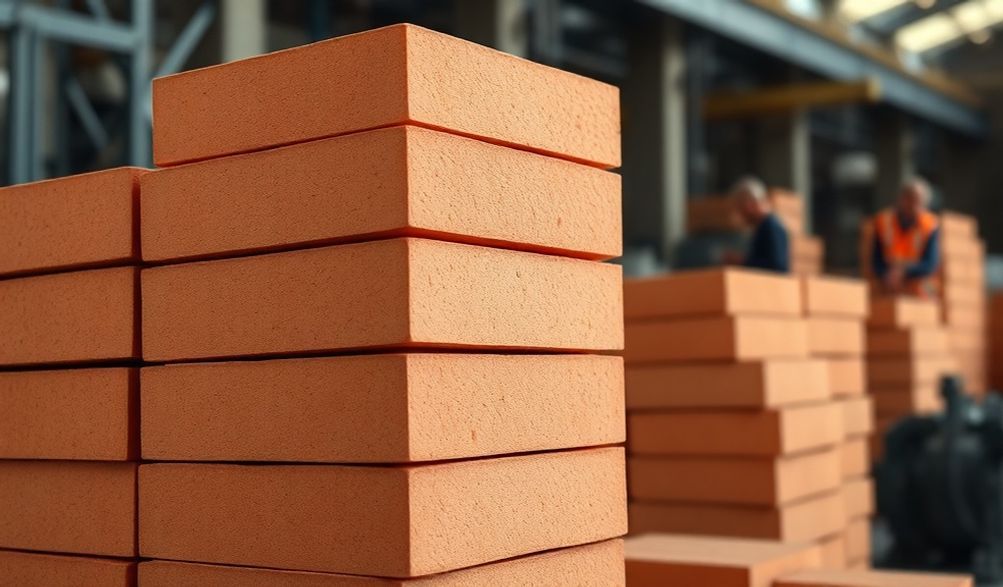
Gạch Ép Máy: Hướng Dẫn Hiện Đại về Sản Xuất, Ưu Điểm và Ứng Dụng
Trong hàng nghìn năm, viên gạch khiêm tốn đã là nền tảng của nền văn minh. Từ những viên gạch bùn phơi nắng của Lưỡng Hà cổ đại đến những đơn vị đất sét đúc thủ công thời Cách mạng Công nghiệp, cuộc tìm kiếm một viên gạch xây tốt hơn chưa bao giờ ngừng lại. Ngày nay, ngành xây dựng đòi hỏi tốc độ, độ bền và độ chính xác ở quy mô chưa từng có. Vậy điều gì giúp việc xây dựng hiện đại trở nên nhanh hơn, bền hơn và đồng đều hơn? Câu trả lời thường nằm ở sự chuyển dịch cơ bản từ thủ công mỹ nghệ sang sản xuất có tính toán kỹ thuật:Máy ép gạch.
Gạch ép máy đúng như tên gọi của nó: một đơn vị xây dựng được sản xuất bằng máy ép cơ khí—thường là thủy lực hoặc cơ học—tạo áp lực cực lớn để nén nguyên liệu thô thành hình dạng chắc chắn, chính xác. Khác với phương pháp truyền thống chủ yếu dựa vào nung hoặc đúc khuôn đơn giản, bản chất cốt lõi của những viên gạch này được hình thành dưới hàng tấn lực nén. Quá trình này biến đổi các vật liệu như đất sét, bê tông hoặc phụ phẩm công nghiệp thành những khối xây dựng đồng nhất, hiệu suất cao.
Hướng dẫn này là nguồn tài nguyên toàn diện dành cho bạn. Chúng tôi sẽ giải mã công nghệ cốt lõi, dẫn dắt bạn qua quy trình sản xuất hiện đại, và trình bày chi tiết những ưu điểm vượt trội khiến gạch ép máy trở thành lựa chọn ưu tiên. Chúng ta sẽ khám phá các loại gạch đa dạng cùng phạm vi ứng dụng của chúng, đồng thời cung cấp một khuôn khổ thực tiễn để lựa chọn loại gạch phù hợp cho dự án của bạn. Dựa trên các tiêu chuẩn ngành và thực hành xây dựng tối ưu, bài viết này được thiết kế để trang bị cho kiến trúc sư, nhà thầu xây dựng, chủ đầu tư và gia chủ am hiểu những kiến thức chuyên môn đáng tin cậy.
Máy ép gạch là gì? Tìm hiểu công nghệ cốt lõi
Trọng tâm của viên gạch ép máy nằm ở việc áp dụng độ chính xác công nghiệp vào một trong những vật liệu xây dựng lâu đời nhất thế giới. Nó được định nghĩa không phải bởi nguyên liệu thô, mà bởi phương pháp tạo hình: nén áp suất cao.
Nguyên Lý Cơ Bản: Áp Lực Trên Lửa
Đặc điểm xác định chính là quá trình nén áp suất cao. Trong khi gạch đất sét truyền thống có được độ bền từ quá trình thủy tinh hóa xảy ra trong quá trình nung ở nhiệt độ cao, và một số khối bê tông dựa vào quá trình đóng rắn hóa học, thì gạch ép có được độ đặc chắc và cường độ chủ yếu nhờ lực cơ học được áp dụng trong quá trình định hình.
- So sánh với Đùn Ép:Khác với gạch ép đùn được đẩy qua khuôn như mì ống, gạch ép tĩnh được định hình trong khuôn kín dưới áp lực cao hơn nhiều, tạo ra các cạnh sắc nét hơn và độ xốp thấp hơn.
- So với Khuôn Bùn Mềm:Trái ngược với các phương pháp đất mềm hoặc thủ công, quy trình ép loại bỏ sự không đồng nhất, tạo ra các đơn vị có kích thước và trọng lượng gần như giống hệt nhau.
Nguyên Liệu Thô Thông Dụng
Công nghệ ép linh hoạt và có thể áp dụng cho nhiều hỗn hợp vật liệu khác nhau.
- Đất sét Used for high-quality facing bricks and pavers. The pressed clay is later fired in a kiln.
- Xi măng & Cốt liệu: The most common mix for concrete press bricks (e.g., Cement Solid Blocks or Dense Concrete Blocks).
- Tro bay: An eco-friendly variant where fly ash—a by-product of coal combustion—is combined with lime, gypsum, and water.
- Lime & Sand: The base for Calcium Silicate (Sand Lime) bricks, which are cured using steam in an autoclave.
Key Characteristics of Pressed Bricks
This manufacturing method imparts several distinctive physical properties:
- High Dimensional Accuracy and Uniformity: Each brick is a near-perfect replica of the last, ensuring consistent mortar joints and alignment.
- Smooth, Sharp Edges and Faces: The metal molds produce clean lines, ideal for neat masonry work and aesthetic finishes.
- Độ Bền Nén Cao: The compaction process forces particles together, eliminating voids and creating a dense microstructure capable of bearing significant loads.
- Khả năng hấp thụ nước thấp For many types, especially concrete and sand lime, the low porosity leads to better resistance to moisture ingress and frost damage.
The Machine Press Brick Manufacturing Process: A Step-by-Step Look
The journey from raw material to finished brick is a symphony of automated precision. Here’s a breakdown of the typical stages.
Stage 1: Raw Material Preparation and Mixing
Quality begins with the blend. Raw materials are carefully selected and processed.
- Crushing & Screening: Aggregates or clay are crushed and screened to achieve a consistent, optimal particle size distribution.
- Proportional Mixing: Materials are batched by weight or volume into a mixer. Water is added precisely to achieve the correct moisture content for compaction, known as the “optimum moisture content.”
Stage 2: The Pressing Operation – Heart of the Process
This is where the magic happens. The prepared mix is fed into the press machine.
- The Press Machine: Two main types are used. Hydraulic Presses use fluid power to apply smooth, controllable high pressure. Mechanical Presses use a flywheel and crank mechanism for high-speed operation.
- Mold & Pressure: The mix is filled into a rigid steel mold cavity. A ram then applies extreme pressure—often ranging from 10 MPa to over 40 MPa (1,450 PSI to 5,800 PSI or higher)—compacting the material into its final shape in a matter of seconds.
- Đẩy ra: The newly formed, “green” brick is then automatically ejected from the mold onto a pallet or conveyor.
Stage 3: Curing, Drying, or Firing
The treatment post-pressing depends on the brick’s chemistry.
- For Concrete/Fly Ash Bricks: They are moved to a curing chamber where controlled temperature and humidity allow the cementitious reactions to occur, gaining strength over 7-28 days.
- For Clay Bricks: The “green” bricks are first dried slowly to remove moisture, then fired in a kiln at temperatures up to 1100°C to achieve permanent hardness.
- For Sand Lime Bricks: They are placed in an autoclave (a high-pressure steam vessel) for several hours, where a chemical reaction between lime and sand forms calcium silicate hydrate.
Stage 4: Quality Control and Packaging
Before dispatch, batches undergo rigorous testing.
- Standard Tests: These include compressive strength tests, water absorption tests, dimensional checks, and density measurements.
- Consistency is Key: This stage ensures every batch meets the declared standards (like ASTM, IS, or EN), providing reliability for the builder. Bricks are then stacked and packaged for shipping.
Advantages and Benefits of Using Machine Press Bricks
Choosing machine press bricks isn’t just a manufacturing preference; it delivers tangible benefits from the foundation to the finish.
Superior Strength and Structural Integrity
The high-pressure compaction creates an incredibly dense matrix.
- This directly translates to higher compressive strength, making them the default choice for load-bearing walls in multi-story buildings and heavy-duty infrastructure.
Exceptional Durability and Weather Resistance
Density is the enemy of porosity.
- Lower water absorption means less moisture penetrates the brick, drastically reducing the risk of freeze-thaw damage in cold climates and efflorescence (salt deposits) in all climates. This leads to a longer-lasting structure with lower maintenance.
Precision and Construction Efficiency
Uniformity streamlines the building process.
- Faster Laying: Masons work more quickly with consistent brick sizes.
- Less Mortar: Uniform joints require less mortar, saving material cost and labor time.
- Smoother Finishes: The even surfaces provide an excellent base for plaster, reducing the amount of finishing material needed.
Aesthetic Versatility
Modern presses offer more than just plain blocks.
- Bricks can be produced with integral pigments for consistent color, textured faces for architectural interest, or even special finishes that mimic natural stone. This reduces the need for additional cladding or paint.
Environmental and Economic Benefits
The advantages extend beyond the site.
- Material Use: Fly ash bricks utilize industrial waste. The precision manufacturing process also minimizes material waste.
- Lifecycle Cost: While sometimes higher in initial cost, their durability, energy efficiency (due to mass), and reduced maintenance lead to significant long-term savings.
Common Types and Applications of Pressed Bricks
The press technology adapts to create bricks for nearly every construction need.
Clay Pressed Bricks (Wire-Cut or Pressed)
- Đặc điểm: Often considered premium facing bricks. Can be engineered for very low absorption (engineering bricks).
- Ứng dụng: Exterior facing walls, pavers, landscaping, and architectural features where aesthetics and durability are paramount.
Concrete Pressed Blocks (Solid, Hollow, or Paver)
- Đặc điểm: The workhorse of modern construction. Available in various densities and compressive strength classes.
- Ứng dụng:
- Khối Đặc For load-bearing structural walls, foundations (where specified), and sound barriers.
- Gạch rỗng: For partition walls, infill walls in framed structures, and as a lighter-weight option.
- Gạch lát nền: For high-strength driveways, walkways, and industrial flooring.
Fly Ash Pressed Bricks
- Đặc điểm: Lighter than clay bricks, with good thermal insulation properties. A sustainable choice.
- Ứng dụng: General wall construction in residential, commercial, and industrial projects, especially where green building certifications are targeted.
Calcium Silicate (Sand Lime) Bricks
- Đặc điểm: Known for their light grey/white color, smooth finish, and excellent dimensional accuracy. They are free from efflorescence.
- Ứng dụng: Both interior and exterior walls where a clean, light-colored finish is desired, often used without plaster.
How to Choose the Right Machine Press Brick for Your Project
Selecting the correct brick is a technical decision. Use this framework to guide your specification.
Assessing Project Requirements: Load-Bearing vs. Non-Load-Bearing
This is the first and most critical filter.
- Load-Bearing Walls: Require bricks with a high compressive strength class (e.g., Class A or >7 MPa). Consult structural calculations.
- Non-Load-Bearing/Partition Walls: Can use lower-strength, often lighter-weight or hollow blocks.
Climate and Environmental Exposure Considerations
Match the brick’s properties to its environment.
- High Rainfall/Freeze-Thaw Zones: Specify bricks with very low water absorption (e.g., <7% for severe exposure).
- Coastal Areas: Consider bricks with high resistance to sulfate attack.
Aesthetic and Finish Requirements
Decide on the final look early.
- Will the brick be plastered, painted, or left exposed?
- For exposed work, request large samples to check color consistency and texture under natural light.
- Consider jointing style (e.g., recessed, flush) as it interacts with the brick’s face.
Supplier and Quality Checks
This is where due diligence is non-negotiable. Always prioritize verifiable data over marketing claims.
- Request Test Certificates: Ask for recent third-party lab reports against relevant standards (ASTM C90 for concrete block, IS 1077 for clay brick, etc.). Check for consistency in compressive strength and absorption values.
- Visit the Plant: If possible, inspect the manufacturing facility. A well-organized plant with quality control checks at each stage is a good sign.
- Check Certifications: Look for suppliers with industry-recognized quality management certifications (like ISO 9001).
Frequently Asked Questions (FAQ) About Machine Press Bricks
Q1: Are machine press bricks stronger than traditional handmade bricks?
Typically, yes. The high-pressure compaction creates a denser, more uniform microstructure with fewer voids, generally resulting in higher and more consistent compressive strength compared to traditional handmade bricks.
Q2: What is the typical compressive strength range of a machine press brick?
It varies significantly by material and class. For example, standard concrete press bricks often range from 4 MPa (~580 PSI) to over 15 MPa (~2175 PSI). High-strength engineering clay bricks can exceed 50 MPa (~7250 PSI). Always refer to the manufacturer’s technical data sheet for the specific product.
Q3: Can machine press bricks be used for foundation work?
Specific types designed for high strength and very low water absorption can be used. Solid, dense concrete blocks or Class A engineering bricks are sometimes specified. This decision must involve a structural engineer and comply with local building codes, as foundations have the most stringent requirements for durability and load capacity.
Q4: How do I calculate the number of bricks needed for a wall?
Use this basic formula: (Wall Area in sq ft or sq m) / (Face Area of a Single Brick) + Wastage Allowance (5-10%). The precision of machine press bricks makes this calculation more reliable, as mortar joint thickness can be planned more accurately.
Q5: Are fly ash press bricks a sustainable choice?
Yes, they are widely considered an eco-friendly building material. They utilize fly ash, an industrial by-product that would otherwise occupy landfill space. This process conserves topsoil (used in clay bricks) and reduces the carbon footprint associated with cement production in concrete blocks.
Conclusion
The machine press brick stands as a testament to how innovation can refine a fundamental material. By replacing variable manual processes with controlled, high-pressure compaction, this technology delivers bricks of exceptional strength, durability, and precision. From the structural core of a skyscraper to the aesthetic facade of a home, they offer a solution that balances performance, efficiency, and increasingly, environmental responsibility.
For any modern construction project demanding reliability and cost-effectiveness over the long term, machine press bricks present a superior and logical choice. The final step is to apply the technical criteria outlined here—focusing on strength requirements, environmental exposure, and aesthetic goals—to select the optimal type.
Arm yourself with the knowledge from this guide to engage in informed discussions with architects, engineers, and builders. A trustworthy specification is built on asking the right questions and demanding verified quality data from your supplier.
Ready to specify bricks for your project? Use the criteria above to evaluate suppliers, or consult with a construction professional to determine the optimal machine press brick for your specific structural and design needs.
<