
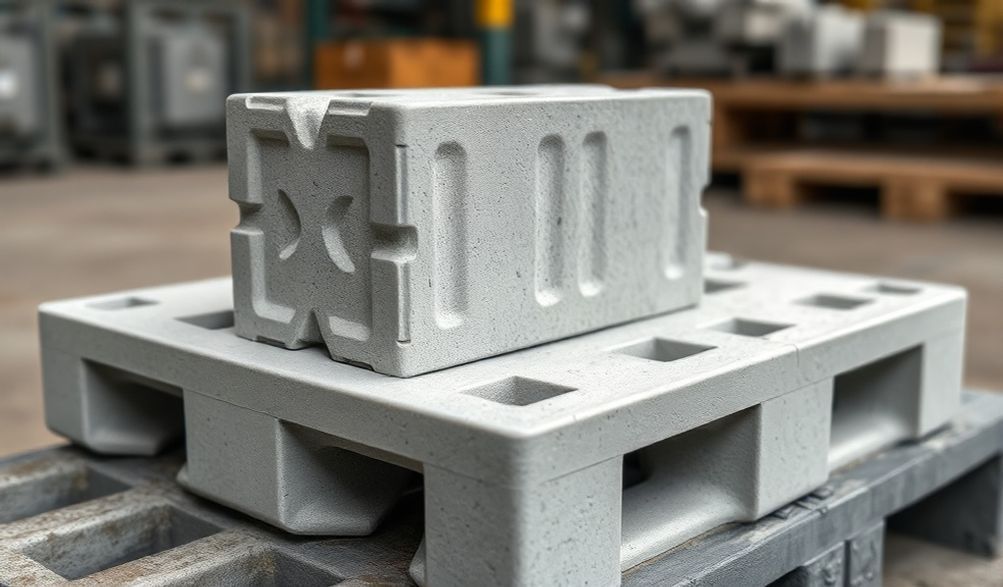
GMT Palearia ad Machinas Laterarias: Ultima Ductio ad Formas Durabiles, Summae Efficientiae
Introductio
Si in opificio laterum coquendorum versaris, nimis bene exercitatum te esse scias. Cum productio maxime floret, aut palis ligneis distortis impediris, qui lateres inordinatos efficiunt, aut assiduum orbitam terendi, occludendi, et formarum attritarum substituendarum adversaris. Haec intermissio non solum incommodum est, sed directe lucro tuo nocet, moras irritas, qualitatem inconstantem operum, et sumptus operationales in altum euntes causans.
Hic ductor, ex decenniis usus manualis in fabricandis productis concretis et ex intima scientia materiae peritiaque deductus, adest ut solutionem transformativam introducat. Per strepitum secamus ut loquamur deGMT pallets pro machinis laterariisSaltus technologicus qui firmitatem et efficientiam in officina productionis denovo definit. Palearia e Thermoplastico Vitreo Stipato (GMT) non tantum aliud substitutum sunt; sunt potius provectus opportunus qui destinatur ad tollendos dolores perpetua cum paleariis traditis lignei, ferreis, plasticisque consuetis coniunctos.
Ad finem huius comprehensivi ductoris, perspicuam peritorum suffultam intellegentiam habebis de quid GMT pali sint, eorum incomparabilibus commodis, quomodo rectos pro operatione tua eligas, et optimis exercitationibus ad eorum vitam maxime extendendam. Propositum nostrum est te scientia instruere ut lineam productionis tuam ad summam efficientiam, superiorem laterum qualitatem, et diuturnam quaestuositatem optimes.
Quid sunt Orbes GMT? (Scientia post Firmitudinem)
Ad aestimandum cur GMT pali res novas ferant, intellegendum est quid eos fundamentaliter distinguat. Non est tantum plastica diversa; est compositum elaboratum ad extremam efficaciam machinatum.
Materiam GMT Intelligere
GMT significatTessera Vitrea ThermoplasticaEst materia composita summae efficaciae, quae duobus praecipuis elementis constat:
* Matte Fibra Vitrea FortuitaHoc praebet vim tensilem et rigiditatem, quasi armaturae ossa agens.
* Matrix Polymera ThermoplasticaPolypropylene plerumque, hoc fibris vitreis coniungit, resistentiam ictus, stabilitatem chemicam, et figuram praebens.
Magia in processu laminationis fit. Tela fibrae vitreae plene imbuitur et cum thermoplastico liquido sub calore pressioneque intensa coalescit. Exitus est lamina homogenea cum eximia proportione firmitatis ad pondus, ubi fibrae vitreae aequaliter distributae sunt ut tensionem ex quavis parte resistent.
Quomodo GMT Palearia Fabricantur ad Machinas Laterarias
Tabulas GMT in formas laterum praecisas convertere est processus qui peritiam machinalem postulat. Non est simplicis incisionis; est praecisae conformationis.
- Praecisa Sectio:GMT laminae ad mensuram exactam vacuam quae pro pala ultima requiritur secantur.
- Thermoformandum:Vacuum calefactum donec flexibile fit et deinde in magna forma ad speciem facta sub alta pressione formatur. Haec forma est negativa figurae et texturae lateris desideratae.
- Cooling and Finishing: The formed pallet is cooled to set its shape permanently. Edges are trimmed, and any necessary holes for machine mounting are drilled with precision.
The entire process is tailored to match specific brick machine models (like Zenith, Hess, or Besser) and exact brick dimensions, ensuring a perfect fit and consistent performance from day one.
Key Advantages of Using GMT Pallets in Brick Production
Switching to GMT pallets isn’t a mere substitution; it’s an operational upgrade. Here’s how they deliver tangible benefits where it matters most.
Insuperabilis Firmitas et Longaevitas
This is the cornerstone of the GMT value proposition. These pallets are built to endure.
* Abrasion Resistance: The hard thermoplastic surface and glass reinforcement stand up to the constant scraping of concrete and aggregates far better than wood or weaker plastics.
* Moisture & Chemical Immunity: Unlike wood, GMT does not absorb water, swell, rot, or react with the alkaline compounds in wet concrete. It remains dimensionally stable in humid plant conditions.
* Lifespan Comparison: In our field experience, while wooden pallets may last a few months under heavy use, and other plastics might survive a couple of years, high-quality GMT pallets consistently deliver a service life of 3 to 7 years or more, dramatically reducing changeover frequency.
Superior Dimensional Stability & Brick Quality
Precision is profitability in brick manufacturing. GMT pallets excel here.
* No Warping: Their resistance to moisture and heat prevents the warping and twisting common in wood, which leads to misshapen bricks and production jams.
* Thermal Stability: They exhibit minimal expansion and contraction with temperature fluctuations, ensuring brick dimensions remain consistent from the first batch in the morning to the last batch at night.
* Exitus. You achieve a higher yield of first-quality bricks with smooth finishes, sharp edges, and uniform dimensions. This reduces waste, minimizes customer rejections, and protects your brand’s reputation for quality.
Significant Operational Cost Savings
Look beyond the initial price tag. The Total Cost of Ownership (TCO) tells the true story.
* Reduced Replacement Costs: The multi-year lifespan eliminates the recurring cost of purchasing wooden or short-life plastic pallets.
* Minimata Intermissio: Fewer pallet changes mean more continuous production time. Less time spent on maintenance is more time spent making sellable product.
* Minus Curae: Forget about weekly sanding, sealing, or painting. GMT pallets require only routine cleaning, freeing up labor for more valuable tasks.
Enhanced Worker Safety and Efficiency
A smoother operation is a safer and faster one.
* Levior Pondus: GMT pallets are significantly lighter than their steel counterparts. This makes them easier and safer for operators to handle, reducing fatigue and risk of injury during setup or changeover.
* Excellent Release Properties: The non-porous, smooth surface of GMT prevents concrete from adhering aggressively. Bricks release more cleanly, which speeds up the production cycle and reduces the need for excessive release agents.
How to Choose the Right GMT Pallets for Your Brick Machine
Investing in GMT pallets is a strategic decision. Making the right choice requires careful consideration of your specific operation. Here’s our unbiased advice.
Critical Compatibility Factors
Getting the fit wrong is not an option.
* Machine Model and Type: This is non-negotiable. You must specify the exact make, model, and type of your brick machine (e.g., fully automatic, semi-automatic, manual). The mounting hole pattern, dimensions, and pallet thickness must be a perfect match for your machine’s carriage.
* Brick Size and Design: Are you producing standard hollow blocks, pavers, solid bricks, or a special architectural shape? The GMT pallet must be molded to the precise cavity design, including any desired surface textures (smooth, split-face, rock-faced, etc.).
Evaluating GMT Pallet Specifications
Not all GMT is created equal. Ask your supplier for these details.
* Thickness and Ply: Thicker pallets (e.g., 8mm, 10mm, 12mm) generally offer greater load capacity and longevity for heavy block production. Some are made from multiple laminated layers (ply) for added strength.
* Glass Fiber Content: A higher percentage of glass fiber (e.g., 40% vs. 30%) typically translates to greater stiffness, strength, and resistance to deformation under load.
* Superficies Politio: Discuss the finish needed for your brick’s aesthetic. A polished mold surface will produce a smooth brick, while a textured mold will impart a rustic look.
Supplier Vetting: Questions to Ask
Your supplier’s expertise is as important as the product.
1. Can you provide material certifications or test data for your GMT composite?
2. Do you have case studies or testimonials from brick manufacturers with similar machines and production volumes?
3. What is the warranty period and what does it cover?
4. Do you offer custom engineering support for unique brick designs or machine adaptations?
5. What is your after-sales service and support process?
Installation, Maintenance, and Best Practices
To get the full return on your GMT pallet investment, proper handling and care are essential. Based on common feedback from operators, here are the key protocols.
Proper Installation for Optimal Performance
A correct start prevents problems.
* Ensure the machine carriage is clean and free of old concrete debris or damaged mounting hardware.
* Carefully align the mounting holes on the GMT pallet with those on the carriage. Do not force them.
* Use the correct bolts or fasteners, typically provided or specified by the pallet manufacturer. Tighten them evenly and to the recommended torque to avoid creating stress points.
Routine Maintenance and Cleaning Protocol
Consistency is key to longevity.
* Daily/Per Shift: Use a stiff-bristled brush or plastic scraper to remove loose concrete residue. A quick blow-down with compressed air can be effective.
* Weekly/As Needed: For more stubborn buildup, wash with a mild detergent and water. Critical: Avoid harsh chemical solvents, acids, or abrasive steel brushes, as these can degrade the thermoplastic surface over time.
* Release Agents: If a release agent is needed, use a water-based, non-petroleum product compatible with plastics. Apply sparingly.
Troubleshooting Common Issues
- Brick Sticking: First, ensure the pallet is clean. If sticking persists, slightly increase the amount of release agent or consult your supplier for a recommended brand. Check that the concrete mix water content is not too high.
- Surface Wear: Regularly inspect the pallet surface for deep scratches or wear patterns. Minor surface gloss loss is normal. Significant wear in a specific area may indicate an alignment issue with the machine or mixer.
- When to Call the Supplier: For any cracking, de-lamination (separation of layers), or persistent dimensional issues, contact your supplier immediately. Do not attempt major repairs in-house, as this may void warranties.
Frequently Asked Questions (FAQ) About GMT Pallets
Q1: Are GMT pallets more expensive than traditional wood pallets?
A: Yes, the initial purchase price is higher. However, when evaluated on a cost-per-cycleautcost-per-brick basis, GMT pallets are far more economical. You eliminate the constant, recurring cost of wood pallet replacement, associated labor for maintenance, and the hidden cost of production downtime. The long-term savings are substantial.
Q2: Can GMT pallets be used for all types of concrete bricks and blocks?
A: They are exceptionally versatile and suitable for the vast majority of products, including standard hollow blocks, solid bricks, pavers, and landscaping blocks. For extremely high-temperature curing processes (e.g., certain aggressive steam curing regimes), it’s crucial to consult your supplier to ensure the specific GMT composite’s heat deflection temperature is suitable.
Q3: How long can I expect a set of GMT pallets to last?
A: With proper maintenance and under normal production conditions, a quality set of GMT pallets can last between 3 and 7 years. This range depends on factors like your machine’s cycle speed, the abrasiveness of your concrete mix, and how rigorously cleaning protocols are followed.
Q4: Do you offer custom sizes and designs?
A: Reputable manufacturers specialize in custom engineering. They can create GMT pallets to match any brick machine model and produce custom cavity designs for unique brick shapes, sizes, and surface textures.
Q5: What is the best way to clean and store GMT pallets?
A: For cleaning, use non-abrasive tools (plastic scrapers, stiff brushes) and mild detergents. Avoid harsh chemicals. For storage, if pallets are to be removed for an extended period, clean them thoroughly, allow them to dry completely, and store them flat in a cool, dry place away from direct sunlight to prevent any unnecessary thermal stress.
Conclusion
GMT pallets for brick machines represent a clear evolution in manufacturing technology. By offering a combination of exceptional durability, superior dimensional stability, and significant long-term cost savings, they provide a solution to the most persistent challenges on the brick production floor. Moving from a cycle of frequent replacement and maintenance to a model of reliable, high-performance tooling is a strategic decision that modernizes your operation and boosts your competitive edge.
This guide, built on professional expertise in brick manufacturing technology, demonstrates that the investment in GMT is an investment in the consistency, quality, and efficiency of your entire production process.
Ready to optimize your production line and end the cycle of pallet-related downtime? Contact our expert engineering team today for a free, no-obligation consultation and a precise quote on custom GMT pallets designed for your specific brick machine.
<