
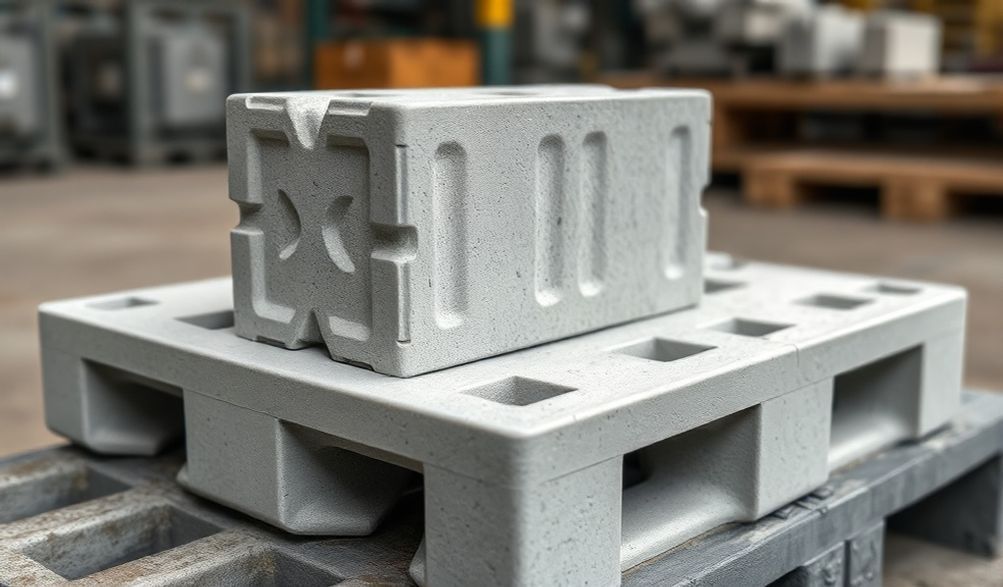
GMT Paleta para sa Brick Machines: Ang Komprehensibong Gabay sa Matibay at Mataas ang Pagganap na Molde
Panimula
Kung ikaw ay nasa negosyo ng paggawa ng ladrilyo, alam mo nang husto ang mga pang-araw-araw na suliranin. Sa mismong oras na tumatakbo nang maayos ang produksyon, biglang humihinto ang operasyon dahil sa mga baluktot na kahoy na pallet na nagdudulot ng hindi pantay na pagkakahanay ng mga ladrilyo, o kaya'y nahaharap ka sa walang katapusang siklo ng pagpapakinis, pagpapahid ng sealant, at pagpapalit ng mga sirang molde. Ang mga pagkakataong ito na tumitigil ang operasyon ay hindi lamang isang abala; ito ay direktang pumipinsala sa iyong kita, na nagdudulot ng nakakabuwisit na mga pagkaantala, hindi pare-parehong kalidad ng produkto, at patuloy na pagtaas ng mga gastos sa pagpapatakbo.
Ang gabay na ito, na hinango mula sa dekada-dekadang praktikal na karanasan sa pagmamanupaktura ng produktong kongkreto at malalim na kaalaman sa agham ng mga materyales, ay narito upang magpakilala ng isang mapagbabagong solusyon. Tinatanggal namin ang mga kumplikadong usapan upang pag-usapan angGMT pallets para sa mga makina ng ladrilyoIsang teknolohikal na paglulunsad na muling nagbibigay-kahulugan sa tibay at kahusayan sa sahig ng produksyon. Ang mga pallet na Glass Mat Thermoplastic (GMT) ay hindi lamang isa pang alternatibo; sila ay isang estratehikong pag-upgrade na idinisenyo upang wakasan ang mga talamak na suliranin na kaugnay ng tradisyonal na kahoy, bakal, at karaniwang mga pallet na plastik.
Sa pagtatapos ng komprehensibong gabay na ito, magkakaroon ka ng malinaw at dalubhasang pag-unawa kung ano ang mga GMT pallet, ang kanilang walang katulad na mga pakinabang, kung paano pumili ng tamang mga ito para sa iyong operasyon, at ang pinakamahuhusay na pamamaraan upang mapalawig ang kanilang buhay ng serbisyo. Ang layunin namin ay bigyan ka ng kaalaman upang i-optimize ang iyong linya ng produksyon para sa rurok na kahusayan, mataas na kalidad ng ladrilyo, at pangmatagalang kita.
Ano ang GMT Pallets? (Ang Agham sa Likod ng Tibay)
Upang maunawaan kung bakit nagbabago ang laro ang GMT pallets, kailangan mong maunawaan kung ano ang nagtatangi sa mga ito sa isang pangunahing antas. Hindi lamang ito ibang plastik; ito ay isang sopistikadong komposito na ininhinyero para sa matinding pagganap.
Pag-unawa sa GMT Material
Ang GMT ay nangangahulugangGlass Mat ThermoplasticIto ay isang mataas na pagganap na kompositong materyal na binubuo ng dalawang pangunahing sangkap:
* Isang Random Glass Fiber Mat:Ito ay nagbibigay ng lakas ng pag-unat at katigasan, na gumaganap bilang isang balangkas ng pampatibay.
* Isang Matunaw na Polimer na Matris:Karaniwan itong gawa sa polypropylene, na nagbubuklod sa mga hibla ng salamin, na nagbibigay ng paglaban sa epekto, katatagan sa kemikal, at hugis.
Ang mahika ay nangyayari sa proseso ng laminasyon. Ang banig ng hibla ng salamin ay ganap na nababad at pinagsama sa tinunaw na thermoplastic sa ilalim ng matinding init at presyon. Ang resulta ay isang homogenous na sheet na may pambihirang ratio ng lakas sa bigat, kung saan ang mga hibla ng salamin ay pantay na ipinamamahagi upang labanan ang stress mula sa anumang direksyon.
Paano Ginagawa ang GMT Pallets para sa Brick Machines
Ang paggawa ng mga GMT sheet sa mga hulmang tisa na may mataas na katumpakan ay isang prosesong nangangailangan ng dalubhasang kaalaman sa inhenyeriya. Hindi ito basta-bastang pagpuputol; ito ay paghubog na may eksaktong sukat.
- Precision Cutting:Ang mga GMT sheet ay pinuputol sa eksaktong sukat ng blangkong kinakailangan para sa panghuling pallet.
- Thermoforming:Ang blangko ay pinainit hanggang sa ito ay maging malambot at nababaluktot, at pagkatapos ay hinuhubog sa isang malaki at pasadyang hulmahan sa ilalim ng mataas na presyon. Ang hulmahan na ito ay ang negatibo ng ninanais na hugis at tekstura ng ladrilyo.
- Palamig at Pagtapos:Ang nabuong pallet ay pinalamig upang permanenteng maitakda ang hugis nito. Ang mga gilid ay tinatabas, at anumang kinakailangang butas para sa pagkakabit ng makina ay tinusok nang may katumpakan.
Ang buong proseso ay iniakma upang tumugma sa mga partikular na modelo ng brick machine (tulad ng Zenith, Hess, o Besser) at eksaktong sukat ng ladrilyo, tinitiyak ang perpektong pagkakasya at tuloy-tuloy na pagganap mula sa unang araw.
Mga Pangunahing Pakinabang ng Paggamit ng GMT Pallets sa Produksyon ng Bricks
Ang paglipat sa GMT pallets ay hindi simpleng pagpapalit; ito ay isang pag-upgrade sa operasyon. Narito kung paano nila ibinibigay ang tunay na benepisyo sa mga pinakamahalagang aspeto.
Walang Kapantay na Tibay at Habang-Buhay
Ito ang batong-panulukan ng alok na halaga ng GMT. Ang mga paletang ito ay itinayo upang tumagal.
* Paglaban sa Paggasgas:Ang matigas na thermoplastikong ibabaw at pagpapalakas ng salamin ay mas matatag na nakapaglalaban sa patuloy na pagkayod ng kongkreto at mga pinagsama-sang materyales kaysa sa kahoy o mahihinang plastik.
* Halumigmig at Resistensya sa Kemikal:Hindi tulad ng kahoy, ang GMT ay hindi sumisipsip ng tubig, hindi lumalaki, hindi nabubulok, o hindi nakikipag-ugnayan sa mga alkalay na kompawnd sa basang kongkreto. Nananatili itong matatag sa sukat sa mga kondisyong may halumigmig sa mga halaman.
* Paghahambing ng Haba ng Buhay:Sa aming karanasan sa larangan, habang ang mga kahoy na paleta ay maaaring tumagal ng ilang buwan sa ilalim ng mabigat na paggamit, at ang ibang plastik ay maaaring makayanan ang ilang taon, ang mga dekalidad na GMT paleta ay patuloy na nagtataguyod ng isang buhay-paggamit ng3 hanggang 7 taon o higit paMatinding pagbabawas sa dalas ng pagpapalit.
Superyor na Dimensiyonal na Katatagan at Kalidad ng Bricks
Ang presisyon ay ang kita sa paggawa ng ladrilyo. Ang GMT pallets ay nangunguna rito.
* Walang Pagbaluktot:Ang kanilang paglaban sa halumigmig at init ay pumipigil sa pagkabaluktot at pagkabalintong na karaniwan sa kahoy, na nagdudulot ng mga depektong ladrilyo at mga pagkaantala sa produksyon.
* Katatagan sa Temperatura:Nagpapakita sila ng kaunting paglawak at pag-urong sa pagbabago ng temperatura, na nagsisiguro na ang mga sukat ng ladrilyo ay nananatiling pare-pareho mula sa unang batch sa umaga hanggang sa huling batch sa gabi.
* Resulta:Nakamit mo ang mas mataas na ani ng mga unang-klaseng ladrilyo na may makinis na tapis, matatalim na gilid, at pantay-pantay na sukat. Binabawasan nito ang basura, pinapaliit ang pagtanggi ng mga kliyente, at pinoprotektahan ang reputasyon ng iyong tatak para sa kalidad.
Malaking Pagtitipid sa Gastos sa Operasyon
Tumingin nang higit pa sa unang presyo. Ang Kabuuang Halaga ng Pagmamay-ari (TCO) ang nagsasabi ng totoong kwento.
* Reduced Replacement Costs: The multi-year lifespan eliminates the recurring cost of purchasing wooden or short-life plastic pallets.
* Pinababang Oras ng Paghinto: Fewer pallet changes mean more continuous production time. Less time spent on maintenance is more time spent making sellable product.
* Mas Mababang Pagpapanatili: Forget about weekly sanding, sealing, or painting. GMT pallets require only routine cleaning, freeing up labor for more valuable tasks.
Enhanced Worker Safety and Efficiency
A smoother operation is a safer and faster one.
* Lighter Weight: GMT pallets are significantly lighter than their steel counterparts. This makes them easier and safer for operators to handle, reducing fatigue and risk of injury during setup or changeover.
* Excellent Release Properties: The non-porous, smooth surface of GMT prevents concrete from adhering aggressively. Bricks release more cleanly, which speeds up the production cycle and reduces the need for excessive release agents.
How to Choose the Right GMT Pallets for Your Brick Machine
Investing in GMT pallets is a strategic decision. Making the right choice requires careful consideration of your specific operation. Here’s our unbiased advice.
Critical Compatibility Factors
Getting the fit wrong is not an option.
* Machine Model and Type: This is non-negotiable. You must specify the exact make, model, and type of your brick machine (e.g., fully automatic, semi-automatic, manual). The mounting hole pattern, dimensions, and pallet thickness must be a perfect match for your machine’s carriage.
* Brick Size and Design: Are you producing standard hollow blocks, pavers, solid bricks, or a special architectural shape? The GMT pallet must be molded to the precise cavity design, including any desired surface textures (smooth, split-face, rock-faced, etc.).
Evaluating GMT Pallet Specifications
Not all GMT is created equal. Ask your supplier for these details.
* Thickness and Ply: Thicker pallets (e.g., 8mm, 10mm, 12mm) generally offer greater load capacity and longevity for heavy block production. Some are made from multiple laminated layers (ply) for added strength.
* Glass Fiber Content: A higher percentage of glass fiber (e.g., 40% vs. 30%) typically translates to greater stiffness, strength, and resistance to deformation under load.
* Tapos sa Ibabaw: Discuss the finish needed for your brick’s aesthetic. A polished mold surface will produce a smooth brick, while a textured mold will impart a rustic look.
Supplier Vetting: Questions to Ask
Your supplier’s expertise is as important as the product.
1. Can you provide material certifications or test data for your GMT composite?
2. Do you have case studies or testimonials from brick manufacturers with similar machines and production volumes?
3. What is the warranty period and what does it cover?
4. Do you offer custom engineering support for unique brick designs or machine adaptations?
5. What is your after-sales service and support process?
Installation, Maintenance, and Best Practices
To get the full return on your GMT pallet investment, proper handling and care are essential. Based on common feedback from operators, here are the key protocols.
Proper Installation for Optimal Performance
A correct start prevents problems.
* Ensure the machine carriage is clean and free of old concrete debris or damaged mounting hardware.
* Carefully align the mounting holes on the GMT pallet with those on the carriage. Do not force them.
* Use the correct bolts or fasteners, typically provided or specified by the pallet manufacturer. Tighten them evenly and to the recommended torque to avoid creating stress points.
Routine Maintenance and Cleaning Protocol
Consistency is key to longevity.
* Daily/Per Shift: Use a stiff-bristled brush or plastic scraper to remove loose concrete residue. A quick blow-down with compressed air can be effective.
* Weekly/As Needed: For more stubborn buildup, wash with a mild detergent and water. Critical: Avoid harsh chemical solvents, acids, or abrasive steel brushes, as these can degrade the thermoplastic surface over time.
* Release Agents: If a release agent is needed, use a water-based, non-petroleum product compatible with plastics. Apply sparingly.
Troubleshooting Common Issues
- Brick Sticking: First, ensure the pallet is clean. If sticking persists, slightly increase the amount of release agent or consult your supplier for a recommended brand. Check that the concrete mix water content is not too high.
- Surface Wear: Regularly inspect the pallet surface for deep scratches or wear patterns. Minor surface gloss loss is normal. Significant wear in a specific area may indicate an alignment issue with the machine or mixer.
- When to Call the Supplier: For any cracking, de-lamination (separation of layers), or persistent dimensional issues, contact your supplier immediately. Do not attempt major repairs in-house, as this may void warranties.
Frequently Asked Questions (FAQ) About GMT Pallets
Q1: Are GMT pallets more expensive than traditional wood pallets?
Isalin ang teksto sa Filipino. I-output LAMANG ang isinalin na teksto. Yes, the initial purchase price is higher. However, when evaluated on a cost-per-cycleocost-per-brick basis, GMT pallets are far more economical. You eliminate the constant, recurring cost of wood pallet replacement, associated labor for maintenance, and the hidden cost of production downtime. The long-term savings are substantial.
Q2: Can GMT pallets be used for all types of concrete bricks and blocks?
Isalin ang teksto sa Filipino. I-output LAMANG ang isinalin na teksto. They are exceptionally versatile and suitable for the vast majority of products, including standard hollow blocks, solid bricks, pavers, and landscaping blocks. For extremely high-temperature curing processes (e.g., certain aggressive steam curing regimes), it’s crucial to consult your supplier to ensure the specific GMT composite’s heat deflection temperature is suitable.
Q3: How long can I expect a set of GMT pallets to last?
Isalin ang teksto sa Filipino. I-output LAMANG ang isinalin na teksto. With proper maintenance and under normal production conditions, a quality set of GMT pallets can last between 3 and 7 years. This range depends on factors like your machine’s cycle speed, the abrasiveness of your concrete mix, and how rigorously cleaning protocols are followed.
Q4: Do you offer custom sizes and designs?
Isalin ang teksto sa Filipino. I-output LAMANG ang isinalin na teksto. Reputable manufacturers specialize in custom engineering. They can create GMT pallets to match any brick machine model and produce custom cavity designs for unique brick shapes, sizes, and surface textures.
Q5: What is the best way to clean and store GMT pallets?
Isalin ang teksto sa Filipino. I-output LAMANG ang isinalin na teksto. For cleaning, use non-abrasive tools (plastic scrapers, stiff brushes) and mild detergents. Avoid harsh chemicals. For storage, if pallets are to be removed for an extended period, clean them thoroughly, allow them to dry completely, and store them flat in a cool, dry place away from direct sunlight to prevent any unnecessary thermal stress.
Konklusyon
GMT pallets for brick machines represent a clear evolution in manufacturing technology. By offering a combination of exceptional durability, superior dimensional stability, and significant long-term cost savings, they provide a solution to the most persistent challenges on the brick production floor. Moving from a cycle of frequent replacement and maintenance to a model of reliable, high-performance tooling is a strategic decision that modernizes your operation and boosts your competitive edge.
This guide, built on professional expertise in brick manufacturing technology, demonstrates that the investment in GMT is an investment in the consistency, quality, and efficiency of your entire production process.
Ready to optimize your production line and end the cycle of pallet-related downtime? Contact our expert engineering team today for a free, no-obligation consultation and a precise quote on custom GMT pallets designed for your specific brick machine.
<