
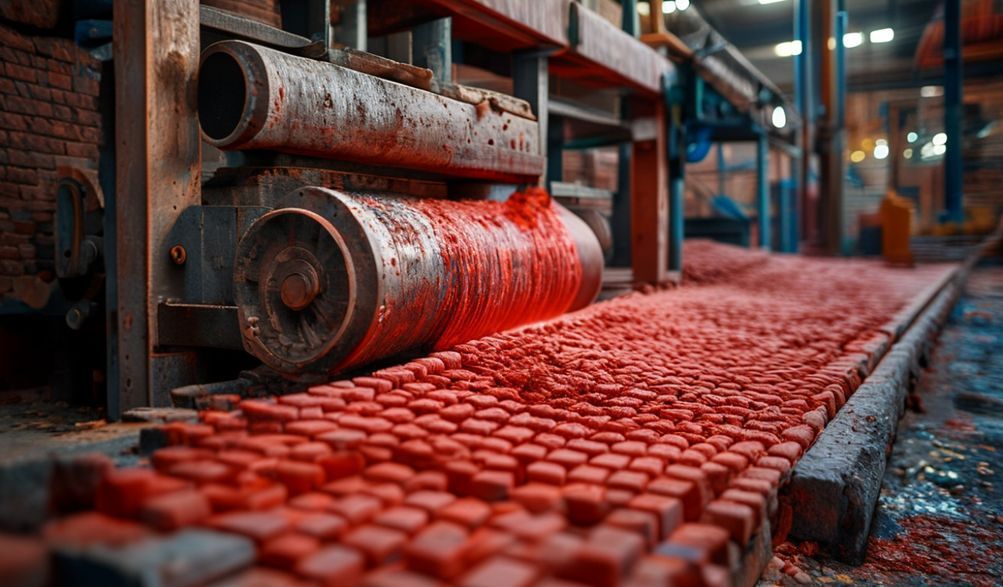
Panduan Terakhir untuk Mesin Pembuat Bata Tanah Liat di Pakistan (Panduan Pembeli 2026)
Pengenalan
Industri pembinaan Pakistan adalah tulang belakang kepada pembangunan ekonominya, dengan permintaan yang tidak pernah puas untuk bahan binaan berkualiti. Di teras hampir setiap struktur terletak batu bata yang sederhana—unit asas yang telah membina bandar dan rumah selama beberapa generasi. Selama beberapa dekad, tradisionalbhattaSistem (tanur) yang bergantung kepada tenaga kerja manual dan kaedah artisanal, dahulu menguasai landskap. Kini, satu perubahan mendalam sedang berlaku. Pengilang yang berpandangan jauh beralih kepada teknologi untuk mengatasi cabaran berterusan dan menjamin masa depan mereka dalam pasaran yang kompetitif.
Jika anda pemilik kilang bata, usahawan pembinaan, atau pelabur, anda mungkin bergelut dengan masalah biasa: kualiti bata yang tidak konsisten membawa kepada aduan pelanggan, kos buruh yang melambung tinggi dan tidak dapat diramal, kelajuan pengeluaran yang tidak mampu mengejar tarikh akhir projek, dan ketidakcekapan yang membebankan akibat penggunaan bahan api yang tinggi. Isu-isu ini bukan sahaja mengikis keuntungan; malah mengancam kelangsungan perniagaan anda.
Penyelesaiannya jelas: modenmesin pembuatan bata tanah liat di PakistanIni bukan sekadar menggantikan beberapa pekerja; ia tentang merevolusikan keseluruhan paradigma pengeluaran anda. Melabur dalam mesin yang tepat adalah langkah muktamad ke arah mencapai kualiti piawai, peningkatan eksponen dalam output, dan margin keuntungan yang jauh lebih sihat.
Panduan ini direka untuk menjadi sumber paling dipercayai anda. Disusun daripada spesifikasi teknikal terperinci, analisis pasaran semasa, dan wawasan langsung daripada pengendali loji Pakistan serta pengeluar mapan, matlamat kami adalah melengkapkan anda dengan pengetahuan berwibawa berasaskan pengalaman. Kami akan menyingkirkan jargon jualan untuk menyediakan peta jalan yang jelas dan komprehensif bagi membuat pelaburan yakin dan berinformasi. Panduan muktamad ini akan meneroka jenis mesin yang tersedia, manfaat nyatanya, analisis kos realistik, serta faktor kritikal yang mesti anda pertimbangkan sebelum membeli sebuahmesin pembuatan bata tanah liat di Pakistan.
Memahami Mesin Pembuatan Batu Bata Tanah Liat
Beralih dari pengeluaran manual kepada sistem mekanikal adalah satu lompatan besar. Memahami mekanik teras dan pilihan yang tersedia adalah langkah pertama ke arah pembelian yang bijak.
Cara Mesin Pembuatan Bata Tanah Liat Berfungsi (Proses Asas)
Walaupun reka bentuk berbeza-beza, prinsip teras mesin pembuatan bata moden adalah untuk mengautomasikan dan menyempurnakan proses lama. Berikut adalah pecahan yang dipermudahkan:
- Penyediaan Tanah Liat:Tanah liat mentah mula-mula dimasukkan ke dalam penghancur untuk memecahkan ketulan dan batu. Kemudian, ia dicampur dengan air di dalam kilang penguli untuk mencapai konsistensi plastik yang homogen—langkah penting untuk kekuatan.
- Pengekstrudan & Pembentukan:Tanah liat yang telah disediakan ini dimasukkan ke dalam ekstruder mesin. Sebuah auger berkuasa mendorong tanah liat melalui ruang vakum (yang mengeluarkan poket udara untuk ketumpatan lebih tinggi) dan kemudian melalui acuan yang direka khas. Acuan ini membentuk lajur tanah liat berterusan kepada profil yang dikehendaki (pepejal, berongga, dan lain-lain).
- Memotong:Apabila lajur tanah liat terbentuk keluar dari acuan, wayar automatik atau pemotong memotongnya menjadi bata individu dengan panjang yang tepat dan seragam.
- Pengeringan & Penuangan:Bata hijau (yang belum dibakar) kemudiannya dikeringkan dengan teliti untuk membuang kelembapan sebelum dimasukkan ke dalam tanur (hofman, terowong, dan lain-lain) untuk pembakaran, di mana ia memperoleh kekerasan dan ketahanan akhir.
Peranan mesin adalah untuk memastikan setiap batu bata daripada proses ini mempunyai dimensi, ketumpatan, dan integriti struktur yang serupa—konsistensi yang mustahil dicapai dengan acuan manual.
Jenis Mesin Pembuatan Bata Tanah Liat yang Tersedia di Pakistan
Pasaran Pakistan menawarkan penyelesaian untuk setiap skala operasi:
-
Mesin Manual/Separa Automatik: Ideal for small-scale startups, rural enterprises, or those with limited capital.
- Operasi: Require significant manual intervention for feeding clay and removing finished bricks. The extrusion and cutting are mechanized.
- Output: Typically produce 2,000 to 8,000 bricks per 8-hour shift.
- Kes Penggunaan: Perfect for testing the market, catering to local demand, or as a supplementary production line.
-
Loji Pembuatan Bata Sepenuhnya Automatik: The powerhouse choice for serious, large-scale commercial production.
- Operasi: Integrated systems that automate clay feeding, extrusion, cutting, and brick setting onto dryer cars or pallets. They often include automated stackers and loaders.
- Output: Can produce from 15,000 to over 50,000 bricks per shift.
- Kes Penggunaan: For established manufacturers supplying major construction projects, developers, and distributors. They maximize output while minimizing labor.
-
Mesin Pembuatan Bata Mudah Alih:Penyelesaian serba boleh yang semakin popular.
- Kelebihan: Mounted on a trailer, these units can be transported directly to a construction site or clay pit. This drastically reduces the cost and logistics of transporting heavy raw clay.
- Kes Penggunaan: Excellent for large, on-site projects like housing societies, dams, or where clay sources are scattered.
Komponen Utama Mesin yang Andal
The durability and performance of your machine hinge on the quality of its core components:
- Extruder (Auger & Barrel): The heart of the machine. A high-grade steel auger and a reinforced, wear-resistant barrel are non-negotiable for consistent clay flow and pressure.
- Vacuum Chamber: This component removes air from the clay. A higher vacuum level (measured in Hg) results in denser, stronger bricks with fewer cracks.
- Cutter Assembly: Must provide clean, vibration-free cuts for precise brick dimensions. Look for sturdy wires or blades and a stable cutting mechanism.
- Control Panel & Gearbox: A user-friendly control system and a rugged, industrial-grade gearbox ensure smooth operation, easy troubleshooting, and long service life.
Investing in a machine with robust components might have a higher upfront cost but pays dividends in lower downtime, fewer repairs, and superior brick quality.
Benefits of Investing in a Modern Brick Making Machine in Pakistan
The transition to mechanization is an investment in your business’s future. Here are the concrete returns you can expect:
Dramatically Increased Production Output & Efficiency
A single semi-automatic machine can outperform 15-20 skilled manual laborers. Where a traditional setup might produce 8,000-10,000 bricks per day with a large crew, a medium-sized automatic plant can reliably produce 25,000+ bricks in the same timeframe, with a fraction of the workforce.
Kualiti Bata yang Unggul dan Konsisten
Machines eliminate human error. Every brick has:
* Precise dimensional accuracy (e.g., uniform 9″ x 4.5″ x 3″ size), essential for modern plastering and construction standards.
* Higher compressive strength due to better compaction and vacuum processing.
* Excellent finish and sharp edges, increasing their market value and appeal.
Pengurangan Ketara dalam Kos Buruh dan Kebergantungan
Automation reduces dependence on a large, often unpredictable, labor force. You need fewer skilled operators, leading to direct savings on wages and eliminating issues related to labor shortages or strikes.
Long-Term Cost Savings and Higher Profit Margins
While the initial investment is substantial, the operational savings are transformative. Reduced labor, lower fuel consumption per brick (due to faster kiln cycling), and minimal waste from rejected bricks all contribute to a lower cost per brick and significantly higher profit margins.
Versatility in Brick Products
With a simple mold change, a single machine can produce various products to meet market demand:
* Solid bricks for load-bearing walls.
* Hollow or perforated bricks for lighter, better-insulated structures.
* Paving bricks (block pavers) for landscaping and driveways.
* Special shapes for architectural features.
This flexibility allows you to diversify your product line and tap into multiple revenue streams.
Key Considerations Before Buying in Pakistan
A successful purchase goes beyond just selecting a machine. It requires careful planning tailored to Pakistani conditions.
Assessing Your Production Needs and Scale
Tanya diri anda:
* What is my current and projected future demand?
* Who are my customers (local market, contractors, large developers)?
* Calculate your required bricks per hour/day. It’s better to invest in a machine with 20-30% more capacity than your current need to allow for business growth.
Power Requirements: Electricity vs. Diesel
This is a critical decision point given Pakistan’s energy landscape.
* Motor Elektrik: Cleaner, quieter, and generally more efficient. However, they require a reliable, continuous power supply. A three-phase connection is usually necessary for industrial machines.
* Enjin Diesel: A practical necessity in areas plagued by load-shedding. They offer complete independence from the grid but come with higher fuel costs, more noise, and greater maintenance needs.
* Hybrid Solution: Many opt for an electric machine paired with a dedicated generator as a backup, offering a balance of efficiency and reliability.
Clay Quality and Preparation
The machine is only as good as the clay you feed it. Pakistani clay varies by region.
* Testing: Have your clay tested for composition, plasticity, and shrinkage.
* Persiapan Adalah Kunci: Budget for and include auxiliary equipment: a clay crusher to break down hard lumps and a double-shaft mixer to ensure perfect water-clay amalgamation. Neglecting preparation will lead to machine jams, wear, and poor-quality bricks.
After-Sales Support: The Most Critical Factor
This cannot be overstated. A machine is a long-term asset that will require maintenance.
* Sokongan Teknikal Tempatan: Does the supplier have engineers readily available for installation, training, and breakdowns?
* Spare Parts Inventory: Are common wear parts (augers, liners, cutter wires) available in their local warehouse? Waiting months for a part from overseas can shut down your entire operation.
* Latihan Komprehensif: Ensure they provide hands-on training for your operators and maintenance staff.
Choosing a supplier with a strong service network in Pakistan is more important than a slightly lower price from a supplier with no local presence.
Top Suppliers and Brands of Clay Brick Making Machines in Pakistan
Navigating the supplier landscape requires diligence. Here’s an overview (Note: This is a general market guide; always conduct your own due diligence).
Established Local Manufacturers and Assemblers
Several Pakistani engineering firms have developed strong expertise in manufacturing and assembling robust brick making machines. Their advantages include:
* Pemahaman tentang Keadaan Tempatan: Machines are often designed with Pakistani clay and power issues in mind.
* Proximity for Service: Faster response times for technical support and maintenance.
* Easier Spare Parts Procurement.
Look for companies with a proven track record, a physical factory or workshop you can visit, and a list of satisfied clients you can contact.
Reliable International Brands with Local Dealers
Brands from China, India, and Europe have a significant market share, especially for fully automatic lines. Reputable brands have established official dealers or partners in major cities like Lahore, Karachi, and Islamabad.
* Kelebihan: Often incorporate advanced technology and automation features.
* Key Action: Verify the legitimacy and capability of the local dealer. Ensure they have the technical staff and parts inventory to support the product.
Red Flags to Avoid When Choosing a Supplier
- No Physical Office or Workshop: Be wary of “fly-by-night” operators.
- Unrealistically Low Prices: If a quote seems too good to be true, it often is. Quality components have a cost.
- Vague or Unreasonable Warranty Terms: A clear, written warranty is essential.
- Unwillingness to Provide Client References: A reputable supplier will be proud to connect you with their existing customers.
- Pressure for Full Upfront Payment: Standard practice involves a significant advance, but be cautious of suppliers demanding 100% payment before delivery or installation.
Cost Analysis and Investment Guide
Understanding the full financial picture is crucial for planning and securing financing.
Price Range for Machines in Pakistan (PKR Estimates)
Prices are indicative and subject to change due to currency fluctuation, import duties, and model specifications.
* Small Semi-Automatic Machine: PKR 1.5 million to PKR 3.5 million.
* Medium-Capacity Fully Automatic Plant: PKR 5 million to PKR 15 million.
* Large, High-Capacity Automatic Line: PKR 20 million and above.
Always get detailed, itemized quotations from multiple suppliers.
Understanding the Total Cost of Ownership
The machine’s sticker price is just the beginning. Factor in:
* Installation & Foundation: Civil work for a stable machine base.
* Peralatan Bantu: Clay crusher, mixer, conveyor belts, generator.
* Utilities: Electrical setup, water connection.
* Spare Parts Inventory: An initial stock of essential wear parts.
* Operating Costs: Power/fuel, labor, regular maintenance.
Government Policies and Financing Options
- SME Support: Investigate if any provincial or federal programs offer soft loans or subsidies for industrial modernization.
- Bank Financing: Most commercial banks offer leasing or loan facilities for purchasing industrial machinery. Prepare a solid business plan.
- Import Regulations: If considering an imported machine, work with a reliable clearing agent to understand all applicable duties and taxes.
Installation, Operation, and Maintenance Tips
Proper setup and care ensure your investment delivers for years.
Setting Up Your Brick Plant for Success
- Layout: Design a logical flow from raw material yard → crusher → mixer → machine → drying area → kiln.
- Foundation: Pour a strong, level concrete foundation as per the machine manufacturer’s specifications to prevent vibration and misalignment.
- Utilities: Ensure your power supply (or generator capacity) and water source are adequate and easily accessible.
Essential Operator Training and Safety
- Insist on comprehensive training from your supplier.
- Enforce strict safety protocols: lock-out/tag-out procedures during maintenance, no loose clothing near moving parts, and proper use of personal protective equipment (PPE).
Routine Maintenance Checklist for Longevity
A little regular care prevents major breakdowns.
* Daily: Clean the machine thoroughly at the end of each shift. Check for loose bolts or nuts.
* Weekly: Grease all lubrication points. Inspect the cutter wires/blades and auger for wear.
* Monthly: Check the vacuum pump oil. Inspect electrical connections. Test safety switches.
* Annually: Schedule a comprehensive inspection by a qualified technician.
Soalan Lazim (FAQ)
Q1: What is the average production capacity of a standard clay brick making machine in Pakistan?
A: Capacity varies widely. A semi-automatic machine may produce 5,000 to 10,000 bricks per 8-hour shift. A standard fully automatic plant typically ranges from 18,000 to 35,000 bricks per shift. High-end lines can exceed 50,000.
Q2: Can I use local Pakistani clay in these machines?
A: Absolutely. In fact, machines are designed for local materials. The key is proper preparation—the clay must be crushed, screened to remove stones and debris, and tempered to achieve the correct moisture content and plasticity for optimal extrusion.
Q3: What is the estimated payback period for this investment?
A: With efficient operation and good market demand, a well-planned investment in a semi-automatic or automatic plant can typically see a full return on investment (ROI) within 1.5 to 3 years. Factors like scale, management efficiency, and local brick prices directly influence this timeline.
Q4: Are there any local manufacturers, or are all machines imported?
A: Pakistan has a growing number of capable local manufacturers and assemblers who produce durable and efficient machines. They are a strong option, especially for their service advantages. Many fully automatic and high-tech lines are imported, but are supported through local dealers.
Q5: What warranty should I expect, and what does it usually cover?
A: A reputable supplier should offer a minimum of 1 year on the core components like the gearbox, extruder main shaft, and vacuum system. The warranty covers manufacturing defects and should be clearly outlined in writing. It typically does not cover wear parts (like auger tips, cutter wires) or damage due to improper operation or lack of maintenance.
Kesimpulan
The decision to invest in a modern mesin pembuatan bata tanah liat di Pakistan is more than a purchase; it’s a strategic commitment to the growth, quality, and sustainability of your business. In an industry where margins are increasingly competitive, embracing mechanization is the clear path to securing a profitable future. It transforms your operation from a labor-intensive craft into a streamlined, quality-controlled industrial process.
Let this guide serve as your foundational checklist. We have emphasized the critical importance of local after-sales support, thorough needs assessment, and rigorous supplier verification because your success depends on it. The most prudent step you can take now is to use this knowledge to engage with shortlisted suppliers. Visit their facilities, inspect their machines in operation, and most importantly, speak directly to their existing customers.
Take the next step with confidence. Reach out to reputable suppliers, present them with your production requirements, and request detailed quotations. Equip yourself with the right questions, and make your investment a cornerstone for building a stronger, more profitable enterprise.
<