
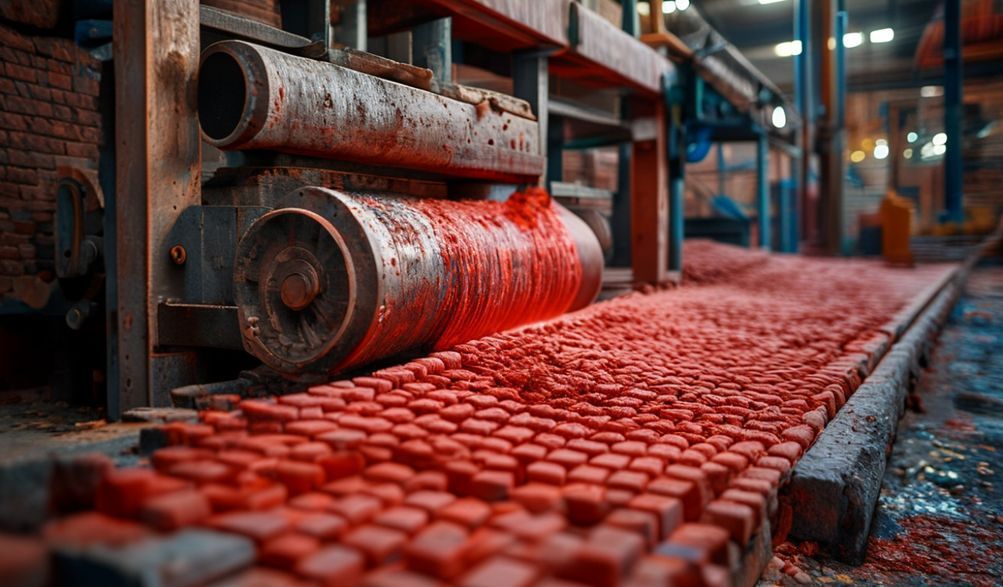
Guia Definitivo para Máquinas de Fabricação de Tijolos de Barro no Paquistão (Guia do Comprador 2026)
Introdução
A indústria da construção do Paquistão é a espinha dorsal do seu desenvolvimento econômico, com uma demanda insaciável por materiais de construção de qualidade. No coração de quase todas as estruturas está o humilde tijolo — uma unidade fundamental que construiu cidades e lares por gerações. Por décadas, o tradicionalbhattasistema de fornos, dependente de mão de obra manual e métodos artesanais, dominava o cenário. Hoje, uma mudança profunda está em curso. Fabricantes visionários estão recorrendo à tecnologia para superar desafios persistentes e garantir seu futuro em um mercado competitivo.
Se você é proprietário de uma olaria, empreendedor da construção civil ou investidor, provavelmente enfrenta problemas conhecidos: qualidade inconsistente dos tijolos que gera reclamações dos clientes, custos de mão de obra disparados e imprevisíveis, velocidade de produção que não acompanha os prazos dos projetos e a debilitante ineficiência do alto consumo de combustível. Esses problemas não apenas corroem os lucros; eles ameaçam a própria viabilidade do seu negócio.
A solução é clara: modernizarMáquinas de fabricação de tijolos de barro no PaquistãoIsso não se trata apenas de substituir alguns trabalhadores; trata-se de revolucionar todo o seu paradigma de produção. Investir na maquinaria certa é o passo definitivo para alcançar qualidade padronizada, ganhos exponenciais na produção e margens de lucro significativamente mais saudáveis.
Este guia foi projetado para ser o seu recurso mais confiável. Compilado a partir de especificações técnicas detalhadas, análises atuais do mercado e insights diretos de operadores de plantas paquistaneses e fabricantes estabelecidos, nosso objetivo é munir você com conhecimento autoritativo e baseado na experiência. Vamos cortar o jargão de vendas para fornecer um roteiro claro e abrangente para realizar um investimento confiante e bem-informado. Este guia definitivo explorará os tipos de máquinas disponíveis, seus benefícios tangíveis, uma análise de custo realista e os fatores críticos que você deve considerar antes de adquirir umaMáquina de fabricação de tijolos de barro no Paquistão.
Entendendo a Maquinaria para Fabricação de Tijolos de Barro
Mudar da produção manual para um sistema mecanizado é um salto significativo. Compreender a mecânica central e as opções disponíveis é o primeiro passo para uma compra inteligente.
Como Funcionam as Máquinas de Fabricação de Tijolos de Barro (O Processo Básico)
Embora os designs variem, o princípio central de uma máquina moderna de fabricação de tijolos é automatizar e aperfeiçoar o processo secular. Aqui está uma explicação simplificada:
- Preparação da Argila:A argila bruta é primeiro alimentada em um triturador para quebrar os torrões e pedras. Em seguida, é misturada com água em um misturador de argila para alcançar uma consistência homogênea e plástica — uma etapa crítica para a resistência.
- Extrusão e Conformação:Esta argila preparada é alimentada na extrusora da máquina. Uma rosca sem-fim potente empurra a argila através de uma câmara de vácuo (que remove bolhas de ar para maior densidade) e, em seguida, através de uma matriz especialmente projetada. Esta matriz molda a coluna contínua de argila no perfil desejado (sólido, oco, etc.).
- Corte:À medida que a coluna de argila moldada sai da matriz, um fio ou cortador automático a corta em tijolos individuais de comprimento preciso e uniforme.
- Secagem e Queima:Os tijolos verdes (não queimados) são então cuidadosamente secos para remover a umidade antes de serem carregados em um forno (Hofman, túnel, etc.) para a queima, onde adquirem sua dureza e durabilidade finais.
O papel da máquina é garantir que cada tijolo deste processo tenha dimensões, densidade e integridade estrutural idênticas — uma consistência impossível de alcançar com moldagem manual.
Tipos de Máquinas para Fabricação de Tijolos de Argila Disponíveis no Paquistão
O mercado paquistanês oferece soluções para cada escala de operação:
-
Máquinas Manuais/Semi-Automáticas:Ideal para pequenas startups, empresas rurais ou aquelas com capital limitado.
- Operação:Exigem intervenção manual significativa para alimentar a argila e remover os tijolos acabados. A extrusão e o corte são mecanizados.
- Saída:Normalmente produz de 2.000 a 8.000 tijolos por turno de 8 horas.
- Caso de Uso:Perfeito para testar o mercado, atender à demanda local ou como uma linha de produção suplementar.
-
Fábricas de Tijolos Totalmente Automáticas:A escolha de força motriz para produção comercial séria e em grande escala.
- Operação:Sistemas integrados que automatizam a alimentação de argila, extrusão, corte e colocação de tijolos em carros secadores ou paletes. Eles frequentemente incluem empilhadores e carregadores automatizados.
- Saída:Pode produzir de 15.000 a mais de 50.000 tijolos por turno.
- Caso de Uso:Para fabricantes estabelecidos que fornecem para grandes projetos de construção, desenvolvedores e distribuidores. Eles maximizam a produção enquanto minimizam a mão de obra.
-
Máquinas Móveis de Fabricação de Tijolos:Uma solução versátil que está ganhando popularidade.
- Vantagem:Montadas em um reboque, essas unidades podem ser transportadas diretamente para um canteiro de obras ou jazida de argila. Isso reduz drasticamente o custo e a logística de transportar argila bruta pesada.
- Caso de Uso:Excelente para grandes projetos no local, como conjuntos habitacionais, barragens ou onde as fontes de argila estão dispersas.
Componentes Essenciais de uma Máquina Confiável
A durabilidade e o desempenho da sua máquina dependem da qualidade de seus componentes centrais:
- Extrusora (Parafuso e Cilindro):O coração da máquina. Uma serpente de aço de alta qualidade e um cano reforçado e resistente ao desgaste são inegociáveis para um fluxo e pressão consistentes da argila.
- Câmara de Vácuo: This component removes air from the clay. A higher vacuum level (measured in Hg) results in denser, stronger bricks with fewer cracks.
- Cutter Assembly: Must provide clean, vibration-free cuts for precise brick dimensions. Look for sturdy wires or blades and a stable cutting mechanism.
- Control Panel & Gearbox: A user-friendly control system and a rugged, industrial-grade gearbox ensure smooth operation, easy troubleshooting, and long service life.
Investing in a machine with robust components might have a higher upfront cost but pays dividends in lower downtime, fewer repairs, and superior brick quality.
Benefits of Investing in a Modern Brick Making Machine in Pakistan
The transition to mechanization is an investment in your business’s future. Here are the concrete returns you can expect:
Dramatically Increased Production Output & Efficiency
A single semi-automatic machine can outperform 15-20 skilled manual laborers. Where a traditional setup might produce 8,000-10,000 bricks per day with a large crew, a medium-sized automatic plant can reliably produce 25,000+ bricks in the same timeframe, with a fraction of the workforce.
Qualidade Superior e Consistente dos Tijolos
Machines eliminate human error. Every brick has:
* Precise dimensional accuracy (e.g., uniform 9″ x 4.5″ x 3″ size), essential for modern plastering and construction standards.
* Higher compressive strength due to better compaction and vacuum processing.
* Excellent finish and sharp edges, increasing their market value and appeal.
Significant Reduction in Labor Costs and Dependence
Automation reduces dependence on a large, often unpredictable, labor force. You need fewer skilled operators, leading to direct savings on wages and eliminating issues related to labor shortages or strikes.
Long-Term Cost Savings and Higher Profit Margins
While the initial investment is substantial, the operational savings are transformative. Reduced labor, lower fuel consumption per brick (due to faster kiln cycling), and minimal waste from rejected bricks all contribute to a lower cost per brick and significantly higher profit margins.
Versatility in Brick Products
With a simple mold change, a single machine can produce various products to meet market demand:
* Solid bricks for load-bearing walls.
* Hollow or perforated bricks for lighter, better-insulated structures.
* Paving bricks (block pavers) for landscaping and driveways.
* Special shapes for architectural features.
This flexibility allows you to diversify your product line and tap into multiple revenue streams.
Key Considerations Before Buying in Pakistan
A successful purchase goes beyond just selecting a machine. It requires careful planning tailored to Pakistani conditions.
Assessing Your Production Needs and Scale
Pergunte a si mesmo:
* What is my current and projected future demand?
* Who are my customers (local market, contractors, large developers)?
* Calculate your required bricks per hour/day. It’s better to invest in a machine with 20-30% more capacity than your current need to allow for business growth.
Power Requirements: Electricity vs. Diesel
This is a critical decision point given Pakistan’s energy landscape.
* Motores Elétricos: Cleaner, quieter, and generally more efficient. However, they require a reliable, continuous power supply. A three-phase connection is usually necessary for industrial machines.
* Motores a Diesel: A practical necessity in areas plagued by load-shedding. They offer complete independence from the grid but come with higher fuel costs, more noise, and greater maintenance needs.
* Hybrid Solution: Many opt for an electric machine paired with a dedicated generator as a backup, offering a balance of efficiency and reliability.
Clay Quality and Preparation
The machine is only as good as the clay you feed it. Pakistani clay varies by region.
* Testing: Have your clay tested for composition, plasticity, and shrinkage.
* Preparação é a Chave: Budget for and include auxiliary equipment: a clay crusher to break down hard lumps and a double-shaft mixer to ensure perfect water-clay amalgamation. Neglecting preparation will lead to machine jams, wear, and poor-quality bricks.
After-Sales Support: The Most Critical Factor
This cannot be overstated. A machine is a long-term asset that will require maintenance.
* Suporte Técnico Local: Does the supplier have engineers readily available for installation, training, and breakdowns?
* Spare Parts Inventory: Are common wear parts (augers, liners, cutter wires) available in their local warehouse? Waiting months for a part from overseas can shut down your entire operation.
* Treinamento Abrangente: Ensure they provide hands-on training for your operators and maintenance staff.
Choosing a supplier with a strong service network in Pakistan is more important than a slightly lower price from a supplier with no local presence.
Top Suppliers and Brands of Clay Brick Making Machines in Pakistan
Navigating the supplier landscape requires diligence. Here’s an overview (Note: This is a general market guide; always conduct your own due diligence).
Established Local Manufacturers and Assemblers
Several Pakistani engineering firms have developed strong expertise in manufacturing and assembling robust brick making machines. Their advantages include:
* Compreensão das Condições Locais: Machines are often designed with Pakistani clay and power issues in mind.
* Proximity for Service: Faster response times for technical support and maintenance.
* Easier Spare Parts Procurement.
Look for companies with a proven track record, a physical factory or workshop you can visit, and a list of satisfied clients you can contact.
Reliable International Brands with Local Dealers
Brands from China, India, and Europe have a significant market share, especially for fully automatic lines. Reputable brands have established official dealers or partners in major cities like Lahore, Karachi, and Islamabad.
* Vantagem: Often incorporate advanced technology and automation features.
* Key Action: Verify the legitimacy and capability of the local dealer. Ensure they have the technical staff and parts inventory to support the product.
Red Flags to Avoid When Choosing a Supplier
- No Physical Office or Workshop: Be wary of “fly-by-night” operators.
- Preços Irrealisticamente Baixos: If a quote seems too good to be true, it often is. Quality components have a cost.
- Vague or Unreasonable Warranty Terms: A clear, written warranty is essential.
- Unwillingness to Provide Client References: A reputable supplier will be proud to connect you with their existing customers.
- Pressure for Full Upfront Payment: Standard practice involves a significant advance, but be cautious of suppliers demanding 100% payment before delivery or installation.
Cost Analysis and Investment Guide
Understanding the full financial picture is crucial for planning and securing financing.
Price Range for Machines in Pakistan (PKR Estimates)
Prices are indicative and subject to change due to currency fluctuation, import duties, and model specifications.
* Small Semi-Automatic Machine: PKR 1.5 million to PKR 3.5 million.
* Medium-Capacity Fully Automatic Plant: PKR 5 million to PKR 15 million.
* Large, High-Capacity Automatic Line: PKR 20 million and above.
Always get detailed, itemized quotations from multiple suppliers.
Understanding the Total Cost of Ownership
The machine’s sticker price is just the beginning. Factor in:
* Installation & Foundation: Civil work for a stable machine base.
* Equipamento Auxiliar: Clay crusher, mixer, conveyor belts, generator.
* Utilities: Electrical setup, water connection.
* Spare Parts Inventory: An initial stock of essential wear parts.
* Operating Costs: Power/fuel, labor, regular maintenance.
Government Policies and Financing Options
- SME Support: Investigate if any provincial or federal programs offer soft loans or subsidies for industrial modernization.
- Bank Financing: Most commercial banks offer leasing or loan facilities for purchasing industrial machinery. Prepare a solid business plan.
- Import Regulations: If considering an imported machine, work with a reliable clearing agent to understand all applicable duties and taxes.
Installation, Operation, and Maintenance Tips
Proper setup and care ensure your investment delivers for years.
Setting Up Your Brick Plant for Success
- Layout: Design a logical flow from raw material yard → crusher → mixer → machine → drying area → kiln.
- Foundation: Pour a strong, level concrete foundation as per the machine manufacturer’s specifications to prevent vibration and misalignment.
- Utilities: Ensure your power supply (or generator capacity) and water source are adequate and easily accessible.
Essential Operator Training and Safety
- Insist on comprehensive training from your supplier.
- Enforce strict safety protocols: lock-out/tag-out procedures during maintenance, no loose clothing near moving parts, and proper use of personal protective equipment (PPE).
Routine Maintenance Checklist for Longevity
A little regular care prevents major breakdowns.
* Diário: Clean the machine thoroughly at the end of each shift. Check for loose bolts or nuts.
* Semanal: Grease all lubrication points. Inspect the cutter wires/blades and auger for wear.
* Mensalmente: Check the vacuum pump oil. Inspect electrical connections. Test safety switches.
* Annually: Schedule a comprehensive inspection by a qualified technician.
Perguntas Frequentes (FAQ)
Q1: What is the average production capacity of a standard clay brick making machine in Pakistan?
A: Capacity varies widely. A semi-automatic machine may produce 5,000 to 10,000 bricks per 8-hour shift. A standard fully automatic plant typically ranges from 18,000 to 35,000 bricks per shift. High-end lines can exceed 50,000.
Q2: Can I use local Pakistani clay in these machines?
A: Absolutely. In fact, machines are designed for local materials. The key is proper preparation—the clay must be crushed, screened to remove stones and debris, and tempered to achieve the correct moisture content and plasticity for optimal extrusion.
Q3: What is the estimated payback period for this investment?
A: With efficient operation and good market demand, a well-planned investment in a semi-automatic or automatic plant can typically see a full return on investment (ROI) within 1.5 to 3 years. Factors like scale, management efficiency, and local brick prices directly influence this timeline.
Q4: Are there any local manufacturers, or are all machines imported?
A: Pakistan has a growing number of capable local manufacturers and assemblers who produce durable and efficient machines. They are a strong option, especially for their service advantages. Many fully automatic and high-tech lines are imported, but are supported through local dealers.
Q5: What warranty should I expect, and what does it usually cover?
A: A reputable supplier should offer a minimum of 1 year on the core components like the gearbox, extruder main shaft, and vacuum system. The warranty covers manufacturing defects and should be clearly outlined in writing. It typically does not cover wear parts (like auger tips, cutter wires) or damage due to improper operation or lack of maintenance.
Conclusão
The decision to invest in a modern Máquina de fabricação de tijolos de barro no Paquistão is more than a purchase; it’s a strategic commitment to the growth, quality, and sustainability of your business. In an industry where margins are increasingly competitive, embracing mechanization is the clear path to securing a profitable future. It transforms your operation from a labor-intensive craft into a streamlined, quality-controlled industrial process.
Let this guide serve as your foundational checklist. We have emphasized the critical importance of local after-sales support, thorough needs assessment, and rigorous supplier verification because your success depends on it. The most prudent step you can take now is to use this knowledge to engage with shortlisted suppliers. Visit their facilities, inspect their machines in operation, and most importantly, speak directly to their existing customers.
Take the next step with confidence. Reach out to reputable suppliers, present them with your production requirements, and request detailed quotations. Equip yourself with the right questions, and make your investment a cornerstone for building a stronger, more profitable enterprise.
<