
O Guia Definitivo para Máquinas de Moldagem de Tijolos: Tipos, Vantagens e Como Escolher
Introdução
A indústria global da construção assenta mais de 1,5 trilhão de tijolos todos os anos. Durante séculos, essa tarefa fundamental dependia de trabalho manual exaustivo, resultando em produção lenta, custos elevados e qualidade inconsistente. Hoje, seja você um construtor de pequeno porte, um empreiteiro em crescimento ou um empreendedor de olho no setor da construção, as limitações da fabricação tradicional de tijolos podem sufocar o crescimento e a lucratividade.
Eis que surge a moderna máquina de moldar tijolos: uma poderosa peça de engenharia que automatiza e revoluciona a produção de tijolos. Este guia elimina o ruído. Compilado a partir de especificações detalhadas do setor, dados diretos dos fabricantes e insights práticos de campo, ele foi projetado para ser seu recurso definitivo. Você aprenderá sobre os diferentes tipos de máquinas, seus benefícios concretos, os fatores críticos para escolher a correta e dicas essenciais para operação e manutenção. Vamos construir seu conhecimento desde a base.
O que é uma Máquina de Moldar Tijolos? Função Principal e Evolução
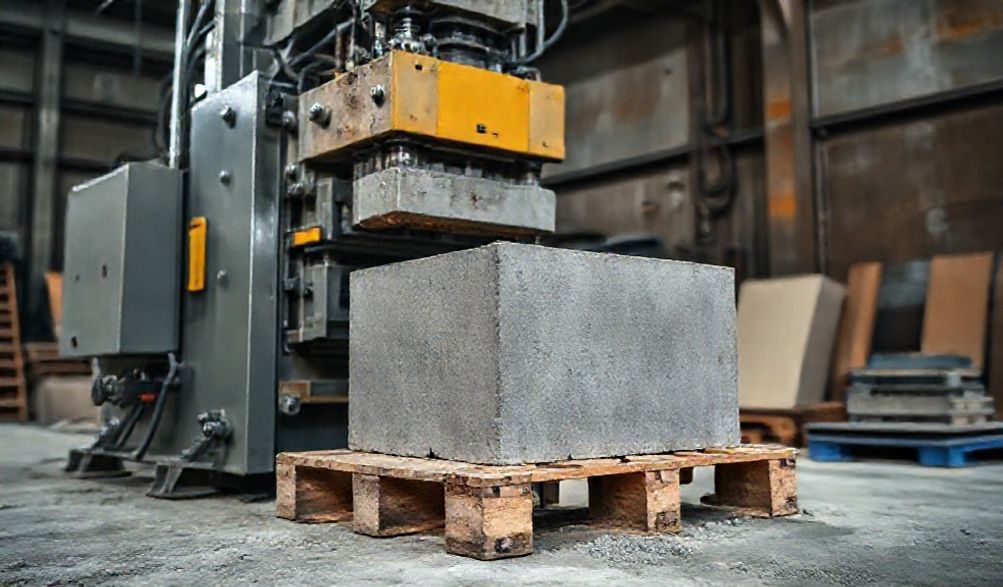
Em sua essência, uma máquina de moldar tijolos é um dispositivo que automatiza o processo de transformar matérias-primas — como argila, concreto ou cinza volante — em tijolos ou blocos precisos e uniformes. Ela substitui o elemento humano variável por força mecânica ou hidráulica, garantindo que cada unidade atenda às especificações exatas.
A jornada do tijolo moldado à mão até os colossos automatizados de hoje é uma história de industrialização. Ela evoluiu de simples moldes de madeira para prensas mecânicas de alavanca e, finalmente, para as sofisticadas linhas de produção controladas por computador que vemos hoje. Essa evolução foi impulsionada por uma busca incessante por eficiência, consistência e escala.
O princípio básico de funcionamento é elegantemente simples na maioria das máquinas e envolve três etapas principais:
1. Alimentação:A mistura de matéria-prima preparada é carregada no funil da máquina.
2. Compactação/Moldagem:O material é transferido para uma cavidade do molde onde uma pressão imensa (hidráulica ou mecânica) o compacta. A vibração é frequentemente utilizada para remover bolsas de ar e garantir a densidade.
3. Ejeção:O tijolo verde recém-formado é ejetado do molde para uma palete ou esteira para cura e secagem.
Tipos de Máquinas de Moldagem de Tijolos: Encontrando o Modelo Ideal
Nem todas as máquinas de tijolos são criadas iguais. Sua escolha depende fundamentalmente de seus objetivos de produção, orçamento e recursos disponíveis. Aqui está uma análise das principais categorias.
Máquinas Manuais de Moldagem de Tijolos
- Descrição:Estes são os pontos de entrada mais simples e acessíveis. A operação é totalmente manual, utilizando um mecanismo de alavanca para comprimir o material em um único molde.
- Melhor Para:Projetos de escala extremamente pequena (como uma propriedade rural pessoal), ONGs que atuam em áreas rurais isoladas da rede elétrica, ou startups testando o mercado com investimento de capital mínimo.
- Prós e Contras:
- Prós:Custo muito baixo, não requer eletricidade, portátil, fácil de entender e manter.
- Contras:Produção muito baixa (100-500 tijolos/dia), altamente intensiva em mão de obra, qualidade inconsistente dependente da força e técnica do operador.
Máquinas Semi-Automáticas de Moldagem de Tijolos
- Descrição:Esta categoria atinge o equilíbrio ideal para muitas empresas. Elas normalmente envolvem alimentação manual do material, mas automatizam os ciclos críticos de prensagem e ejeção usando um motor elétrico ou a diesel. Muitas contam com um sistema hidráulico simples e podem ser movidas sobre rodas.
- Melhor Para:Pequenas e médias empresas de construção, empreendedores na fabricação de tijolos e produção em média escala para fornecimento local. Eles são a força motriz da indústria de tijolos de pequeno porte.
- Prós e Contras:
- Prós:Boa capacidade de produção, qualidade consistente devido à pressão mecanizada, relativamente acessível, mais eficiente em energia do que a automação total.
- Contras:Ainda requer trabalho manual para alimentação e manuseio de tijolos, a produção é limitada pela velocidade do operador.
Máquinas de Moldagem de Tijolos Totalmente Automáticas
- Descrição:Estas são linhas de produção completas. Elas integram manuseio automatizado de materiais, mistura, moldagem precisa, cura e até mesmo empilhamento robótico. Controladas por painéis CLP (Controlador Lógico Programável), elas representam o ápice de produção e consistência.
- Melhor Para:Grandes fábricas de produção de tijolos, produção industrial para grandes desenvolvimentos urbanos e projetos de infraestrutura governamental que exigem milhões de blocos uniformes.
- Prós e Contras:
- Prós:Saída extremamente alta e previsível com mão de obra mínima, consistência e controle de qualidade incomparáveis, capacidade de integração com sistemas de cura e embalagem.
- Contras:Investimento inicial muito alto, requisitos significativos de espaço e energia, manutenção complexa exigindo técnicos especializados.
Classificação por Tipo de Tijolo e Saída
Máquinas também são especializadas pelo produto que criam. Moldes intercambiáveis são fundamentais aqui.
- Máquinas para Fabricação de Blocos Vazios:Produza blocos isolantes leves com cavidades. Essenciais para a construção moderna. Uma máquina semiautomática pode produzir800-2,000blocos vazados por dia.
- Máquinas de Fabricação de Tijolos Maciços:Usado para tijolos maciços tradicionais ou blocos de alta densidade. A produção é maior, pois o ciclo pode ser mais rápido. Uma máquina similar pode produzir1,500-3,000tijolos sólidos/dia.
- Máquinas de Fabricação de Pavers/Blocos de EncaixeProjetada para compactação de alta pressão, a fim de criar pedras de pavimentação ou blocos de encaixe duráveis que não exigem argamassa. A produção varia amplamente com base na espessura e complexidade.
Key Benefits of Investing in a Brick Moulding Machine
Moving from manual or outsourced brick procurement to in-house machine production delivers transformative advantages.
Eficiência e Produtividade Inigualáveis
A single semi-automatic machine operated by a small team can outperform 15-20 skilled manual laborers. What takes weeks manually can be accomplished in days. This accelerated timeline means faster project completion for builders and the ability to fulfill large orders for suppliers, directly translating to higher revenue potential.
Qualidade Superior e Consistente dos Tijolos
This is arguably the most critical technical benefit. Machines apply calibrated, repeatable pressure (measured in tons or MPa). This ensures:
* Uniform density and compressive strength (meeting standards like IS 1077 or ASTM C90).
* Exact dimensional accuracy (length, width, height), leading to straighter walls, less mortar use, and faster bricklaying.
* Consistent finish and texture across every single unit.
This quality reduces on-site waste from breakage and rejects, and enhances the structural integrity of the final building.
Redução Significativa de Custos a Longo Prazo
While there’s an upfront cost, the Return on Investment (ROI) is compelling:
* Economia de Custos com Mão de Obra: Drastically reduces the number of workers needed for brick production.
* Material Waste Reduction: Precise mixing and compaction minimize raw material spillage and product rejection.
* Project Speed: Faster brick availability accelerates overall construction, reducing overhead costs.
* Fluxo de Receita: For entrepreneurs, it creates a product to sell. Excess production can be sold to other builders, turning a cost center into a profit center.
Versatility and Customization
Modern machines are not one-trick ponies. With interchangeable moulds, you can pivot production based on market demand:
* Switch between solid, hollow, or decorative bricks.
* Produce interlocking blocks for landscaping or pavers for driveways.
* Adapt to different raw material mixes, including eco-friendly options like fly ash (a byproduct of coal plants) or crushed construction waste.
Critical Factors for Choosing Your Brick Moulding Machine
Selecting the wrong machine is a costly mistake. Use this framework to guide your decision.
Assess Your Production Needs
Start by asking the hard questions:
* What is my average daily or monthly brick requirement? (Be realistic about current needs and near-future growth).
* What is the primary scale of my work? (Personal use, small business, industrial plant)?
* What types of bricks are in highest demand in my market? (Hollow blocks for housing, pavers for developments, solid bricks for fences)?
Understand Raw Material Requirements
The machine must be compatible with your locally available materials.
* Clay-Based Machines: Require properly tempered clay with specific plasticity.
* Máquinas para Blocos de Concreto: Use a mix of cement, sand, and aggregates (like crushed stone). The mix design (e.g., 1:3:5 ratio) is critical for strength.
* Fly Ash Machines: Designed to utilize fly ash, lime, and gypsum. This is often a more eco-conscious and cost-effective choice near thermal power plants.
Always consult the machine specifications for acceptable moisture content and particle size.
Fonte de Energia e Custos Operacionais
Consider your operational environment:
* Modelos Elétricos: Clean, quiet, and efficient, but require a stable and powerful grid connection.
* Modelos a Diesel: Offer independence from the grid and high torque, but have higher fuel costs, noise, and emissions.
* Modelos Híbridos: Offer flexibility to switch between power sources, ideal for areas with intermittent electricity.
Calculate the long-term fuel/electricity consumption as part of your TCO (Total Cost of Ownership).
Machine Durability and After-Sales Support
This is where brand reputation matters immensely. Do not compromise.
* Construção: Look for high-quality, hardened steel in the mould, frame, and vibration table. A heavier machine often indicates better stability and longevity.
* Support Network: Prioritize suppliers who offer a clear warranty, readily available spare parts, and—crucially—local technical support or training. A machine that sits idle for weeks waiting for a specialist is a financial drain. Research and choose a partner known for confiabilidade and service.
Operation, Maintenance, and Safety Best Practices
A machine is a long-term investment. Protect it with proper care.
Essential Pre-Operation Checks
Before starting each shift:
* Check hydraulic oil levels and for any leaks.
* Inspect all bolts and nuts for tightness.
* Ensure the mould and feeder are clean and free of hardened material residue.
* Verify that safety guards are in place.
Routine Maintenance Schedule
- Diário: Clean the machine thoroughly after use. Lubricate all moving parts as per the manual.
- Semanal: Check wear parts like mould liners, feeder scrapers, and vibration springs.
- Mensalmente: Inspect the hydraulic system filters and change the oil as recommended. Check electrical connections.
Non-Negotiable Safety Protocols
Ignoring safety risks severe injury. These protocols come from hard-won experiência:
* Treinamento: Never allow an untrained person to operate the machine.
* PPE (Personal Protective Equipment): Operators must wear safety glasses, gloves, steel-toe boots, and hearing protection near loud machines.
* Lockout/Tagout: Always disconnect power before performing any cleaning, maintenance, or mould changes.
* Clear Area: Keep the work area organized and free of trip hazards.
Perguntas Frequentes (FAQ)
Q1: What is the average production capacity of a standard brick moulding machine?
A: Capacity varies dramatically. A manual press may produce 500 bricks/day. A semi-automatic machine typically outputs 1,000 to 5,000 bricks or blocks per 8-hour shift, depending on block size and operator efficiency. Fully automatic lines can produce 10,000 to 50,000+ units daily.
Q2: Can one machine produce different types and sizes of bricks?
A: Yes, through interchangeable moulds. Most manufacturers offer a range of moulds for their machines. However, changing moulds takes time (30 mins to a few hours), and the process is simpler on semi-automatic than on fully integrated automatic lines.
Q3: What is the typical price range for a brick moulding machine?
A: Prices span a wide spectrum: from $1,000 – $3,000 for a basic manual press, $5,000 – $25,000 for a robust semi-automatic machine, and $50,000 to over $250,000 for a fully automatic production line. Automation level, brand, and output capacity are the primary cost drivers.
Q4: How much space and what kind of foundation is required to install one?
A: A semi-automatic machine needs a level, solid concrete floor (at least 6 inches thick) and about 200-500 sq. ft. for operation, raw material storage, and brick drying. A full plant requires a large industrial shed (several thousand sq. ft.) with a heavy-duty foundation.
Q5: Are there profitable business opportunities with a brick moulding machine?
A: Yes, but success isn’t automatic. It requires careful analysis of local demand, competition, reliable access to affordable raw materials, and a solid business plan. It’s a competitive field, but for those who manage costs and quality effectively, it can be a very profitable venture. This realistic assessment is key to building confiabilidade with potential entrepreneurs.
Conclusão
The brick moulding machine stands as a cornerstone of modern, efficient construction. It transforms a traditionally slow, variable process into a streamlined engine for productivity, quality, and profit. From empowering the small builder to supplying entire cities, its impact is foundational.
Your final choice must be a deliberate match for your specific needs in scale, budget, and material. Remember, this is not just a purchase; it’s a long-term capital investment in your construction capability or business future.
Take the insights from this guide as your blueprint. Your next steps should involve contacting multiple reputable suppliers with your detailed requirements, requesting live demonstrations or customer references, and asking the detailed technical questions that now, you are expertly prepared to ask. The right machine is out there, ready to build your next project—and your success.
<