
Guia Definitivo para Máquinas de Fabricação de Tijolos Maciços de Cimento | Insights da Fábrica FUDA
No mundo da construção, a base de qualquer estrutura duradoura começa com a qualidade de seu componente mais básico: o tijolo. Enquanto as tendências estéticas vêm e vão, a demanda por materiais de construção duráveis, resistentes e confiáveis permanece constante. Para incorporadores, empreiteiros e empreendedores, essa durabilidade se traduz diretamente em integridade do projeto, segurança e valor a longo prazo. Eis que surge a moderna máquina de fabricar tijolos maciços de cimento — uma pedra angular tecnológica que revolucionou a forma como produzimos os blocos de construção de nossas comunidades. Indo além da tradicional queima de tijolos de argila, intensiva em energia, essas máquinas oferecem um caminho mais inteligente, resistente e sustentável para a produção de tijolos.
Este guia não é apenas uma visão teórica; é um manual abrangente extraído de uma profunda prática do setor. Vamos dissecar a máquina de fabricação de tijolos maciços de cimento, com insights baseados nos padrões profissionais de uma líderFábrica de tijolos FUDASeja você um profissional da construção civil especificando materiais, um investidor avaliando uma oportunidade lucrativa, ou um gerente de projetos buscando autossuficiência, este artigo oferece o conhecimento detalhado e confiável necessário para tomar decisões informadas sobre a seleção, operação e benefícios dessa maquinaria fundamental.
O que é uma Máquina de Fabricar Tijolos Maciços de Cimento?
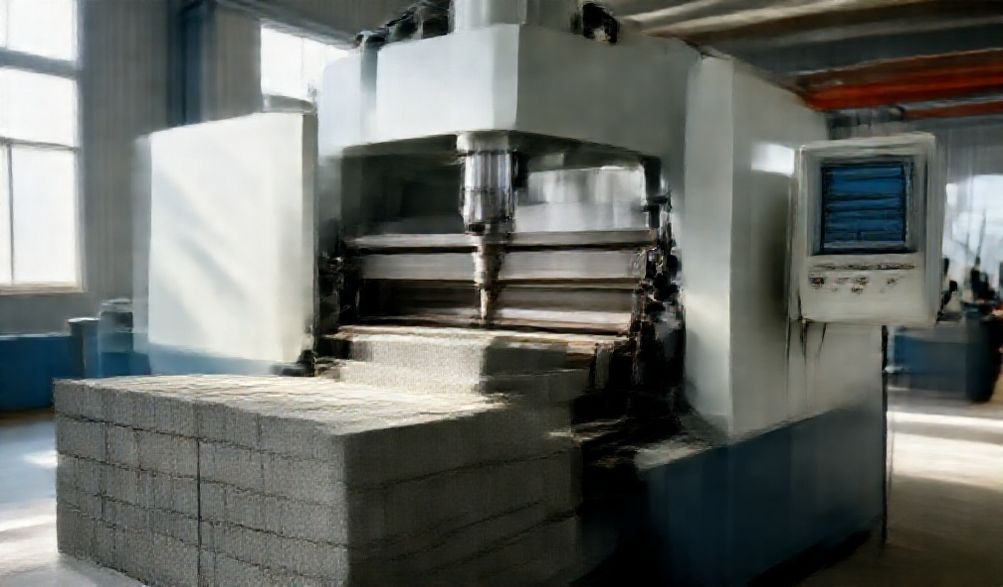
Em sua essência, uma máquina de fazer tijolos maciços de cimento é um dispositivo projetado para fabricar tijolos sólidos e de alta densidade, utilizando um processo de vibração e compressão. Ela transforma uma mistura seca de concreto em unidades de construção precisas e entrelaçadas, sem a necessidade de queima em forno. Essa tecnologia representa um salto significativo em relação aos métodos tradicionais, priorizando a eficiência e a ciência dos materiais.
Função Principal e Princípio de Funcionamento
A magia desta máquina reside na sua simplicidade e força. Ela opera com base no princípio da compactação. Uma mistura seca, precisamente medida, de cimento, areia e agregados (como pedra britada) é alimentada na máquina. Através de uma combinação de compressão de alta pressão — frequentemente hidráulica — e, por vezes, vibração, a mistura é compactada em um molde rígido (matriz). A imensa pressão força as partículas a se unirem, criando uma ligação mecânica e um tijolo de densidade e resistência excepcionais. O tijolo é então ejetado, pronto para a cura. Este processo elimina a necessidade de água na mistura ou calor na cura, resultando em um ciclo de produção mais rápido e controlado.
Componentes Principais e Seus Papéis
Compreender a máquina começa por conhecer as suas partes essenciais:
* Hopper:Este é o ponto de entrada onde a mistura seca de matéria-prima é carregada. Seu design garante um fluxo consistente e ininterrupto para o sistema de moldagem.
* Mofo ou Morra:O coração da personalização. Este componente de aço endurecido define a forma, o tamanho e a textura superficial do tijolo final. Trocar os moldes permite que uma máquina produza diferentes tipos de tijolo.
* Sistema de Compressão:A fonte de poder. Esta pode ser uma robustasistema hidráulico(para maior pressão e automação) ou umasistema mecânico(frequentemente encontrado em modelos manuais/semi-automáticos). Ele fornece a tonelagem necessária para uma compactação adequada.
* Painel de Controle:O cérebro das máquinas automatizadas. Ele permite que os operadores definam parâmetros como duração da pressão, tempos de ciclo e vibração, garantindo qualidade consistente e repetível a cada tijolo.
Vantagens de Utilizar uma Máquina de Tijolos Sólidos de Cimento
Mudar para a produção de tijolos maciços de cimento não é apenas uma troca de equipamento; é uma melhoria nos resultados. As vantagens são tangíveis, impactando tudo, desde a integridade estrutural até a sua lucratividade.
Força e Durabilidade Inigualáveis
Os tijolos maciços de cimento são projetados para desempenho. A compactação de alta pressão resulta em:
* Alta Resistência à Compressão:Frequentemente excedendo a das tradicionais tijolos de argila cozida, tornando-os ideais para paredes de carga e construções de múltiplos andares.
* Superior Resistência às Condições Climáticas:Eles apresentam excelente resistência à absorção de água, ciclos de congelamento e degelo e erosão, resultando em estruturas mais duráveis com menor manutenção.
* Consistência e Estabilidade Dimensional:A moldagem de precisão garante tamanho e forma uniformes, simplificando a construção, reduzindo o uso de argamassa e minimizando o desperdício no local.
Cost-Effectiveness and Profitability
This is where the business case shines. The production model offers substantial economic benefits:
* Lower Raw Material Costs: Uses widely available, inexpensive materials like sand, aggregate, and cement. Often, industrial by-products (like fly ash) can be incorporated.
* Elimination of Firing Costs: No coal, gas, or large kilns are needed, slashing energy overheads dramatically.
* High Output & Fast ROI: Machines can produce hundreds to thousands of bricks per hour. This rapid production capacity, combined with low operational costs, leads to a strong and quick return on investment for business ventures.
Environmental Sustainability
In an era of green construction, this method stands out:
* Eficiente em Energia: The “curing” process happens at ambient temperature, requiring no fossil fuels.
* Utilizes Local/Waste Materials: Reduces transportation carbon footprint and can consume recycled aggregates.
* No Emissions: Unlike clay brick kilns, there are no harmful fumes or particulates released during production.
Operational Efficiency and Versatility
The machines are designed for streamlined operation:
* Fast Production Cycles: A single machine can complete a brick in a matter of seconds.
* Redução da Dependência de Mão de Obra: Especially in semi- and fully-automatic models, one or two operators can manage high-volume production.
* Flexibilidade do Produto: By simply changing the mold, a single machine can produce solid bricks, hollow blocks, paving slabs, kerbstones, and more, allowing you to diversify your product line to meet market demand.
Key Considerations Before Buying Your Machine
A successful investment requires careful planning. Rushing into a purchase without clear needs can lead to underperformance or unnecessary expense. Here’s a practical framework for your decision.
Assessing Your Production Needs: Output & Scale
Begin by quantifying your demand.
* Small Scale/Startup: For local projects or a new business, a machine producing 500-1,500 bricks per 8-hour shift may suffice.
* Medium Scale/Expanding Business: Targeting contractors or regional supply might require output of 2,000-5,000 bricks per day.
* Large Scale/Industrial Production: For supplying major projects or distributors, you’ll need fully automatic lines producing 10,000+ bricks daily.
Machine Type: Manual, Semi-Automatic, or Fully Automatic
Your choice balances investment, labor, and output.
* Máquinas Manuais: Lowest cost, fully human-powered. Ideal for very small-scale, intermittent production. High labor intensity, lower output.
* Máquinas Semiautomáticas: The sweet spot for many. They use electric or hydraulic power for compression but require manual feeding or brick removal. Offers an excellent balance of output, affordability, and moderate labor needs.
* Máquinas Totalmente Automáticas: Top-tier investment. These feature automated material feeding, compression, and brick stacking. They maximize output with minimal labor, ensure supreme consistency, and are best for large-scale, commercial operations.
Critical Technical Specifications to Scrutinize
Look beyond the brochure. Key specs determine capability:
* Força de Pressão (Tonelagem): This directly correlates to brick density and strength. For solid bricks, higher tonnage (e.g., 100+ tons) is typically better.
* Tempo de Ciclo: How many seconds for one brick? Faster cycles mean higher hourly output.
* Potência do Motor: Indicates the machine’s overall power and ability to handle continuous operation.
* Personalização de Moldes: Ensure the manufacturer can provide or create molds for the specific brick designs you wish to produce.
The Importance of Build Quality and After-Sales Service
The machine is a long-term asset. Its durability and support are paramount.
* Qualidade de Construção: Look for heavy-duty steel frames, hardened steel molds, and reputable hydraulic components. A robust build minimizes downtime.
* Serviço Pós-Venda: This is non-negotiable. Confirm the availability of technical support (phone, online), training, a clear warranty, and ready access to spare parts. Established factories like FODA build their reputation on this lifelong partnership, not just a one-time sale.
Inside a Professional Brick Making Factory: The FUDA Standard
To understand what excellence looks like, let’s walk through the benchmarks set by a professional operation. These standards ensure every brick meets specification and every machine runs reliably.
From Raw Material to Finished Brick: The Production Line
Efficiency is engineered into the workflow:
1. Preparação de Materiais: Sand and aggregates are sieved and stored. Cement is kept dry.
2. Mistura Preciso: Materials are batched in exact ratios (e.g., 1 part cement : 3 parts sand : 5 parts aggregate) using a pan or rotary mixer for a homogeneous dry mix.
3. Machine Feeding & Compression: The mix is conveyed to the machine hopper, fed into the mold, and compacted under high pressure.
4. Cura: Fresh bricks are stacked on pallets and kept moist (often by sprinkling water) for 7-14 days to achieve initial strength, reaching full strength in 28 days.
5. Paletização e Armazenamento: Cured bricks are packaged and stored for dispatch, ready for the construction site.
Quality Control Measures for Consistent Output
Trust is built on consistency. Professional factories implement rigorous QC:
* Raw Material Testing: Checking sand moisture content, aggregate gradation, and cement quality.
* Verificações em Processo: Monitoring brick weight, dimensions, and visual integrity right off the machine.
* Final Product Testing: Regularly testing sample bricks for compressive strength in a lab, ensuring every batch meets or exceeds national building standards.
Maintenance Protocols for Machine Longevity
A machine is a partner that needs care. A professional schedule includes:
* Daily: Cleaning the hopper and mold, checking hydraulic oil levels, and lubricating moving parts.
* Weekly: Inspecting wires and hoses for wear, tightening bolts and fittings.
* Monthly: Checking hydraulic system pressure, cleaning filters, and conducting a thorough inspection of the mold and compression plates.
Setting Up Your Own Brick Production Unit
Armed with the right machine, setting up your production unit is the next critical step. Proper planning here prevents operational headaches.
Space, Power, and Raw Material Logistics
- Espaço: You’ll need a covered area for the machine (protected from rain and dust), a large, level, open yard for curing and storage, and space for raw material stockpiles. Plan for easy material flow.
- Poder: Ensure a stable electrical connection that matches your machine’s voltage and power (kW) requirements. A three-phase connection is common for industrial models.
- Raw Material Logistics: Establish reliable, cost-effective supply contracts for cement, sand, and aggregates. Consistent material quality is key to consistent brick quality.
Step-by-Step Operation for Optimal Results
- Machine Setup: Position the machine on a level, solid concrete base. Connect power and perform a test run without material.
- Preparação da Mistura: Use a mechanical mixer for consistency. A common starting ratio is 1 (cement) : 3 (sand) : 5 (6mm aggregate). Adjust based on local material tests.
- Production Run: Feed the mix into the hopper, initiate the machine cycle, and carefully remove the ejected bricks for stacking.
- Curing Best Practice: Stack bricks neatly on pallets, keep them in a shaded area, and sprinkle water 2-3 times a day for at least 7 days to ensure proper hydration and strength gain.
Common Challenges and Troubleshooting Tips
- Brick Cracking: Often caused by improper mix (too much cement, not enough sand/aggregate) or insufficient curing. Re-calibrate your mix and ensure proper watering.
- Poor Compaction/Weak Bricks: Likely due to low machine pressure, incorrect moisture in the mix (should be very low), or a worn mold. Check machine settings and mold condition.
- Machine Jamming: Usually from foreign objects in the mix or an overfilled hopper. Always sieve raw materials and follow feeding guidelines.
Frequently Asked Questions (FAQ)
Q: What is the typical cost range for a cement solid brick making machine?
A: Costs vary dramatically based on automation and capacity. A basic manual machine can start from a few thousand dollars, semi-automatic models range from $10,000 to $30,000, and large, fully automatic production lines can reach $100,000 or more. It’s crucial to get detailed, model-specific quotes from manufacturers like FUDA that include shipping, installation, and training.
Q: What is the ideal cement-sand-aggregate mix ratio?
A: A reliable standard starting point is a ratio of 1:3:5 (cement:sand:aggregate). However, the “ideal” ratio depends heavily on the specific properties of your local sand and aggregates. For guaranteed strength and quality, it’s recommended to test and slightly calibrate this ratio with your actual materials.
Q: How long do cement bricks need to cure before use?
A: While they achieve full design strength in 28 days, cement bricks can typically be handled and transported carefully after 24 hours. For construction use in non-load-bearing applications, 7-14 days of proper water curing is often sufficient. For load-bearing walls, waiting the full 28 days is the best practice.
Q: Can these machines produce other products besides solid bricks?
A: Absolutely. This is a key advantage. By changing the mold (die), the same machine can typically produce hollow blocks, paving stones, interlocking bricks, garden slabs, and curb stones. Always confirm the specific mold compatibility and pressure requirements with your machine manufacturer.
Q: Why is FUDA Factory considered a reliable manufacturer?
A: Factories like FUDA earn their reputation through a commitment to E-E-A-T: Experiência from years in the industry, Especialização in robust mechanical and hydraulic engineering, Autoridade established through rigorous product testing and compliance, and Confiança built on transparent customer communication, comprehensive after-sales support, and reliable warranty programs. They don’t just sell a machine; they provide a production solution.
Conclusão
Investing in a cement solid brick making machine is more than a purchase; it’s a strategic decision that bridges the gap between ambitious construction goals and profitable business reality. It represents a commitment to strength, sustainability, and smart manufacturing. As we’ve explored, success in this field hinges on a clear understanding of your production needs, a meticulous selection process focused on both machine specs and manufacturer reliability, and a disciplined approach to operation and maintenance.
Let this guide serve as your foundational blueprint. As you move forward, prioritize partners who exemplify the principles of proven Experiência, Expertise, Autoridade e Confiabilidade (E-E-A-T) in every aspect of their work—from the drawing board to the factory floor and beyond. By aligning with standards exemplified by professional operations like the Fábrica de tijolos FUDA, you secure not just a machine, but a cornerstone for your building or business success.
<