

Автоматизированный производственный цикл: пошаговое руководство
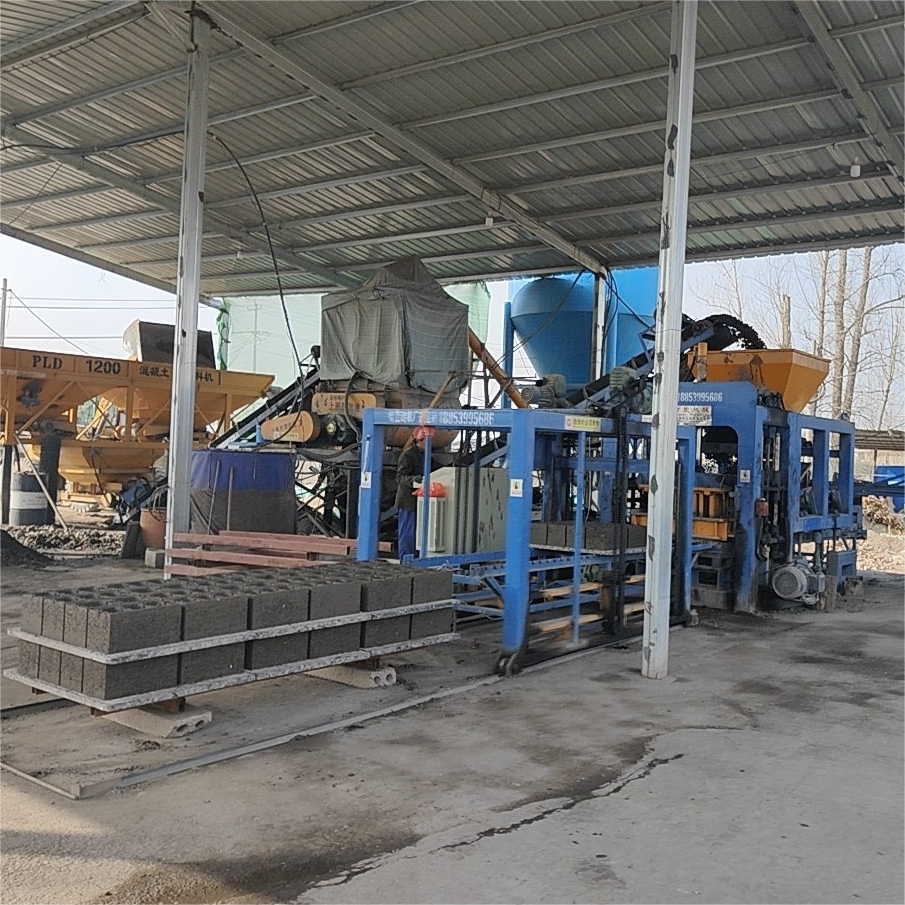
Работа автоматической блок-формовочной машины представляет собой непрерывный, синхронизированный процесс, управляемый программируемым логическим контроллером (ПЛК). Цикл объединяет несколько этапов — от сырья до готового изделия — с минимальным ручным вмешательством.
Этап 1: Дозирование и смешивание сырьевых материалов
Этот основополагающий этап происходит до работы блочной машины, но имеет решающее значение для её успешного функционирования.
- Автоматизированное пакетирование:На полностью интегрированном заводе силосы и бункеры для заполнителей подают точные количества цемента, песка, щебня и воды в центральную весовую систему. Этот процесс управляется ПЛК, чтобы гарантировать абсолютную стабильность пропорций смеси для каждой партии.
- Высокоэффективное смешивание:配料后的物料被输送至工业搅拌机,通常为双轴或行星式搅拌机,可在短时间内确保形成均匀一致的混凝土混合物。水分含量需精确控制,因为过湿或过干的混合物会导致砌块质量问题及设备堵塞。
Этап 2: Транспортировка материала и подача в форму
- Перевод на машину:Готовая смесь транспортируется от смесителя к приемному бункеру блочной машины с помощью закрытого ленточного конвейера или ковшового элеватора, что предотвращает расслоение материалов.
- Точное заполнение формы:Машина с питающим бункером, перемещающимся по рельсам, распределяет бетонную смесь по полостям форм. Система обеспечивает заполнение каждой полости до точного, предварительно заданного уровня. Передовые системы могут использовать несколько проходов подачи и предварительное уплотнение для обеспечения равномерного распределения, особенно при сложной конфигурации блоков.
Третий этап: Формирование ядра, уплотнение и вибрация.
Это сердце процесса формирования блоков внутри машины.
- Одновременная вибрация и уплотнение: Once the mold is filled, the machine’s table, upon which the mold sits, is subjected to high-frequency, high-amplitude vibration. Simultaneously, hydraulic pressure is applied from the top via a press head (and from within for hollow blocks using core rods). This dual action drives out air pockets, compacts the concrete to its maximum density, and gives the block its precise shape and sharp edges.
- Controlled Parameters: The pressure, vibration intensity, and duration are pre-programmed into the PLC based on the block type and mix design, ensuring repeatable quality.
Stage 4: Demolding, Ejection, and Pallet Handling
- Lifting and Stripping: After compaction, the mold box is lifted vertically. The formed blocks, now resting on a pallet underneath, remain in place. For hollow blocks, the core rods retract first to avoid damaging the block’s webs.
- Product Transfer: An ejection system or robotic arm then pushes or lifts the entire stack of green (fresh) blocks on their pallet out of the forming station.
- Обращение паллет: The empty pallet from the previous cycle is cleaned and fed back under the mold. The pallet with the new blocks is transferred onto a chain conveyor or a stacker/carousel system.
Stage 5: Curing and Final Handling
- Automatic Stacking and Curing: Robotic stackers lift multiple blocks on their pallets and arrange them into dense cubes on curing racks. These racks are moved into a controlled curing chamber where heat and humidity are regulated to accelerate the cement hydration process, achieving high early strength within 24 hours.
- Depalleting and Packaging: After sufficient curing, the blocks are automatically depalletized. The empty pallets return to the machine, and the hardened blocks are bundled, strapped, and prepared for dispatch.
Conclusion: Synchronization as the Key to Efficiency
The process of making blocks with an automatic machine is a symphony of coordinated mechanical, hydraulic, and electronic systems. Success hinges not on any single component, but on their flawless synchronization and the consistency of the input materials. For the business intermediary, this knowledge underscores the importance of selling a complete, compatible system and providing comprehensive operator training. Clients must understand that achieving the machine’s rated output and quality depends on meticulous attention to the entire process chain—from the aggregate pile to the curing chamber. By facilitating this holistic understanding, you ensure your clients can operate their investment at peak performance, maximizing throughput, minimizing waste, and establishing a reputation for unwavering product quality in the marketplace.
Frequently Asked Questions (FAQ)
Q1: What is the most critical factor for ensuring block quality in an automatic machine?
А: The single most critical factor is consistent raw material quality and mix proportion. Variations in aggregate size, moisture content, or cement grade will directly cause defects in the final block, regardless of how advanced the machine is. Precise, automated batching and consistent mixing are non-negotiable prerequisites.
Q2: How often does the mold need maintenance or replacement?
А: Mold liners and wear plates are consumable items. Their lifespan depends on production volume and aggregate abrasiveness. A rigorous inspection schedule (e.g., weekly) is essential to check for wear, dents, or damage that can affect block dimensions and surface finish. Proactive replacement of worn parts prevents a decline in product quality.
Q3: Can one operator manage the entire automatic line?
А: While the PLC controls the process, a typical setup requires at least two personnel: one operator monitoring the control panel, mixer, and machine status, and another supervising the curing area, stacking, and handling finished products. Their role shifts from manual labor to machine supervision and quality oversight.
Q4: How is the machine programmed for different block types?
А: Modern machines store multiple product “recipes” in the PLC. Switching products involves selecting the correct program, which automatically adjusts parameters like feed volume, vibration time, and press head height. The physical change of the mold set is still required, but the process is guided and simplified by the control system.
Q5: What are common operational issues and their likely causes?
А:
- Blocks breaking during ejection: Often caused by incorrect mix (too dry), insufficient compaction, or premature ejection.
- Poor surface finish or incomplete filling: Usually due to an incorrect mix (too stiff or segregating), low vibration, or worn mold liners.
- Machine jamming or alarm faults: Can be triggered by incorrect pallet positioning, overfilling of the hopper, or hydraulic/pressure sensor issues. Regular preventive maintenance is key to avoiding these.
- автоматическая машина для изготовления блоков7 products
- Глиняный блокоформительный станок4 products
- передвижная машина для изготовления блоков4 products
- другое строительное оборудование5 products
- полуавтоматическая машина для производства блоков4 products