

دورة الإنتاج الآلي: دليل مرحلي خطوة بخطوة
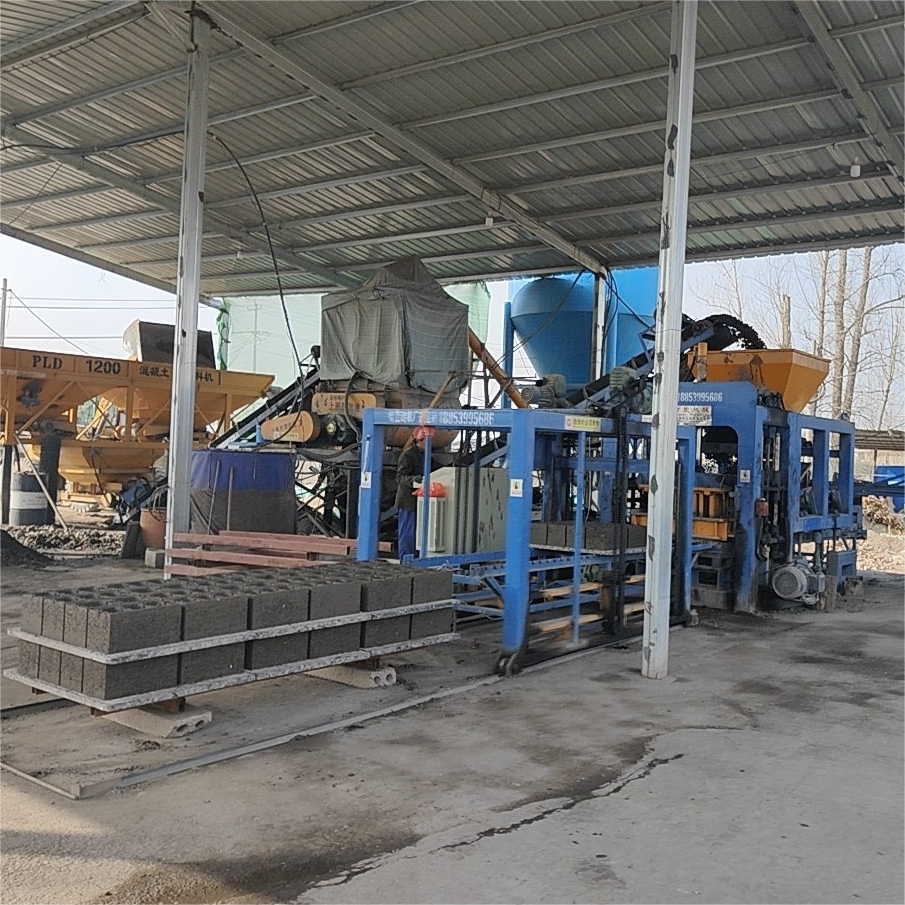
تشغيل آلة البلوك الأوتوماتيكية هو عملية مستمرة ومتزامنة يديرها وحدة تحكم منطقية قابلة للبرمجة (PLC). تدمج الدورة عدة مراحل من المواد الخام إلى المنتج النهائي بأقل تدخل بشري.
المرحلة 1: وزن وخلط المواد الخام
مرحلة التأسيس هذه تحدث قبل ماكينة البلوك، لكنها حاسمة لنجاحها.
- الدفعات الآليةفي مصنع متكامل بالكامل، تقوم الصوامع وأوعية الركام بتغذية كميات دقيقة من الأسمنت والرمل ورقائق الحجر والماء إلى نظام وزن مركزي. يتم التحكم في ذلك بواسطة وحدة التحكم المنطقي القابل للبرمجة (PLC) لضمان تناسق مطلق في نسب الخلط لكل دفعة.
- خلط عالي الكفاءة:تُنقل المواد المجمعة إلى خلاط صناعي، عادةً من النوع ذي المحورين أو الكوكبي، الذي يضمن مزيجًا خرسانيًا متجانسًا وموحدًا في وقت قصير. يتم التحكم في محتوى الرطوبة بدقة، حيث أن المزيج الرطب جدًا أو الجاف جدًا سيؤدي إلى مشاكل في جودة الطوب وتعطل الماكينة.
المرحلة 2: نقل المواد وتغذية القالب
- نقل إلى الآلةيتم نقل الخلطة الجاهزة من الخلاطة إلى قادوس التغذية الخاص بآلة البلوك عبر ناقل حزامي مغلق أو مصعد دلو، مما يمنع انفصال المواد.
- ملء القالب بدقة:يقوم صندوق تغذية الماكينة، الذي يتحرك على قضبان، بتوزيع خليط الخرسانة فوق تجاويف القالب. يضمن النظام ملء كل تجويف بمستوى دقيق ومحدد مسبقًا. قد تستخدم الأنظمة المتقدمة تمريرات تغذية متعددة وضغطًا مسبقًا لضمان توزيع متساوٍ، خاصةً لتصاميم الكتل المعقدة.
المرحلة الثالثة: تكوين النواة، الانضغاط، والاهتزاز.
هذا هو قلب عملية تشكيل الكتل داخل الآلة.
- Simultaneous Vibration and Compaction: Once the mold is filled, the machine’s table, upon which the mold sits, is subjected to high-frequency, high-amplitude vibration. Simultaneously, hydraulic pressure is applied from the top via a press head (and from within for hollow blocks using core rods). This dual action drives out air pockets, compacts the concrete to its maximum density, and gives the block its precise shape and sharp edges.
- Controlled Parameters: The pressure, vibration intensity, and duration are pre-programmed into the PLC based on the block type and mix design, ensuring repeatable quality.
Stage 4: Demolding, Ejection, and Pallet Handling
- Lifting and Stripping: After compaction, the mold box is lifted vertically. The formed blocks, now resting on a pallet underneath, remain in place. For hollow blocks, the core rods retract first to avoid damaging the block’s webs.
- Product Transfer: An ejection system or robotic arm then pushes or lifts the entire stack of green (fresh) blocks on their pallet out of the forming station.
- تداول البليتات The empty pallet from the previous cycle is cleaned and fed back under the mold. The pallet with the new blocks is transferred onto a chain conveyor or a stacker/carousel system.
Stage 5: Curing and Final Handling
- Automatic Stacking and Curing: Robotic stackers lift multiple blocks on their pallets and arrange them into dense cubes on curing racks. These racks are moved into a controlled curing chamber where heat and humidity are regulated to accelerate the cement hydration process, achieving high early strength within 24 hours.
- Depalleting and Packaging: After sufficient curing, the blocks are automatically depalletized. The empty pallets return to the machine, and the hardened blocks are bundled, strapped, and prepared for dispatch.
Conclusion: Synchronization as the Key to Efficiency
The process of making blocks with an automatic machine is a symphony of coordinated mechanical, hydraulic, and electronic systems. Success hinges not on any single component, but on their flawless synchronization and the consistency of the input materials. For the business intermediary, this knowledge underscores the importance of selling a complete, compatible system and providing comprehensive operator training. Clients must understand that achieving the machine’s rated output and quality depends on meticulous attention to the entire process chain—from the aggregate pile to the curing chamber. By facilitating this holistic understanding, you ensure your clients can operate their investment at peak performance, maximizing throughput, minimizing waste, and establishing a reputation for unwavering product quality in the marketplace.
الأسئلة الشائعة (FAQ)
Q1: What is the most critical factor for ensuring block quality in an automatic machine?
أ: The single most critical factor is consistent raw material quality and mix proportion. Variations in aggregate size, moisture content, or cement grade will directly cause defects in the final block, regardless of how advanced the machine is. Precise, automated batching and consistent mixing are non-negotiable prerequisites.
Q2: How often does the mold need maintenance or replacement?
أ: Mold liners and wear plates are consumable items. Their lifespan depends on production volume and aggregate abrasiveness. A rigorous inspection schedule (e.g., weekly) is essential to check for wear, dents, or damage that can affect block dimensions and surface finish. Proactive replacement of worn parts prevents a decline in product quality.
Q3: Can one operator manage the entire automatic line?
أ: While the PLC controls the process, a typical setup requires at least two personnel: one operator monitoring the control panel, mixer, and machine status, and another supervising the curing area, stacking, and handling finished products. Their role shifts from manual labor to machine supervision and quality oversight.
Q4: How is the machine programmed for different block types?
أ: Modern machines store multiple product “recipes” in the PLC. Switching products involves selecting the correct program, which automatically adjusts parameters like feed volume, vibration time, and press head height. The physical change of the mold set is still required, but the process is guided and simplified by the control system.
Q5: What are common operational issues and their likely causes?
أ:
- Blocks breaking during ejection: Often caused by incorrect mix (too dry), insufficient compaction, or premature ejection.
- Poor surface finish or incomplete filling: Usually due to an incorrect mix (too stiff or segregating), low vibration, or worn mold liners.
- Machine jamming or alarm faults: Can be triggered by incorrect pallet positioning, overfilling of the hopper, or hydraulic/pressure sensor issues. Regular preventive maintenance is key to avoiding these.
- آلة صناعة الطوب الأوتوماتيكية7 products
- آلة صنع الطوب الطيني4 products
- آلة صنع الكتل المتحركة4 products
- معدات البناء الأخرى5 products
- آلة صنع الكتل شبه الأوتوماتيكية4 products