

Ang Automated Production Cycle: Isang Gabay sa Bawat Yugto
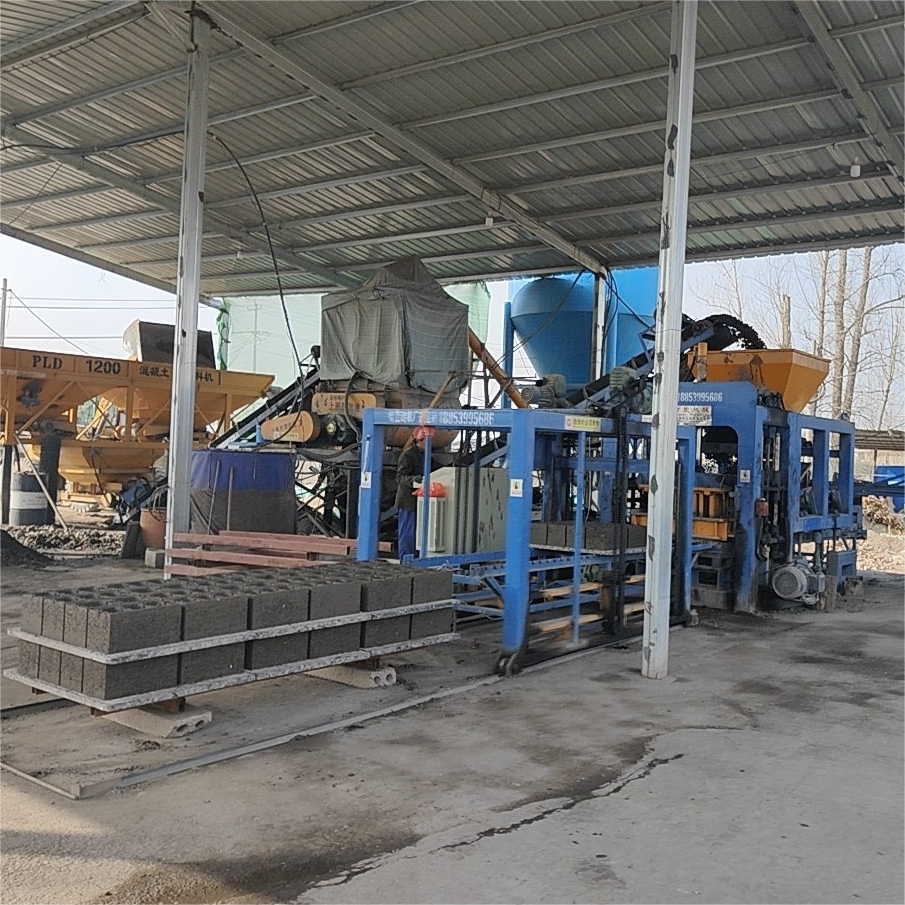
Ang operasyon ng isang automatic block machine ay isang tuluy-tuloy, sabay-sabay na proseso na pinamamahalaan ng Programmable Logic Controller (PLC). Ang siklo ay nagsasama ng ilang yugto mula sa hilaw na materyal hanggang sa natapos na produkto na may kaunting manu-manong interbensyon.
Unang Yugto: Pagtimpla at Paghahalo ng Hilaw na Materyales
Ang pangunahing yugtong ito ay nangyayari bago ang block machine, ngunit mahalaga ito sa tagumpay nito.
- Awtomatikong Pag-batch:Sa isang ganap na pinagsamang planta, ang mga silo at pinagsama-samang lalagyan ay nagpapakain ng tiyak na dami ng semento, buhangin, tipak ng bato, at tubig patungo sa isang sentral na sistema ng pagtimbang. Ito ay kinokontrol ng PLC upang masigurado ang lubos na pagkakapare-pareho sa proporsyon ng halo para sa bawat batch.
- Mataas na Episyenteng PaghahaloAng mga materyales na may batch ay inihahatid sa isang pang-industriyang panghalo, karaniwan ay uri ng twin-shaft o planetary, na nagsisiguro ng isang homogenous at pantay na halo ng kongkreto sa maikling panahon. Mahigpit na kinokontrol ang antas ng kahalumigmigan, dahil ang masyadong basa o tuyo na halo ay magdudulot ng mga isyu sa kalidad ng bloke at pagkabara ng makina.
Stage 2: Material Conveyance and Mold Feeding
- Transfer to the Machine: The ready mix is transported from the mixer to the block machine’s feed hopper via an enclosed belt conveyor or bucket elevator, preventing segregation of materials.
- Precise Mold Filling: The machine’s feed box, moving on rails, distributes the concrete mix over the mold cavities. The system ensures each cavity is filled to an exact, pre-set level. Advanced systems may use multiple feed passes and pre-compaction to ensure even distribution, especially for complex block designs.
Stage 3: Core Formation, Compaction, and Vibration
This is the heart of the block-forming process inside the machine.
- Simultaneous Vibration and Compaction: Once the mold is filled, the machine’s table, upon which the mold sits, is subjected to high-frequency, high-amplitude vibration. Simultaneously, hydraulic pressure is applied from the top via a press head (and from within for hollow blocks using core rods). This dual action drives out air pockets, compacts the concrete to its maximum density, and gives the block its precise shape and sharp edges.
- Controlled Parameters: The pressure, vibration intensity, and duration are pre-programmed into the PLC based on the block type and mix design, ensuring repeatable quality.
Stage 4: Demolding, Ejection, and Pallet Handling
- Lifting and Stripping: After compaction, the mold box is lifted vertically. The formed blocks, now resting on a pallet underneath, remain in place. For hollow blocks, the core rods retract first to avoid damaging the block’s webs.
- Product Transfer: An ejection system or robotic arm then pushes or lifts the entire stack of green (fresh) blocks on their pallet out of the forming station.
- Sirkulasyon ng Pallet The empty pallet from the previous cycle is cleaned and fed back under the mold. The pallet with the new blocks is transferred onto a chain conveyor or a stacker/carousel system.
Stage 5: Curing and Final Handling
- Automatic Stacking and Curing: Robotic stackers lift multiple blocks on their pallets and arrange them into dense cubes on curing racks. These racks are moved into a controlled curing chamber where heat and humidity are regulated to accelerate the cement hydration process, achieving high early strength within 24 hours.
- Depalleting and Packaging: After sufficient curing, the blocks are automatically depalletized. The empty pallets return to the machine, and the hardened blocks are bundled, strapped, and prepared for dispatch.
Conclusion: Synchronization as the Key to Efficiency
The process of making blocks with an automatic machine is a symphony of coordinated mechanical, hydraulic, and electronic systems. Success hinges not on any single component, but on their flawless synchronization and the consistency of the input materials. For the business intermediary, this knowledge underscores the importance of selling a complete, compatible system and providing comprehensive operator training. Clients must understand that achieving the machine’s rated output and quality depends on meticulous attention to the entire process chain—from the aggregate pile to the curing chamber. By facilitating this holistic understanding, you ensure your clients can operate their investment at peak performance, maximizing throughput, minimizing waste, and establishing a reputation for unwavering product quality in the marketplace.
Mga Madalas Itanong (FAQ)
Q1: What is the most critical factor for ensuring block quality in an automatic machine?
Isalin ang teksto sa Filipino. I-output LAMANG ang isinalin na teksto. The single most critical factor is consistent raw material quality and mix proportion. Variations in aggregate size, moisture content, or cement grade will directly cause defects in the final block, regardless of how advanced the machine is. Precise, automated batching and consistent mixing are non-negotiable prerequisites.
Q2: How often does the mold need maintenance or replacement?
Isalin ang teksto sa Filipino. I-output LAMANG ang isinalin na teksto. Mold liners and wear plates are consumable items. Their lifespan depends on production volume and aggregate abrasiveness. A rigorous inspection schedule (e.g., weekly) is essential to check for wear, dents, or damage that can affect block dimensions and surface finish. Proactive replacement of worn parts prevents a decline in product quality.
Q3: Can one operator manage the entire automatic line?
Isalin ang teksto sa Filipino. I-output LAMANG ang isinalin na teksto. While the PLC controls the process, a typical setup requires at least two personnel: one operator monitoring the control panel, mixer, and machine status, and another supervising the curing area, stacking, and handling finished products. Their role shifts from manual labor to machine supervision and quality oversight.
Q4: How is the machine programmed for different block types?
Isalin ang teksto sa Filipino. I-output LAMANG ang isinalin na teksto. Modern machines store multiple product “recipes” in the PLC. Switching products involves selecting the correct program, which automatically adjusts parameters like feed volume, vibration time, and press head height. The physical change of the mold set is still required, but the process is guided and simplified by the control system.
Q5: What are common operational issues and their likely causes?
Isalin ang teksto sa Filipino. I-output LAMANG ang isinalin na teksto.
- Blocks breaking during ejection: Often caused by incorrect mix (too dry), insufficient compaction, or premature ejection.
- Poor surface finish or incomplete filling: Usually due to an incorrect mix (too stiff or segregating), low vibration, or worn mold liners.
- Machine jamming or alarm faults: Can be triggered by incorrect pallet positioning, overfilling of the hopper, or hydraulic/pressure sensor issues. Regular preventive maintenance is key to avoiding these.
- awtomatikong makina ng paggawa ng bloke7 products
- makina ng paggawa ng bloke ng luwad4 products
- gumagalaw na bloke ng paggawa ng makina4 products
- iba pang mga kagamitan sa konstruksiyon5 products
- semi awtomatikong makina ng paggawa ng bloke4 products