
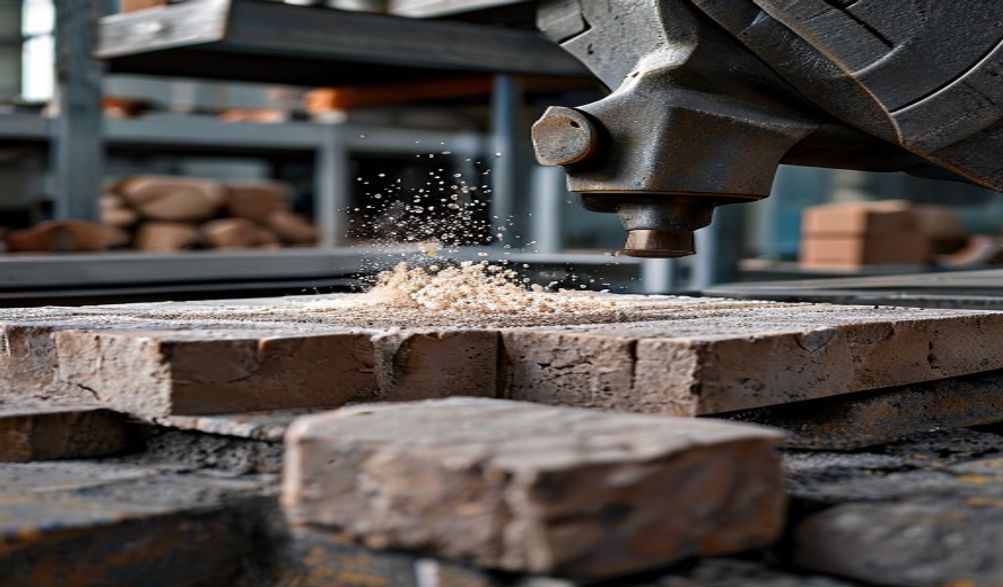
Uko Wahisemo Imashini yo Kubaka Amatafari: Umuyoboro Wuzuye w’Umuguzi
Intangamarara
Ushyize umutwe wo kwihutisha ibikoresho bya bubumba. Wenda uri umushinga wihuta cyane ku batanga serivisi batizeye, umubyaza umutungo ureba amahirwe yo kubaka, cyangwa ushyira mu bikorwa ushaka kugabanya ibiciro n’igihe. Ujya gushakisha ibikoresho bya bubumba, mu minsi mike, uba uri mu byinshi by’amahitamo. Ibikoresho by’abantu, ibikoresho by’imashini, ibikoresho by’amazi, ibikoresho by’amabuye y’ubutaka, ibikoresho by’ibumba, ibisohoka bigera ku 100 kugeza ku 10,000 by’amabuye ku isaha, n’ibiciro bitandukanye cyane. Ibi biribwa, kandi ibintu bikomeye—ibi si ibyo kugura ibintu byoroshye; ni ingenzi mu gushora imari mu mushinga wawe cyangwa mu bikorwa byawe by’ubucuruzi.
Iyi giambo yateguwe kugira ngo isobanure ibyo bibazo. Ishingiye ku buhanga bw’imyaka irenga mu rwego rwa serivisi, ingingo z’ubumenyi mu buhinzi, n’ubumenyi bw’imikorere bwakuwe mu buhanga, turaha uburyo bworoshye bwo gufata ibyemezo. Intego yacu si ugukugurisha umushini runaka, ahubwo ni ugukomeza uburyo bwo gukoresha ibisabwa by’ingenzi kugira ngo ukore ibyemezo byizewe, bifite agaciro, kandi bigamije intego. Ntitujyinire kuri broshure zirabikana gusa, ahubwo tuzajya mu bintu by’ingenzi bigena ku nyungu mu buzima bwa buri munsi: ibyifuzo byawe byihariye by’umushinga, ibitsina by’imashini, ibisobanuro by’ingengo z’ikoranabuhanga, n’ibiciro byinshi byihariye by’umwihariko bifatwa nk’iby’ubutaka. Reka dushyireho ishingiro ryizwe ryo gufata ibyemezo byawe.
Gusobanukirwa Ibisabwa by'Umushinga wanyu: Ishingiro ry'Ibyo Muhitamo
Mbere yo gusuzuma gahunda y’ikinyamakuru cy’imashini, ukeneye kwitegereza mw’iteka. Imashini ishoboye kandi igurana cyane ku isoko izaba ari igikorwa cy’amahomvu niba ituganiye n’ubuzima bwawe. Iyi mwanzuro yo kwitegereza ni intangiriro idashobora guhindurwa.
Kugaragaza Intego zawe zo Gukora
Umubare ni we mwami. Ibyemezo bitaziguye biherekezwa n’amadenge atari meza. Menyesha ibisobanuro by’umubare.
* Ubwinshi bwo gusohoraHiga ikibazo cyawe nyakoamabuye y’ubwubatsi ku isaha, ku gice, cyangwa ku kwezi.Ni byo bigamije umushinga w’inyubako umwe wa bifite amatafari 50,000, cyangwa ni ugutanga amatafari mu gukomeza?
* Umushinga wo KubaruriraShaka ubwoko bwa serivisi wakora.
* Gato-gato:Gukoresha mu muryango, gushyira mu bikorwa byo mu rugo, kugurisha mu murenge.
* Muri urwego rwo hagati:Ubwubatsi bwa buri munsi bwo gukora ibikorwa remezo, gutanga abubatsi bo mu karere, gutangiza ubucuruzi bwihariye bwo gukora amatafari.
* Ibikubiyemo:Ibikorwa by’ubucuruzi, gutanga abakorana n’abakiriya bakomeye, cyangwa gukora ibicuruzwa byo hanze.
* Uburyo bwo gukora ubucuruzi:Iyi ni gahunda y’umutungo umwe gusa cyangwa ni umutungo mukuruzwa w’ubucuruzi bw’igihe kirekire? Igisubizo cyawe cyahindura cyane ubuzima bushingiyeho n’inyungu zizagaruka mu byo wishyuye.
Guhindura Ubwoko bw’Amatafari n’Ibyo Bikubiyemo
Imashini igomba gukoraburyaibumba, si gusaaibumba.
* Ubwoko bwa brike:Uzakora iki?
* Amatafari Y'imigano:Kubaka byose.
* Amatafari Y'umwobo:Byorohere, kuringa neza.
* Amatafari Yumubumbe:Mu bwubatsi bw'amatare atandukanye, kugabanya ikoreshwa rya mortier.
* Amabuye y'inkondo: For driveways, walkways, patios.
* Amatafari y’ubucucu bw’amakara: Eco-friendly, using industrial by-product.
* Key Specs: Determine the required dimensions, compressive strength (e.g., 7N/mm², 10N/mm²), and surface finish. This is non-negotiable.
* Compliance: The produced bricks must meet local building codes and standards. A machine that can’t achieve this is useless.
Gusuzuma Ibikoresho Byawe Bitarakoreshejwe
The machine is a transformer; your raw material is the input. The two must be compatible.
* Ibikoresho By'ibanze Is it clay, concrete (cement, sand, aggregate), fly ash, or a soil-cement mix? Machine design varies for each.
* Availability & Cost: Secure a consistent, affordable supply. Your machine’s efficiency depends on it.
* Ibipimo by’ibikoresho: Pay attention to moisture content, granulometry (particle size), and consistency. Some machines are sensitive to variations, while others are more forgiving.
Types of Brick Making Machines: Mechanisms and Applications
Now, with your needs defined, we can explore the three main categories of machines. Each represents a different balance of capital investment, labor, and output.
Imashini z'ubukoreshazi z'ubukora amatafari
These are the simplest form of brick production technology.
* Biteye Bikora: Operated by human labor using a lever system to apply pressure into a mold. They are often mobile and require no external power.
* Inziza:
* Extremely low initial cost.
* Minimal to no maintenance.
* Zero operating energy costs.
* Highly portable.
* Ibibi:
* Very low output (e.g., 100-500 bricks per day).
* Highly labor-intensive and physically demanding.
* Inconsistent brick quality and density.
* Byiza Kuri: Extremely tight budgets, one-off personal projects in remote locations without reliable electricity, or as a supplementary proof-of-concept tool.
Imashini zituma amatafari zikora mu buryo bwa kabiri
This category offers the best “sweet spot” for most small to medium enterprises (SMEs).
* Biteye Bikora: They use a powered system (hydraulic or mechanical) to apply high pressure for molding. Operators manually feed the raw material mix and remove the finished bricks, but the core compression cycle is automated.
* Inziza:
* Excellent balance of output and affordability.
* Significantly better quality consistency and strength than manual machines.
* More efficient use of labor.
* Moderate energy consumption.
* Ibibi:
* Still requires a consistent operational crew.
* Output is lower than fully automated lines.
* Byiza Kuri: Small to medium businesses, construction companies making bricks for their own projects, and entrepreneurs starting a brick manufacturing venture. Models like stationary hydraulic press machines fall here.
Imashini z'ikora amatafari zikora mu buryo bwikora
These are complete production systems, representing the peak of efficiency and output.
* Biteye Bikora: These are PLC-controlled lines where the raw material is automatically fed, precisely measured, molded under high pressure, cured, and stacked by robotic palletizers—all with minimal human intervention.
* Inziza:
* Very high, consistent output (thousands of bricks per hour).
* Exceptional product uniformity and quality control.
* Drastically reduced labor requirements.
* High overall operational efficiency.
* Ibibi:
* Very high initial capital investment.
* Complex maintenance requiring specialized skills.
* Requires a large, dedicated space and stable, high-capacity power supply.
* Byiza Kuri: Large-scale production plants, high-volume businesses supplying major markets, and export-oriented manufacturers where scale and consistency are paramount.
Key Technical Specifications to Scrutinize
When comparing machines within your chosen category, these technical details separate the robust from the unreliable.
Production Capacity and Cycle Time
- Look Beyond the Brochure: A “2,000 bricks per hour” claim might be a theoretical maximum under perfect conditions. Ask for real-world, sustained output data.
- Cycle Time is Key: This is the total time for one complete molding cycle (fill, compress, eject). A faster cycle time directly translates to higher real-world capacity. A machine with a 15-second cycle is 50% more productive than one with a 22-second cycle.
Pressure and Power
- Hydraulic Pressure (Tonnage): This is the most critical factor for brick strength. Higher pressure compacts the raw material more densely, resulting in bricks with higher compressive strength and lower water absorption. For concrete blocks, 100+ tons is common; for high-strength bricks, look for more.
- Motor Power (kW/HP): This determines the machine’s ability to deliver that pressure consistently. An underpowered motor will struggle, overheat, and fail prematurely. Ensure the motor power is appropriately matched to the claimed pressure.
Mold Customization and Versatility
- Interchangeability: Can you easily switch molds to produce different brick types (e.g., from solid to hollow to paving bricks)? This future-proofs your investment.
- Ubwiza bwa Moule: Molds endure incredible wear. Inquire about the steel grade (e.g., hardened chromium steel) and the hardening process. Cheap molds wear out quickly, leading to defective bricks and frequent, costly replacements.
- Ibikoresho bya Molds Byateguwe: If you need a proprietary brick design, confirm the supplier can manufacture custom molds, and understand the cost and lead time involved.
Beyond the Machine: Operational and Support Factors
The machine itself is only part of the equation. Ignoring these factors is the most common and costly mistake buyers make.
Space, Power, and Utility Requirements
- Floor Space: Account for the machine’s footprint plus space for raw material storage, brick curing (which can require significant area for days), and finished product storage.
- Ubutumwa bw'ingufu: Confirm the voltage and phase (e.g., 380V, 3-phase) required. A fully automatic line may need a dedicated transformer.
- Utilities: Does the process require a consistent water supply for mixing or curing? Do pneumatic systems require an industrial air compressor?
Kiguzi Nyaryo cyo Gutunzwe
Think in terms of total lifecycle cost, not just purchase price.
* Initial Price: Just the entry ticket.
* Operating Costs: Include labor wages, energy consumption per brick, and raw material efficiency (does the machine have high waste?).
* Gahunda yo kugenzura no gukosora What is the cost and availability of critical spare parts like hydraulic seals, pumps, and PLC components? A cheap machine with expensive, imported parts is a liability.
* The Crucial Point: The machine with the lowest sticker price often has the highest total cost of ownership due to downtime, high energy use, and expensive repairs.
Manufacturer and After-Sales Support
This is your safety net and a direct indicator of quality.
* Vetting the Supplier: Choose established manufacturers with a verifiable track record. Look for online reviews, ask for a client list, and seek out independent testimonials.
* Warranty: What is covered (parts, labor?) and for how long? A one-year comprehensive warranty is a good baseline.
* Ubufasha bwa tekiniki Do they offer installation supervision, on-site operator training, and remote troubleshooting support? This is vital for complex machines.
* Spare Parts Guarantee: Will they commit to supplying spare parts for the expected lifespan of the machine (e.g., 10+ years)? A supplier who disappears after the sale is a major red flag.
The Step-by-Step Selection Checklist
Use this actionable list to structure your procurement process:
1. Lock Down Specs: Finalize your required brick type, dimensions, strength, and daily/monthly volume.
2. Determine Automation Level: Based on volume and budget, decide on Manual, Semi-Auto, or Full-Auto.
3. Create a Shortlist: Identify 3-5 machine models from different brands that meet your core capacity and pressure needs.
4. Vet Manufacturers: Research the reputation, history, and support capabilities of each shortlisted supplier.
5. Request Detailed Quotes: Ask for formal quotations that include FOB price, shipping, insurance, installation, and training costs.
6. Check References: Ask each supplier for 2-3 customer references in a similar business and actually call them. Ask about performance, reliability, and support.
7. Calculate TCO: Perform a 3-year Total Cost of Ownership estimate for your top 2 choices, factoring in purchase, shipping, installation, estimated energy, labor, and maintenance.
8. Final Decision: Choose the option that offers the best long-term value, reliability, and partnership—not just the lowest initial price.
Bibazo Byinshi Byibazwa (FAQ)
Q: What is the most important factor when choosing a brick making machine?
A: There’s no single factor. The most critical gukora is accurately matching the machine’s capabilities to your specific production goals and raw materials. A mismatch here leads to failure, regardless of the machine’s quality.
Q: How much does a good brick making machine cost?
A: Prices range dramatically from a few thousand dollars for a manual machine to hundreds of thousands for a fully automatic line. A reliable semi-automatic machine for a small business often starts in the $15,000 – $50,000 range, depending on capacity and features. Always budget for installation, training, and initial spare parts.
Q: Can one machine produce different types and sizes of bricks?
A: Yes, many machines are versatile, but this depends on the model. The key is interchangeable molds. Ensure the manufacturer offers (or can source) molds for the specific brick designs you want, and that changing them is a relatively straightforward process.
Q: Is after-sales service really that important?
A: Absolutely. It is as important as the machine itself. A complex machine without proper training, accessible spare parts, and technical support can become a very expensive paperweight. Prioritize suppliers with a proven track record of supporting their customers long after the sale.
Q: How do I know if a supplier is trustworthy?
A: Look for concrete evidence: years in business, verifiable client lists, video testimonials, and a physical address/factory you can potentially visit. Be wary of suppliers who only communicate via email, offer prices that seem too good to be true, or cannot provide clear technical documentation.
Ibyo byose
Choosing a brick making machine is a strategic decision that goes far beyond comparing price tags. It requires a disciplined analysis of your own project requirements against the hard technical and operational realities of the equipment. By prioritizing long-term reliability, comprehensive manufacturer support, and total cost of ownership over the allure of a low sticker price, you invest in more than a machine—you invest in the foundation of a smooth-running, profitable operation.
Use this guide as your framework. Create a spreadsheet, fill it with the data from your shortlisted options, and methodically work through the checklist. By doing your due diligence, you transform a potentially overwhelming purchase into a confident investment in your future success. We wish you the very best in your brick-making venture.
<