
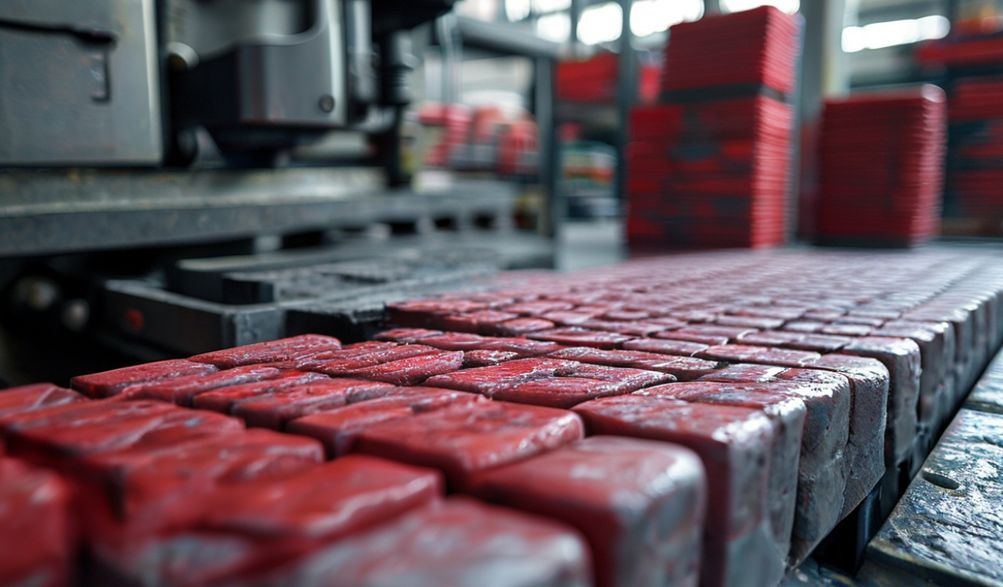
Ingamba y’Icyiciro cya Nyuma mu Kubaka Imashini z’Ubutaka bwo Kubaka Amatafari: Guhitamo, Gukoresha & Inyungu y’Amafaranga
Intangamarara
Kuva mu mihanda yo mu mijyi n’inzira z’imodoka, kugeza mu mbuga z’ubucuruzi n’ahantu rusange, ishyaka ry’isi yose mu gukoresha uburyo bwo gutwika inzira burambye, buhebuje mu buryo bwiza kandi buciriritse burakomeje kwiyongera. Iyi mihindagurikire ikunze n’ingamba zo kubaka ibikorwa remezo birambye, bifite ubushobozi mu bikorwa ndetse bikanaboneka mu buryo bwiza. Nyamara, uburyo bwa kera bwo gutwika inzira—bushingiye ku mabuye yatobotswe, sima yanyweshwe, cyangwa amatafari yashyizweho n’abantu—birangwa n’ibibazo bihambaye. Ibyo harimo ibiciro by’umwenda by’abakozi birenze urugero, kuba ibikoresho bitagira uburinganire mu rwego rwiza bigatuma bigakanka mbere y’igihe, ndetse n’igihe cyo gukora imishinga gishobora kugera kuminsi amezi cyangwa amezi menshi.
Injiramashini yo gukora amabuye y'ubutakaNi ikintu cyihariye cya tekinoroji ya ndangabumenyi y’ubucuruzi cyafasha amasosiyete, abakontarakta, n’ibikorwa binini kwigenga mu gukora ibikorwa. Iki gikubo kikaba umuyoboro wawe uzuye, ushyigikiwe n’abahanga. Dukurikije ibisobanuro by’inganda by’ikirenga, amakuru y’abashoramari, n’uburyo bwiza bwo gukora mu mirimo, intego yacu ni ugusobanura neza ibikoresho. Tuzaguha ubumenyi bukoreshwa bukenewe kugirango ugire uruhare mu gutanga amafaranga, mu buryo bwerekeye imikorere no kugira inyungu, biganisha ku byose uhereye ku bwoko bw’imashini n’ibyiza by’ingenzi kugeza mu gushyiraho ibikorwa no kureba neza inyungu y’amafaranga watanze (ROI).
Ni iki gikoresho cyo gukora amabuye y’ubutaka yubakishijwe hamwe?
Mu ntangiriro, umashini wubaka ibyatsi bya pavari ishirahamwe ni urugero rwihariye—rwamashini, rwamazi, cyangwa rwigaragambye—rwahugurijwe gukanya ibikoresho byambere mubishushanyo byihariye, bya geometirike, munsi yumwanya ukomeye. Ihindura igisanganwa cyumye cyangwa gikabije cyibikoresho nka sima, umusenyi, ivu ryaturutse mumashini, ninshinganyamizi mubikoresho byinshi, bikomeye.
Ubucuruzi bw’ibuye ry’inzitizi bushingiye ku “guhuza” imiterere yaryo. Ubwoheje, amatafari y’ibuye ry’inzitizi yari ifite imiterere isanzwe nk’imiringatiro, ariko muri iki gihe hari amatafari y’ibuye ry’inzitizi yashizweho imikoreshereze y’ubuhanga (imikaya n’imitsi, ibipimo, cyangwa izindi nshinga). Iyo yashyizwe hamwe, akora urusika rw’ibuye ry’inzitizi rukomeye, ruhindagurika, kandi rukora nk’umubumbe umwe, rukiyihambira mu buryo bwo guhura no gupfumbika, bigatuma nta gikenewe cyo gushyiramo sima.
Ingingo Shingiro n'Imikorere Yazo
Gusobanukirwa ibice by'ingenzi bya mashini ni ngombwa mu gukoresha no gukemura ibibazo:
- Sisitemu yo Gutanga no GutangaAha ni ho ibintu bya mbere bigurwa. Gushyira mu gaciro ibintu bya mbere bigurwa mu gaciro kugenda mu gaciro k’ubwoko bw’ibumba ni ngombwa kugirango ibyuma by’ibumba bigire uburemere n’ubunini bungana.
- Mold / Die:Umutima w'umashini. Iki kivuko cya simeri gisobanura umubare, ubunini, imiterere, n'imitako y'ikirango cy'ibyuma. Umashini umwe ushobora gukora imiterere myinshi itaruka gusa mu guhindura imiterere y'ibyuma.
- Sisitemu ya Hydraulike cyangwa Sisitemu ya VibratoryIyi ni "imiswa". Sisitemu za hydroliki zikoresha umuti w’amazi ushimishijwe gukoresha toni z’ingufu, zishira hamwe ibyatanzwe. Ama meza y’umuzinga akoresha imivudingo ya frequence yo hejuru gushira no kongera uburemere bw’ibintu. Imashini nyinshi zishyira hamwe byombi kugirango zibeho ibyiza.
- Paneli yo Gucunga:"Umutwe." Kuva ku byuma byoroheje byo gukoresha amaboko kugeza kuri PLCs (ibikoresho bya kontoro byashizweho porogaramu), iyi mbuga ikora umuyoboro w'ikigenda cy'ubukorikori—kugaburira, gukanya, gukuba, no gusohora.
- Umufashanyo n'Umurongo wo Gushyira Ibintu mu BipakiIyo sisitemu y'inkunga itanga ubufasha mu gukosora ibikoresho byo guterura amabuye y'ibiti cyangwa by'amacuti aho amabuye mashya akorwa. Isaba guhagarika ibikoresho mu gahunda kandi ikurikirane amabuye yarakozwe kugirango yubake, byongerereza umusaruro cyane kandi ikabije gukuraho abakozi.
Ubwoko bw'Imashini z'ibyuma by'ibyapa by'umurongo: Gushaka Ibyo Bikwiriye neza
Selecting the right machine type is the first critical decision. Your choice should align with your production goals, budget, and labor availability.
Imashini zikoreshwa n’amaboko cyangwa zikorwa n’amaboko
These are the entry point into block manufacturing, often leveraging a simple lever or flywheel mechanism.
- Icyifuzo Cyiza Cyo Gukoresha: Ideal for micro-enterprises, startups, community projects, or very low-volume, on-demand production.
- Inziza: Lowest capital investment, minimal electrical requirements, simple mechanics that are easy to understand and repair.
- Ibibi: Highly labor-intensive, low output (typically 100-500 blocks per 8-hour shift), and final block consistency heavily depends on the operator’s skill and rhythm.
Ibigikoresho Bya Komeza
This category strikes a balance, automating the core compression and vibration cycles while requiring manual intervention for feeding and block removal.
- Icyifuzo Cyiza Cyo Gukoresha: Perfect for small to medium-scale businesses looking to scale up, contractors supplying local markets, or municipal production units.
- Inziza: Excellent balance between cost and output (e.g., 800-2,500 blocks per hour). Offers much better consistency than manual machines and requires a smaller crew.
- Ibibi: Still requires periodic operator attention for feeding raw material and removing finished blocks. Output is not continuous.
Imashini Zigendera ku Bwabo
These are complete production lines with automated material feeding, compression, pallet circulation, and block stacking.
- Icyifuzo Cyiza Cyo Gukoresha: Designed for large-scale manufacturing plants, industrial parks, and businesses fulfilling high-volume contracts or supplying to distributors.
- Inziza: Maximum output (2,500 to 10,000+ blocks per hour), minimal manual labor (primarily for supervision and maintenance), and exceptional, unwavering product consistency.
- Ibibi: Highest initial capital investment. Requires significant space, stable three-phase power, and a more skilled technician for maintenance and programming.
Stationary vs. Mobile Block Making Machines
Beyond automation, consider mobility:
* Ibigaragara Bikoreshwa mu Bikorwa are set up in a fixed location, optimized for high-volume, long-term production from a central hub.
* Mobile Machines are mounted on trailers. Their key advantage is the ability to produce pavers directly on large project sites (e.g., road construction, housing developments), slashing transportation costs of finished blocks.
Key Features to Evaluate Before You Buy
Looking beyond basic type, these technical specifications will determine your long-term satisfaction and profitability.
Ubushobozi bwo Gukora (Amabara ku Isaha)
Don’t just look at the peak theoretical output. Consider the sustainable output over an 8-hour shift, accounting for mold changes and breaks. Match this number to your realistic sales projections with room for growth. Overbuying leads to idle capital; underbuying means missed opportunities.
Pressure Rating (Tonnes)
This is a non-negotiable metric for quality. Pressure directly correlates to block density and compressive strength. A machine with a 150-tonne capacity will produce a denser, more durable, and more frost-resistant block than a 50-tonne press using the same mix. For commercial-grade pavers (M30-M40 strength), higher pressure (100+ tonnes) is typically essential.
Mold Versatility and Changeover Time
Your ability to offer different patterns (herringbone, basketweave, circle kits) and sizes (60mm, 80mm, 100mm thick) is a major competitive advantage. Investigate:
* How many mold cavities does the standard die have?
* What is the cost and lead time for additional molds?
* How long does it take to change a mold? Quick-change systems (30-60 minutes) minimize downtime and maximize flexibility.
Automation Level & Control System
The control system dictates ease of use and diagnostic capability. A basic relay system works but offers less precision. A PLC-based system allows you to digitally set parameters like vibration time, pressure dwell time, and feed volume. This ensures repeatability, simplifies operation, and often includes diagnostic error messages that simplify troubleshooting.
Build Quality & After-Sales Support
This is where long-term trust is built. Examine the steel frame’s welding quality and plate thickness. More critically, scrutinize the after-sales support.
* Is there a clear warranty period and terms?
* Does the supplier stock critical spare parts (hydraulic seals, vibration motors, mold liners)?
* Do they provide commissioning, on-site training, and have technicians available for support? A slightly more expensive machine from a supplier with impeccable support is almost always a better investment than a cheap machine you’re left to maintain alone.
Raw Materials & Mix Design for Optimal Blocks
The machine is only as good as the raw materials you feed it. Consistent, high-quality blocks start with a proper mix design.
Common Material Components
- Sima: The binder. Ordinary Portland Cement (OPC) is common, but Portland Pozzolana Cement (PPC) incorporating fly ash can improve workability and long-term strength.
- Umusenyi: Should be clean, sharp, and well-graded. Fine sand fills voids, while coarser sand provides skeletal structure.
- Coarse Aggregate: Crushed stone chips (typically 6mm or 10mm down). Provides the bulk and mechanical strength.
- Umwanda wo mu kirere: A pozzolanic industrial by-product that can replace part of the cement, reducing costs and improving later-age strength.
- Ibiranga: Iron oxide pigments are used for colored blocks. Dispersion and dosage are critical for consistent hue.
The Importance of Mix Proportion
The water-cement ratio is paramount. Too much water reduces final strength and can cause blocks to stick in the mold or deform. Too little water leads to poor compaction and weak blocks. A typical mix for a standard M35 paver might have a cement-to-aggregate ratio in the range of 1:4 to 1:6, with just enough water for a “ball-in-hand” consistency—the mix should hold its shape when squeezed but crumble when poked.
Material Preparation: Batching and Mixing
Consistency is king. Use a weigh-batching system instead of volume batching for accuracy. A pan mixer or planetary mixer is ideal for achieving a homogeneous, uniform color mix in 2-3 minutes. Never mix for too long, as this can cause segregation.
The Operational Workflow: From Raw Material to Finished Product
Here’s a step-by-step look at the production cycle in a typical semi- or fully-automatic setup.
Step 1: Material Preparation and Feeding
Weighed batches of raw materials are mixed thoroughly until uniform in color and consistency. This mix is then transferred to the machine’s feed hopper, which meters a precise amount into the mold cavity on the pallet below.
Step 2: Compression and Vibration Cycle
The mold head descends. The machine simultaneously applies high-frequency vibration to settle the mix and immense hydraulic pressure (e.g., 100+ tonnes) to compact it into a solid, dense block. This dual action removes air voids and ensures maximum strength.
Step 3: Curing Process (Critical for Strength)
Freshly ejected “green” blocks are fragile. Curing—the controlled hydration of cement—is what gives them strength.
* Water Sprinkling: Blocks are stacked and kept wet under a shed for 14-28 days. It’s low-cost but ties up inventory and space for weeks.
* Steam Curing: Blocks are placed in a curing chamber and exposed to steam (60-80°C) for 8-12 hours. This accelerates the chemical reaction, allowing blocks to gain over 70% of their strength in a single day. This is the standard for high-throughput commercial plants as it dramatically speeds up the production-to-sales cycle.
Step 4: Quality Control Checks
Regular testing is non-negotiable. Simple checks include:
* Ubwiza bw’ingano: Use calipers to ensure blocks are within tolerance (typically ±2mm).
* Ubushobozi bwo Gushishagarira: Crush sample blocks (after 28 days) in a compression testing machine to verify they meet the claimed grade (M30, M40, etc.).
* Visual Check: Look for consistent color, smooth edges, and absence of cracks or laminations.
Calculating Your Return on Investment (ROI)
A clear financial model is essential. Here’s how to build one.
Initial Investment Breakdown
- Machine Cost: The largest component (varies by type).
- Additional Molds: Budget for at least 2-3 popular designs.
- Auxiliary Equipment: Concrete mixer, loader, pallets (100s required), curing racks or chamber.
- Site Setup: Foundation, shed, water, and power connections.
Operational Costs Analysis (Per Month)
- Ibikoresho by'ibanze: Cement, sand, aggregate, pigment. This is typically 50-70% of your variable cost.
- Umurimo: Wages for operators, mixers, and stackers.
- Utilities: Electricity (a major cost for automatic machines) and water.
- Maintenance & Spares: A monthly reserve (1-3% of machine cost).
- Overheads: Rent, transportation, marketing.
Revenue Projections
Research your local market. What is the selling price per square meter of, say, a standard 60mm thick interlocking paver? Price varies by color, design, and strength. Calculate your production capacity in sqm/month.
Sample ROI Calculation
Disclaimer: This is a simplified illustration. Actual figures vary widely by region, scale, and efficiency.
- Scenario: A semi-automatic plant producing 100 sqm of pavers per day (22 days/month).
- Gutanga. $45,000 (machine, molds, mixer, setup).
- Operating Cost: $15 per sqm (materials, labor, power).
- Selling Price: $25 per sqm.
- Gross Profit: $10 per sqm.
- Monthly Gross Profit: 100 sqm/day * 22 days * $10 = $22,000.
- Monthly Net Profit (after overheads): ~$18,000.
- Simple Payback Period: $45,000 / $18,000 ≈ 2.5 months.
This demonstrates the potential, but your own detailed calculation is vital.
Maintenance Checklist for Long Machine Life
Proactive maintenance prevents costly downtime.
- Buri munsi: Clean the machine thoroughly, especially the mold area. Check hydraulic oil levels and for leaks. Lubricate all moving parts as per the manual.
- Buri cyumweru: Inspect mold liners for wear. Check vibration motor mounts and bolts for tightness. Examine hydraulic hoses for abrasions.
- Monthly: Change hydraulic oil filters. Calibrate the pressure gauge. Perform a thorough inspection of electrical connections.
- Common Wear Parts: Keep spares for mold liners (wear out with use), hydraulic seals (prone to leaks), and vibration motor bearings.
FAQ Section
Q1: What is the average cost range for a paver block machine?
A: Prices vary dramatically. Manual machines can start from $3,000 – $10,000. Semi-automatic machines typically range from $15,000 – $50,000. Fully automatic production lines can cost $60,000 to $250,000+, depending on capacity and sophistication. Always get detailed quotations based on your specifications.
Q2: Can one machine produce different paver designs?
A: Absolutely. This is a key advantage. By changing the mold/die, a single machine can produce dozens of different shapes, sizes, and surface textures. You will need to purchase each specific mold separately.
Q3: What is the typical strength of blocks produced?
A: With a proper mix design and adequate machine pressure, it’s standard to produce blocks with a compressive strength of 30 MPa (M30) to 40 MPa (M40) or higher. This is more than sufficient for driveways, parking lots, and most public walkways.
Q4: Is special training required to operate the machine?
A: Yes. While manual machines are straightforward, operating and maintaining semi- and fully-automatic machines requires specific training on safety procedures, control panel operation, basic troubleshooting, and mix design. A reputable supplier should include comprehensive training during machine commissioning.
Q5: What are the most common problems and how to fix them?
A:
* Blocks sticking in mold: Likely caused by an overly wet mix, worn mold liners, or insufficient mold release agent. Adjust water content and inspect the mold.
* Poor surface finish or cracks: Often due to an incorrect mix (too dry/too sandy), uneven feeding, or vibration issues. Re-check your mix proportions and ensure the feeder is distributing material evenly.
* Low block density/strength: The most common cause is insufficient compaction pressure or vibration time. Check hydraulic pressure settings and vibration timer. Also, verify your raw material quality and water-cement ratio.
Ibyo byose
Choosing the right interlocking paver block making machine is a strategic decision that hinges on a clear understanding of your production goals, budget, and the technical support available. As we’ve explored, success in this venture relies not just on purchasing a machine, but on mastering the entire ecosystem—from the material science of mix design to the disciplined rhythms of operation and proactive maintenance.
We strongly advise you to conduct thorough due diligence. Request material test reports and production demonstrations from suppliers. If possible, visit an existing plant using the machine you’re considering to see it in action. Prioritize suppliers with a proven track record of quality machinery and reliable, accessible after-sales service over those offering only the lowest upfront price. This investment is more than a piece of equipment; it’s a foundation for building sustainable infrastructure and a profitable, resilient business for the future.
<