
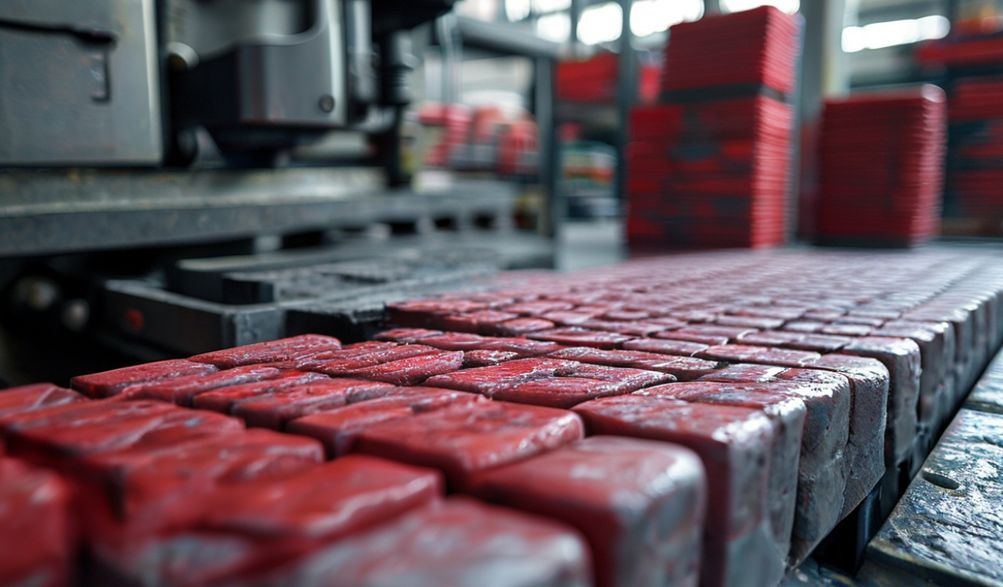
Hướng Dẫn Toàn Diện Về Máy Sản Xuất Gạch Block Lát Vỉa: Lựa Chọn, Vận Hành & Lợi Tức Đầu Tư
Giới thiệu
Từ các lối đi bộ đô thị và đường lái xe đến quảng trường thương mại và không gian công cộng, nhu cầu toàn cầu về các giải pháp lát nền bền vững, thẩm mỹ và hiệu quả chi phí đang tăng mạnh. Sự tăng trưởng này được thúc đẩy bởi nhu cầu về cơ sở hạ tầng bền vững kết hợp tính năng sử dụng với vẻ ngoài hấp dẫn. Tuy nhiên, các phương pháp lát truyền thống - dựa vào đá cắt, bê tông đổ hoặc gạch lát thủ công - đặt ra những thách thức đáng kể. Chúng bao gồm chi phí nhân công quá cao, chất lượng sản phẩm không đồng đều dẫn đến hao mòn sớm, và tiến độ dự án kéo dài hàng tuần hoặc hàng tháng.
Nhậpmáy làm gạch lát vỉa hè liên kếtmột công nghệ công nghiệp mang tính chuyển đổi, trao quyền cho doanh nghiệp, nhà thầu và các dự án quy mô lớn để kiểm soát sản xuất. Hướng dẫn này đóng vai trò là nguồn tài nguyên toàn diện, được hỗ trợ bởi chuyên gia. Dựa trên thông số kỹ thuật ngành trực tiếp, dữ liệu nhà sản xuất và các phương pháp vận hành tối ưu trong thực tế, mục tiêu của chúng tôi là làm sáng tỏ thiết bị này. Chúng tôi sẽ trang bị cho bạn những hiểu biết thực tế cần thiết để đưa ra quyết định đầu tư chiến lược, có căn cứ và sinh lời, bao quát mọi khía cạnh từ loại máy và tính năng chính đến thiết lập vận hành và cái nhìn rõ ràng về tỷ suất hoàn vốn (ROI) của bạn.
Máy sản xuất gạch block tự chèn là gì?
Về bản chất, máy sản xuất gạch lát vỉa hè liên kết là một loại máy ép chuyên dụng - cơ khí, thủy lực hoặc rung - được thiết kế để nén nguyên liệu thô thành các hình dạng hình học chính xác dưới áp lực cực lớn. Nó biến hỗn hợp khô hoặc bán khô của các vật liệu như xi măng, cát, tro bay và cốt liệu thành những khối rắn chắc, có mật độ cao.
Sự kỳ diệu nằm ở thiết kế "liên kết khóa". Khác với những viên gạch hình chữ nhật truyền thống, những viên lát nền này có các cạnh được thiết kế đặc biệt (hệ thống rãnh và gờ, các khoảng cách, hoặc các kiểu cấu hình khác). Khi được lát cạnh nhau, chúng tạo thành một hệ thống mặt đường vững chắc, linh hoạt và đồng nhất, tự khóa vào vị trí thông qua ma sát và sự giới hạn, loại bỏ nhu cầu sử dụng các mối nối vữa.
Các Thành Phần Cốt Lõi và Chức Năng của Chúng
Hiểu rõ các bộ phận chính của máy móc là điều cốt yếu cho vận hành và xử lý sự cố.
- Hệ Thống Phễu & Máy Cấp Liệu:Đây là nơi hỗn hợp nguyên liệu thô được đưa vào. Việc cấp liệu đồng nhất và kiểm soát từ phễu vào khoang khuôn là yếu tố then chốt để đảm bảo trọng lượng và độ đặc khối đồng đều.
- Khuôn / Khuôn mẫu:Trái tim của cỗ máy. Khoang thép này quyết định hình dáng, kích thước, hoa văn và kết cấu bề mặt của khối. Chỉ cần thay đổi khuôn, một máy duy nhất có thể tạo ra vô số thiết kế.
- Hệ thống thủy lực hoặc cơ chế rungĐây là "cơ bắp." Hệ thống thủy lực sử dụng chất lỏng có áp suất để tạo ra lực lên đến hàng tấn, nén chặt hỗn hợp. Bàn rung sử dụng rung động tần số cao để lắng và đặc chặt vật liệu. Nhiều máy kết hợp cả hai phương pháp để đạt kết quả tối ưu.
- Bảng điều khiển:"Bộ não." Từ các cần gạt thủ công đơn giản đến các bộ điều khiển logic khả trình (PLCs), giao diện này quản lý chu kỳ sản xuất—cấp liệu, nén, rung và đẩy ra.
- Máy Cấp và Xếp Pallet These auxiliary systems automate the handling of the steel or wooden pallets that the fresh blocks are formed on. They move pallets into position and stack finished blocks for curing, significantly boosting efficiency and reducing labor.
Types of Interlocking Paver Block Machines: Finding Your Perfect Fit
Selecting the right machine type is the first critical decision. Your choice should align with your production goals, budget, and labor availability.
Manual or Hand-Operated Machines
These are the entry point into block manufacturing, often leveraging a simple lever or flywheel mechanism.
- Trường hợp sử dụng lý tưởng: Ideal for micro-enterprises, startups, community projects, or very low-volume, on-demand production.
- Ưu điểm: Lowest capital investment, minimal electrical requirements, simple mechanics that are easy to understand and repair.
- Nhược điểm: Highly labor-intensive, low output (typically 100-500 blocks per 8-hour shift), and final block consistency heavily depends on the operator’s skill and rhythm.
Máy Bán Tự Động
This category strikes a balance, automating the core compression and vibration cycles while requiring manual intervention for feeding and block removal.
- Trường hợp sử dụng lý tưởng: Perfect for small to medium-scale businesses looking to scale up, contractors supplying local markets, or municipal production units.
- Ưu điểm: Excellent balance between cost and output (e.g., 800-2,500 blocks per hour). Offers much better consistency than manual machines and requires a smaller crew.
- Nhược điểm: Still requires periodic operator attention for feeding raw material and removing finished blocks. Output is not continuous.
Máy Móc Hoàn Toàn Tự Động
These are complete production lines with automated material feeding, compression, pallet circulation, and block stacking.
- Trường hợp sử dụng lý tưởng: Designed for large-scale manufacturing plants, industrial parks, and businesses fulfilling high-volume contracts or supplying to distributors.
- Ưu điểm: Maximum output (2,500 to 10,000+ blocks per hour), minimal manual labor (primarily for supervision and maintenance), and exceptional, unwavering product consistency.
- Nhược điểm: Highest initial capital investment. Requires significant space, stable three-phase power, and a more skilled technician for maintenance and programming.
Stationary vs. Mobile Block Making Machines
Beyond automation, consider mobility:
* Thực vật cố định are set up in a fixed location, optimized for high-volume, long-term production from a central hub.
* Mobile Machines are mounted on trailers. Their key advantage is the ability to produce pavers directly on large project sites (e.g., road construction, housing developments), slashing transportation costs of finished blocks.
Key Features to Evaluate Before You Buy
Looking beyond basic type, these technical specifications will determine your long-term satisfaction and profitability.
Công Suất Sản Xuất (Khối Mỗi Giờ)
Don’t just look at the peak theoretical output. Consider the sustainable output over an 8-hour shift, accounting for mold changes and breaks. Match this number to your realistic sales projections with room for growth. Overbuying leads to idle capital; underbuying means missed opportunities.
Pressure Rating (Tonnes)
This is a non-negotiable metric for quality. Pressure directly correlates to block density and compressive strength. A machine with a 150-tonne capacity will produce a denser, more durable, and more frost-resistant block than a 50-tonne press using the same mix. For commercial-grade pavers (M30-M40 strength), higher pressure (100+ tonnes) is typically essential.
Mold Versatility and Changeover Time
Your ability to offer different patterns (herringbone, basketweave, circle kits) and sizes (60mm, 80mm, 100mm thick) is a major competitive advantage. Investigate:
* How many mold cavities does the standard die have?
* What is the cost and lead time for additional molds?
* How long does it take to change a mold? Quick-change systems (30-60 minutes) minimize downtime and maximize flexibility.
Automation Level & Control System
The control system dictates ease of use and diagnostic capability. A basic relay system works but offers less precision. A Hệ thống dựa trên PLC allows you to digitally set parameters like vibration time, pressure dwell time, and feed volume. This ensures repeatability, simplifies operation, and often includes diagnostic error messages that simplify troubleshooting.
Build Quality & After-Sales Support
This is where long-term trust is built. Examine the steel frame’s welding quality and plate thickness. More critically, scrutinize the after-sales support.
* Is there a clear warranty period and terms?
* Does the supplier stock critical spare parts (hydraulic seals, vibration motors, mold liners)?
* Do they provide commissioning, on-site training, and have technicians available for support? A slightly more expensive machine from a supplier with impeccable support is almost always a better investment than a cheap machine you’re left to maintain alone.
Raw Materials & Mix Design for Optimal Blocks
The machine is only as good as the raw materials you feed it. Consistent, high-quality blocks start with a proper mix design.
Common Material Components
- Xi măng: The binder. Ordinary Portland Cement (OPC) is common, but Portland Pozzolana Cement (PPC) incorporating fly ash can improve workability and long-term strength.
- Cát Should be clean, sharp, and well-graded. Fine sand fills voids, while coarser sand provides skeletal structure.
- Coarse Aggregate: Crushed stone chips (typically 6mm or 10mm down). Provides the bulk and mechanical strength.
- Tro bay: A pozzolanic industrial by-product that can replace part of the cement, reducing costs and improving later-age strength.
- Sắc tố: Iron oxide pigments are used for colored blocks. Dispersion and dosage are critical for consistent hue.
The Importance of Mix Proportion
The water-cement ratio is paramount. Too much water reduces final strength and can cause blocks to stick in the mold or deform. Too little water leads to poor compaction and weak blocks. A typical mix for a standard M35 paver might have a cement-to-aggregate ratio in the range of 1:4 to 1:6, with just enough water for a “ball-in-hand” consistency—the mix should hold its shape when squeezed but crumble when poked.
Material Preparation: Batching and Mixing
Consistency is king. Use a weigh-batching system instead of volume batching for accuracy. A pan mixer or planetary mixer is ideal for achieving a homogeneous, uniform color mix in 2-3 minutes. Never mix for too long, as this can cause segregation.
The Operational Workflow: From Raw Material to Finished Product
Here’s a step-by-step look at the production cycle in a typical semi- or fully-automatic setup.
Step 1: Material Preparation and Feeding
Weighed batches of raw materials are mixed thoroughly until uniform in color and consistency. This mix is then transferred to the machine’s feed hopper, which meters a precise amount into the mold cavity on the pallet below.
Step 2: Compression and Vibration Cycle
The mold head descends. The machine simultaneously applies high-frequency vibration to settle the mix and immense hydraulic pressure (e.g., 100+ tonnes) to compact it into a solid, dense block. This dual action removes air voids and ensures maximum strength.
Step 3: Curing Process (Critical for Strength)
Freshly ejected “green” blocks are fragile. Curing—the controlled hydration of cement—is what gives them strength.
* Water Sprinkling: Blocks are stacked and kept wet under a shed for 14-28 days. It’s low-cost but ties up inventory and space for weeks.
* Steam Curing: Blocks are placed in a curing chamber and exposed to steam (60-80°C) for 8-12 hours. This accelerates the chemical reaction, allowing blocks to gain over 70% of their strength in a single day. This is the standard for high-throughput commercial plants as it dramatically speeds up the production-to-sales cycle.
Step 4: Quality Control Checks
Regular testing is non-negotiable. Simple checks include:
* Độ chính xác kích thước: Use calipers to ensure blocks are within tolerance (typically ±2mm).
* Cường độ nén: Crush sample blocks (after 28 days) in a compression testing machine to verify they meet the claimed grade (M30, M40, etc.).
* Visual Check: Look for consistent color, smooth edges, and absence of cracks or laminations.
Calculating Your Return on Investment (ROI)
A clear financial model is essential. Here’s how to build one.
Initial Investment Breakdown
- Machine Cost: The largest component (varies by type).
- Additional Molds: Budget for at least 2-3 popular designs.
- Auxiliary Equipment: Concrete mixer, loader, pallets (100s required), curing racks or chamber.
- Site Setup: Foundation, shed, water, and power connections.
Operational Costs Analysis (Per Month)
- Nguyên liệu thô: Cement, sand, aggregate, pigment. This is typically 50-70% of your variable cost.
- Lao động Wages for operators, mixers, and stackers.
- Utilities: Electricity (a major cost for automatic machines) and water.
- Maintenance & Spares: A monthly reserve (1-3% of machine cost).
- Overheads: Rent, transportation, marketing.
Revenue Projections
Research your local market. What is the selling price per square meter of, say, a standard 60mm thick interlocking paver? Price varies by color, design, and strength. Calculate your production capacity in sqm/month.
Sample ROI Calculation
Disclaimer: This is a simplified illustration. Actual figures vary widely by region, scale, and efficiency.
- Scenario: A semi-automatic plant producing 100 sqm of pavers per day (22 days/month).
- Đầu tư: $45,000 (machine, molds, mixer, setup).
- Operating Cost: $15 per sqm (materials, labor, power).
- Selling Price: $25 per sqm.
- Gross Profit: $10 per sqm.
- Monthly Gross Profit: 100 sqm/day * 22 days * $10 = $22,000.
- Monthly Net Profit (after overheads): ~$18,000.
- Simple Payback Period: $45,000 / $18,000 ≈ 2.5 months.
This demonstrates the potential, but your own detailed calculation is vital.
Maintenance Checklist for Long Machine Life
Proactive maintenance prevents costly downtime.
- Hàng ngày: Clean the machine thoroughly, especially the mold area. Check hydraulic oil levels and for leaks. Lubricate all moving parts as per the manual.
- Hàng tuần: Inspect mold liners for wear. Check vibration motor mounts and bolts for tightness. Examine hydraulic hoses for abrasions.
- Monthly: Change hydraulic oil filters. Calibrate the pressure gauge. Perform a thorough inspection of electrical connections.
- Common Wear Parts: Keep spares for mold liners (wear out with use), hydraulic seals (prone to leaks), and vibration motor bearings.
FAQ Section
Q1: What is the average cost range for a paver block machine?
A: Prices vary dramatically. Manual machines can start from $3,000 – $10,000. Semi-automatic machines typically range from $15,000 – $50,000. Fully automatic production lines can cost $60,000 to $250,000+, depending on capacity and sophistication. Always get detailed quotations based on your specifications.
Q2: Can one machine produce different paver designs?
A: Absolutely. This is a key advantage. By changing the mold/die, a single machine can produce dozens of different shapes, sizes, and surface textures. You will need to purchase each specific mold separately.
Q3: What is the typical strength of blocks produced?
A: With a proper mix design and adequate machine pressure, it’s standard to produce blocks with a compressive strength of 30 MPa (M30) to 40 MPa (M40) or higher. This is more than sufficient for driveways, parking lots, and most public walkways.
Q4: Is special training required to operate the machine?
A: Yes. While manual machines are straightforward, operating and maintaining semi- and fully-automatic machines requires specific training on safety procedures, control panel operation, basic troubleshooting, and mix design. A reputable supplier should include comprehensive training during machine commissioning.
Q5: What are the most common problems and how to fix them?
A:
* Blocks sticking in mold: Likely caused by an overly wet mix, worn mold liners, or insufficient mold release agent. Adjust water content and inspect the mold.
* Poor surface finish or cracks: Often due to an incorrect mix (too dry/too sandy), uneven feeding, or vibration issues. Re-check your mix proportions and ensure the feeder is distributing material evenly.
* Low block density/strength: The most common cause is insufficient compaction pressure or vibration time. Check hydraulic pressure settings and vibration timer. Also, verify your raw material quality and water-cement ratio.
Conclusion
Choosing the right interlocking paver block making machine is a strategic decision that hinges on a clear understanding of your production goals, budget, and the technical support available. As we’ve explored, success in this venture relies not just on purchasing a machine, but on mastering the entire ecosystem—from the material science of mix design to the disciplined rhythms of operation and proactive maintenance.
We strongly advise you to conduct thorough due diligence. Request material test reports and production demonstrations from suppliers. If possible, visit an existing plant using the machine you’re considering to see it in action. Prioritize suppliers with a proven track record of quality machinery and reliable, accessible after-sales service over those offering only the lowest upfront price. This investment is more than a piece of equipment; it’s a foundation for building sustainable infrastructure and a profitable, resilient business for the future.
<