
Hagidda Ugu Wanaagsan ee Makiinadaha Buugagga Dhulka Isku-xidha: Dhismo Si Waara la Sameeyo
Hordhac
Waxaa jira caqabad adduun oo cad: baahida kordhaysa ee guryaha qiimo jaban, iyo saameynta deegaanka ee dhismaha caadiga ah. Baarista xalalka dhismeed ee waara, adkaysan, oo qiimo jaban ma ayna weligaa aheyn baahida ugu daran. Dhexdooda baaristaan, farsamo awood leh, laakiin fudud oo qurux badan ayaa horumar ku samaynaysa—mashiinka toosan ee dhulka isku xira (ISB).
Hagahan waxa uu soo bandhigayaa makiinadda ISB si aan u ahayn qalab kaliya, balse si ay u tahay hab dhaqdhaqaaq cusub oo dhismo. Waxay awood u siisaa shaqsiyaadka, bulshada, iyo horumariyayaasha inay ka dhistaan dhismooyin adag, qurux badan, oo deegaanka ilaaliya laga bilaabo dhulka hoostiisa. Wada hadalkayagu waxa uu ku dhisanyahay aasaaska mabda'ayada handarada, khibradda dhabta ah ee goobta, iyo sida ay ugu dadaalayaan inay bixiyaan macluumaad aamin ah oo la fulin karo. Ujeeddadeena waa inaan noqonno ilahaaga kalsoonida leh ee ku saabsan farsamadan beddelkeed.
Marka aad baadhidid qalabka "makiinada dhulka isku xirxira," waxaad baran doontaa sida uu u shaqeeyo, faa'iidooyinkiisa qoto dheer, noocyada kala duwan ee la heli karo, iyo talaabooyinka muhiimka ah ee loo isticmaalo si guul leh. Haddii aad tahay dhismo-naf, khabiir horumar, ama aad u xiiseynayso badalka waara, hagahan wuxuu ku goodinayaa safar dhammaystiran laga bilaabo doorashada carada ilaa darbi adag.
Waa maxay Mashiinka Blooka Carada Isku Xidhan? (Fahamka Teknolojiyada Aasaasiga ah)
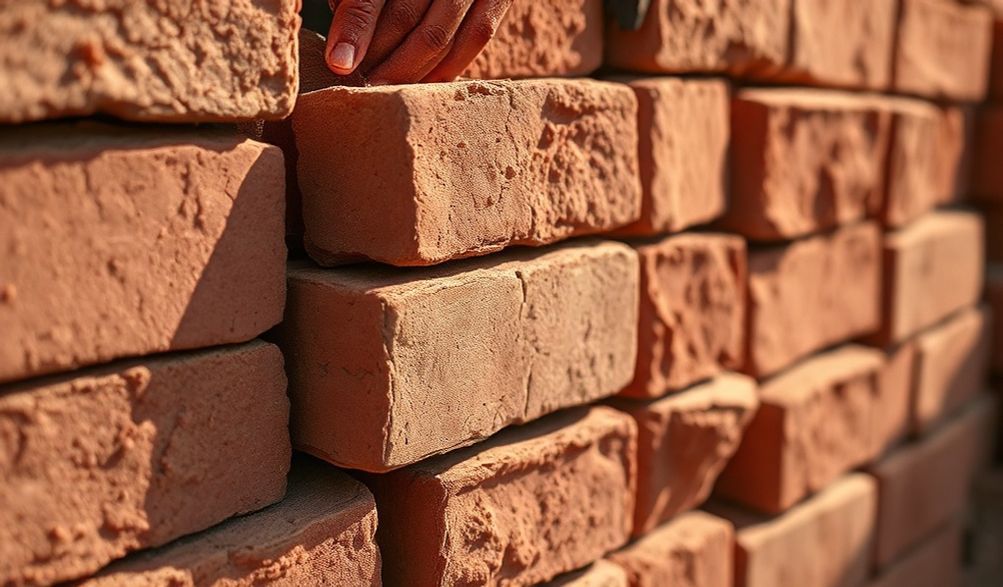
Qalabka loogu talagalay dhisme dhagaxo dhoobo oo isku xira waa aalad ku shiida dhoobo qoyan si ay u noqoto dhagax dhisid oo cufan oo qaab sax ah leh. Astaanta ugu muhiimsan waa qaabka isku xirka ee loo sameeyo dhagax kasta, taas oo u ogolaanaysa inay isku xiraan sida qaybo ka mid ah furaac, inta badan iyadoon aan loo baahnayn siman.
Aasaaska Aasaasiga ah: Cabbirka iyo Isku-xidhka
Makanikada waa mid qurux badan oo fudud.
- Kala-bixidWaxyaabaha dhulka qoyan oo badanaa lagu xoojiyo xaddid yar oo siman ama nuun ah, ayaa lagu dhejiyay qalab bir ah. Dabadeedna, qalab xoog leh oo gacanta, hydraulic, ama makaaniki ah ayaa ku qasbaa walxaha. Xooggani wuxuu isku hagaajiyaa xubnaha dhulka, isagoo tirtira hawada iyo sameynta boolo adag oo aad u xoog leh.
- Isku-xirid:ISB waxay leedahay qaab kor u kacay (carrab) dushiisa iyo xariiq la dhigma hoostiisa, ka duwan libin laamiga caadiga ah. Qaar ka mid ah naqshadeyntu waxay ku leeyihiin qiraacad fara badan oo dhinacyada, sida birqabka. Tani waxay u oggolaanaysaa bulookada inay is xiro si toosan iyo dhinacba, iyagoo abuura nidaam derbi adag oo hal dhinac ah iyadoo la isugu darayo "kala-dugsi."
Taariikh Kooban iyo Saamaynta Caalamiga ah
Qaabka casriga ah wuxuu ka soo baxay CINVA Ram-ka gacanta ee la horumariyay 1950-yadii. Makiinadaha maanta waa kuwo xiiso leh oo ka soo biloowday fikradda aasaasiga ah, oo u kala baxa makiinado gacanta loo shaqeeyo ilaa xariiqo warshadeed oo si toos ah u shaqeeya.
Saamaynta caalamiga ah waa mid aad muhiim u ah. Teknolojiyada ISB waxay muhiim ugu ahaayeen:
* Dib-u-dhiska ka dib dhibaatooyinkagobollada sida Haiti iyo Nepal, oo bixinaya guryo degdeg ah oo qiimo jaban.
* Mashaariicda guryaha la awoodi karoAfrika, Aasiya, iyo Laatiin Ameerika oo dhan.
* Dhisidda waartaadduunka oo dhan, min kuulaha deegaanka ilaa guryaha gaarka ah, waxaa lagu qiimeeyaa tamartooda hoose iyo waxqabadkooda kulaylka.
Faa'iidooyinka Muhiimka ah ee Isticmaalka Mashiinka Baloogyada Ciidda Is-xidha
Faa'iidooyinka tignoolajiyadani waxay ka kooban yihiin dhinacyo dhaqaale, deegaanka, iyo qaab-dhismeed, taasoo ka dhigaysa dal cad oo loogu talagalay qaadashadeeda.
Faa'iidooyinka Dhaqaalaha iyo Helitaanka
- Hooseeynta Qiimaha Alaabta ee Aad u Xun: The primary ingredient—soil—is often available on-site or locally for minimal cost. This eliminates the major expense of fired bricks or concrete blocks.
- Low Operational Cost: Once the machine is acquired, production costs are very low, requiring minimal energy (especially for manual models) and labor.
- Income Generation Potential: Owners can establish a small-scale business, producing blocks for their community and creating local jobs, fostering low-cost buildingiyoaffordable construction initiatives.
Environmental and Sustainability Benefits
- Minimal Carbon Footprint: The process requires no firing, saving vast amounts of fossil fuels and avoiding the CO2 emissions associated with cement or brick kilns.
- Local & Natural Materials: It utilizes subsoil, a renewable local resource, reducing the environmental damage from quarrying and long-distance transport of materials.
- Masaafka Kulka ee Sareeya: Compressed earth blocks have excellent thermal mass, absorbing heat during the day and releasing it at night, naturally regulating indoor temperatures and slashing energy bills—a hallmark of eco-friendly constructioniyosustainable building material.
Structural and Practical Perks
- Qodobka Xoogga Culeyska sare. Properly made and cured blocks can achieve strengths comparable to or exceeding conventional fired clay bricks.
- Faster Construction Speed: The interlocking, mortar-less system allows walls to rise quickly, as there’s no waiting for mortar to set between courses.
- Design Flexibility: The blocks can be easily shaped on-site for creating curved walls, arches, and various architectural features, offering great aesthetic freedom.
Types of Interlocking Soil Block Machines: Choosing the Right One
Selecting the correct machine hinges on your project scale, budget, and labor availability. Here are the three main categories.
Manual Press Machines (The Entry-Level Option)
- Sharaxaad: Operated by a long lever, these rely on human power to generate compression force. They are highly portable and simple.
- Faaiidooyinka: Lowest upfront cost, no need for electricity or fuel, extremely portable, easy to maintain.
- Laba. Physically demanding, slower production rate (e.g., 60-100 blocks per person per day), requires consistent effort for uniform block quality.
Hydraulic Machines (The Balanced Performer)
- Sharaxaad: These use a hydraulic system to apply pressure. They can be powered by a manual hand pump, an electric motor, or a petrol/diesel engine.
- Faaiidooyinka: Delivers higher, more consistent pressure for stronger blocks. Significantly increases production output with less physical labor. Offers a great balance of capability and cost. Often marketed as a hydraulic brick pressamacompressed earth block machine.
- Laba. Higher initial investment than manual presses. Requires basic maintenance of hydraulic components. Engine or electric models need a power source.
Fully Automated Machines (The High-Production Solution)
- Sharaxaad: These are motorized, stationary systems that often integrate a mixer, conveyor, and multiple presses. They produce blocks in a continuous, automated cycle.
- Faaiidooyinka: Very high, consistent output (thousands of blocks per day), minimal manual labor, and excellent block uniformity. Ideal for commercial ventures.
- Laba. Requires a substantial capital investment, a reliable power supply, and more space. They are not portable. These are true automatic soil block maker systems for commercial block making machinehawlgallo.
The Step-by-Step Process: From Soil to Solid Wall
Success with ISBs depends on a meticulous process. Skipping steps compromises quality and strength.
Step 1: Soil Testing and Selection (The Critical Foundation)
Not all soil is suitable. The ideal soil is a “loam” containing a balanced mix of:
* Dhoobo Acts as the natural binder.
* Dhoobo: Fills voids.
* Carro Provides skeletal strength and reduces shrinkage.
Perform these simple field tests:
* Jar Test: Layer soil and water in a clear jar, shake, and let settle. The layers will show approximate ratios of sand, silt, and clay.
* Ribbon Test: Moisten soil and try to roll it into a thin ribbon. If it forms a ribbon 2-3 cm long before breaking, the clay content is likely adequate.
Step 2: Material Preparation and Stabilization
- Sieving: Remove stones, roots, and organic matter.
- Xasiloonayn: For permanent, load-bearing structures in most climates, a stabilizer is essential.
- Shamiid (5-10%): Most common. Provides high strength and water resistance.
- Lime (5-15%): Good for clay-rich soils, offers flexibility.
- Isku-dhafka: Combine soil, stabilizer, and water thoroughly. The moisture content is critical—aim for “optimum moisture” where a handful of mix holds its shape when squeezed but crumbles when poked.
Step 3: Block Production and Curing
- Wax soo saar Fill the machine’s mold with the prepared mix, operate the press to compress, then eject the finished block.
- Daweynta: This is where blocks gain strength. Stack them in a shaded area, cover with plastic sheeting, and keep them damp by lightly sprinkling with water for 7-14 days. Proper curing is non-negotiable for durability.
Critical Considerations Before You Buy or Use a Machine
Project Scope and Scale Assessment
Weydiiso naftaada:
* How many blocks do I need for my project?
* What is my timeline?
* What is my budget for the machine and labor?
Your answers will clearly point you toward a manual, hydraulic, or automated system.
Soil Suitability and Local Regulations
- Professional Testing: For large projects, invest in a lab soil test for precise composition and recommended stabilizer percentages.
- Building Codes: Crucially, check your local building regulations. While earth construction is gaining acceptance, you may need permits or to demonstrate compliance with specific engineering standards. This due diligence is key to establishing trustworthiness in your build.
Machine Specifications and Supplier Vetting
Astaamaha muhiimka ah ee la baadhi karo:
* Block dimensions and interlock design.
* Compression pressure (measured in MPa or PSI). Higher pressure generally means stronger blocks.
* Production capacity (blocks per hour/day).
* Machine weight and build quality (thick steel is better).
* Warranty and availability of spare parts.
Choosing a supplier:
* Seek companies with a proven track record.
* Ask for customer references and contact them.
* Look for suppliers who offer comprehensive training—this is a major value-add.
Frequently Asked Questions (FAQ) About Interlocking Soil Block Machines
Q1: How strong are interlocking soil blocks compared to fired bricks or concrete blocks?
A: With proper soil mix and stabilization (e.g., 5-10% cement), ISBs can achieve a compressive strength of 3-10 MPa, which meets or exceeds the strength of standard fired clay bricks (3.5-7 MPa). They are perfectly suited for durable, load-bearing walls in 1-3 story buildings.
Q2: Can I use any type of soil from my property?
A: Not all soil is suitable. Pure clay will shrink and crack; pure sand will not bind. The ideal soil is a blend. Simple field tests like the jar test and ribbon test are essential first steps to determine suitability.
Q3: Are buildings made with these blocks waterproof?
A: The blocks are weather-resistant but not waterproof. Like most masonry, they require protective detailing: a raised foundation, adequate roof overhangs, and a breathable plaster render (e.g., earthen or lime-based plaster). The interlocking design itself provides excellent resistance to rain penetration.
Q4: What is the typical cost range for a machine?
A: Manual presses range from \$500 – \$2,500. Hydraulic machines typically cost \$2,500 – \$15,000. Fully automated production systems start around \$20,000 and can exceed \$100,000. Prices vary by capacity, automation, and region.
Q5: Is special training required to operate the machine and build with the blocks?
A: Basic machine operation is simple to learn. However, comprehensive training in soil science, mix design, block production, and—most importantly—construction techniques (lintels, rebars, bond beams, plumbing/electrical integration) is highly recommended for ensuring structural integrity, safety, and a long-lasting building.
Gabagabo
The interlocking soil block machine stands as a testament to the power of appropriate technology. It offers a tangible path toward sustainable, economical, and resilient construction, putting the power to build back into the hands of communities and individuals. As we’ve explored, its success is not magic—it’s the application of expert knowledge in soil mechanics, learning from experienced practitioners, investing in trustworthy equipment, and adhering to proven best practices.
Your journey starts with understanding your local soil. We encourage you to take that first step: perform a simple jar test, connect with sustainable building organizations in your area, and reach out to reputable machine manufacturers for detailed specifications. In an era demanding smarter resource use, interlocking soil block technology isn’t just an alternative; it’s a forward-looking, practical choice for the future of building.
<