
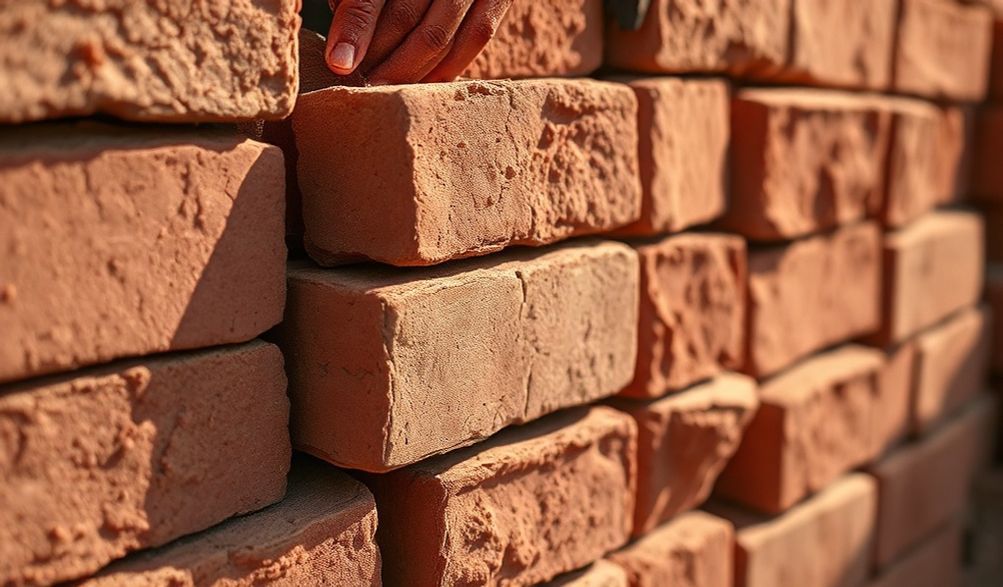
Интерлок топрак блок машыналарынын Ылгабры: Тейлесиз курулуш
Giriş
Global ýagdaýy gaty açyk: arzan jaýlaryň möçberi artýar, şol bir wagtyň özünde adaty gurluşygyň ekologiýa täsiri. Dowamly, berk we arzan gurluş çözgütlerini gözlemek hiç wagt şeýle şowly bolmandy. Bu gözlegiň dowamynda, güýçli, ýöne ajaýyp ýönekeý tehnologiýa giňden ýaýraýar – bir-birine geçýän toprak blok (ISB) maşyny.
Bu gollanma ISB maşynyny diňe bir gural hökmünde däl, eýsem, gurluşykda rewolýusion usul hökmünde hödürleýär. Ol şahslara, jemgyýetlere we öndürijilere aýak astyndaky toprakdan güýçli, gözel we ekologiýa üçin amatly gurluşyklary gurmaga mümkinçilik berýär. Bizin çekişmämiz inženerlik prinsiplarynyň, amaly meýdan tejribesiniň we ygtybarly, hereket ediş maglumatlaryny hödürlemäge söýgüniň esasynda gurlan. Bizim maksadymyz bu öwrülişikli tehnologiýa boýunça ygtybarly çeşme bolmakdyr.
"Бир-бирине киришген топрак блок машинасынын" нысанларыны өвренмек аркалы, сиз онун ишлешини, ыңгайлыгынын терен пейдаларыны, бар болан түрлерини жана ону ийгиликли улгетмек учин герекли багдарламалык адымларыны өвренерсиниз. Өз-өзүңиз гурлушыгыңыз, өнүктириш маманлыгыңыз, яда болса дайындурлайыш альтернативлери барда гызыкланьяңызмы, буй гуллүкме топрак сайламадан берки берки диварга чейинки толук сапар бередяр.
Interloklaýan Toprak Blok Maşyny Näme? (Esasy Teknologiýany Düşünmek)
Onuň esasynda, bir-birine gireşýän toprak blok maşyny, nemli topragy ýok dykyzlykda we takyk kesilip ýasalan gurluş blokyna siňdirýän guraldyr. Onuň kesgitleýji aýratynlygy, her bir blokda guralýan bir-birine gireşýän dizaýndyr, bu bolsa olaryň, köplenç harçsyz, ýönekeý tapmacanyň bölekleri ýaly birikdirilmegine mümkinçilik berýär.
Esasy Prensip: Gysyş we Birikme
Mekanikalar gözellikle düzgün işleyişlidir.
- ЫКСЫЛДЫРЫЛМАКÇamurly toprak birleşimi—köplenç kiçi bir möçberde sement ýa-da ýaş bilen durnuklaşdyrylýar—polat garyp içine ýerleşdirilýär. Soňra, el, gidrawliki ýa-da mehaniki bolsun, ýokary basyşly pres bu materialy sypdyrýar. Bu güýç toprak bölejiklerini bir hatara getirýär, howa boşluklaryny aradan aýyrýar we ajaýyp berklige eýe boljak blok döredýär.
- Интерлок:Adaty dörtburçluk kiremitden tapawutlylykda, ISB-da ýokarky tarapynda ýokarykly nusga (dil) we aşaky tarapynda degişli oýuk bar. Käbir dizaýnlarda gapdal tarapynda hem bulmaca ýaly gyralar bolýar. Bu bloklaryň dik we gorizontal ýerleşdirilip, "gury gurmak" arkaly durnukly, monolit diwar ulgamy döretmäge mümkinçilik berýär.
Gysgaça Taryhy we Dünýä Täsiri
Häzirki döwürdeki düşünje 1950-nji ýyllarda işlenip düzülen manual CINVA Ram-dan ösüp çykdy. Bu günki maşynlar şol başlangyç pikirdiň çylşyrymly görnüşleri bolup, el bilen dolandyrylýan preslerden tut, doly awtomatlaşdyrylan öndürijilik hatlaryna çenli dürli görnüşlerde ýaýrandyr.
Global ýagdaýa täsiri ep-esli. ISB tehnologiýasy aşakdakylarda esasy rol oýnady:
* Betbagtçylykdan soňky dikeltme işleriGaiti we Nepal ýaly sebitlerde çalt, arzan bahaly ýaşaýyş jaýlaryny üpjün edýär.
* Arzan ýaşaýyş jaýlary taslamalaryAfrikanyň, Aziýanyň we Latyn Amerikasynyň çäginde.
* Durnykly gurluşyklardünýä ýüzünde, ekologiýa otellerinden şahsy öýlere çenli, az berkidilen energiýasy we ýylylyk görkezijileri bilen gymmatlydyr.
Blok toprak maşynyny ulanmagyň esasy peýdalary
Bu tehnologiýanyň artykmaçlyklary ykdysady, ekologiki we gurluş pudaklaryny öz içine alýar, onuň kabul edilmegi üçin ygtybarly deliller hödürleýär.
Ykdysady we elýeterlilik artykmaçlyklary
- Драматик материалдардын наркын төмендетүү: The primary ingredient—soil—is often available on-site or locally for minimal cost. This eliminates the major expense of fired bricks or concrete blocks.
- Low Operational Cost: Once the machine is acquired, production costs are very low, requiring minimal energy (especially for manual models) and labor.
- Income Generation Potential: Owners can establish a small-scale business, producing blocks for their community and creating local jobs, fostering low-cost buildingһәмaffordable construction initiatives.
Environmental and Sustainability Benefits
- Minimal Carbon Footprint: The process requires no firing, saving vast amounts of fossil fuels and avoiding the CO2 emissions associated with cement or brick kilns.
- Local & Natural Materials: It utilizes subsoil, a renewable local resource, reducing the environmental damage from quarrying and long-distance transport of materials.
- Өзгече Ысыклык Сыйымдылыгы: Compressed earth blocks have excellent thermal mass, absorbing heat during the day and releasing it at night, naturally regulating indoor temperatures and slashing energy bills—a hallmark of eco-friendly constructionһәмsustainable building material.
Structural and Practical Perks
- Ýokary Gysmaýylyk Güýji: Properly made and cured blocks can achieve strengths comparable to or exceeding conventional fired clay bricks.
- Faster Construction Speed: The interlocking, mortar-less system allows walls to rise quickly, as there’s no waiting for mortar to set between courses.
- Dizaýn Çeýeligi: The blocks can be easily shaped on-site for creating curved walls, arches, and various architectural features, offering great aesthetic freedom.
Types of Interlocking Soil Block Machines: Choosing the Right One
Selecting the correct machine hinges on your project scale, budget, and labor availability. Here are the three main categories.
Manual Press Machines (The Entry-Level Option)
- Düşündiriş: Operated by a long lever, these rely on human power to generate compression force. They are highly portable and simple.
- Artalary: Lowest upfront cost, no need for electricity or fuel, extremely portable, easy to maintain.
- Kemçilikler: Physically demanding, slower production rate (e.g., 60-100 blocks per person per day), requires consistent effort for uniform block quality.
Hydraulic Machines (The Balanced Performer)
- Düşündiriş: These use a hydraulic system to apply pressure. They can be powered by a manual hand pump, an electric motor, or a petrol/diesel engine.
- Artalary: Delivers higher, more consistent pressure for stronger blocks. Significantly increases production output with less physical labor. Offers a great balance of capability and cost. Often marketed as a hydraulic brick pressжегысылан ер блок машинасы.
- Kemçilikler: Higher initial investment than manual presses. Requires basic maintenance of hydraulic components. Engine or electric models need a power source.
Fully Automated Machines (The High-Production Solution)
- Düşündiriş: These are motorized, stationary systems that often integrate a mixer, conveyor, and multiple presses. They produce blocks in a continuous, automated cycle.
- Artalary: Very high, consistent output (thousands of blocks per day), minimal manual labor, and excellent block uniformity. Ideal for commercial ventures.
- Kemçilikler: Requires a substantial capital investment, a reliable power supply, and more space. They are not portable. These are true automatic soil block maker systems for commercial block making machineämeller.
The Step-by-Step Process: From Soil to Solid Wall
Success with ISBs depends on a meticulous process. Skipping steps compromises quality and strength.
Step 1: Soil Testing and Selection (The Critical Foundation)
Not all soil is suitable. The ideal soil is a “loam” containing a balanced mix of:
* ЛайТабии birleşdiriji bolup işleýär.
* Silt: Fills voids.
* Gum Provides skeletal strength and reduces shrinkage.
Perform these simple field tests:
* Jar Test: Layer soil and water in a clear jar, shake, and let settle. The layers will show approximate ratios of sand, silt, and clay.
* Ribbon Test: Moisten soil and try to roll it into a thin ribbon. If it forms a ribbon 2-3 cm long before breaking, the clay content is likely adequate.
Step 2: Material Preparation and Stabilization
- Sieving: Remove stones, roots, and organic matter.
- Stabilizasiýa: For permanent, load-bearing structures in most climates, a stabilizer is essential.
- Cement (5-10%): Most common. Provides high strength and water resistance.
- Lime (5-15%): Good for clay-rich soils, offers flexibility.
- Gatnaşdyrmak: Combine soil, stabilizer, and water thoroughly. The moisture content is critical—aim for “optimum moisture” where a handful of mix holds its shape when squeezed but crumbles when poked.
Step 3: Block Production and Curing
- Önümçilik: Fill the machine’s mold with the prepared mix, operate the press to compress, then eject the finished block.
- Gowulama: This is where blocks gain strength. Stack them in a shaded area, cover with plastic sheeting, and keep them damp by lightly sprinkling with water for 7-14 days. Proper curing is non-negotiable for durability.
Critical Considerations Before You Buy or Use a Machine
Project Scope and Scale Assessment
Özüňi sor:
* How many blocks do I need for my project?
* What is my timeline?
* What is my budget for the machine and labor?
Your answers will clearly point you toward a manual, hydraulic, or automated system.
Soil Suitability and Local Regulations
- Professional Testing: For large projects, invest in a lab soil test for precise composition and recommended stabilizer percentages.
- Building Codes: Crucially, check your local building regulations. While earth construction is gaining acceptance, you may need permits or to demonstrate compliance with specific engineering standards. This due diligence is key to establishing trustworthiness in your build.
Machine Specifications and Supplier Vetting
Key specifications to scrutinize:
* Block dimensions and interlock design.
* Compression pressure (measured in MPa or PSI). Higher pressure generally means stronger blocks.
* Production capacity (blocks per hour/day).
* Machine weight and build quality (thick steel is better).
* Warranty and availability of spare parts.
Choosing a supplier:
* Seek companies with a proven track record.
* Ask for customer references and contact them.
* Look for suppliers who offer comprehensive training—this is a major value-add.
Frequently Asked Questions (FAQ) About Interlocking Soil Block Machines
Q1: How strong are interlocking soil blocks compared to fired bricks or concrete blocks?
A: With proper soil mix and stabilization (e.g., 5-10% cement), ISBs can achieve a compressive strength of 3-10 MPa, which meets or exceeds the strength of standard fired clay bricks (3.5-7 MPa). They are perfectly suited for durable, load-bearing walls in 1-3 story buildings.
Q2: Can I use any type of soil from my property?
A: Not all soil is suitable. Pure clay will shrink and crack; pure sand will not bind. The ideal soil is a blend. Simple field tests like the jar test and ribbon test are essential first steps to determine suitability.
Q3: Are buildings made with these blocks waterproof?
A: The blocks are weather-resistant but not waterproof. Like most masonry, they require protective detailing: a raised foundation, adequate roof overhangs, and a breathable plaster render (e.g., earthen or lime-based plaster). The interlocking design itself provides excellent resistance to rain penetration.
Q4: What is the typical cost range for a machine?
A: Manual presses range from \$500 – \$2,500. Hydraulic machines typically cost \$2,500 – \$15,000. Fully automated production systems start around \$20,000 and can exceed \$100,000. Prices vary by capacity, automation, and region.
Q5: Is special training required to operate the machine and build with the blocks?
A: Basic machine operation is simple to learn. However, comprehensive training in soil science, mix design, block production, and—most importantly—construction techniques (lintels, rebars, bond beams, plumbing/electrical integration) is highly recommended for ensuring structural integrity, safety, and a long-lasting building.
Netije
The interlocking soil block machine stands as a testament to the power of appropriate technology. It offers a tangible path toward sustainable, economical, and resilient construction, putting the power to build back into the hands of communities and individuals. As we’ve explored, its success is not magic—it’s the application of expert knowledge in soil mechanics, learning from experienced practitioners, investing in trustworthy equipment, and adhering to proven best practices.
Your journey starts with understanding your local soil. We encourage you to take that first step: perform a simple jar test, connect with sustainable building organizations in your area, and reach out to reputable machine manufacturers for detailed specifications. In an era demanding smarter resource use, interlocking soil block technology isn’t just an alternative; it’s a forward-looking, practical choice for the future of building.
<