
Hagaha Ugu Wanaagsan ee Makiinadaha Dhismaha Laanta Ukunta: Sida ay U Shaqeeyaan & Sababta ay Ugu Baahan Tahay Mid
Hordhac
Haddii aad ganacsiga dhismaha ku jirto, waad ogtahay habka. Taariikhaha mashruuca ayaa soo dhoweeyay, laakiin soo saarida blookada waa cidhib. Waxaad ku dagaallanaysaa kharashka shaqaale ee koraya, dhibka jirka ee qalabka gacanta, iyo kala duwanaanta niyad-jabka tayada blookada ee kala duwan. Kuwaasi ma ahan waxyaabo yar oo madaxa qallalis ah; waa faa'iidooyinka dhimaya marka mashruuc kasta uu daahayo iyo shaybaarka la diido.
Maxaa haddii ay jirto hab aad ugu beddeli karto soo saarista blockadaada oo ah caqabad joogto ah injin lagu kalsoonaan karo oo waxtar leh oo koritaan ku horseedi kara? Ku soo dhowoowmashinka dhista ukumo beerta—qalab dhaqdhaqaaq cusub oo isbeddel ku yimid wax-soo-saarista buraashada simento ee heerka yar ilaa dhexdhexaad adduunka oo dhan. Iskudhinta qaybaha ugu shaqo badan ee habka, waxay keentaa iskudar isku mid ah warshadeed goobtaada iyadoon la baahnayn farsamo iyo qiimo murugo badan oo warshad joogto ah u baahan tahay.
Hageegan guudkan waxaa lagu dhisay aragtida warshadaha, mabaadi'da aasaasiga ah ee injineernimada, iyo aqoonta isku-duwidda ee sanooyin badan ee hawl-galka. Waxaan ugu soo saarnay muhiimada si aan uga tagno shanqadaha suuq-geynta. Dhamaadka maqaalkan, waxaad si cad u fahmi doontaa sida ay u shaqeeyaan makiinadahan, faa'iidooyinkooda la taaban karo, arrimaha muhiimka ah ee doorashada midka saxda ah, iyo sida loo hawl-geliyo si loo gaaro cimri dheer iyo faa'iido badan oo lacag la soo celiyo.
Waa maxay Mashinka Laaminta Ukunta? Fahanka Teknolojiyada
Marka ugu horreysa, magaca "makiinada laamiga ukunta dhigta" waxaa laga yaabaa inay la yaabato. Laakiin mar aad aragto siday u shaqeyso, qiyaastu aad bay u caddaynaysaa. Qaybtan waxaa lagu faahfaahinayaa farsamada aasaasiga ah ee ka dhigaysa mid gaar ah oo qiimo leh.
Qeexidda Aasaasiga ah iyo Hawlaha
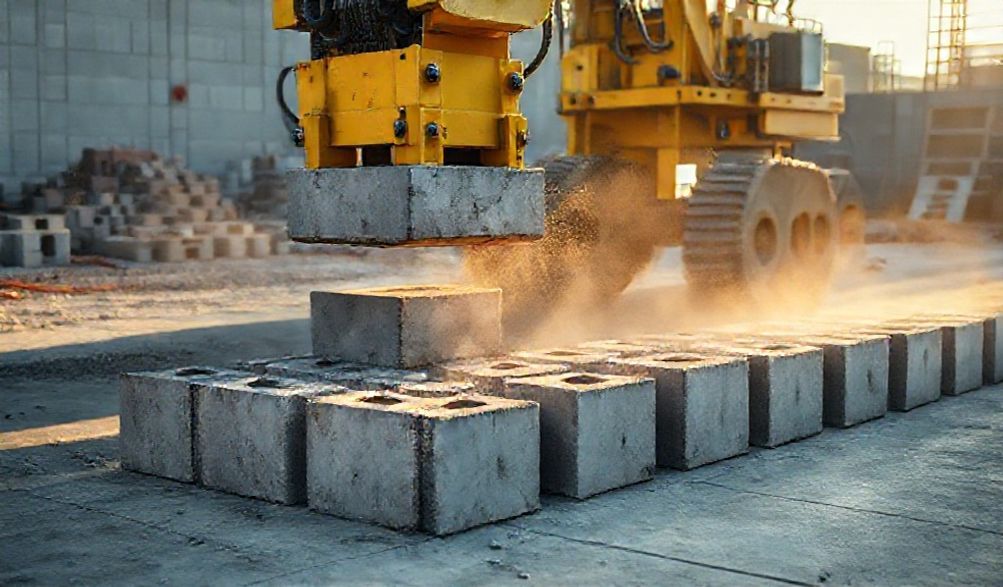
Mashinka dhaliya ukunta waa mashiin la dhaqaaqi karo, oo inta badan ku shaqaysa daayalka ama korontada, loo qorsheeyay inay sameeyo buloogada simenti—sida buloogada dhuuban, kuwa adag, birigta fadhiga, iyo dhagaxa karbaha—si toos ah oo koreeya dusha lagu keydiyo. Ka duwan warshadaha joogtada ah oo ka soo saara buloogada pallelad ka dibna loo raro goobta keydinta, dhaliyaha ukuntu wuxuu abuuraa buloogada ka dibna wuu dhaqaaqaa si uu u “dhiibo” si jilicsan dhulka, sida ay ukunta ugu dhigto digaagad. Kala duwanaashaan aasaasiga ah ee habka ayaa ah asalka waxqabadkeeda sare iyo fududeynteeda.
Qaabka "Uridda Ukunta" ee la Sharxay
Sixidda waxay dhacdaa hab isku xiran oo wareegsan. Fahamka wareeggani waa fure u fahanka qaabka mashiinka.
- Isku Dhafka & Quudinta:Wax soo ururiyey oo hore loo isku daray (isku dheggan oo dhexdhexaad ah oo siman, ciid, iyo xabag) ayaa lagu shubay hoobka mashiinka.
- Qalabka & Isku-dhafka:Waxaa lagu dhex daraa sanduuq qaab. Gariiryaal xoog leh, inta badan oo kaashanaya madax riixid hidroolik, ayaa walxaha ku dhejinaya gariir daran. Tani waa ka saarta hawooyinka iyo hubinta in la helo buluko adag oo xoog leh.
- "Wakhtiga La Dhisayo"Tani waa astaanta dhaqdhaqaaqa. Dhamaan gaariga qalabka - oo hadda ku jira goobka cusub ee la isku dhejiyay, oo la adkeeyay - ayaa kor u kaca si toos ah. Markaas mashinka ayaa hore ama dib u dhaqaaqa xadhkaha ama dhagaxyada.
- Qaybinta.Gawaarida qalabka ayaa hoos u dhacaya, oo baraha ayaa lagu tuuraa dabaqa la diyaariyey ee la qalajinayo. Qalabka ayaa ku noqdaa meeshiisa bilowga, isaga oo ka tagaya bar isku filan ah oo diyaar u ah in la qalajiyo.
- Wax soo celin ku celcelis:Mashiinka waa la cusbooneysiiyaa, markaas wareegga ayaa mar kale bilowda, oo ku dhejinaya blookyada si qurxoon, taxane ah dhulka.
Qaybaha Muhiimka ah iyo Doorkooda
Qayb kasta wuxuu ka ciyaaraa doorka muhiimka ah ee baletka otomaatiga ah:
- Hopper:Barta gelitaanka isku dhafka siminti ee dhabta ah. Cabbirkeedu wuxuu go'aamiyaa inta qalab la gelin karo mar walba.
- Qaybta Dhoobada/Dhagdhagaaqa:Wadnaha makiinada. Sanduuqa qalabka isbeddelka ah ayaa qeexaya qaabka iyo cabbirka block-ka. Gariirrada isku dhafan ayaa bixiya xoogga lagama maarmaan ah ee cufka.
- Nidaamka Hydraulic ama Mechanical:Waxaa siinaya awoodda loogu qaado gaariga qalabka, cadaadis lagu dhaqmo inta lagu jiro isku dhufashada, iyo fulinta dhaqdhaqaaqyada. Nidaamyada haydirooligga ayaa caan ku ah awooddooda jilicsan iyo maamulkooda.
- Qaybta Maamulka:Waxay ku hayaan gacanta lagu maamulo hawlgalka mashiinka, oo u oggolaanaya maamulaha inuu maamulo wareegga, waqtiga gariirka, iyo dhaqdhaqaaqa.
- Qalabka Sida Pallet-ka (ama Aan Laheyn): Notably, most true egg layers do ma aha use pallets. The block is deposited directly onto the curing floor, which is a major cost and logistics saver.
Advantages of Using an Egg Laying Block Machine
Moving from theory to practice, the real-world benefits reported by operators and business owners are what make this machine a game-changer. Here’s what you can expect.
Unmatched Efficiency and Output
On-site observations consistently show that a single egg laying machine operated by a crew of 3-5 people can outperform a team of 15-20 manual laborers. With cycle times ranging from 15 to 30 seconds, production rates of 2,000 to 5,000 blocks per 8-hour shift are common for standard hollow blocks. This dramatic increase in output with a smaller crew directly translates to faster project completion and the ability to take on more work.
Superior Space and Logistics Management
Because blocks are laid directly onto the curing floor, you eliminate two major headaches:
* No Pallet Investment: You don’t need to purchase, maintain, or replace thousands of wooden or steel pallets.
* Simplified Handling: There’s no need for complex forklift movements or racking systems to move pallets of green blocks. The blocks cure where they are laid, and are simply picked up once hardened. This significantly reduces the required yard space and handling equipment.
Enhanced Block Quality and Consistency
Manual production is vulnerable to human error—variations in mixing, compaction, and molding lead to inconsistent blocks. An egg laying machine applies precise, repeatable vibration and pressure every single cycle. This results in:
* Higher compressive strength due to better compaction.
* Uniform dimensions and sharp edges.
* Denser blocks with lower water absorption.
* A more professional, reliable product that commands better market trust and price.
Cost-Effectiveness and ROI
For a growing construction firm or block-making entrepreneur, the financial argument is compelling:
* Lower Capital Outlay: It is significantly more affordable than a fully automated stationary block making plant.
* Reduced Labor Dependency: Cuts your largest variable cost.
* Daryeel Yar oo Yar. With fewer complex conveyors and transfer systems, maintenance is simpler and less costly.
* Wax-soo-saarka: You can start with one machine and add more as demand grows, making it a low-risk, high-return entry into automated production.
Key Considerations Before Buying an Egg Laying Block Machine
A wise investment requires due diligence. This checklist, drawn from industry best practices, will help you evaluate your options and partner with the right supplier.
Qiimaynta Baahiyada Wax-soo-saarkaaga
Begin with a clear business plan:
* Noocyada Blookada & Cabbirka: What will you primarily produce? 4″, 6″, 8″ hollow blocks? Pavers? Interlocking bricks? Ensure the machine you choose offers readily available molds for your needs.
* Output Targets: Calculate your average daily or weekly requirement based on current and projected contracts. Don’t just buy for today’s peak; plan for steady growth.
* Project Scale & Mobility: Will the machine operate at a fixed yard, or do you need to move it between sites? This affects your choice of trailer-mounted vs. static models.
Machine Specifications Deep Dive
When comparing models, these specs are non-negotiable:
* Waqtiga Wareegga: The time to produce one block. Faster cycles mean higher output.
* Block Capacity per Cycle: Some machines produce 1, 2, 3, or even 4 blocks per cycle (e.g., for pavers).
* Awoodda Mootorka: Indicates the machine’s overall capability (e.g., 10 HP, 15 HP). More power typically supports heavier cycles and larger blocks.
* Nidaamka Gariirka: Frequency (Hz) and amplitude (mm) determine compaction efficiency. A combination of high frequency and variable amplitude is often ideal for different mix designs.
* Heerka Automationka: Semi-automatic machines require an operator to initiate each cycle. Fully automatic models run a continuous cycle, offering the highest output.
Power Source and Operational Environment
Your site conditions dictate the best choice:
* Koronto: Clean, quiet, and cost-effective to run, but requires reliable grid connection.
* Dhiisel: Offers complete independence and high torque, ideal for remote sites. Factor in fuel costs and emissions.
* Iskudhaf Some models offer the flexibility to switch between power sources, providing the best of both worlds.
Manufacturer and Supplier Evaluation
This is the most critical step. The right partner ensures long-term success.
* Company History & Reputation: How long have they been in business? Look for established manufacturers with a track record.
* After-Sales Service & Support: Do they offer installation guidance, operator training, and timely technical support? Ask for specific details.
* La Helitaanka Qaybaha Gadaal Are parts standardized and readily available locally or through a quick supply chain? Downtime is lost revenue.
* Client Testimonials & Site Visits: Request references and, if possible, visit an existing installation to see the machine running.
* Warranty Terms: A clear, comprehensive warranty is a sign of a manufacturer that trusts its product’s quality.
Operating and Maintaining Your Machine for Longevity
Your machine is a significant asset. Proper operation and maintenance, as outlined in standard industry protocols, protect your investment and ensure consistent performance.
Step-by-Step Operational Procedure
Follow this safety-focused checklist for daily operation:
1. Pre-Start Check: Inspect the machine for loose bolts, hydraulic leaks, and clean the mold box. Ensure the vibration motors are secure.
2. Diyaarinta Qalabka: Use a consistent, semi-dry concrete mix with the correct cement-aggregate ratio. Inconsistent mix is the leading cause of block defects.
3. Machine Setup: Position the machine on a perfectly level and prepared curing floor (often a concrete slab).
4. Cycle Operation: Load the hopper, initiate the cycle, and monitor the block formation and laying process. Adjust vibration time based on block density.
5. Post-Operation: Thoroughly clean all concrete residue from the hopper, mold, and vibrator shafts before it hardens. This is a daily non-negotiable task.
Essential Daily and Periodic Maintenance
Adherence to a maintenance schedule prevents major breakdowns:
* Daily: Clean machine thoroughly. Check oil levels in the hydraulic tank. Lubricate all guide rails and moving joints as per the manual.
* Weekly: Tighten all bolts and nuts, especially on vibrator mounts. Inspect hydraulic hoses for wear. Check electrical connections.
* Monthly/Periodically: Change hydraulic oil and filters as recommended. Inspect the vibrator motors for bearing wear. Have a qualified technician perform a full system check.
Troubleshooting Common Issues
- Block Sticking in Mold: Usually caused by a worn/damaged mold, insufficient mold release agent, or an overly wet concrete mix.
- Poor Compaction/Weak Blocks: Likely due to incorrect vibration time, low vibration frequency, or an improper raw material mix (too dry or poor gradation).
- Hydraulic Leaks or Slow Movement: Check hose fittings, seals, and hydraulic fluid levels. Contaminated oil can also cause system issues.
Safety Protocols for Operators
- Mandatory PPE: Safety glasses, steel-toe boots, hearing protection, and gloves.
- Lockout/Tagout (LOTO): Always disconnect and lock out the power source (electrical or diesel) before performing any maintenance or clearing a jam.
- Safe Material Handling: Use appropriate equipment for loading raw materials to avoid strain injuries.
Egg Laying Block Machine vs. Stationary Block Making Plant
Choosing the right technology depends on your business model. Here’s an authoritative comparison to guide your decision.
Comparative Analysis: Investment and Flexibility
- Egg Laying Machine: Lower initial investment. Quick setup and commissioning. Highly mobile—can be moved between sites. Ideal for medium-scale production, start-ups, and projects requiring on-site block manufacturing.
- Warshad Joogto ah: High capital cost. Requires permanent, significant foundation and infrastructure. Fixed location. Designed for ultra-high-volume, single-location production (e.g., 10,000+ blocks/day).
Production Output and Labor Comparison
- Egg Laying Machine: High output for its class (up to ~5,000 blocks/day). Requires a small crew (3-5). Output is ultimately limited by the sequential laying process.
- Warshad Joogto ah: Maximum output potential is far higher due to continuous, parallel production lines. Often more automated, but may still require a larger operational and maintenance team.
Making the Right Choice for Your Business
Use this simple matrix:
* Choose an Egg Laying Machine if: You are a growing business, have multiple sites, need flexibility, have a medium-scale demand, or are working with a constrained budget.
* Consider a Stationary Plant if: You are supplying a massive, constant market (e.g., a major city), have a single, large factory site, and have the capital for a long-term, fixed infrastructure investment.
FAQ Section
Q1: What is the average production capacity of a standard egg laying block machine?
A: For a standard 4″ or 6″ hollow block, a well-operated machine can produce between 2,000 and 5,000 blocks in an 8-hour shift, depending on the model’s cycle time and crew efficiency.
Q2: Can one machine produce different types and sizes of blocks?
A: Yes, absolutely. This is a key advantage. By changing the mold box, the same machine can produce hollow blocks, solid blocks, paving stones, and more. Ensure you purchase the desired molds from your supplier.
Q3: What is the typical lifespan of a well-maintained egg laying machine?
A: With strict adherence to maintenance schedules and operation within design limits, a quality machine can have a productive lifespan of 10-15 years or more. Critical components like vibrators and hydraulic parts may require replacement sooner based on usage.
Q4: What raw material mix is recommended for optimal results?
A: A standard, reliable mix is a 1:6:4 ratio (Cement: Sand: Aggregate, by volume). Use a coarse, well-graded sand and 3/8″ aggregate. The mix should be semi-dry—holding its shape when squeezed in your hand but crumbling when poked.
Q5: Is special training required to operate this machinery?
A: While not overly complex, formal training from your supplier is highly recommended. Proper training ensures safety, maximizes output, minimizes waste, and extends machine life. Most reputable suppliers include basic operational training.
Q6: How much space is needed for operation and block curing?
A: You need a level, solid concrete curing floor. Space required depends on daily output. As a rule of thumb, for curing 1000 blocks, you need approximately 150-200 sq. meters, accounting for walking aisles. The machine itself requires an operational area about 4m wide by 10m long per lane.
Gabagabo
The egg laying block machine stands as a testament to smart, practical engineering. It elegantly solves the core problems of labor intensity, inconsistent quality, and logistical complexity in block production. By understanding its “lay-and-go” mechanism, recognizing the substantial benefits in efficiency and cost-saving, and carefully selecting a machine and manufacturer based on your specific needs, you can make an investment that pays dividends for years to come.
For most small to medium-sized construction businesses and block manufacturing entrepreneurs, it represents the ideal balance of capability, affordability, and flexibility. It’s not just a machine; it’s a strategic tool for scalable growth.
Ready to take the next step? We strongly encourage you to use the criteria outlined here to consult with several reputable manufacturers. Request detailed specifications, ask for client references, and if possible, insist on a live demonstration. Have specific questions about your project? Feel free to reach out—our goal is to be a continuing resource in your journey toward more efficient and profitable construction.
Author Bio:
This guide was authored by a team with over 20 years of combined experience in civil engineering, construction machinery distribution, and on-site block manufacturing operations. Our insights are drawn from direct collaboration with manufacturers, technical training sessions, and countless hours observing these machines in action across diverse project sites. We are dedicated to providing accurate, practical information to help industry professionals build their businesses on a solid foundation.