
Hướng Dẫn Toàn Diện Về Máy Làm Gạch Không Nung: Nguyên Lý Hoạt Động & Lý Do Bạn Nên Sở Hữu
Giới thiệu
Nếu bạn đang kinh doanh trong lĩnh vực xây dựng, bạn hiểu rõ vấn đề. Thời hạn dự án đang cận kề, nhưng sản xuất gạch block lại là nút thắt cổ chai. Bạn đang vật lộn với chi phí nhân công tăng cao, gánh nặng thể chất của việc đúc thủ công, và sự thiếu đồng đều đáng bực mình về chất lượng gạch từ lô này sang lô khác. Đây không chỉ là những vấn đề nhỏ; chúng là biên lợi nhuận đang rò rỉ với mỗi dự án bị trì hoãn và mỗi lô hàng bị từ chối.
Sẽ thế nào nếu có một cách biến việc sản xuất khối từ một thách thức thường trực thành một động cơ tăng trưởng đáng tin cậy và hiệu quả? Hãy đến vớiMáy đẻ trứng khối—một thiết bị mang tính cách mạng đã thay đổi ngành sản xuất khối bê tông quy mô nhỏ đến trung bình trên toàn thế giới. Bằng cách tự động hóa những phần tốn nhiều công sức nhất của quy trình, nó mang lại sự đồng nhất như nhà máy ngay tại công trường của bạn mà không cần đến sự phức tạp và chi phí của một nhà máy cố định đầy đủ.
Hướng dẫn toàn diện này được xây dựng dựa trên những hiểu biết sâu sắc từ ngành công nghiệp, các nguyên tắc kỹ thuật nền tảng và nhiều thập kỷ kinh nghiệm vận hành tích lũy. Chúng tôi đã chắt lọc những yếu tố cốt lõi để loại bỏ những thông tin quảng cáo gây nhiễu. Đến cuối bài viết, bạn sẽ hiểu rõ cách thức hoạt động của những cỗ máy này, lợi ích thiết thực chúng mang lại, các yếu tố quan trọng để lựa chọn sản phẩm phù hợp, cũng như cách vận hành để tối đa hóa tuổi thọ và lợi tức đầu tư.
Máy Đúc Gạch Không Nung Là Gì? Giải Mã Công Nghệ
Thoạt nhìn, cái tên "máy đúc gạch ốp trứng" có vẻ kỳ lạ. Nhưng một khi chứng kiến nó hoạt động, phép so sánh ấy trở nên hoàn toàn rõ ràng. Phần này sẽ phân tích công nghệ cốt lõi khiến nó trở thành một tài sản độc đáo và giá trị đến vậy.
Định Nghĩa và Chức Năng Cốt Lõi
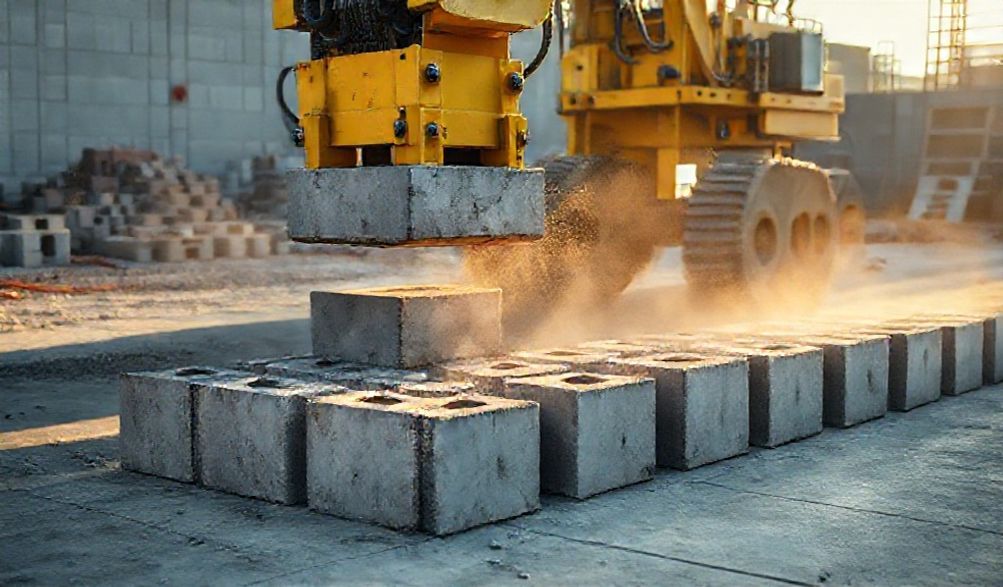
Máy đặt khối kiểu đẻ trứng là một thiết bị di động, thường chạy bằng động cơ diesel hoặc điện, được thiết kế để sản xuất trực tiếp các khối bê tông—như khối rỗng, khối đặc, gạch lát vỉa hè và đá bó vỉa—trên một bề mặt bảo dưỡng bằng phẳng. Khác với các nhà máy cố định sản xuất khối trên pallet rồi mới vận chuyển đến khu vực bảo dưỡng, máy đặt kiểu đẻ trứng tạo ra khối và sau đó di chuyển để "đặt" nhẹ nhàng khối đó xuống mặt đất, tựa như cách một con gà mái đẻ trứng. Sự khác biệt cơ bản này trong phương pháp chính là nguồn gốc tạo nên hiệu quả và tính đơn giản đáng chú ý của nó.
Cơ Chế "Đẻ Trứng" Được Giải Thích
Phép màu diễn ra trong một quá trình liên tục, tuần hoàn. Hiểu được chu kỳ này là chìa khóa để thấu hiểu thiết kế của cỗ máy.
- Pha trộn & Cho ăn:Một hỗn hợp bê tông trộn sẵn (hỗn hợp bán khô của xi măng, cát và cốt liệu) được đổ vào phễu của máy.
- Đúc khuôn & Nén chặtHỗn hợp được đổ vào hộp khuôn. Các máy rung mạnh, thường được hỗ trợ bởi đầu ép thủy lực, nén chặt vật liệu bằng rung động mạnh. Quá trình này loại bỏ các túi khí và đảm bảo khối bê tông đặc chắc, bền vững.
- Khoảnh khắc "Đặt xuống":Đây là động tác đặc trưng. Toàn bộ khung khuôn - lúc này đang chứa khối bê tông mới được đúc và nén chặt - được nâng lên theo phương thẳng đứng. Sau đó, máy di chuyển tiến hoặc lùi trên đường ray hoặc bánh xe của nó.
- Lời khai:Khuôn di chuyển xuống, và khối bê tông được đẩy ra nền đã chuẩn bị sẵn để bảo dưỡng. Khuôn trở về vị trí ban đầu, để lại một khối hoàn chỉnh, sẵn sàng cho quá trình bảo dưỡng.
- Chu kỳ Lặp lại:Máy khởi động lại, và chu kỳ bắt đầu một lần nữa, đặt các khối theo một trình tự gọn gàng trên mặt đất.
Các Thành Phần Chính và Vai Trò của Chúng
Mỗi bộ phận đều đóng một vai trò quan trọng trong vở ballet tự động hóa này:
- Hopper:Điểm tiếp nhận hỗn hợp bê tông thô. Kích thước của nó quyết định lượng vật liệu có thể được nạp vào cùng một lúc.
- Đơn vị Khuôn/RungTrái tim của cỗ máy. Các hộp khuôn có thể thay thế xác định hình dạng và kích thước của khối. Các thiết bị rung tích hợp cung cấp lực nén cần thiết.
- Hydraulic or Mechanical System: Provides the power to lift the mold carriage, apply pressure during compaction, and execute movements. Hydraulic systems are common for their smooth power and control.
- Bảng điều khiển: Houses the controls for the machine’s operations, allowing the operator to manage the cycle, vibration time, and movement.
- Pallet Feeder (or lack thereof): Notably, most true egg layers do không use pallets. The block is deposited directly onto the curing floor, which is a major cost and logistics saver.
Advantages of Using an Egg Laying Block Machine
Moving from theory to practice, the real-world benefits reported by operators and business owners are what make this machine a game-changer. Here’s what you can expect.
Unmatched Efficiency and Output
On-site observations consistently show that a single egg laying machine operated by a crew of 3-5 people can outperform a team of 15-20 manual laborers. With cycle times ranging from 15 to 30 seconds, production rates of 2,000 to 5,000 blocks per 8-hour shift are common for standard hollow blocks. This dramatic increase in output with a smaller crew directly translates to faster project completion and the ability to take on more work.
Superior Space and Logistics Management
Because blocks are laid directly onto the curing floor, you eliminate two major headaches:
* No Pallet Investment: You don’t need to purchase, maintain, or replace thousands of wooden or steel pallets.
* Simplified Handling: There’s no need for complex forklift movements or racking systems to move pallets of green blocks. The blocks cure where they are laid, and are simply picked up once hardened. This significantly reduces the required yard space and handling equipment.
Enhanced Block Quality and Consistency
Manual production is vulnerable to human error—variations in mixing, compaction, and molding lead to inconsistent blocks. An egg laying machine applies precise, repeatable vibration and pressure every single cycle. This results in:
* Higher compressive strength due to better compaction.
* Uniform dimensions and sharp edges.
* Denser blocks with lower water absorption.
* A more professional, reliable product that commands better market trust and price.
Cost-Effectiveness and ROI
For a growing construction firm or block-making entrepreneur, the financial argument is compelling:
* Lower Capital Outlay: It is significantly more affordable than a fully automated stationary block making plant.
* Giảm Sự Phụ Thuộc Vào Lao Động Cuts your largest variable cost.
* Bảo Trì Tối Thiểu: With fewer complex conveyors and transfer systems, maintenance is simpler and less costly.
* Khả năng mở rộng: You can start with one machine and add more as demand grows, making it a low-risk, high-return entry into automated production.
Key Considerations Before Buying an Egg Laying Block Machine
A wise investment requires due diligence. This checklist, drawn from industry best practices, will help you evaluate your options and partner with the right supplier.
Đánh Giá Nhu Cầu Sản Xuất Của Bạn
Begin with a clear business plan:
* Các Loại Khối & Kích Thước: What will you primarily produce? 4″, 6″, 8″ hollow blocks? Pavers? Interlocking bricks? Ensure the machine you choose offers readily available molds for your needs.
* Output Targets: Calculate your average daily or weekly requirement based on current and projected contracts. Don’t just buy for today’s peak; plan for steady growth.
* Project Scale & Mobility: Will the machine operate at a fixed yard, or do you need to move it between sites? This affects your choice of trailer-mounted vs. static models.
Đào Sâu Thông Số Kỹ Thuật Máy Móc
Khi so sánh các mẫu xe, những thông số kỹ thuật này là bắt buộc phải có:
* Thời gian chu kỳ: The time to produce one block. Faster cycles mean higher output.
* Block Capacity per Cycle: Some machines produce 1, 2, 3, or even 4 blocks per cycle (e.g., for pavers).
* Công suất động cơ: Indicates the machine’s overall capability (e.g., 10 HP, 15 HP). More power typically supports heavier cycles and larger blocks.
* Hệ thống Rung Frequency (Hz) and amplitude (mm) determine compaction efficiency. A combination of high frequency and variable amplitude is often ideal for different mix designs.
* Mức độ Tự động hóa: Semi-automatic machines require an operator to initiate each cycle. Fully automatic models run a continuous cycle, offering the highest output.
Power Source and Operational Environment
Your site conditions dictate the best choice:
* Điện: Clean, quiet, and cost-effective to run, but requires reliable grid connection.
* Đi-ê-zen Offers complete independence and high torque, ideal for remote sites. Factor in fuel costs and emissions.
* Lai tạo: Some models offer the flexibility to switch between power sources, providing the best of both worlds.
Manufacturer and Supplier Evaluation
This is the most critical step. The right partner ensures long-term success.
* Company History & Reputation: How long have they been in business? Look for established manufacturers with a track record.
* After-Sales Service & Support: Do they offer installation guidance, operator training, and timely technical support? Ask for specific details.
* Sẵn có Phụ tùng Thay thế: Are parts standardized and readily available locally or through a quick supply chain? Downtime is lost revenue.
* Client Testimonials & Site Visits: Request references and, if possible, visit an existing installation to see the machine running.
* Warranty Terms: A clear, comprehensive warranty is a sign of a manufacturer that trusts its product’s quality.
Operating and Maintaining Your Machine for Longevity
Your machine is a significant asset. Proper operation and maintenance, as outlined in standard industry protocols, protect your investment and ensure consistent performance.
Step-by-Step Operational Procedure
Follow this safety-focused checklist for daily operation:
1. Pre-Start Check: Inspect the machine for loose bolts, hydraulic leaks, and clean the mold box. Ensure the vibration motors are secure.
2. Chuẩn bị nguyên vật liệu: Use a consistent, semi-dry concrete mix with the correct cement-aggregate ratio. Inconsistent mix is the leading cause of block defects.
3. Machine Setup: Position the machine on a perfectly level and prepared curing floor (often a concrete slab).
4. Cycle Operation: Load the hopper, initiate the cycle, and monitor the block formation and laying process. Adjust vibration time based on block density.
5. Post-Operation: Thoroughly clean all concrete residue from the hopper, mold, and vibrator shafts before it hardens. This is a daily non-negotiable task.
Essential Daily and Periodic Maintenance
Adherence to a maintenance schedule prevents major breakdowns:
* Hàng ngày: Clean machine thoroughly. Check oil levels in the hydraulic tank. Lubricate all guide rails and moving joints as per the manual.
* Hàng tuần: Tighten all bolts and nuts, especially on vibrator mounts. Inspect hydraulic hoses for wear. Check electrical connections.
* Monthly/Periodically: Change hydraulic oil and filters as recommended. Inspect the vibrator motors for bearing wear. Have a qualified technician perform a full system check.
Troubleshooting Common Issues
- Block Sticking in Mold: Usually caused by a worn/damaged mold, insufficient mold release agent, or an overly wet concrete mix.
- Poor Compaction/Weak Blocks: Likely due to incorrect vibration time, low vibration frequency, or an improper raw material mix (too dry or poor gradation).
- Hydraulic Leaks or Slow Movement: Check hose fittings, seals, and hydraulic fluid levels. Contaminated oil can also cause system issues.
Safety Protocols for Operators
- Mandatory PPE: Safety glasses, steel-toe boots, hearing protection, and gloves.
- Lockout/Tagout (LOTO): Always disconnect and lock out the power source (electrical or diesel) before performing any maintenance or clearing a jam.
- Safe Material Handling: Use appropriate equipment for loading raw materials to avoid strain injuries.
Egg Laying Block Machine vs. Stationary Block Making Plant
Choosing the right technology depends on your business model. Here’s an authoritative comparison to guide your decision.
Comparative Analysis: Investment and Flexibility
- Egg Laying Machine: Lower initial investment. Quick setup and commissioning. Highly mobile—can be moved between sites. Ideal for medium-scale production, start-ups, and projects requiring on-site block manufacturing.
- Nhà máy cố định: High capital cost. Requires permanent, significant foundation and infrastructure. Fixed location. Designed for ultra-high-volume, single-location production (e.g., 10,000+ blocks/day).
Production Output and Labor Comparison
- Egg Laying Machine: High output for its class (up to ~5,000 blocks/day). Requires a small crew (3-5). Output is ultimately limited by the sequential laying process.
- Nhà máy cố định: Maximum output potential is far higher due to continuous, parallel production lines. Often more automated, but may still require a larger operational and maintenance team.
Making the Right Choice for Your Business
Use this simple matrix:
* Choose an Egg Laying Machine if: You are a growing business, have multiple sites, need flexibility, have a medium-scale demand, or are working with a constrained budget.
* Consider a Stationary Plant if: You are supplying a massive, constant market (e.g., a major city), have a single, large factory site, and have the capital for a long-term, fixed infrastructure investment.
FAQ Section
Q1: What is the average production capacity of a standard egg laying block machine?
A: For a standard 4″ or 6″ hollow block, a well-operated machine can produce between 2,000 and 5,000 blocks in an 8-hour shift, depending on the model’s cycle time and crew efficiency.
Q2: Can one machine produce different types and sizes of blocks?
A: Yes, absolutely. This is a key advantage. By changing the mold box, the same machine can produce hollow blocks, solid blocks, paving stones, and more. Ensure you purchase the desired molds from your supplier.
Q3: What is the typical lifespan of a well-maintained egg laying machine?
A: With strict adherence to maintenance schedules and operation within design limits, a quality machine can have a productive lifespan of 10-15 years or more. Critical components like vibrators and hydraulic parts may require replacement sooner based on usage.
Q4: What raw material mix is recommended for optimal results?
A: A standard, reliable mix is a 1:6:4 ratio (Cement: Sand: Aggregate, by volume). Use a coarse, well-graded sand and 3/8″ aggregate. The mix should be semi-dry—holding its shape when squeezed in your hand but crumbling when poked.
Q5: Is special training required to operate this machinery?
A: While not overly complex, formal training from your supplier is highly recommended. Proper training ensures safety, maximizes output, minimizes waste, and extends machine life. Most reputable suppliers include basic operational training.
Q6: How much space is needed for operation and block curing?
A: You need a level, solid concrete curing floor. Space required depends on daily output. As a rule of thumb, for curing 1000 blocks, you need approximately 150-200 sq. meters, accounting for walking aisles. The machine itself requires an operational area about 4m wide by 10m long per lane.
Conclusion
The egg laying block machine stands as a testament to smart, practical engineering. It elegantly solves the core problems of labor intensity, inconsistent quality, and logistical complexity in block production. By understanding its “lay-and-go” mechanism, recognizing the substantial benefits in efficiency and cost-saving, and carefully selecting a machine and manufacturer based on your specific needs, you can make an investment that pays dividends for years to come.
For most small to medium-sized construction businesses and block manufacturing entrepreneurs, it represents the ideal balance of capability, affordability, and flexibility. It’s not just a machine; it’s a strategic tool for scalable growth.
Ready to take the next step? We strongly encourage you to use the criteria outlined here to consult with several reputable manufacturers. Request detailed specifications, ask for client references, and if possible, insist on a live demonstration. Have specific questions about your project? Feel free to reach out—our goal is to be a continuing resource in your journey toward more efficient and profitable construction.
Author Bio:
This guide was authored by a team with over 20 years of combined experience in civil engineering, construction machinery distribution, and on-site block manufacturing operations. Our insights are drawn from direct collaboration with manufacturers, technical training sessions, and countless hours observing these machines in action across diverse project sites. We are dedicated to providing accurate, practical information to help industry professionals build their businesses on a solid foundation.