
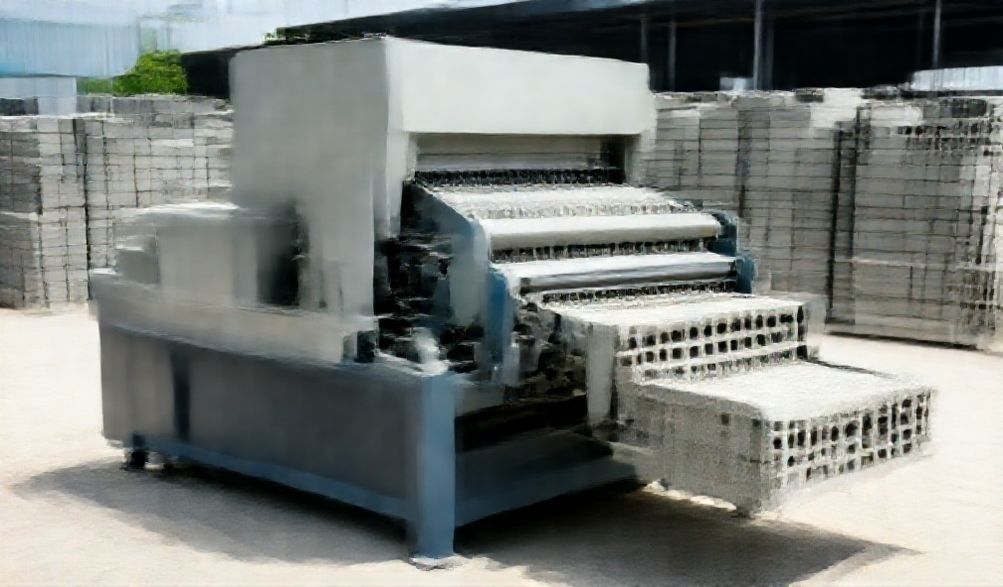
The Ultimate Guide to Cement Brick Making Machines in Malaysia (2026)
บทนำ
Malaysia’s skyline is a testament to a construction industry in perpetual motion. From the monumental infrastructure projects under national master plans to the bustling residential developments meeting urban demand, bricks remain the fundamental building block of this growth. Yet, for many builders, contractors, and property developers, reliance on traditional brick suppliers presents a recurring set of challenges: unpredictable price hikes, supply chain delays, and frustrating inconsistencies in quality that can compromise an entire project’s integrity.
What if the solution wasn’t just finding a better supplier, but becoming your own? On-site cement brick production using dedicated brick making machines is rapidly transforming from a niche industrial activity into a strategic advantage for Malaysian businesses of all sizes. This modern approach offers unprecedented control, efficiency, and cost-effectiveness.
This comprehensive guide is designed to be your authoritative resource. Compiled from industry insights, technical analysis, and a deep understanding of the local Malaysian market, it cuts through the noise. We’ll provide the clarity you need to make a confident, informed decision. By the end, you will have a firm grasp of the different types of machines available, key features that matter, a realistic view of costs and suppliers in Malaysia, and a clear framework for choosing the perfect machine to match your project scale and business ambitions.
Why Consider a Cement Brick Making Machine in Malaysia?
Moving brick production in-house is a significant decision. Beyond the initial investment, it’s a strategic shift in operations. For the right business, the benefits are substantial and directly address the pain points of Malaysia’s dynamic construction environment.
Cost Efficiency & Control Over Raw Materials
The financial logic is compelling. Owning a machine decouples you from the volatility of brick market prices.
- Reduce Supplier Dependency: You are no longer subject to sudden price increases from suppliers or scarcity during peak construction seasons.
- Optimize Material Sourcing: You can directly procure bulk raw materials—cement, sand, and quarry dust—which are often more stable in price and widely available locally.
- Minimize Logistics Cost: Eliminate the recurring expense of transporting heavy finished bricks from a factory to your site. You only transport raw materials, which is typically more cost-effective.
Unmatched Production Flexibility & Customization
This is where ownership truly shines. A brick making machine turns your production into an on-demand service.
- Produce to Need: Generate bricks as your project requires, drastically reducing the need for large, costly storage yards and minimizing material waste from over-ordering.
- Create Unique Designs: Need a specific size, shape, or color for an architectural feature? With interchangeable molds, you can produce custom hollow blocks, interlocking bricks for landscaping, or specially sized paving blocks, giving your projects a unique edge.
Supporting Malaysia’s Construction & Sustainability Goals
Your investment aligns with broader national objectives, positioning your business as a forward-thinking player.
- Align with National Development: Support government-led infrastructure and affordable housing initiatives by ensuring a reliable, local supply of building materials.
- Embrace Sustainable Practices: Modern machines allow for the incorporation of industrial by-products like fly ash or slag into your brick mix. This not only reduces the cement content (lowering cost and carbon footprint) but also contributes to a more circular economy, a key focus for Malaysia’s sustainable development.
Ensuring Consistent Quality & Project Timelines
Ultimately, control over production means control over your project’s outcome and schedule.
- Guaranteed Uniform Strength: You dictate the mix design, water-cement ratio, and compaction process. This results in bricks with consistent, high compressive strength, batch after batch.
- Eliminate Project Delays: Never face another work stoppage due to delayed brick deliveries. Your production schedule is in your hands, allowing for precise planning and timely project completion.
ประเภทของเครื่องทำอิฐซีเมนต์ที่มีจำหน่าย
Understanding the categories of machines is the first step in your selection process. The right choice hinges on your required output, budget, and level of automation.
เครื่องทำอิฐแบบใช้มือ
These are the most fundamental entry point into brick production, relying entirely on human power.
- ปฏิบัติการ: A lever-operated system where the operator manually fills the mold, compresses the mix using mechanical force, and releases the formed brick.
- เหมาะที่สุดสำหรับ: Ideal for very small-scale projects, individual homeowners, startups testing the market, or producing specialty items like garden interlocking bricks. Their portability makes them suitable for remote sites without power.
- ข้อดีและข้อเสีย:
- ข้อดี: Extremely low initial cost, no electricity needed, simple to maintain, highly portable.
- ข้อเสีย Very low output (typically 100-500 bricks per day), physically demanding, quality heavily dependent on operator skill.
เครื่องทำอิฐกึ่งอัตโนมัติ
This category offers the best balance for most small to medium-sized Malaysian businesses, providing mechanized assistance for consistent quality.
- ปฏิบัติการ: Powered by an electric motor or diesel engine, these machines use vibration and hydraulic or mechanical pressure to compact the brick. The operator manually feeds the raw mix into the hopper and removes the finished bricks for curing.
- เหมาะที่สุดสำหรับ: Small to medium blockyards, contractors undertaking several projects per year, and businesses looking for steady, reliable production without full automation.
- ข้อดีและข้อเสีย:
- ข้อดี: Significantly higher output than manual machines (e.g., 1,000 – 3,000 bricks per 8-hour shift), good consistency, more energy-efficient than full-auto models, moderate investment cost.
- ข้อเสีย Still requires a dedicated operator, output is not continuous.
เครื่องทำอิฐอัตโนมัติเต็มรูปแบบ
These are industrial production lines designed for maximum output with minimal manual intervention.
- ปฏิบัติการ: These are complete systems with computerized controls. They automate the entire process: feeding raw materials, mixing, conveying the mix to the mold, high-pressure compaction, curing (in integrated systems), and stacking pallets of finished bricks.
- เหมาะที่สุดสำหรับ: Large-scale brick manufacturing plants, businesses supplying to major developers or for export, and operations where labor cost and maximum volume are primary concerns.
- ข้อดีและข้อเสีย:
- ข้อดี: Very high, continuous output (10,000+ bricks per day), minimal labor requirements, exceptional consistency and product density, high level of automation.
- ข้อเสีย Very high capital investment, requires significant space and stable three-phase power supply, complex maintenance requiring specialized technicians.
Key Features to Evaluate When Buying
Once you’ve identified your machine type, drilling down into these critical features will ensure you select a model that delivers long-term value and reliability.
กำลังการผลิต (ผลผลิตต่อชั่วโมง/วัน)
Don’t just look at the peak number. Industry practice shows it’s wiser to consider sustainable, daily output.
- Match Output to Demand: Calculate your average brick consumption per project or monthly sales target. Choose a machine whose สมจริง output meets 120-150% of your current need to allow for growth and maintenance downtime.
- Understand Cycle Time: Ask suppliers for the cycle time (seconds per brick or per mold) and how many bricks are produced per cycle. This gives a clearer picture than a theoretical maximum.
Brick Type and Size Versatility
The ability to produce multiple products future-proofs your investment.
- Common Malaysian Brick Types: Ensure the machine can produce the sizes in demand:
- Solid/Hollow Blocks: 400mm x 200mm x (100mm, 150mm, 200mm)
- Interlocking Paving Blocks
- ขอบทางเท้า
- Decorative bricks
- แม่พิมพ์ที่สามารถเปลี่ยนได้ A key feature. Check the cost, lead time, and ease of changing molds. A good supplier in Malaysia should stock common mold sizes.
Power Source: Electric, Diesel, or Hybrid?
Your site conditions dictate the optimal choice.
- ไฟฟ้า Cleaner, quieter, and more cost-effective to run in urban/industrial areas with reliable grid power. Requires a stable connection (often 3-phase for larger models).
- ดีเซล Offers complete independence from the grid, essential for remote sites or areas with frequent power cuts. Higher fuel and maintenance costs, and generates noise/exhaust.
- ไฮบริด: Some models offer dual-power capabilities, providing valuable flexibility.
ความทนทานและการสนับสนุนหลังการขาย
This is the most critical E-E-A-T (Experience, Expertise, Authoritativeness, Trustworthiness) consideration for the Malaysian buyer. The machine’s build is only half the equation.
- การก่อสร้างที่แข็งแรงทนทาน Look for machines with high-grade steel frames, reinforced vibration tables, and quality hydraulic systems. The weight of the machine can often indicate material solidity.
- Local After-Sales Support is Non-Negotiable: A machine is a long-term asset. You must confirm:
- Local Service Technicians: Does the supplier have trained technicians based in Malaysia for repairs and maintenance?
- Spare Parts Inventory: Is there a local warehouse stocking wear-and-tear parts like mold liners, vibration motors, and hydraulic seals? Waiting months for a part from overseas is a business killer.
- การฝึกอบรม Does the purchase include proper on-site training for your operators?
Navigating the Malaysian Market: Suppliers and Costs
Entering the market with clear expectations will help you negotiate effectively and find a trustworthy partner.
Overview of Local Manufacturers vs. International Importers
Both options have merits, and the right choice depends on your priorities.
- Local Malaysian Manufacturers/Assemblers:
- ข้อดี: Better understanding of local material conditions and standards, typically faster and cheaper service support, easier communication, parts more readily available.
- การพิจารณา Technology may be based on older, proven designs rather than cutting-edge innovation.
- International Importers (e.g., from China, India, Europe):
- ข้อดี: Access to the latest technological features and automation, potentially lower upfront cost for comparable specs.
- Critical Considerations: Verify the importer’s local support capability. Who will handle installation, warranty claims, and major repairs? Ensure they have a strong physical presence, not just a sales office.
Understanding the Price Range
Prices vary widely based on automation, capacity, and brand. Use these indicative brackets as a starting point (prices are in Malaysian Ringgit).
- เครื่องทำอิฐแบบใช้มือ: RM 3,000 – RM 20,000
- เครื่องทำอิฐกึ่งอัตโนมัติ: RM 25,000 – RM 150,000
- Fully Automatic Brick Making Plants: RM 200,000 – RM 1,000,000+
Disclaimer: These are broad estimates. Always get detailed quotations based on your specific requirements. Factors like mold customization, extra conveyors, and pallet stackers will affect the final price.
Essential Questions to Ask Your Supplier
Arm yourself with this checklist during negotiations:
- What is included in the quoted price? (Installation? Training? Initial set of molds? Delivery?)
- What is the warranty period and what does it specifically cover?
- Where is your spare parts warehouse located in Malaysia, and what is the typical availability for common parts?
- Can you provide contact details for 2-3 current customers in Malaysia for a reference check?
- Do your bricks comply with relevant Malaysian Standards (MS)? Can you assist with testing?
- Do you offer annual maintenance contracts?
The Business Case: ROI and Operational Setup
Turning your machine into a profitable asset requires planning beyond the purchase order.
Calculating Your Return on Investment (ROI)
A simplified framework helps visualize the payoff:
- Calculate Total Investment: Machine cost + installation + initial raw material stock + utility setup.
- Calculate Operational Cost per Brick: (Cost of cement + sand + quarry dust + electricity/fuel + labor + maintenance) per brick.
- Determine Your Benefit: This is either:
- Savings: The money you no longer pay to an external supplier per brick.
- Revenue: The selling price per brick if you are manufacturing for sale.
- Calculate Profit per Brick: Benefit per brick minus Operational Cost per brick.
- Estimate Payback Period: Total Investment / (Profit per brick x Monthly Production Volume).
ตัวอย่าง If your machine and setup cost RM 100,000, and you net a profit of RM 0.20 per brick while producing 30,000 bricks a month, your payback period is roughly 16-17 months.
Basic Operational Requirements in Malaysia
Plan your space and utilities accordingly:
- อวกาศ You need area for the machine, raw material storage (covered), a mixing station, and a curing yard. A semi-automatic setup may require 5,000-10,000 sq. ft.
- Power & Water: Ensure your site has the required electrical supply (voltage, phase). A consistent water source for the mix is essential.
- วัตถุดิบ: Establish relationships with reliable sand and aggregate suppliers. Consistency in raw material quality is key to consistent brick quality.
- กระบวนการบ่ม Freshly molded bricks must be kept damp (by spraying water or covering with plastic sheets) for at least 7-14 days to gain strength properly. This is a crucial, often overlooked step.
Compliance and Standards
Producing for commercial projects requires adherence to standards.
- Malaysian Standards (MS): Familiarize yourself with the relevant MS for concrete bricks and blocks. Producing bricks that can be tested and certified to these standards significantly enhances their marketability and trust, especially for larger contractors and government projects.
- Quality Documentation: Maintain records of your mix designs and, if possible, conduct periodic compression tests at a certified lab. This builds authority and trust with your clients.
คำถามที่พบบ่อย (FAQ)
Q1: What is the average cost of a cement brick making machine in Malaysia?
ก As outlined above, costs range dramatically from a few thousand RM for basic manual presses to over a million RM for fully automatic plants. For most small-to-medium businesses, a capable semi-automatic machine represents an investment between RM 50,000 to RM 120,000, depending on features and output.
Q2: Can I start a brick-making business with a small budget?
ก Absolutely. Many successful blockyard owners started with a single manual or small semi-automatic machine, fulfilling local orders. This allows you to validate the market, learn the process, and reinvest profits to scale up gradually.
Q3: How much profit can I make from making cement bricks?
ก Profitability is highly variable. It depends on your operational efficiency, local market prices for both raw materials and finished bricks, and your sales volume. A well-run, efficient small blockyard can see healthy margins by controlling costs and finding a steady client base.
Q4: Where can I find reliable suppliers in Malaysia?
ก Start by searching industrial machinery directories online. Attend construction and machinery trade shows, such as those endorsed by CIDB (Construction Industry Development Board). The most reliable method is to ask for referrals from others in the construction industry and always conduct the due diligence suggested in this guide.
Q5: What is the strength and quality of machine-made bricks compared to traditional ones?
ก When operated correctly, machine-made bricks typically surpass traditional sun-dried or manually produced bricks in consistency and compressive strength. The controlled vibration and high compaction force create a denser, more uniform product with fewer voids, leading to better structural performance and water resistance.
สรุป
Investing in a cement brick making machine is more than a purchase; it’s a strategic decision to take control of a critical part of your construction supply chain. For businesses in Malaysia, it offers a powerful answer to cost volatility, quality concerns, and project delays. We’ve explored the spectrum from manual to fully automatic machines, highlighted the must-evaluate features—especially the paramount importance of local after-sales support—and provided a realistic view of the market landscape and costs.
Use this guide as your foundational knowledge. It is built on industry experience and designed for trustworthiness, presenting both opportunities and considerations. The next step is to engage with the market directly. Visit suppliers, see machines in operation, request brick samples from their demo units, and speak to their existing customers.
Ready to explore specific models and take the next step? Contact several reputable Malaysian suppliers today to discuss your unique project needs, operational setup, and request a detailed, comparative quotation.
For ongoing insights into construction materials, machinery trends, and business strategies in the Malaysian market, consider subscribing to our industry newsletter or exploring our library of related guides.
<