
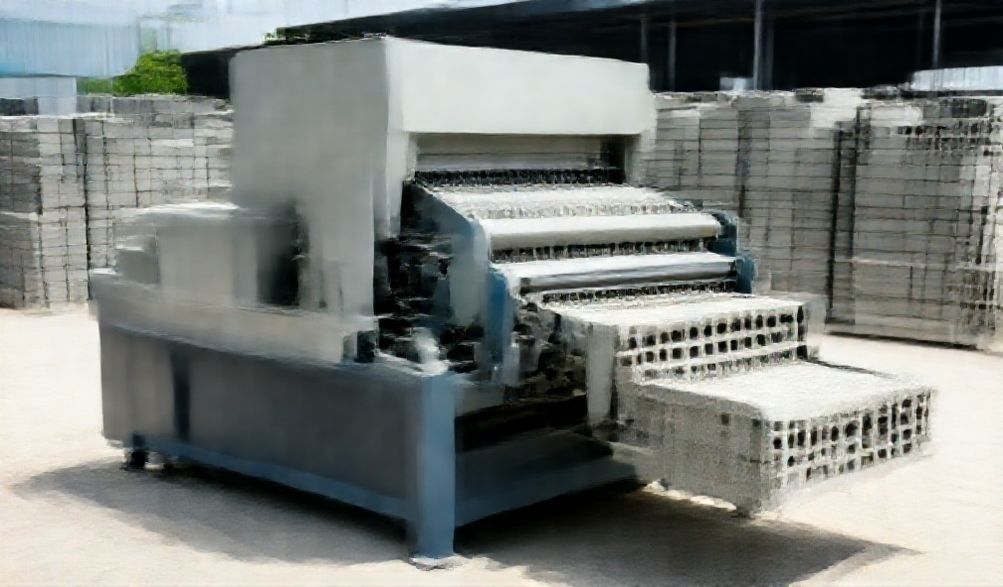
Малайзияда цемент кирпич ясагыш машиналарының төвүнги гидиси (2026)
Giriş
Malaýziýanyň asmana uzanýan binalary, gurluşyk senagatynyň hemişe hereketde bolýandygyna şaýatlyk edýär. Milli meýilnamalar astyndaky uly infrastruktura taslamalaryndan tut, şäher talabyny kanagatlandyrýan gürleşýän ýaşaýyş jaýlaryna çenli, kerpiçler bu ösüşiň esasy gurluşyk elementidir. Emma, köp gurluşykçylar, pudakçylar we daýhançylyk öndürijileri üçin däp bolan kerpiç üpjünçilerine bolan baglylyk, yzygiderli bir top kynçylyklary ýüze çykarýar: çak edilip bolmajak baha artyşlary, üpjün zynjyrynyň gijikmeleri we bütin taslamanyň ygtybarlylygyna zyýan ýetirip bilýän hiliniň düşnüksiz üýtgeşiklikleri.
Eger çözgü diňe gowy üpjünçi tapmak däl-de, özüňiň üpjünçiň bolmak bolsa? Belli bir garyndy gurallaryny ulanyp, ýerli beton kerpiç öndürişi, käbir önümçilik işi hökmünde çaltdanam ähli ölçegli Malaýziýa işewürler üçin strategiki üstünlik öwrülýär. Bu häzirki usul, öňüni görmeýän gözegçilik, netijelilik we bahasynyň netijeliligini hödürleýär.
Bu gollanma siziň ygtybarly çeşmeňiz bolmak üçin düzüldi. Senagat çuňňurlyklary, tehniki analiz we ýerli Malaýziýa bazarynyň çuňňur düşünjesi esaslarynda taýýarlanan, ol gep-gürrüňleriň arasyndan hakykaty aýýp görkezýär. Size ygtyýarly we düşündirilen karar çykarmak üçin zerur açyklygy hödürleýäris. Soňunda, elýeterli maşynlaryň dürli görnüşlerini, möhüm aýratynlyklary, Malaýziýadaky çykdajylar we üpjün edijiler baradaky real göz öňüne getirmäni we taslamanyň ölçegine we iş meýilnamalaryňyza laýyk gelýän ideal maşyny saýlamak üçin açyk çatnyşyk alaryny doly düşünip alarsyňyz.
Малайзияда цемент кирпич ясаг станокны немек сатып алырга болай?
Kiremit öndürmegi öz içine almak uly karar. Başlangyç maşgala goýulandan başga, bu iş amallarynda strategiki üýtgeşikdir. Dogry iş üçin peýdalar uly we Malayziýanyň üýtgeýän gurluşyk gurşawynda düşünilen problemleri göni çözmekdir.
Хасиýetlilik we Çig Materiallara Gözegçilik
Maliýe mäzmuny güýçli. Maşyna eýelemek sizi kerpiç bazarynyň gymmatlyklarynyň üýtgeýşliliginden aýyrýar.
- Теджиркерине Баглылыгы Азалтмак:Тедерлеý meýdanlarynda türgen gurluşik döwründe üpjünçilerden kütülmedik bahalaryň ýokarlanmagyna ýa-da ýetmezçilikläre boýun egmeli dälsiňiz.
- Materiallaryň çeşmesini optimizasiýalaň:Siz toplum hâlinde çig materiallary—sement, çägel we daş tozuny—gönüden-göni satyn alyp bilersiňiz, olaryň bahasy köplenç durnukly we ýerli derejede giň elýeterlidir.
- Логистика хыяжытыны азайтмак:Агыр аякландырылан керпичлерди заводуңыздан объектиңизе ташымаклыгынңызнын кайталанып тураян чыгымларыны алыңыз. Сиз гана хам материаллары ташыярсыз, бу эмгек-затраталарны типик жакдан арзанладыр.
Bäsdeşsiz Önümçilik Iňililigi we Düýbünden Döredilme
Bu, eýeçiligiň hakykatdanam ýagtyldyrýan ýeridir. Kerpiç ýasama maşyny, öndürişiňizi talaba görä hyzmat hökmüne öwürýär.
- Эмгек өндүрүшү талапка ылайык болушу керек.Öz proýektiňiziň talabyna laýyklykda kerpiçleri öndüriň, uly, gymmat ammar meýdanlaryna bolan zerurlygy ep-esli azaltmak we artykmaç sargyt sebäpli material ýitgisini iň aşa ýetiriň.
- Ýörite Dizaýnlar Dörediň:Архитектуралық элемент үшін белгили бир өлчем, форма ýада түс gerekmi? Çalşyrylyp bolýan galyplar bilen, özboluşly guramaly bloklar, peýzaj işleri üçin bir-birine girýän kerpiçler ýa-da aýratyn ölçegli plitkalary öndürüp, taslamalaryňyza özboluşly üstünlik gazandyryp bilersiňiz.
Малайзияның Гурлушылык және Давурлылык Максатларына Голбериш Бермек
Siziň maýa goýumyňyz giňişleýin milli maksatlara gabat gelýär we işiňizi öňdebaryjy oýunçy hökmünde ornaşdyrýar.
- Milli Ösüşe Uýgunlaşdyryň:Döwlet tarapyndan ýöredilýän infrastruktura we elýeterli jaýlar gurluşyk başlangyçlaryny goldamak üçin ýerli gurluşyk materiallarynyň ygtybarly üpjünçiligini üpjün ediň.
- Dürli ýagdaýlara uýgun amallary kabul ediň:Häzirki zaman maşynlary, söweş külü ýa-da şlak ýaly önümçilik goşundylaryny kerpiç garyndysyna goşup bolýar. Bu diňe sement mukdaryny azaltmak bilen çäklenmän (bahasyny we uglerod yzyny peseldýär), eýsem, Malaziýanyň dowamly ösüşi üçin esasy ugur bolan has aýlawly ykdysadyýete hem goşant goşýar.
Yzygiderli Hil we Taslama Wagt Çäklendirmelerini Üpjün Etmek
Ahyrynda, öndürişe gözegçilik etmek, taslamanyň netijesine we tertibine gözegçilik etmekdir.
- Kepillendirilen Birmeňzeş Güýç: You dictate the mix design, water-cement ratio, and compaction process. This results in bricks with consistent, high compressive strength, batch after batch.
- Eliminate Project Delays: Never face another work stoppage due to delayed brick deliveries. Your production schedule is in your hands, allowing for precise planning and timely project completion.
Types of Cement Brick Making Machines Available
Understanding the categories of machines is the first step in your selection process. The right choice hinges on your required output, budget, and level of automation.
Manual Güllemek Ýasama Maşynlary
These are the most fundamental entry point into brick production, relying entirely on human power.
- Amal: A lever-operated system where the operator manually fills the mold, compresses the mix using mechanical force, and releases the formed brick.
- Iň Gowy: Ideal for very small-scale projects, individual homeowners, startups testing the market, or producing specialty items like garden interlocking bricks. Their portability makes them suitable for remote sites without power.
- Kämil we kemçilikler:
- Artalary: Extremely low initial cost, no electricity needed, simple to maintain, highly portable.
- Kemçilikler: Very low output (typically 100-500 bricks per day), physically demanding, quality heavily dependent on operator skill.
Ýarym-awtomatik Kerpiç Ýasama Maşynlary
This category offers the best balance for most small to medium-sized Malaysian businesses, providing mechanized assistance for consistent quality.
- Amal: Powered by an electric motor or diesel engine, these machines use vibration and hydraulic or mechanical pressure to compact the brick. The operator manually feeds the raw mix into the hopper and removes the finished bricks for curing.
- Iň Gowy: Small to medium blockyards, contractors undertaking several projects per year, and businesses looking for steady, reliable production without full automation.
- Kämil we kemçilikler:
- Artalary: Significantly higher output than manual machines (e.g., 1,000 – 3,000 bricks per 8-hour shift), good consistency, more energy-efficient than full-auto models, moderate investment cost.
- Kemçilikler: Still requires a dedicated operator, output is not continuous.
Doly Awtomatiki Kerpiç Ýasama Maşynlary
These are industrial production lines designed for maximum output with minimal manual intervention.
- Amal: These are complete systems with computerized controls. They automate the entire process: feeding raw materials, mixing, conveying the mix to the mold, high-pressure compaction, curing (in integrated systems), and stacking pallets of finished bricks.
- Iň Gowy: Large-scale brick manufacturing plants, businesses supplying to major developers or for export, and operations where labor cost and maximum volume are primary concerns.
- Kämil we kemçilikler:
- Artalary: Very high, continuous output (10,000+ bricks per day), minimal labor requirements, exceptional consistency and product density, high level of automation.
- Kemçilikler: Very high capital investment, requires significant space and stable three-phase power supply, complex maintenance requiring specialized technicians.
Key Features to Evaluate When Buying
Once you’ve identified your machine type, drilling down into these critical features will ensure you select a model that delivers long-term value and reliability.
Önümçiligiň Kuwwaty (Sagatda/Günde Önüm)
Don’t just look at the peak number. Industry practice shows it’s wiser to consider sustainable, daily output.
- Match Output to Demand: Calculate your average brick consumption per project or monthly sales target. Choose a machine whose realistic output meets 120-150% of your current need to allow for growth and maintenance downtime.
- Understand Cycle Time: Ask suppliers for the cycle time (seconds per brick or per mold) and how many bricks are produced per cycle. This gives a clearer picture than a theoretical maximum.
Brick Type and Size Versatility
The ability to produce multiple products future-proofs your investment.
- Common Malaysian Brick Types: Ensure the machine can produce the sizes in demand:
- Solid/Hollow Blocks: 400mm x 200mm x (100mm, 150mm, 200mm)
- Interlocking Paving Blocks
- Bordür daşlary
- Decorative bricks
- Interchangeable Molds: A key feature. Check the cost, lead time, and ease of changing molds. A good supplier in Malaysia should stock common mold sizes.
Power Source: Electric, Diesel, or Hybrid?
Your site conditions dictate the optimal choice.
- Elektrik: Cleaner, quieter, and more cost-effective to run in urban/industrial areas with reliable grid power. Requires a stable connection (often 3-phase for larger models).
- Дизель: Offers complete independence from the grid, essential for remote sites or areas with frequent power cuts. Higher fuel and maintenance costs, and generates noise/exhaust.
- Gatnaşyk: Some models offer dual-power capabilities, providing valuable flexibility.
Durability and After-Sales Support
This is the most critical E-E-A-T (Experience, Expertise, Authoritativeness, Trustworthiness) consideration for the Malaysian buyer. The machine’s build is only half the equation.
- Gaty Gurluşyk: Look for machines with high-grade steel frames, reinforced vibration tables, and quality hydraulic systems. The weight of the machine can often indicate material solidity.
- Local After-Sales Support is Non-Negotiable: A machine is a long-term asset. You must confirm:
- Ýerli hyzmat tehnikleri: Does the supplier have trained technicians based in Malaysia for repairs and maintenance?
- Spare Parts Inventory: Is there a local warehouse stocking wear-and-tear parts like mold liners, vibration motors, and hydraulic seals? Waiting months for a part from overseas is a business killer.
- Training: Does the purchase include proper on-site training for your operators?
Navigating the Malaysian Market: Suppliers and Costs
Entering the market with clear expectations will help you negotiate effectively and find a trustworthy partner.
Overview of Local Manufacturers vs. International Importers
Both options have merits, and the right choice depends on your priorities.
- Local Malaysian Manufacturers/Assemblers:
- Üstünlikler: Better understanding of local material conditions and standards, typically faster and cheaper service support, easier communication, parts more readily available.
- Ser etmek: Technology may be based on older, proven designs rather than cutting-edge innovation.
- International Importers (e.g., from China, India, Europe):
- Üstünlikler: Access to the latest technological features and automation, potentially lower upfront cost for comparable specs.
- Critical Considerations: Verify the importer’s local support capability. Who will handle installation, warranty claims, and major repairs? Ensure they have a strong physical presence, not just a sales office.
Understanding the Price Range
Prices vary widely based on automation, capacity, and brand. Use these indicative brackets as a starting point (prices are in Malaysian Ringgit).
- Колданма Кирпич Ясагыш Машиналары: RM 3,000 – RM 20,000
- Ýarym-awtomatiki Kerpiç Ýasama Maşynlary: RM 25,000 – RM 150,000
- Doly awtomatik kirpiç ýasaw zawodlary: RM 200,000 – RM 1,000,000+
Disclaimer: These are broad estimates. Always get detailed quotations based on your specific requirements. Factors like mold customization, extra conveyors, and pallet stackers will affect the final price.
Essential Questions to Ask Your Supplier
Arm yourself with this checklist during negotiations:
- What is included in the quoted price? (Installation? Training? Initial set of molds? Delivery?)
- What is the warranty period and what does it specifically cover?
- Where is your spare parts warehouse located in Malaysia, and what is the typical availability for common parts?
- Can you provide contact details for 2-3 current customers in Malaysia for a reference check?
- Do your bricks comply with relevant Malaysian Standards (MS)? Can you assist with testing?
- Do you offer annual maintenance contracts?
The Business Case: ROI and Operational Setup
Turning your machine into a profitable asset requires planning beyond the purchase order.
Calculating Your Return on Investment (ROI)
A simplified framework helps visualize the payoff:
- Calculate Total Investment: Machine cost + installation + initial raw material stock + utility setup.
- Calculate Operational Cost per Brick: (Cost of cement + sand + quarry dust + electricity/fuel + labor + maintenance) per brick.
- Determine Your Benefit: This is either:
- Savings: The money you no longer pay to an external supplier per brick.
- Revenue: The selling price per brick if you are manufacturing for sale.
- Calculate Profit per Brick: Benefit per brick minus Operational Cost per brick.
- Estimate Payback Period: Total Investment / (Profit per brick x Monthly Production Volume).
Mysal: If your machine and setup cost RM 100,000, and you net a profit of RM 0.20 per brick while producing 30,000 bricks a month, your payback period is roughly 16-17 months.
Basic Operational Requirements in Malaysia
Plan your space and utilities accordingly:
- Space: You need area for the machine, raw material storage (covered), a mixing station, and a curing yard. A semi-automatic setup may require 5,000-10,000 sq. ft.
- Power & Water: Ensure your site has the required electrical supply (voltage, phase). A consistent water source for the mix is essential.
- Çig mal. Establish relationships with reliable sand and aggregate suppliers. Consistency in raw material quality is key to consistent brick quality.
- Gepleme Prosesi: Freshly molded bricks must be kept damp (by spraying water or covering with plastic sheets) for at least 7-14 days to gain strength properly. This is a crucial, often overlooked step.
Compliance and Standards
Producing for commercial projects requires adherence to standards.
- Malaysian Standards (MS): Familiarize yourself with the relevant MS for concrete bricks and blocks. Producing bricks that can be tested and certified to these standards significantly enhances their marketability and trust, especially for larger contractors and government projects.
- Quality Documentation: Maintain records of your mix designs and, if possible, conduct periodic compression tests at a certified lab. This builds authority and trust with your clients.
Frequently Asked Questions (FAQ)
Q1: What is the average cost of a cement brick making machine in Malaysia?
A: As outlined above, costs range dramatically from a few thousand RM for basic manual presses to over a million RM for fully automatic plants. For most small-to-medium businesses, a capable semi-automatic machine represents an investment between RM 50,000 to RM 120,000, depending on features and output.
Q2: Can I start a brick-making business with a small budget?
A: Absolutely. Many successful blockyard owners started with a single manual or small semi-automatic machine, fulfilling local orders. This allows you to validate the market, learn the process, and reinvest profits to scale up gradually.
Q3: How much profit can I make from making cement bricks?
A: Profitability is highly variable. It depends on your operational efficiency, local market prices for both raw materials and finished bricks, and your sales volume. A well-run, efficient small blockyard can see healthy margins by controlling costs and finding a steady client base.
Q4: Where can I find reliable suppliers in Malaysia?
A: Start by searching industrial machinery directories online. Attend construction and machinery trade shows, such as those endorsed by CIDB (Construction Industry Development Board). The most reliable method is to ask for referrals from others in the construction industry and always conduct the due diligence suggested in this guide.
Q5: What is the strength and quality of machine-made bricks compared to traditional ones?
A: When operated correctly, machine-made bricks typically surpass traditional sun-dried or manually produced bricks in consistency and compressive strength. The controlled vibration and high compaction force create a denser, more uniform product with fewer voids, leading to better structural performance and water resistance.
Netije
Investing in a cement brick making machine is more than a purchase; it’s a strategic decision to take control of a critical part of your construction supply chain. For businesses in Malaysia, it offers a powerful answer to cost volatility, quality concerns, and project delays. We’ve explored the spectrum from manual to fully automatic machines, highlighted the must-evaluate features—especially the paramount importance of local after-sales support—and provided a realistic view of the market landscape and costs.
Use this guide as your foundational knowledge. It is built on industry experience and designed for trustworthiness, presenting both opportunities and considerations. The next step is to engage with the market directly. Visit suppliers, see machines in operation, request brick samples from their demo units, and speak to their existing customers.
Ready to explore specific models and take the next step? Contact several reputable Malaysian suppliers today to discuss your unique project needs, operational setup, and request a detailed, comparative quotation.
For ongoing insights into construction materials, machinery trends, and business strategies in the Malaysian market, consider subscribing to our industry newsletter or exploring our library of related guides.
<