
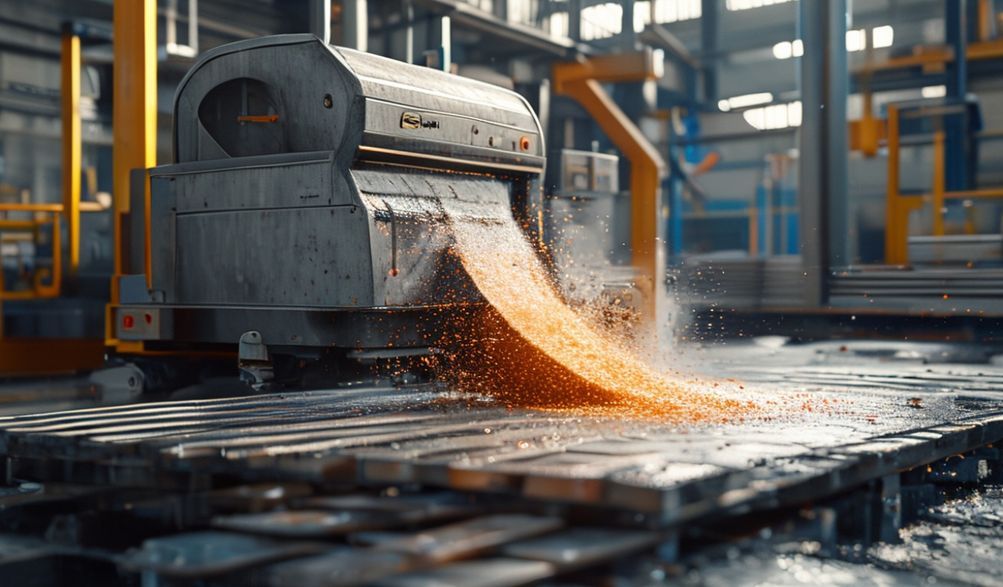
Бетон блоклары машыналарыныň Ýokary Gollanmasy: Görnüşleri, Ulanylyşy we Näme Üçin Saýlamaly?
Giriş
Bilýäňizmi, beton gurluş bloklary ýer şarynda iň köp ulanylýan gurluş materiallarynyň biri bolup, her ýyl milliardlarça öndürilýär. Gökdelenleriň düýplerinden başlap, howludaky goldaw diwarlaryna çenli, göniçi beton bloklar häzirki zaman gurluşygynda esasy orun tutýar. Emma her bir meňzeş we berk blokuň yzky tarapynda möhüm bir enjam ýerleşýär: beton blok maşyny.
Bu gollanma siziň üçin ygtybarly çeşme bolup hyzmat etmek üçin düzüldi. Gurluşyk işlerini ýerine ýetirýän pudagyňyzda material öndürişini ýönekeýleşdirmek isleýän pudakçy bolsaňyz, uly zawod üçin enjamlary satyn alýan satyn almak menedžeri bolsaňyz ýa-da önümçilik mümkinçiliklerini gözden geçirýän telekeçi bolsaňyz, bilimli karar kabul etmek iň möhüm bolýar. Senagat bilimi, tehniki spesifikasiýalar we amaly iş tejribeleri esasynda düzülen bu gollanma, beton blok maşynlarynyň işini aňsatlaşdyrar.
Olar nähili işleýändiginiň esasy mehanizimlerini öwrenersiňiz, elýeterli dürli görnüşlerini gözden geçirersiňiz we öz ýörite zerurlyklaryňyz üçin dogry maşyny saýlamak boýunça amaly maslahatlar alarsyňyz. Biz şeýle-de işiň esasy amatly amallaryny, serişdeleri saklamak tertibini we hata-da goýum goýmagyň iş kesbini öz içine alarys, bu bolsa işjeňligi, hili we girdejililiği gowulandyrmak üçin saýlawlaryňyzy güýçlendirer.
Konkret blok maşyny näme? Esasy principleri we işleýişi
Beton blok maşyny, sement, agregatlar we suwyň garyndysyny kesgitlenen şekil we ölçegli galyba ýygnap, beton gurluş birliklerini (CMU) öndürmek üçin niýetlenen enjamdyr. Esasy ýörelgesi ähli görnüşlerde birmeňzeş: ýary-gury beton garyndysyny güýçlendirmäge taýyn ýokary dykyzlykly, takyk şekillendirilen bloka öwürmek. Bu prosesdäm işjeňlik, ölçeg we awtomatlaşdyrylyş derejesi maşynyň kategoriýasyny kesgitleýär.
Esasy Mekanika: Çig Materialdan Taýýar Bloka Çenli
Öwrülişik kesgitlenen tertip boýunça amala aşyrylýar:
1. Gatnaşdyrmak:Çig materiallar (esasan sement, gum, çägel ýa-da döwülen daş) birmeňzeş, ýary-gurak beton goşundysyny döretmek üçin mikserde kesgitlenen mukdarda suw bilen birleşdirilýär. Namylygy üýtgeşik bolsa, blok deformasiýa bolup biler; gury bolsa, dogry ýygyşdyryp bolmaz.
2. Galyplama:Гарыш калъып ýa-da "калъып gutusy" içine doldurylýar, ol bolsa bloklaryň görnüşini kesgitleýär (meselem, boş, doly, plitka).
3. Ыкмалашдырма:Бул iň möhüm tapgyr. Maşyna, birleşdirilenýokary tezlikli titremeһәмгидравлический ýa-da mehaniki basyş(массасы) аралашманы сығу үчін, һава көпшеклерини алып ташлап, талап етилйән тығызлык ве берклиге етиш үчін.
4. Гызылдырышдан айыруу жана бекитмек: The freshly formed, or “green,” block is ejected from the mold onto a pallet or the ground. It then enters a curing process, where it gains strength over days through controlled moisture and temperature, often in a dedicated curing chamber.
Standart bir maşynyň esasy bölekleri
Understanding the main parts helps in operation and troubleshooting:
* Хоппер: Holds the raw concrete mix before molding.
* Миксер: Blends the ingredients (integrated in some models, separate in others).
* Mold/Mold Box: The core tooling that shapes the block. Interchangeable molds allow one machine to produce different block types.
* Вибратор системасы: Usually an electric or hydraulic vibrator that settles the concrete mix densely into the mold.
* Goşundy Ulgamy: A hydraulic ram or mechanical lever applies the final pressing force.
* Kontrol ulgamy: Ranges from simple levers on manual machines to programmable logic controller (PLC) panels on automatic models, governing the production cycle.
* Pallet Circulation System (in automatic models): Moves pallets through the machine for block ejection and transport to the curing area.
Häzirki Zaman Blok Ýasamagynda Awtomatlaşdyrmanyň Rolü
Automation has revolutionized block production. Modern machines use PLCs to control every parameter—vibration time, pressure, feed quantity—ensuring every block is identical. Automated pallet feeders, stackers, and cube conveyors drastically reduce manual labor, increase output (sometimes to thousands of blocks per hour), and improve operator safety. This technological shift is a key differentiator between machine types.
Types of Concrete Block Machines: Finding the Right Fit
Choosing the right machine hinges on your production scale, budget, and labor availability. Industry practice shows that aligning the machine type with your project scope is the first step to a successful operation.
Manual Concrete Block Machines
These are the most basic, human-powered machines.
* Ideal Üçin: Small-scale projects (e.g., building a single home, garden wall), startups with minimal capital, or regions with very low labor costs.
* Amal: An operator manually fills the mold, engages a lever to apply vibration/pressure, and then demolds the block.
* Artalary:
* Very low initial investment.
* Işletmek we saklamak üçin ýönekeý.
* No power requirement (for purely mechanical models).
* Kemçilikler:
* Very low output (typically 100-500 blocks per 8-hour shift).
* High labor intensity and physical strain.
* Inconsistency in block quality due to human variables.
Semi-Automatic Concrete Block Machines
These machines automate the critical compaction and vibration phases but require manual intervention for feeding mix and removing finished blocks.
* Ideal Üçin: Medium-scale production for local construction businesses, supplying small housing developments, or producing specialty blocks intermittently.
* Amal: The operator feeds mix into the hopper, and the machine automates the molding, compaction, and demolding cycle. Blocks are then manually removed and stacked for curing.
* Artalary:
* Good balance between cost, output, and quality consistency.
* Higher output than manual machines (e.g., 800-2,000 blocks per shift).
* Significantly improves block density and uniformity.
* Kemçilikler:
* Still requires several operators for material handling and block removal.
* Output is limited by manual handling speed.
Fully Automatic Concrete Block Machines
These are complete production systems, automating the entire process from raw material feeding to block stacking.
* Ideal Üçin: Large-scale commercial plants, high-volume infrastructure projects, and businesses where consistent, high-throughput production is critical.
* Amal: With a PLC control panel, the machine manages material batching, mixing, molding, compaction, curing pallet circulation, and block stacking. Operators primarily monitor the system and perform maintenance.
* Artalary:
* Very high, consistent output (can exceed 10,000 blocks per 8-hour shift).
* Exceptional quality control and dimensional accuracy.
* Drastically reduced direct labor costs per block.
* Kemçilikler:
* High initial capital investment.
* Requires significant space, a strong foundation, and three-phase power.
* More complex maintenance requiring technical skill.
Mobile Block Machines vs. Stationary Plants
This is a crucial strategic choice:
* Мобил блок машыналары: Mounted on a trailer, these are designed for on-site production. They eliminate transport costs for blocks and are perfect for large, remote projects like dams, road construction, or large-scale rural housing. They are typically semi-automatic.
* Стационарлык Өсүмликлар: Fixed installations at a factory or yard. They benefit from optimized layouts, easier integration with curing systems, and can house larger, fully automatic lines. They supply a market from a central location.
Key Factors to Consider When Choosing a Machine
Moving beyond basic type, a deep dive into specifications and requirements is necessary for a trustworthy investment decision.
Öndürijilik Talapalaryňyzy Bahalandyrmak
Ask these questions first:
* Gündelik/Hepdelik Çykyş How many blocks do you need to produce to meet demand?
* Блоклардыň Görnüşleri we Ölçegleri: Will you produce standard hollow blocks, solid blocks, pavers, interlocking blocks, or specialty shapes? Each may require different mold kits.
* Проектиň ölçegi we Dowamlylygy: Is this for a one-off project or continuous business?
Machine Specifications Deep Dive
Compare these technical specs across models:
* Sikl wagty: The time to produce one block or one mold of blocks. Faster cycles mean higher output.
* Mold Capacity: How many blocks are produced per cycle (e.g., 3-block mold, 6-block mold).
* Басым (Тоннаж): The compaction force, measured in tons. Higher tonnage (e.g., 150+ tons) produces denser, stronger blocks suitable for load-bearing applications.
* Güýç talap edýän zatlar: Manual (none), single-phase (for small semi-autos), or industrial three-phase power (for automatic plants).
Quality of Output: What to Look For
Request sample blocks from a machine you’re considering. Evaluate:
* Density & Strength: A well-compacted block should feel heavy and solid.
* Ölçeg Takyklygy: Measure samples. They must be consistent and within standard tolerances (e.g., +/- 1.5mm).
* Ýüziniň öňü: Should be smooth, without cracks or chips.
* Ylalaşyklylyk: Ten blocks should look and feel virtually identical.
Total Cost of Ownership: Beyond the Purchase Price
The smartest buyers look at lifetime cost:
* Башланғыч салым: Machine price, mold costs, and installation.
* Amalýat çykdajylary: Electricity consumption, labor wages, and raw material costs per block.
* Maintenance & Parts: Availability and cost of wear parts (mold liners, vibrator motors, hydraulic seals). A machine from a reputable brand with local parts support can save significant downtime and cost.
* Foundation & Space: Don’t forget the cost of preparing a level, reinforced concrete base for stationary machines.
Operational Best Practices and Maintenance
Owning the right machine is only half the battle. Proper operation and maintenance, as seasoned operators report, are what ensure longevity, safety, and consistent profit margins.
Raw Material Preparation: The Foundation of Quality Blocks
The machine can only work with what it’s given. Industry standards emphasize mix design:
* Ideal Ratios: A common mix is 1 part cement, 3 parts sand, and 5 parts coarse aggregate (1:3:5), but this varies based on desired strength and local materials.
* Water Content: This is critical. The mix should be semi-dry—holding its shape when squeezed in your hand but crumbling apart when poked.
* Goşundylar: Plasticizers or color pigments can be added for specific workability or aesthetic requirements.
Step-by-Step: Operating Your Machine for Optimal Results
- Safety First: Always wear PPE (safety glasses, gloves, hearing protection). Ensure all guards are in place.
- Pre-Start Check: Verify lubrication points, check hydraulic oil levels, and ensure the mold is clean and secure.
- Материал бермек: Load the hopper with a consistent, well-mixed batch of concrete.
- Cycle Initiation: Start the machine cycle via the control panel or lever. Let the automation/vibration sequence complete fully.
- Block Removal & Curing: Carefully remove the green block and place it on a level, stable curing rack. Maintain proper moisture (often by covering with plastic sheeting) for at least 24-48 hours before air curing.
Essential Maintenance Schedule for Longevity
Adherence to a schedule prevents costly breakdowns:
* Daily: Clean the mold, hopper, and feed system thoroughly after production. Check for loose bolts or parts.
* Weekly: Lubricate all moving parts as per the manual. Inspect hydraulic hoses for leaks.
* Monthly: Check vibration motor mounts and bolts. Inspect the hydraulic oil for contamination. Calibrate sensors on automatic machines.
Troubleshooting Common Concrete Block Machine Issues
- Poor Compaction/Weak Blocks: Likely caused by incorrect water content (too wet or too dry), insufficient vibration time, or low compaction pressure.
- Surface Cracks: Usually from too much water in the mix or improper curing (drying too quickly).
- Sticking in Mold: A dirty, damaged, or poorly lubricated mold. Can also be caused by an overly wet mix.
- Inconsistent Block Height: Worn mold components, uneven feeding of the mix, or an unlevel machine foundation.
The Business Case: ROI and Applications
Understanding the market and financials establishes the authoritativeness of your investment.
Diverse Applications of Machine-Made Concrete Blocks
The product versatility drives demand:
* Jaý gurluşygy: Foundation walls, partition walls, and chimney blocks.
* Commercial/Industrial: Load-bearing walls in warehouses, factories, and multi-story buildings.
* Landşaft Dizaýny we Görnüşli Bezegler: Pavers, retaining wall units, and garden edging.
* Infrastructure: Sound barrier walls, drainage systems, and utility blocks.
Calculating Your Return on Investment (ROI)
A simplified framework:
1. Calculate your cost per block: (Cost of Cement + Sand + Aggregate + Power + Labor + Machine Depreciation) / Number of Blocks Produced.
2. Determine the local market price for a similar quality block.
3. Your gross profit per block = Market Price – Cost per Block.
4. Simple Payback Period = (Total Machine Investment Cost) / (Gross Profit per Block * Blocks Sold per Month).
Mysal: If your machine costs $50,000 and you net $0.20 profit per block selling 20,000 blocks a month, your payback period is roughly 12.5 months.
Starting a Concrete Block Manufacturing Business: An Overview
Key considerations beyond the machine:
* Space & Zoning: Secure a yard or warehouse with room for production, raw material storage, and block curing. Verify industrial zoning.
* Licensing & Standards: Obtain necessary business licenses and ensure your blocks meet relevant national or regional quality standards (e.g., ASTM C90 in the US).
* Supply Chain: Secure reliable, cost-effective sources for cement and aggregates.
* Market Analysis: Identify your primary customers: contractors, DIY stores, or government tenders.
Frequently Asked Questions (FAQ) About Concrete Block Machines
Q1: What is the average cost range for a concrete block machine?
A: Prices vary dramatically. A small manual machine can start at a few hundred dollars. Semi-automatic machines range from $5,000 to $50,000. Fully automatic production lines can cost from $50,000 to over $500,000, depending on capacity and sophistication. Always correlate price with specifications and output.
Q2: Can one machine produce different block types and sizes?
A: Yes, through the use of interchangeable molds. Most manufacturers offer a range of mold kits (for hollow blocks, solid blocks, pavers, etc.). However, changing molds requires time and labor, so it’s most efficient for batch production of one type at a time.
Q3: How much space and what kind of foundation is needed for setup?
A: A small semi-automatic machine might need a 10m x 10m area. A full plant requires a large shed or factory space. The foundation must be a level, reinforced concrete slab, often 6-8 inches thick, to absorb the machine’s vibration and weight. Always follow the manufacturer’s specific foundation drawing.
Q4: What is the typical lifespan of a well-maintained machine?
A: With diligent maintenance and proper operation, a quality concrete block machine can last 15 to 25 years. Key structural components like the frame last the longest, while wear parts like molds and vibrators will need replacement every few years depending on usage.
Q5: Are there specific safety certifications or operator training required?
A: While operator certification isn’t universally mandated, it is critically important. Reputable manufacturers provide operational training. Always insist on it. Safety practices—like lockout/tagout procedures during maintenance, using PPE, and understanding emergency stops—are non-negotiable for a trustworthy operation.
Netije
Selecting and operating a concrete block machine is a significant decision with direct implications for your project’s efficiency or your business’s bottom line. The key takeaways are to meticulously match the machine type—manual, semi-automatic, or fully automatic—to your genuine production needs and budget. Look beyond the sticker price to the total cost of ownership, and never compromise on the quality of output or the rigor of your maintenance schedule.
Choosing the right equipment is transformative. It empowers you to control material quality, reduce costs, and meet demand reliably. Use this guide as a foundational benchmark for your research. When you’re ready, consult with reputable manufacturers, request live demonstrations using your local materials, and make an investment built on knowledge and insight.
<