
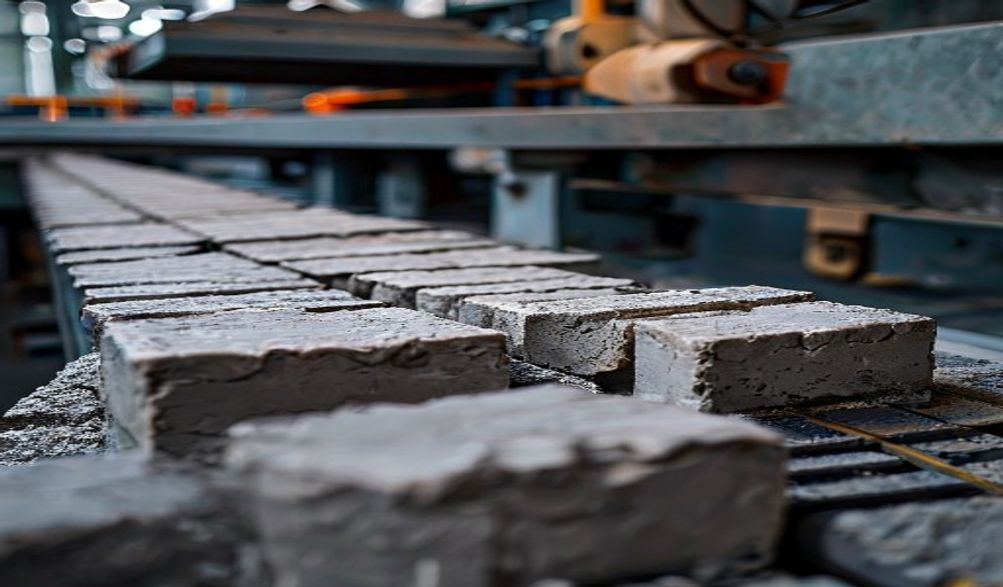
Як вибрати машину для виробництва цегли: Всебічний посібник для покупця
Вступ
Від найскромнішого будинку до найвеличнішого хмарочоса, цегла є буквально будівельними блоками нашого світу. Для підприємців, будівельних компаній та керівників проектів рішення щодоякВиробництво цих цеглин є ключовим. Вибір правильної машини для виготовлення цегли — це не просто покупка; це інвестиція в якість, ефективність і, зрештою, прибутковість усієї вашої діяльності. Неправильний вибір може призвести до руйнівних простоїв, неякісної продукції та фінансового тиску.
Цей посібник є вашим вичерпним планом дій. Заснований на галузевій експертизі, технічних знаннях та практичному досвіді роботи, він розвіює маркетинговий шум. Ми надамо вам чітку, дієву структуру для прийняття цього важливого рішення. До кінця ви зрозумієте не лишеяк вибрати машину для виробництва цеглиале як вибратиоптимальниймашина для ваших конкретних цілей, гарантуючи, що ви уникаєте поширених і дорогих помилок.
Розуміння вимог вашого проекту: основа вашого вибору
Перш ніж ви подивитеся на жоден проспект про обладнання, ви повинні зазирнути всередину. Унікальні потреби вашого проекту — це беззаперечний план для вашого вибору. Пропуск цього кроку — найшвидший спосіб купити дорогий предмет для пресування паперу.
Оцінка обсягів та масштабу вашого виробництва
Ваші вимоги до результату є основним чинником вартості та складності. Будьте безжально чесними у своїх прогнозах.
-
Малий та середній масштаб (ручний/напівавтоматичний):
- Вихід:До 1,000 – 5,000 блоків на день.
- Ідеально підходить для:Стартапи, невеликі будівельні проекти, підприємства на основі громади або бізнеси, що тестують ринок.
- Розгляд:Ці машини потребують більшої ручної праці, але мають нижчі початкові інвестиції та простіше обслуговування.
-
Крупномасштабне комерційне виробництво (повністю автоматизоване):
- Вихід:Від 8,000 до понад 50,000 блоків на день.
- Ідеально підходить для:Налагоджені цегельні заводи, постачальники для великих будівельних компаній та масштабні інфраструктурні проекти.
- Розгляд:Високі капітальні витрати компенсуються нижчими витратами на працю на одиницю продукції та вищою, стабільною якістю.
Запитай себе:Це для разового проекту з фіксованим терміном, чи для запуску безперервного виробничого бізнесу? Ваша відповідь визначає, чи потрібен вам робочий кінь, чи чемпіон спринту.
Визначення типу необхідних цеглин або блоків
Не всі цеглини створені рівними, як і машини, що їх виробляють. Бажаний кінцевий продукт одразу звужує коло пошуку.
- Суцільні та порожнисті бетонні блоки:Основа будівництва. Потрібні машини з потужною вібрацією та стисненням.
- Бруківка (блоки, що зчеплюються, або стандартні):Потрібне високощільне ущільнення для довговічності. Часто вимагають спеціалізованих систем подачі піддонів.
- Глиняна цегла (палена або непалена):Використовуйте абсолютно іншу технологію екструзії або пресування порівняно з бетонними машинами.
- Спеціалізовані блоки:Переплетені ґрунтові блоки, легкі аеровані блоки або спеціальні архітектурні форми вимагають специфічних можливостей машин та конструкцій форм.
Правило просте:Спочатку визначте свій продукт, а потім знайдіть машину, створену для його виробництва.
Аналіз доступності сировини
Ваша машина має бути партнером для ваших локальних ресурсів, а не конкурентом.
- Машини на основі бетону: These are the most common. They use a mix of cement, sand, aggregate, and water. Ensure you have consistent access to quality aggregates.
- Машини для виробництва глиняної цегли: Ideal if you have abundant clay deposits. They involve processes like extrusion, cutting, and often firing in a kiln.
- Fly Ash or Soil-Based Machines: Eco-friendly options that utilize industrial by-products or stabilized soil. Perfect for regions promoting sustainable construction.
Matching the machine to your locally available, cost-effective raw materials is a fundamental step for long-term viability.
Key Types of Brick Making Machines Explained
Now, let’s translate your needs into machinery categories. Understanding these core types is essential.
Ручні та напівавтоматичні машини
Це є вхідними точками у виробництво цегли.
- Як вони працюють: Manual machines rely entirely on human labor for mixing, feeding, and compaction (often via a lever). Semi-automatic versions use a mechanical or hydraulic press operated by a worker, with some automated elements like vibration.
- Переваги:
- Дуже низькі початкові інвестиції.
- Minimal electricity consumption.
- Simple to operate and repair.
- Highly portable.
- Недоліки:
- Low production output.
- High labor intensity and cost.
- Inconsistency in brick density and strength if not carefully operated.
- Verdict: Perfect for proof-of-concept, very small budgets, or regions with extremely low labor costs but unreliable power.
Fully Automatic Stationary Plants
These are the powerhouses of the industry, representing a turnkey production line.
- Як вони працюють: From batching and mixing to molding, curing, and stacking, the process is automated via conveyor belts and programmable logic controllers (PLCs). Human intervention is primarily for monitoring and maintenance.
- Переваги:
- Very high, consistent output.
- Exceptional and uniform product quality.
- Dramatically reduced labor requirements.
- Higher profit margins at scale.
- Недоліки:
- Very high capital cost.
- Requires significant factory space and robust power supply (3-phase).
- Complex installation and need for skilled technicians for maintenance.
- Verdict: The choice for serious, large-volume commercial production where efficiency and quality are paramount.
Мобільні машини для виробництва цегли
These offer a unique set of advantages for specific scenarios.
- Як вони працюють: Mounted on a trailer or truck bed, these machines can be driven to a construction site to produce bricks directly where they are needed.
- Переваги:
- Eliminates the cost and breakage of transporting finished bricks over long distances.
- Reduces the project’s carbon footprint.
- Provides flexibility for companies working on multiple remote sites.
- Недоліки:
- Output is generally lower than large stationary plants.
- May have higher wear and tear due to constant movement.
- Still requires a source of raw materials and power on-site.
- Verdict: An excellent solution for large, remote infrastructure projects (dams, roads, rural housing) where transport costs are prohibitive.
Critical Technical Specifications to Evaluate
When comparing specific models, move beyond the glossy pictures and focus on these hard numbers and features.
Виробнича потужність (блоків за годину/день)
Manufacturer claims are often based on ideal laboratory conditions.
- Look Deeper: Ask for the час циклу (how long to produce one batch) and the mold capacity (how many blocks per cycle). Multiply these for a theoretical maximum.
- Real-World Factor: Deduct 15-20% for real-world variables like material feeding, pallet changes, and minor stoppages. A machine claiming 1,000 blocks per hour might reliably produce 800-850.
Machine Power and Energy Consumption
This is a major operational cost center.
- Тип живлення: Electric is clean and efficient but requires stable grid power. Diesel is powerful and independent, suited for areas with unreliable electricity, but has higher fuel costs and emissions. Hybrid models offer flexibility.
- Due Diligence: Calculate your daily running cost. A 30kW machine running 8 hours a day at your local electricity rate will have a very different cost profile than a diesel-powered one. Don’t get surprised by the power bill.
Pressure and Vibration Systems
This is the heart of your brick’s strength. Proper compaction removes air pockets and ensures density.
- Вібрація: Essential for concrete blocks. Look for high-frequency, dual-sided vibration that ensures even compaction throughout the mold.
- Тиск: Hydraulic pressure systems provide immense, controllable force, crucial for high-density paving stones and interlocking blocks. Understand the compaction force (measured in kN or tons) – higher is generally better for strength.
- Combination Systems: The best machines often employ a “vibrate and press” method for superior results.
Mold Quality and Customization
The mold defines your product’s shape and wears out over time.
- Матеріал: High-carbon, heat-treated steel molds last exponentially longer than mild steel ones. They resist abrasion and deformation. This is an area where cheaper machines cut corners.
- Налаштування: If you plan to produce specialty blocks, confirm the manufacturer can design and supply custom molds. Ask about the lead time and cost for additional molds.
- Changeover: How easy is it to change molds? A system that allows for quick changeovers (under 30 minutes) increases your operational flexibility.
Beyond the Machine: Operational and Support Factors
The machine’s price tag is just the beginning. True cost and success lie in these operational realities.
Total Cost of Ownership Analysis
Make a spreadsheet. Account for every cost over a 5-year period:
* Початкова вартінсть: Machine price, shipping, import duties, installation.
* Операційні витрати: Energy/fuel, labor, raw materials.
* Витрати на технічне обслуговування: Routine service, replacement parts (wear parts like molds, mixer blades, hydraulic seals), and potential downtime costs.
* Training Costs: On-site training for your operators.
A slightly more expensive machine with a longer lifespan and lower maintenance can have a far lower total cost of ownership than a cheap machine that breaks down constantly.
Manufacturer Reputation and After-Sales Support
This is where your risk is managed. Your relationship with the manufacturer is as important as the machine itself.
- Establish Trust: Research their history. How long have they been in business? Look for client references and case studies – and actually contact them. Ask about machine performance and support responsiveness.
- Critical Support Elements:
- Warranty: What is covered, for how long, and what are the terms?
- Запчастини: Is there a local parts depot? What is the typical shipping time for critical components? A machine is useless if you wait months for a spare.
- Технічна підтримка: Do they offer remote support (phone, video)? Can they dispatch technicians? Is there clear documentation (manuals, diagrams)?
Safety Features and Ease of Operation
Protect your people and your investment.
- Safety First: Look for essential guards on moving parts, emergency stop buttons, and two-hand operation controls on semi-automatic machines to prevent accidents.
- Зручність використання: A well-designed control panel, clear indicators, and logical workflow reduce operator error and training time. Good manufacturers provide comprehensive training.
A Step-by-Step Selection Checklist
Use this actionable list to guide your process from start to finish.
- Define Your Core Needs: Lock down your required production volume, brick types, raw materials, and realistic budget (including operational costs).
- Research & Create a Shortlist: Based on #1, identify 3-5 reputable manufacturers whose machine types align with your needs.
- Request & Scrutinize Detailed Quotes: Ask for formal quotes including full technical specs, FOB/CIF prices, delivery timelines, warranty details, and a list of recommended spare parts.
- Conduct Due Diligence: Ask each manufacturer for 2-3 customer references in a similar climate/region. If possible, visit a working installation to see the machine in action.
- Evaluate Support Structures: Compare warranty length, spare parts pricing and logistics, and the proposed training plan. Read the service contract carefully.
- Make Your Informed Decision: Weigh the complete package—machine performance, total cost of ownership, and the quality of manufacturer support. Choose the partner, not just the product.
Часті питання (FAQ)
Q: What is the single most important factor when choosing a brick making machine?
А: There is no single factor. Success hinges on the precise alignment of three pillars: your specific production needs, your total available budget (including running costs)іmachine’s proven capability backed by reliable support. The most powerful machine is a liability if you can’t afford its parts or power it.
Q: How much does a good brick making machine cost?
А: Prices have an enormous range. A simple manual machine can start at $2,000 – $5,000. A robust semi-automatic model may be $10,000 – $30,000. A fully automatic production line can range from $50,000 to over $500,000. Always analyze the Загальна вартість володінняне лише ціна покупки.
Q: Can one machine produce different types of bricks?
А: Yes, versatility is common. However, it requires changing the mold. When evaluating a machine, check the cost, availability, and ease of changing molds. Some systems allow for quick changes, while others are more time-consuming.
Q: What are the most common mistakes first-time buyers make?
А:
1. Underestimating Requirements: Failing to account for needed space, power (3-phase vs. single-phase), and skilled labor.
2. Price Tunnel Vision: Choosing the absolute cheapest option, which often compromises on steel quality, leading to rapid wear and breakdowns.
3. Ignoring the Support Equation: Not planning for maintenance or verifying spare parts availability, leading to catastrophic downtime.
4. Overestimating Skill: Assuming operation is simple without investing in proper training for the team.
Висновок
Choosing a brick making machine is a strategic decision that reverberates through your business for years. It demands a careful balance of technical understanding, financial planning, and foresight. By methodically working through your project requirements, understanding the types of machines available, scrutinizing technical specs, and, above all, prioritizing a partnership with a reputable manufacturer, you de-risk your investment.
Remember, you are not just buying a piece of equipment; you are investing in the foundation of your production capability. Prioritize long-term reliability, service, and total value over short-term savings. Use the checklist provided, compile your specific questions, and approach manufacturers not as a novice, but as an informed buyer ready for a detailed consultation. Your ideal machine is out there—now you have the blueprint to find it.
<